

Ultimate Precipice Trail Safety Tips: Complete Guide to Conquering Acadia's Most Dangerous Hike
Understanding Precipice Trail Dangers and Prerequisites

The Precipice Trail stands as Acadia National Park’s most thrilling—and perilous—hike, demanding both physical readiness and mental composure. These Precipice Trail safety tips highlight why preparation is non-negotiable. In less than a mile, the trail climbs more than 1,000 feet, weaving across sheer cliffs, narrow ledges, and sections where hikers must rely on iron rungs for security.
Critical Safety Warning
The risks here are very real. Falls on the Precipice Trail have led to severe injuries and even fatalities, with the most recent death recorded in 2012. Each rescue mission often requires dozens of trained responders and hours of high-risk effort on dangerous terrain. Attempting this trail without the right experience, gear, and caution is never worth the gamble.
Who Should NOT Attempt This Trail
Before considering these Precipice Trail safety tips, honestly evaluate whether this trail suits your abilities. Do not attempt the Precipice Trail if you:
- Have any fear of heights or acrophobia
- Lack upper body strength for vertical climbing
- Have mobility limitations or joint problems
- Are hiking with children under 16
- Have never used iron rungs or via ferrata equipment
- Feel rushed or pressured by others
Physical and Mental Prerequisites
Successful navigation requires specific physical capabilities. You must possess adequate upper body strength to pull your body weight up vertical sections, excellent balance for narrow ledges, and mental composure under extreme exposure. The trail's "point of no return" occurs after the first major ladder section, where descending becomes more dangerous than continuing upward.
Mental preparation proves equally crucial. The Precipice Trail's psychological challenges include navigating blind corners around cliff faces, trusting century-old iron rungs, and maintaining focus despite breathtaking but distracting views. Practice meditation or breathing exercises beforehand, as anxiety can significantly impair judgment and physical performance on exposed sections.
Essential Safety Gear and Equipment
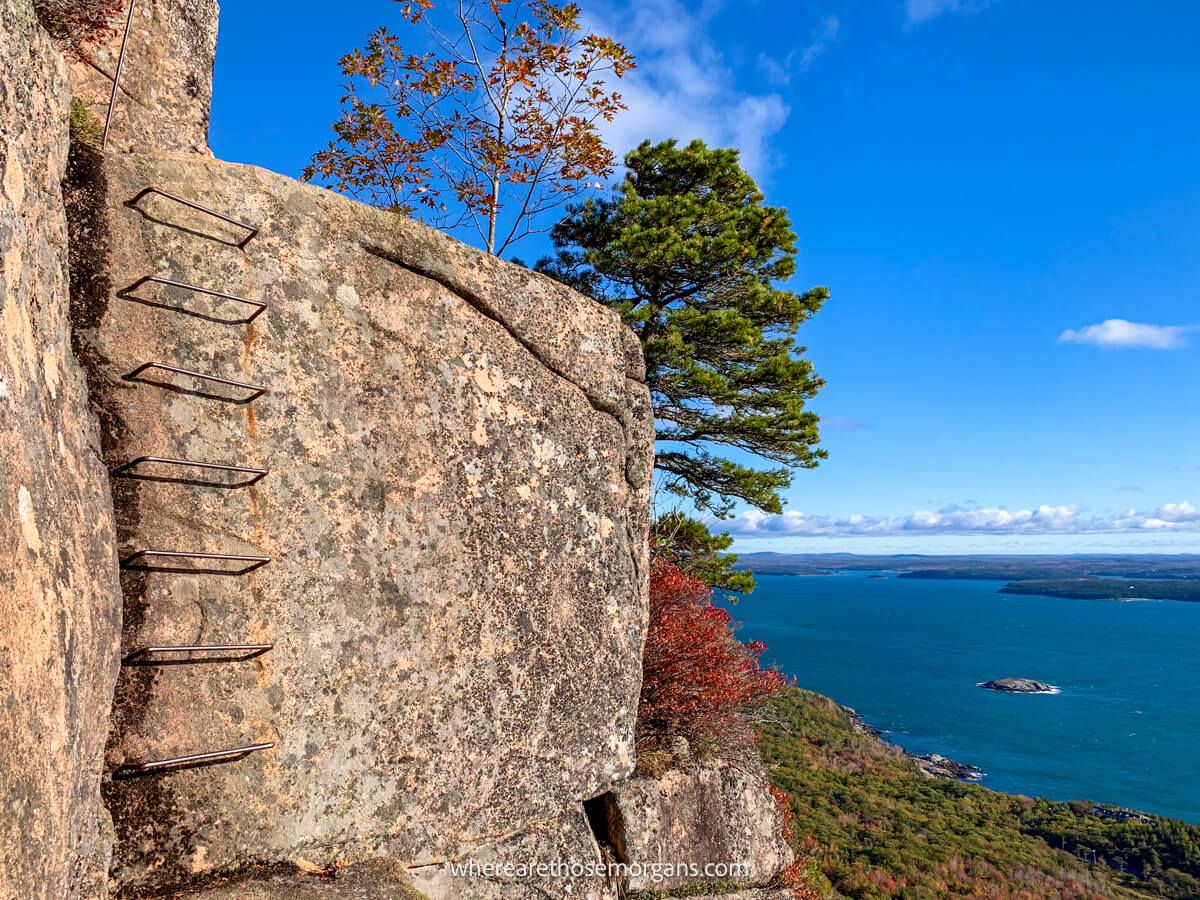
Proper equipment represents the foundation of effective Precipice Trail safety tips. Unlike technical rock climbing, the Precipice Trail requires no ropes or harnesses, but specific gear choices can mean the difference between success and disaster.
Footwear Requirements
Hiking Boots with Aggressive Tread: Choose boots with deep lugs and sticky rubber compounds. Vibram soles perform excellently on Acadia's granite. Avoid new boots that haven't been broken in, as blisters can become dangerous distractions on exposed sections.
Microspikes (Seasonal): Between October and May, carry microspikes or light crampons. Even minimal ice makes the iron rungs extremely dangerous. Kahtoola MICROspikes offer excellent performance for this application.
Clothing and Protection
Layer management becomes critical on the Precipice Trail due to rapid elevation gain and exposure to coastal winds. Start with moisture-wicking base layers, add an insulating mid-layer, and carry a windproof shell jacket. The summit can be 15-20 degrees colder than the trailhead, with wind chill creating additional cooling.
Gloves with Grip: Lightweight gloves with palm grip improve iron rung security while protecting hands from sharp granite and cold metal. Avoid thick gloves that reduce tactile feedback and dexterity.
Navigation and Emergency Equipment
Cell phone service remains spotty throughout the trail, making offline navigation essential. Download detailed topographic maps and trail guides before departure. Carry a whistle for emergency signaling and a headlamp with extra batteries, as the trail's complexity can slow progress significantly.
Pro Tip
Pack everything in a hands-free backpack with a waist belt. Your hands must remain available for climbing throughout most of the ascent. Avoid external attachments that could catch on rock or rungs.
First aid supplies should include blister treatment, pain relievers, elastic bandages, and emergency shelter materials. The trail's remote sections and technical rescue requirements mean self-sufficiency becomes paramount.
Weather Conditions and Optimal Timing
Weather awareness forms the cornerstone of effective Precipice Trail safety tips. Acadia's coastal location creates rapidly changing conditions that can transform a challenging but manageable trail into a deadly trap within minutes.
Seasonal Closures and Availability
The Precipice Trail closes annually from March 15 to August 15 to protect nesting peregrine falcons. This closure actually enhances safety, as it eliminates the trail's most dangerous weather periods including spring ice conditions and summer afternoon thunderstorms.
Weather Red Flags
NEVER attempt the Precipice Trail during rain, recent precipitation, fog, or high winds. Wet granite becomes extremely slippery, and the iron rungs turn treacherous. Even light mist can create dangerous conditions.
Optimal Weather Windows
The best conditions for implementing these Precipice Trail safety tips occur during high-pressure systems with clear skies, light winds, and no precipitation forecast for 24 hours before and after your hike. September and October provide the most reliable weather windows, combining trail availability with stable atmospheric conditions.
Start early to avoid afternoon weather development. Coastal mountains generate their own weather patterns, with calm morning conditions often deteriorating by midday. Plan to complete the technical sections before 11 AM to minimize exposure to afternoon thermal activity and potential storm development.
Seasonal Considerations
Late summer hiking (August-September) offers warmest temperatures but requires extra water and sun protection. Fall hiking (October) provides spectacular foliage but demands careful attention to shorter daylight hours and rapidly changing temperatures. Early morning frost can create invisible ice on north-facing sections even when temperatures appear safe.
Step-by-Step Safety Navigation Guide

Successful navigation requires understanding specific techniques and hazards at each trail section. These detailed Precipice Trail safety tips follow the trail's natural progression from relatively safe terrain to increasingly exposed climbing.
Initial Boulder Field Navigation
The trail begins with boulder scrambling that serves as a natural filtering system. Follow blue blazes carefully, as the route winds through and under massive granite blocks. This section tests basic scrambling skills - if you struggle here, turn back immediately rather than continuing to more dangerous terrain.
Maintain three points of contact at all times: two hands and one foot, or two feet and one hand. Test each hand and foothold before committing your full weight. Look ahead to plan your route through boulder passages, as getting trapped in dead ends forces dangerous backtracking in confined spaces.
The "Eliminator" Section
At approximately 0.1 miles, you'll encounter the first iron rungs dubbed "The Eliminator." These rungs test your comfort level with vertical climbing and exposure. If this section causes significant anxiety or physical difficulty, use the nearby Orange and Black Trail to safely return to the parking area.
Iron Rung Technique
Grip rungs with your whole hand, not just fingertips. Keep your body close to the rock face to maintain balance. Move deliberately - rushing leads to mistakes. Always maintain three points of contact when transitioning between rungs.
Critical Exposure Zones
The trail's most dangerous sections occur between 0.6 and 0.8 miles, where narrow ledges traverse near-vertical cliff faces. These areas demand absolute focus and perfect technique. Edge along ledges sideways, keeping your center of gravity over solid ground rather than leaning outward for better views.
The infamous "crux" section near the summit involves navigating around a blind corner on a sloped, exposed ledge. This represents the trail's most technically demanding and psychologically challenging moment. Take time to study the route, plan your movements, and execute with confidence rather than hesitation.
Summit and Descent Strategy
Upon reaching Champlain Mountain's summit, resist the urge to celebrate prematurely. The descent via North Ridge Trail presents its own hazards, including loose rock, steep granite slabs, and navigation challenges. Follow cairns and blazes carefully, as incorrect routing can lead to dangerous cliff areas.
Emergency Preparedness and Risk Management
Comprehensive emergency planning distinguishes prepared hikers from those who rely on luck. These advanced Precipice Trail safety tips address scenarios where prevention fails and emergency response becomes necessary.
Communication and Rescue Protocols
Cell service exists sporadically throughout the trail, with the most reliable coverage near the summit and parking areas. Download offline emergency contact information and GPS coordinates for key trail sections. Inform someone of your planned route and return time, including specific waypoints and backup plans.
Emergency Contacts
Acadia National Park Emergency: 207-288-8791
Maine State Police: 911
Bar Harbor Fire Department: 207-288-4242
Self-Rescue Techniques
Understanding basic self-rescue techniques can prevent minor incidents from becoming major emergencies. Practice controlled breathing techniques to manage panic, learn basic first aid for cuts and sprains, and understand how to signal for help using whistle codes and visual signals.
If someone in your party becomes injured or unable to continue, never leave them alone on exposed sections. Instead, send the strongest hiker for help while others provide comfort and protection. Create shelter using emergency blankets or extra clothing, and maintain body temperature until rescue arrives.
Risk Assessment and Decision Making
Develop systematic risk assessment skills by regularly evaluating conditions, group capabilities, and escape options. The "point of no return" concept applies throughout the trail - continuously assess whether retreating remains safer than advancing. Pride and summit fever have contributed to numerous accidents when conditions deteriorated beyond safe limits.
Turn-Back Triggers
Establish clear criteria for retreat: any group member expressing serious discomfort, weather deterioration, equipment failure, or time delays that threaten darkness. These decisions are easier to make before reaching high-commitment terrain.
My Personal Experience and Lessons Learned
After completing the Precipice Trail six times over eight years, I've learned that textbook knowledge must be supplemented by practical experience and hard-earned wisdom. My first attempt in 2016 taught me humbling lessons about preparation, respect, and the importance of comprehensive Precipice Trail safety tips.
First Attempt: Lessons in Humility
My initial climb occurred during marginal conditions - clear skies but recent rain had left some ledges damp. What should have been a three-hour adventure stretched to five hours as we waited for other hikers to navigate bottlenecks and dealt with slippery conditions on two key sections. The experience taught me that conditions matter more than confidence.
Equipment Failures and Adaptations
During my third climb, my hiking partner's boot sole began separating at the critical exposure section. We used duct tape from my repair kit to secure the sole temporarily, but the incident highlighted how equipment failure can create emergencies on terrain where retreat is dangerous. Now I always carry backup footwear solutions and inspect all gear the night before departure.
Personal Safety Protocol
I now begin each climb with a complete gear check, review weather forecasts from multiple sources, and establish turn-back criteria with my hiking partners. This systematic approach has prevented several potentially dangerous situations.
Ranger Insights and Local Knowledge
Conversations with Acadia National Park rangers have provided invaluable insights into common mistakes and successful strategies. Rangers emphasize that most incidents occur during descent, when fatigue and overconfidence combine with technical terrain. They recommend taking breaks every 30 minutes during ascent to maintain energy reserves for the demanding return journey.
Seasonal Variations and Conditions
My October climbs revealed how dramatically conditions change with season. Fall foliage creates breathtaking views but also masks trail markers and creates slippery leaf litter on ledges. Early morning frost can persist in shadowed north-facing sections until late morning, creating invisible ice hazards that dramatically increase danger levels.

Frequently Asked Questions
What makes the Precipice Trail so dangerous compared to other Acadia hikes?
The Precipice Trail combines extreme exposure, technical climbing requirements, and limited escape routes in a way that no other Acadia trail matches. Unlike trails with gradual exposure buildup, the Precipice Trail quickly transitions to near-vertical terrain with significant fall potential. The iron rung sections create a false sense of security while actually requiring advanced climbing skills and mental composure. Weather changes can transform manageable conditions into deadly traps within minutes, and rescue operations are extremely complex due to the technical terrain.
How should I prepare physically for the Precipice Trail's climbing demands?
Physical preparation should focus on upper body strength, core stability, and cardiovascular endurance. Practice pull-ups, rock climbing, or gymnasium climbing walls to build specific strength for vertical movement. Balance training using slacklines or balance boards helps develop the stability needed for narrow ledges. Cardiovascular fitness prevents fatigue-related mistakes during technical sections. Start training at least six weeks before your attempt, and include practice with the actual gear you plan to use on the trail.
What weather conditions absolutely prohibit attempting the Precipice Trail?
Never attempt the Precipice Trail during active precipitation, within 12 hours after rain or snow, during fog or low visibility conditions, or when winds exceed 25 mph. Ice conditions, even minimal frost, make the iron rungs extremely dangerous. High humidity can create condensation on metal surfaces that becomes slippery. Thunderstorm potential within 50 miles requires postponement, as granite conducts electricity and the exposed terrain offers no lightning protection. When in doubt, choose a different trail rather than risking dangerous conditions.
What should I do if someone in my group becomes paralyzed by fear on an exposed section?
Remain calm and avoid rushing the frightened person, as panic can lead to dangerous decisions. Provide steady verbal encouragement and specific, simple instructions for safe movement. Position yourself to offer physical support if possible, but never compromise your own safety. If the person cannot continue, establish shelter and send for help rather than attempting dangerous retreat maneuvers. Park rangers are trained in technical rescue operations and have specialized equipment for these scenarios. Prevention through honest pre-trip capability assessment remains the best strategy.
How do I know if my hiking experience qualifies me for the Precipice Trail?
Successful Precipice Trail completion requires experience with Class 3 scrambling, comfort with significant exposure, and proven ability to remain calm under stress. Previous experience with via ferrata, rock climbing, or technical mountaineering provides relevant skills. You should have completed multiple challenging hikes including other Acadia iron rung trails like the Beehive. Physical fitness markers include ability to complete multiple pull-ups, comfort with heights on ladders or high places, and cardiovascular fitness for sustained climbing efforts. Mental preparation matters equally - experience managing fear and making decisions under pressure proves crucial for safe completion.
Conclusion
The Precipice Trail represents both the ultimate Acadia National Park hiking challenge and a serious undertaking requiring comprehensive preparation and respect. These Precipice Trail safety tips provide the foundation for safe completion, but they cannot substitute for honest self-assessment, proper training, and conservative decision-making.
Success on the Precipice Trail comes from combining technical preparation with mental readiness, understanding that retreat often demonstrates greater wisdom than advancement. The trail's rewards - breathtaking views, personal accomplishment, and unforgettable memories - justify the effort only when safety remains the primary priority throughout the experience.
Final Safety Reminder
Remember that the Precipice Trail will always be there for another attempt. No view or personal goal is worth risking serious injury or death. When conditions, capabilities, or comfort levels create doubt, choose safety over summiting.
Whether you're planning your first attempt or returning for another climb, approach the Precipice Trail with preparation, respect, and humility. The granite cliffs of Champlain Mountain have witnessed both triumph and tragedy - proper application of these Precipice Trail safety tips helps ensure your experience falls into the former category.