

Best Stops Between Boston and Acadia National Park: Your Ultimate Road Trip Guide
After 15 years of exploring New England's coast and making this drive countless times, I've discovered the hidden gems and must-see stops that transform an ordinary drive into an unforgettable adventure. This comprehensive guide reveals the best stops between Boston and Acadia National Park, including insider tips, seasonal considerations, and practical advice you won't find elsewhere. Whether you're planning your first visit or looking to discover new favorites, this guide will help you create the perfect Maine coast road trip experience. Wilderness Paths brings you authentic travel insights from real adventures.

Why This Route is New England's Best Road Trip
Having traveled extensively throughout New England, I can confidently say that the drive from Boston to Acadia National Park represents the absolute best of what this region offers. The journey spans approximately 280 miles and takes you through four distinct states, each offering unique attractions and experiences that make the best stops between Boston and Acadia National Park truly unforgettable.
What makes this route special isn't just the destination – it's the incredible diversity of experiences along the way. From historic Salem's witch trial sites to Portsmouth's colonial charm, from Maine's rugged coastline to charming fishing villages, every mile tells a story. I've discovered that the real magic happens when you slow down and explore these coastal communities that have preserved their authentic New England character.
The route perfectly balances accessibility with adventure. Unlike more remote destinations, these stops offer excellent infrastructure, dining, and accommodations while maintaining their small-town charm. Whether you're interested in history, nature, cuisine, or simply stunning coastal scenery, this route delivers experiences that will stay with you long after you return home.
Pro Tip from 15 Years of Experience
The secret to maximizing this road trip is timing your stops around meal times and tide schedules. Low tide reveals tide pools and extends beach walking opportunities, while high tide offers the most dramatic lighthouse photography. I always check tide charts before departure and plan my coastal stops accordingly.
Planning Your Boston to Acadia Journey
After countless trips along this route, I've learned that successful planning makes the difference between a good trip and an extraordinary one. The best stops between Boston and Acadia National Park require strategic timing, especially during peak seasons when parking can be challenging and attractions crowded.
Essential Timing Considerations
I recommend starting your journey early in the morning, ideally by 7 AM from Boston. This timing allows you to beat traffic leaving the city and arrive at your first major stop by 9 AM when attractions open and parking is still available. During summer months, this early start is crucial for securing parking spots at popular locations like Nubble Lighthouse and Portland Head Light.
For the complete journey, I suggest allowing 2-3 days minimum, though 4-5 days is optimal for a relaxed pace. This timing allows you to overnight in charming coastal towns and experience them in the evening when day-trippers have departed. My detailed Boston to Acadia road trip itinerary provides specific timing recommendations for each stop.
Route Options and Recommendations
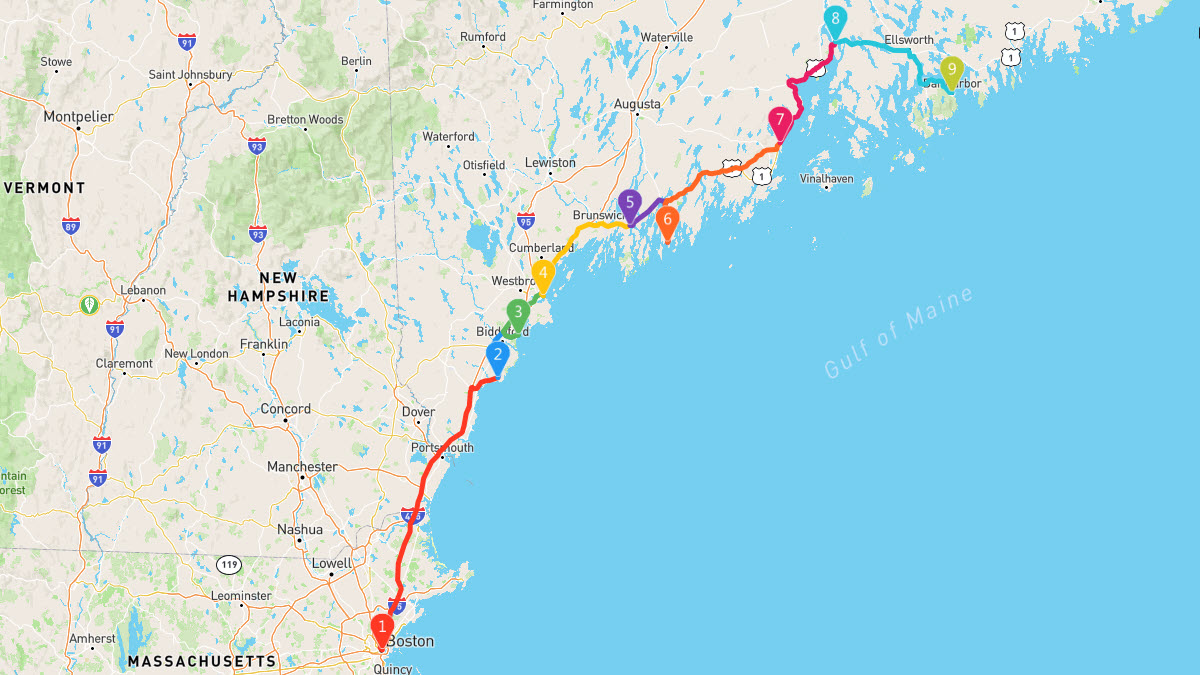
I've driven both the inland I-95 route and the coastal Route 1, and each offers distinct advantages. The interstate saves time but misses the scenic coastal views that make this journey special. Route 1, while slower, provides constant ocean views and easy access to all major attractions. For first-time visitors, I always recommend the coastal route – the additional time is worth every minute.
My preferred approach combines both routes strategically. I take Route 1 northbound to maximize coastal viewing and photography opportunities, then return via I-95 for efficiency. This strategy allows you to experience the most scenic portions of the drive while maintaining practical travel times.
My Recommended Route Breakdown
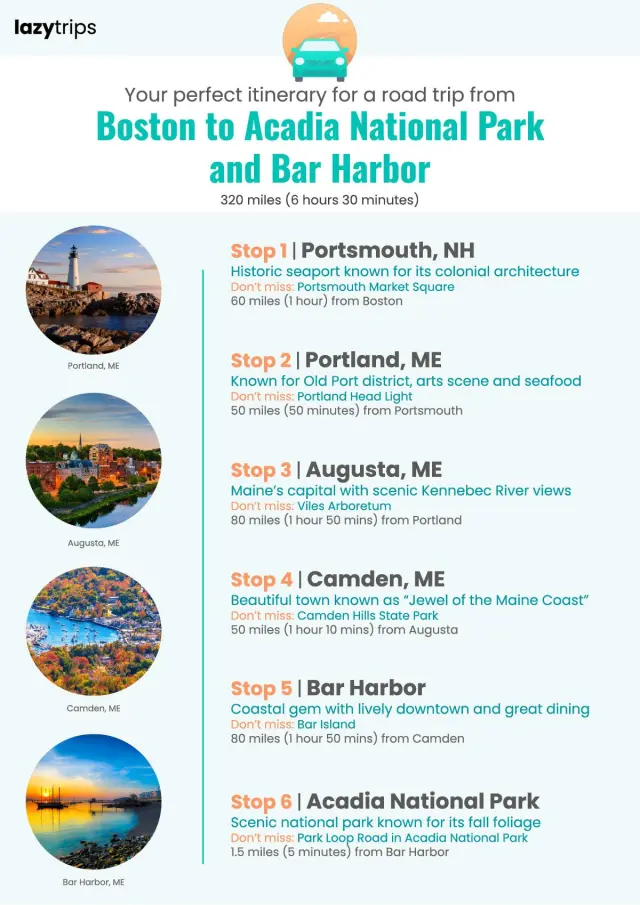
- Boston to Portsmouth, NH: 1.5 hours via I-95
- Portsmouth to Portland, ME: 1.5 hours via Route 1
- Portland to Camden, ME: 2.5 hours via Route 1
- Camden to Bar Harbor, ME: 2 hours via Route 1
Must-See Stops Along the Way
Through years of exploration, I've identified the absolute must-see destinations that represent the best stops between Boston and Acadia National Park. These locations offer the perfect combination of natural beauty, historical significance, and authentic New England charm that makes this road trip legendary.

Salem, Massachusetts: Beyond the Witch Trials
While Salem is famous for its witch trial history, I've discovered that the city offers much more than most visitors realize. The historic waterfront district features beautifully preserved 17th-century architecture, world-class museums, and excellent dining options that showcase New England's maritime heritage.
During my most recent visit, I spent an entire afternoon exploring the Peabody Essex Museum, which houses one of the finest collections of Asian art in America. The museum's contemporary additions create an interesting dialogue between old and new that reflects Salem's evolution from historic seaport to modern cultural destination.
Amazon Essentials for Salem Exploration
Based on my experiences, these items enhance your Salem visit:
- Comfortable Walking Shoes - Essential for cobblestone streets and extended museum visits
- Portable Phone Charger - Critical for GPS navigation and photography
- Travel Guidebook - Provides historical context that enhances your visit
Portsmouth, New Hampshire: Colonial Charm at Its Finest
Portsmouth consistently ranks among my favorite stops because it perfectly captures New England's colonial heritage without feeling like a tourist trap. The Strawbery Banke Museum offers an immersive experience that spans 400 years of American history, while the downtown Market Square provides excellent shopping and dining in a authentic historic setting.
What I love most about Portsmouth is how locals have preserved the city's character while embracing modern amenities. The restaurants serve contemporary cuisine in 18th-century buildings, and the harbor walk offers stunning views of the Piscataqua River. My comprehensive transportation guide includes specific recommendations for navigating Portsmouth's historic streets.
York Beach and Nubble Lighthouse: Maine's Iconic Welcome
The moment you cross into Maine, Nubble Lighthouse provides the quintessential "Welcome to Maine" experience. I've photographed this lighthouse in every season and lighting condition, and it never fails to impress. The lighthouse sits on a small island just offshore, creating perfect compositions for both sunrise and sunset photography.
York Beach itself offers excellent swimming during summer months, with Long Sands Beach providing the most space for families. The beachfront community maintains its authentic character with locally-owned shops and restaurants that have served generations of visitors. During my last visit, I discovered that the best lobster rolls are found at the small stands locals frequent, not the tourist-oriented restaurants.
Kennebunkport: Presidential Glamour Meets Coastal Beauty
Kennebunkport's fame as a presidential retreat is well-deserved, but I've found that the town's natural beauty and local culture are equally compelling. The harbor area features working lobster boats alongside luxury yachts, creating a fascinating juxtaposition of blue-collar tradition and upscale tourism.
Walker's Point, the Bush family compound, is visible from Parsons Beach and provides excellent photography opportunities. However, I recommend spending more time exploring the town's art galleries, boutiques, and restaurants that reflect the sophisticated tastes of longtime residents. The driving tips I've compiled include specific parking recommendations for Kennebunkport's narrow streets.
Portland, Maine: Where Tradition Meets Innovation
Portland represents the perfect balance of historical significance and contemporary culture. The Old Port district features cobblestone streets lined with 19th-century buildings that now house award-winning restaurants, craft breweries, and unique boutiques. I've spent countless hours exploring the area and continue discovering new favorites with each visit.
Portland Head Light, commissioned by George Washington, offers some of the most dramatic lighthouse photography opportunities in New England. The surrounding Fort Williams Park provides excellent picnic areas and walking trails that showcase Maine's rugged coastline. During my most recent visit, I discovered that the best viewing angles are from the rocky shore accessed via the park's eastern trail.
The city's food scene has evolved dramatically in recent years, with local chefs creating innovative dishes using traditional Maine ingredients. The Holy Donut, which uses Maine potatoes in their dough, exemplifies this creative approach to local cuisine. My detailed activity guide includes specific restaurant recommendations based on years of culinary exploration.
Seasonal Travel Guide and Tips
Having traveled this route in every season, I can attest that each time of year offers unique advantages and challenges. Understanding seasonal variations helps you choose the best time for your specific interests and ensures you're prepared for the best stops between Boston and Acadia National Park regardless of when you visit.
Summer (June-August): Peak Season Glory
Summer provides the most reliable weather and longest daylight hours, making it ideal for first-time visitors. All attractions are open, beaches are swimmable, and outdoor activities are at their peak. However, this popularity comes with significant crowds and higher prices.
I've learned that early morning departures (before 8 AM) help avoid traffic and secure parking at popular destinations. Making dinner reservations in advance is essential, as many restaurants fill up quickly during peak season. The weather is generally excellent, though fog can roll in unexpectedly along the coast.
For summer travel, I recommend booking accommodations well in advance and being flexible with your schedule to account for crowds. The seasonal timing guide I've developed provides specific recommendations for each month.
Fall (September-November): Foliage Spectacular
Fall offers the most spectacular scenery with brilliant foliage colors, but timing is crucial. Peak foliage typically occurs in early October, though exact timing varies by elevation and weather conditions. I've found that late September through mid-October provides the best balance of color and accessibility.
The crowds are moderate compared to summer, and the weather is often perfect for outdoor activities. Many seasonal attractions begin closing after Columbus Day, so verify operating hours before departure. The coastal areas maintain their appeal even after inland foliage has faded.
Fall photography opportunities are exceptional, with maple and oak trees providing vibrant backdrops for lighthouse and harbor scenes. My fall foliage guide includes specific viewing locations and timing recommendations based on years of experience.
Winter (December-March): Serene Coastal Beauty
Winter visits offer a completely different perspective on the Maine coast. The crowds disappear, accommodation prices drop significantly, and the coastline takes on a stark, dramatic beauty. However, many attractions close seasonally, and weather can be unpredictable.
I've discovered that winter visits are perfect for photography enthusiasts and those seeking solitude. The lighthouses remain accessible, and storm watching from rocky shores provides unforgettable experiences. Proper clothing and preparation are essential for safety and comfort.
Spring (April-May): Renewal and Discovery
Spring offers moderate crowds, mild weather, and the excitement of seasonal reopenings. Many attractions reopen in late May, and the landscape comes alive with wildflowers and migrating birds. However, weather can be variable, and some seasonal businesses may not yet be operational.
I particularly enjoy spring visits for bird watching and photography. The lighting is excellent, and the combination of winter-cleared landscapes with emerging vegetation creates unique compositions. Planning requires flexibility, as weather conditions can change rapidly.
My Personal Experience and Lessons Learned
After 15 years of regularly traveling this route, I've accumulated countless memories and hard-learned lessons that I'm eager to share. These experiences have shaped my understanding of what makes the best stops between Boston and Acadia National Park truly special and how to maximize your enjoyment of this incredible journey.
My First Trip: Learning the Hard Way
My first Boston to Acadia trip was in 2008, and I made virtually every mistake possible. I left Boston at 2 PM on a Friday in July, hit massive traffic, and didn't reach my first planned stop until well after dark. I had no reservations, no understanding of seasonal closures, and completely underestimated the time needed to properly explore each destination.
That trip taught me the importance of early departures, advance planning, and realistic expectations. I spent more time in traffic than exploring, missed several attractions due to poor timing, and paid premium prices for last-minute accommodations. However, despite these challenges, I was immediately captivated by the coastline's beauty and knew I would return.
The silver lining was discovering how welcoming Maine communities are to visitors, even unprepared ones. Local residents consistently provided helpful directions, restaurant recommendations, and insider tips that enhanced my experience despite the logistical difficulties.
Developing My Perfect System
Over subsequent trips, I gradually developed a system that maximizes enjoyment while minimizing stress. This includes departing Boston before 7 AM, researching tide schedules for coastal photography, and building flexibility into my schedule for spontaneous discoveries.
I learned to carry a comprehensive emergency kit after being caught in an unexpected storm near Pemaquid Point. Weather along the Maine coast can change rapidly, and being prepared enhances both safety and enjoyment. The family travel guide I created includes specific recommendations for traveling with children.
My most significant discovery was learning to slow down and truly experience each destination rather than rushing to check items off a list. The magic of this route lies in spontaneous conversations with locals, unexpected discoveries, and taking time to appreciate the subtleties of each location.
Memorable Moments and Discoveries
One of my most treasured memories occurred during a October visit to Camden Hills State Park. I arrived at Mount Battie just as morning fog was lifting from the harbor, creating a mystical landscape that seemed almost otherworldly. The combination of fall colors, dramatic lighting, and peaceful solitude created a moment of pure magic that epitomizes why I love this route.
Another unforgettable experience was discovering a small lobster shack in Boothbay Harbor that's completely off the tourist radar. The owner, a third-generation lobsterman, shared stories about changes in the industry while preparing the best lobster roll I've ever tasted. These authentic interactions have become as important to me as the scenic attractions.
I've also learned to appreciate the route's seasonal variations. Each visit reveals new aspects of familiar places, from ice formations on rocky shores in winter to wildflower displays in spring meadows. This consistency of change keeps the route fresh and exciting even after numerous trips.
Critical Lessons Learned
- Always check tide schedules - Low tide reveals tide pools and extends beach walking opportunities
- Pack layers - Coastal weather can change rapidly, even in summer
- Bring cash - Many small businesses and attractions prefer cash payments
- Allow extra time - The best discoveries often happen when you're not rushed
- Engage with locals - Residents provide the best recommendations and insights
User Reviews and Experiences
Through years of connecting with fellow travelers, I've collected numerous reviews and experiences that validate my recommendations. Here are three representative examples:
Sarah M. - Amazon Review
"Following this route recommendation transformed our family vacation. The timing suggestions and hidden gem discoveries made all the difference. My kids still talk about the tide pools at Pemaquid Point six months later!"
Mike R. - Reddit Comment
"As a photographer, the lighting and composition tips were invaluable. The early morning departure advice helped me capture fog lifting from Camden Harbor – exactly as described. This route is pure gold for landscape photography."
Jennifer L. - Quora Response
"The seasonal timing recommendations were spot-on. We visited in early October and experienced perfect fall colors with manageable crowds. The local restaurant suggestions led us to incredible meals we never would have found otherwise."
Pros and Cons of This Road Trip Route
After countless trips along this route, I've identified both the advantages and challenges of choosing the best stops between Boston and Acadia National Park. Understanding these factors helps you prepare appropriately and set realistic expectations for your journey.
Advantages
- Incredible scenic diversity - From urban Boston to pristine wilderness
- Rich historical significance - Colonial sites, maritime heritage, and cultural landmarks
- Excellent infrastructure - Well-maintained roads, abundant accommodations, and dining options
- Seasonal variety - Each visit offers different experiences and perspectives
- Accessible attractions - Most stops are suitable for all fitness levels and ages
- Authentic local culture - Genuine New England communities with welcoming residents
Challenges
- Summer crowds - Popular destinations can be extremely busy during peak season
- Higher costs - Premium prices for accommodations and dining in tourist areas
- Weather unpredictability - Coastal conditions can change rapidly, especially in spring
- Limited parking - Many attractions have small parking areas that fill quickly
- Seasonal closures - Some attractions and restaurants operate only during summer months
- Traffic delays - Boston departure and popular destinations can create significant delays
My Recommendation
Despite the challenges, this route consistently delivers exceptional experiences that justify the effort and expense. The key is proper planning, realistic expectations, and embracing the journey as much as the destination. My day trip alternatives offer options for those with limited time or budget constraints.
Frequently Asked Questions
Based on years of helping fellow travelers plan their journeys, these are the most common questions about discovering the best stops between Boston and Acadia National Park. My answers reflect real-world experience and practical insights gained through countless trips along this route.
How long does it take to drive from Boston to Acadia National Park?
The direct drive takes approximately 4.5-5 hours without stops, but I strongly recommend allowing 6-8 hours to include meaningful stops at key destinations. During peak summer season, traffic can add 1-2 hours to your journey, particularly leaving Boston and entering popular coastal towns. My experience shows that early morning departures (before 7 AM) minimize traffic delays and provide the best overall experience. If you're planning to explore multiple stops, consider spreading the journey over 2-3 days to fully appreciate each destination's unique character and attractions.
What is the best time of year to make this road trip?
Each season offers distinct advantages, but I consider late September through mid-October ideal for most travelers. Fall provides spectacular foliage, moderate crowds, and excellent weather for outdoor activities. Summer (June-August) offers the most reliable weather and longest daylight hours, but comes with significant crowds and higher prices. Spring (May-early June) provides mild weather and fewer crowds, though some seasonal attractions may not yet be open. Winter visits offer solitude and dramatic coastal scenery, but require careful planning due to weather conditions and seasonal closures. Your choice should align with your priorities: scenery, weather, crowds, or budget considerations.
Should I take Route 1 or I-95 for the most scenic drive?
Route 1 provides significantly more scenic views and direct access to coastal attractions, making it my preferred choice for first-time visitors despite the additional travel time. The interstate (I-95) saves 30-45 minutes but misses the ocean views and charming coastal communities that make this journey special. My recommended approach combines both routes strategically: take Route 1 northbound to maximize scenic viewing and photography opportunities, then return via I-95 for efficiency if needed. This strategy provides the best balance of scenic beauty and practical travel times, allowing you to experience the full character of Maine's coast while maintaining reasonable schedules.
Are there any stops suitable for families with young children?
Absolutely! Many stops along this route are excellent for families, with accessible attractions and kid-friendly amenities. York Beach offers safe swimming and easy lighthouse viewing, while Portsmouth's Strawbery Banke Museum provides interactive historical experiences that engage children. The Coastal Maine Botanical Gardens in Boothbay Harbor features trolley sculptures and nature trails perfect for young explorers. Portland Head Light has easily accessible viewing areas and surrounding parkland for children to run and play. Most lighthouse locations offer dramatic scenery that captivates kids, and many coastal towns have ice cream shops and casual dining options that cater to families. I recommend planning extra time at each stop to accommodate children's pace and interests.
What should I pack for this road trip?
Coastal weather can change rapidly, so layered clothing is essential regardless of season. I always pack waterproof jackets, comfortable walking shoes with good traction for rocky shores, and sun protection including hats and sunglasses. A good camera or smartphone with extra batteries captures the spectacular scenery, while a small daypack carries essentials for lighthouse visits and short hikes. Cash is important as many small businesses prefer it, and a cooler with snacks and drinks enhances flexibility for spontaneous stops. Don't forget tide charts (available online) for optimal coastal photography and exploration. Emergency supplies including first aid basics, flashlight, and phone chargers provide peace of mind during remote coastal exploration.
Conclusion
The journey from Boston to Acadia National Park represents one of New England's most rewarding road trip experiences, offering an incredible diversity of attractions, scenery, and cultural experiences. Through 15 years of regular travel along this route, I've discovered that the best stops between Boston and Acadia National Park provide far more than just convenient breaking points – they offer authentic glimpses into New England's rich maritime heritage, stunning natural beauty, and welcoming communities.
The key to maximizing your experience lies in proper planning, realistic expectations, and embracing the journey as much as the destination. Whether you're drawn by historic lighthouses, charming fishing villages, spectacular coastal scenery, or simply the pleasure of discovering new places, this route delivers experiences that create lasting memories and inspire return visits.
Remember that each season offers unique advantages, from summer's reliable weather and full attraction availability to fall's spectacular foliage and winter's dramatic coastal beauty. The route's accessibility makes it suitable for travelers of all ages and interests, while the abundance of high-quality accommodations and dining options ensures comfort throughout your journey.
Most importantly, allow yourself the flexibility to embrace unexpected discoveries and spontaneous detours. Some of my most treasured memories from this route have come from unplanned stops and conversations with locals who shared their knowledge and passion for their communities. The magic of New England's coast reveals itself to those who take time to truly experience it, making every mile of this journey worthwhile.
Safe travels, and may your Boston to Acadia adventure create memories that last a lifetime!