
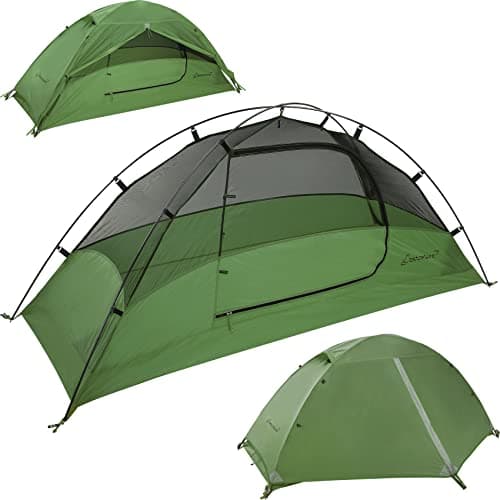
There's a particular kind of misery that hits around mile eight when your shelter is soaked through and your sleeping bag is slowly following suit. I know that feeling well. It happened to me on a soggy fall trip along the Wonderland Trail, back when I was still trusting a budget two-person tent I'd borrowed from a friend. The next season, I started hunting for a dedicated solo shelter that wouldn't blow my gear budget or my back on the climb out. That search eventually brought me to the Clostnature 1-Person Backpacking Tent, and I've had enough wet weekends since then to form a real opinion.
We may earn from qualifying purchases.
Where it shines
The weight story here is genuinely decent for the price tier. At a minimum trail weight of around 2.97 lbs, you're not in cuben-fiber ultralight territory, but you're also not strapping a canvas cabin to your back. For a solo hiker who's weight-conscious but not obsessive, that number works. I've carried heavier tents and felt it by mile five; this one doesn't punish you the same way.
The PU 5000-rated polyester fly and bathtub floor is the headline feature for me, given that I test gear in the PNW where "light rain" is a seasonal personality. A high waterproof rating on a budget tent is exactly the right place to spend extra material cost, and Clostnature made that call. Factory-sealed seams add another layer of confidence. I didn't wake up in a puddle, which, honestly, is the minimum bar for a tent and also one I've had budget shelters fail.
Setup is legitimately fast. Two aluminum poles, freestanding design, D-shaped door that doesn't require you to contort yourself at 6 a.m. in the dark. I had it pitched in under ten minutes the first time, which says something because I was also eating a granola bar and trying to find my headlamp simultaneously. The side vestibule is a genuine selling point for solo trips: boots, wet rain jacket, trekking poles all live out there instead of in your sleeping space.
Interior dimensions (roughly 7'3" x 2'8" x 3' tall) are snug but not coffin-like. I'm 5'11" and could stretch out without touching the foot end. The mesh interior walls help with condensation management on cool nights, which is a real problem in single-wall-adjacent designs. For the full rundown of specs, check the current listing on Amazon.
Compared to what I'd used before
Before landing here, my solo go-to was a two-person tent I'd been borrowing and then a budget one-person option that shall remain nameless. The borrowed two-person tent weighed just over five pounds. My knees and hip flexors remember every ounce of that on switchback climbs. The nameless one-person tent had a fly that was supposed to be waterproof and wasn't, not really, not in sustained Pacific Northwest rain.
The Clostnature holds up better in wet conditions than that previous budget option, full stop. The PU 5000 coating is doing real work. It also packs smaller, around 15" x 5.1" x 5.1", which fits into a standard backpack side pocket or straps cleanly below the main compartment. That's a practical win I underrated until I actually had it on trail.
Where it doesn't win is compared to dedicated ultralight shelters in the $300-plus range. Those tents are lighter, often more packable, and use tougher fabrics that'll outlast a few seasons of abuse. This tent is sitting in a different bracket entirely, and it knows it. If you're coming from a car-camping dome tent and stepping into backpacking, the upgrade here will feel dramatic. If you're coming from a premium solo shelter, it won't.
My one real criticism: the included stakes are fine for benign conditions, but I wouldn't trust them in rocky or hardpacked soil. They bent slightly on a gravelly campsite. I swapped in my own stakes after that trip and haven't thought about it since, but it's something to budget for. The aluminum poles, on the other hand, have held up well, and the included pole repair kit is a small touch that actually matters when you're three days from the trailhead.
Who should skip it
If you're planning high-exposure alpine routes with sustained wind and snow loading, this isn't the tent. It's described as an all-season shelter, and it handles three-season conditions well in my experience, but "all-season" on a budget tent is marketing language I'd read carefully. I wouldn't stake my January summit attempt on it.
Tall hikers over about 6'2" might find the width (2'8") too confining for a comfortable night, especially if you're a side sleeper who shifts around. And if you're the kind of backpacker who runs a gram-counting spreadsheet before every trip, you'll probably want to look at shelters in a higher price tier that shave more weight with premium materials.
But for a three-season day-hiker stepping into overnight trips, someone doing shoulder-season loops in moderate conditions, or a backpacker who needs a dedicated solo shelter without spending half a paycheck? This tent is worth a serious look. It gets the fundamentals right: it's light enough, it sheds rain, and it goes up fast when you're tired and hungry at camp.
I've slept in worse tents that cost more. That's a real compliment, and it's about the most honest endorsement I can give a piece of gear. If you're on the fence, I'd say go for it and put the money you saved toward a better sleeping pad. Your back will thank you more than your shelter spec sheet ever will.
Happy trails and dry sleeping bags out there., Dave