
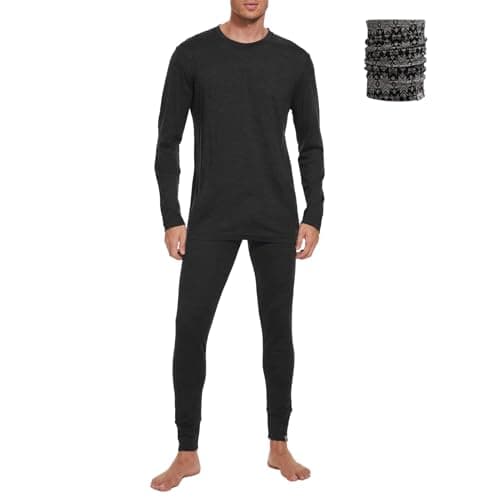
I Wore This Merino Base Layer Through PNW Rain and Cold — Here's What I Think
We may earn from qualifying purchases.
I still remember that miserable November push up the Colchuck Lake trail, a last-minute permit, freezing drizzle at the trailhead, and my old polyester base layer already damp from the approach. I'd been testing the MERINNOVATION Merino Wool Base Layer Set for about six weeks at that point, and I wanted to see if it could handle something real. That climb did.
For context: I'm based in Portland, I get out most weekends, and I've wrecked enough knees to know that staying warm and dry isn't optional, it's what gets you home. So when I say a base layer matters, I mean it literally.
Honest gripes
Let me start with what didn't love, because I think that's more useful than a paragraph of praise.
The neckline on the top runs a little wide. On a casual evening at camp, it's fine. Under a heavy pack with a hip belt, I noticed it would bunch and ride up. Not a dealbreaker, but if you're planning to wear this under a climbing harness or a tight-fitting midlayer, size down or be prepared to adjust. I ended up tugging at it more than I wanted to on steeper terrain.
The flatlock stitching along the shoulders is functional, but after a few washes I noticed it getting slightly rougher where my pack straps sit. Nothing dramatic, I'm not bleeding or anything, but it's the kind of thing that compounds over a long season. If you're doing multi-day trips with a heavier pack, that friction point might bug you. I wish they'd used a slightly softer thread profile there.
The bonus accessory (I got the neck warmer) is exactly what you'd expect from a bundled item. It's not terrible, but it's clearly secondary to the main set. Don't let that $15 value pitch sway your decision. The real value is in the top and bottom.
What I noticed first
When I pulled the MERINNOVATION base layer out of the packaging, the softness hit me right away. Real softness, not the "we promise it's soft" marketing line you usually see on these things. The 18.5-micron fiber count genuinely makes a difference against my skin, I've had cheaper merino that felt like sandpaper after an hour, and this one doesn't.
The weight surprised me too. At 165 GSM, it's positioned as a lightweight baselayer, and it feels like it. I could easily layer it under a midweight fleece without feeling like I was strapping on armor. For shoulder season PNW hiking, that's exactly where I want to be.
The color I tested was a heathered charcoal that hides trail dirt better than you'd think. After two weeks of actual use (not just one "first impression" hike), it still looked presentable enough to wear to a coffee shop without people assuming I'd rolled down a hill. Which, to be fair, I had.
What works
Temperature regulation is where merino really proves itself. On that damp October weekend in the Cascades, the top and bottom kept me warm without that clammy feeling I'd get from cheap synthetic blends. I've worn this on a 45-degree morning and a 28-degree alpine start, and it handled both without needing to stop and add or remove layers. That's the sweet spot for a three-season hiker.
The moisture-wicking is legitimate. I know some merino gets marketed as "breathable" when it's really just not waterproof, but this one actually moves sweat away from my skin. When I worked up a sweat on the climbs, the fabric didn't stay wet and cold against me like some wool blends do. That natural temperature regulation isn't just marketing speak, it's physics, and MERINNOVATION executes it well.
I've been genuinely impressed with how it holds up in the wash. I'm not delicate with my gear. Cold water, regular detergent, throw it in with everything else. After roughly 25 washes, there's no noticeable shrinking, fading, or that weird stiffness some wool gets. The fibers are still supple. For a budget-conscious hiker who doesn't want to baby their clothes, this matters more than you'd think.
The versatility is a plus. I've worn this on trail, as sleepwear in a tent, and honestly, as loungewear on rainy Portland days when I'm not going anywhere but want to feel like I'm ready for adventure. The cut is casual enough that it doesn't look out of place off-trail.
Here's the quick rundown:
| Pros | Cons |
|---|---|
| Genuinely soft 18.5-micron merino | Wide neckline rides up under pack straps |
| Solid temperature regulation | Shoulder stitching gets rough with pack friction |
| Machine washable, holds up over time | Bonus accessory feels like an afterthought |
| Versatile enough for trail and lounge | Neckline sits low for deep winter layering |
| OEKO-TEX certified, good peace of mind |
View on Amazon, the MERINNOVATION set has become one of those pieces I reach for without thinking. It's not the fanciest merino on the market, and it's not trying to be. It's a reliable, comfortable, machine-washable base layer that won't bankrupt you, and for most hikers in the Pacific Northwest or similar climates, that's exactly what you need.
If you're comparing this to higher-end brands, you might notice a difference in construction details, but for weekend warriors and casual backpackers, it's more than sufficient. I've spent real money on "premium" base layers that fell apart after a season. This one still looks and feels good six months in.
I'd recommend it to anyone who wants merino performance without the luxury price tag. Just size down if you're between sizes, and maybe avoid it if you're planning to wear it exclusively under a tight climbing setup.
Happy trails out there. Stay warm, stay dry, and don't forget to check your gear before the long ones., Dave