
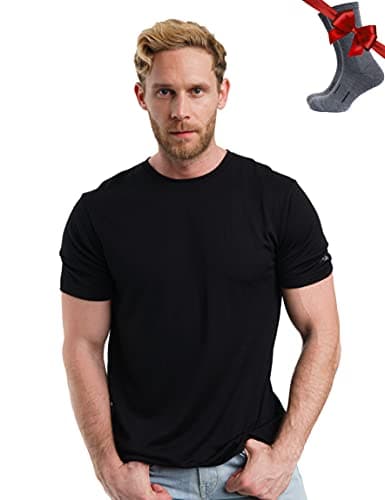
A few soggy weekends ago I was packing for a shoulder-season loop out of Trailhead parking at Mount Hood, and I did what I always do: stood in front of my gear shelf staring at a pile of synthetic base layers, none of which I actually wanted against my skin for two back-to-back days without a shower stop. My usual cheap merino had finally pilled into something resembling a wool sweater from 1987, so I grabbed the Merino.tech bundle I'd been sitting on and threw it in the pack. That trip ended up being wetter than I expected, classic PNW, and I came home with a genuine opinion about this thing.
We may earn from qualifying purchases.
The bundle is a two-piece deal: a short-sleeve 100% merino wool tee made from 17.5-micron superfine wool, plus a pair of merino hiking socks. You can check it out on Amazon here. The fact that both pieces arrive together is honestly what pulled me in, because outfitting a new base layer system piecemeal gets expensive fast.
Compared to what I'd used before
My last base layer was a synthetic moisture-wicking tee from a mid-tier outdoor brand. It did the wicking job fine on dry days, but by hour six of a wet climb it started clinging in that clammy, unpleasant way synthetics do when they're truly saturated. And the odor after a night in the tent? Honestly, I'm sparing you the details.
Merino doesn't behave that way. The 17.5-micron count here is on the finer end of the spectrum, which is what lets Merino.tech credibly claim "no itch." I've worn coarser merino that felt fine at a gear store and then scratched me raw on mile eight, so the micron spec actually matters. This one passed my neck-and-wrist test right out of the bag, and it didn't get worse over a full wet day.
The socks are a pleasant bonus rather than a headline feature, at least for me. They're warm, they cushion well enough for a day hike, and they held up to two washes without significant shrinkage. I've had dedicated merino sock brands charge serious money for a single pair, so getting a pair bundled in feels like a reasonable value play. Grab the bundle on Amazon if you're building out a base layer setup from scratch, because the math works in your favor.
Who this is for
If you're a day hiker or a weekend backpacker who sweats at variable rates, runs warm on climbs and then gets cold fast at ridgeline stops, you're the target customer. Merino's natural temperature regulation isn't marketing fluff, it genuinely buffers those swings better than synthetics do, in my experience.
It's also a solid pick for anyone who hates doing laundry mid-trip or who packs light and relies on the same shirt for two or three days running. The odor resistance is real. I wore this for two full hiking days in damp conditions, and while I wouldn't call it fresh exactly, it wasn't the synthetic disaster I've experienced before.
That said, I'd steer ultralight ounce-counters toward a more technical lightweight merino if shaving every gram is a priority. I don't have an exact weight for this shirt because Merino.tech doesn't publish one in the listing, and I didn't put it on my kitchen scale before my trip like a sensible reviewer would. It feels mid-weight to me, not ultralight. Fine for three-season use, but probably too warm for hot summer desert hiking.
Where it shines
Wet, cool, multi-day conditions. That's the honest summary. On my rainy Hood loop, the shirt wicked sweat during the climbs, dried reasonably quickly during a rest stop under a tarp, and never turned into the cold wet rag that would have ruined my evening. That's exactly what you want from merino, and this one delivered.
The "all-season" claim in the listing is partially true. Spring through fall in the PNW? Yes, this works well. A hot August beach day or a below-zero winter overnight? I'd pick a different weight for both of those extremes. But for the grey, drizzly middle ground that makes up most of my hiking year in Oregon, it's consistently comfortable.
Here's my one real criticism: the fit runs a little boxy through the torso. I'm a proportional large and there was more fabric than I wanted bunching under my pack's hip belt. It didn't cause chafing, but it annoyed me. If you're between sizes, I'd suggest sizing down. A trimmer cut would make this a much easier recommendation for backpackers who care about fit under a loaded pack.
The care instructions say machine washable, which is a relief, some merino brands make you feel like you're handling a historical artifact. Merino.tech recommends hand washing for longevity, which is reasonable. I machine-washed mine on cold and it held its shape, but I'll hand-wash going forward to extend the life.
| Pros | Cons |
|---|---|
| Genuinely soft, no-itch 17.5-micron wool | Boxy fit bunches under a hip belt |
| Strong odor resistance over multi-day trips | Weight not published, hard to compare for ultralight builds |
| Merino socks bundled in, solid value | Too warm for hot-weather desert hiking |
| Machine washable (with care) | Sizing runs large; consider going down a size |
| Good temperature regulation in wet, variable conditions | No published fabric weight or warranty details |
If you're ready to upgrade your base layer situation without buying a shirt and socks separately, this bundle on Amazon is worth a serious look, especially for three-season hiking in wetter climates.
I keep reaching for this shirt on grey, damp mornings when I know the weather's going to be unpredictable, and that's probably the best endorsement I can give. It's not going to replace a dedicated technical layer for a serious winter push, but for everything in between? It earns its place in the pack. Stay dry out there., Dave