
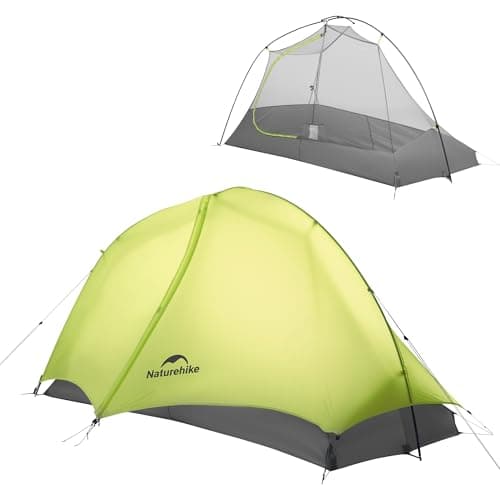
Last autumn I was deep in a planning spiral for a solo shakedown trip in the Colorado high country, staring at my gear spreadsheet and trying to shave grams anywhere I could. My current solo shelter was sitting at just over 1,200g and I'd been eyeing lighter options that wouldn't send my bank account into a spiral. That's the exact headspace I was in when I started looking hard at the Naturehike Star Trail. At 2.3 lbs (roughly 1,043g), it's not the lightest solo tent on the market, I want to be upfront about that, but for a freestanding, double-wall shelter at this price point, the number is real enough to take seriously.
We may earn from qualifying purchases.
First impressions
Out of the stuff sack, the tent packs down to 17.7" x 5.1". That's a manageable cylinder that fits vertically in most ultralight packs without hogging your main compartment. The 10D nylon outer caught my attention immediately. Ten denier is thin, thin enough that you handle it carefully, the way you'd handle a good rain jacket shell. It's not bombproof, and I'll say more about that in a moment.
Setup really is fast. I've pitched a lot of tents in the rain, in the dark, with frozen fingers, and simple pole geometry matters more than any instructional video. The Star Trail's minimal pole structure snaps together logically, and I had it standing in under four minutes on a lumpy test site. Three minutes on flat ground is believable. The clip-style inner attachment means you can pitch the fly first if weather moves in, which I always appreciate in the mountains where afternoon storms don't wait for you to finish reading directions.
Interior height is genuinely good for a solo shelter. I can sit up cross-legged and eat dinner without my head pressing the inner mesh. That's not a given in this weight class, and it's a legitimate selling point.
Where it shines
Three-season use in moderate conditions is where the Star Trail earns its keep. The full-coverage mesh inner is a real asset in summer: airflow is excellent, and on warm nights at altitude, that matters more than most people expect. The PU3000mm floor rating is solid, standing water under a tent isn't going to seep through, and I've seen far worse ratings on tents that cost three times as much.
The PU1500mm+ canopy rating is where I'd pump the brakes slightly. That number is fine for light-to-moderate rain and dew, but if you're planning sustained downpour conditions, say, the Cascades in September, or the White Mountains any weekend ever, you'd want to either seam-seal carefully after purchase or manage your expectations. I don't think that's a dealbreaker at this price, but it's honest information you deserve before you commit.
Here's my specific criticism: the 10D nylon outer is genuinely delicate. Pitching on rocky sites, dragging the fly across a granite slab, catching it on a branch, these are normal things that happen on real trails, and thin fabric punishes you for them faster than heavier competitors. I'd carry a small patch kit and be mindful of site selection in a way you wouldn't have to be with a burlier shelter. That's the real tradeoff for the weight savings, and I wish the marketing copy were more candid about it.
That said, the compact packed size and genuinely quick pitch make this a tent I'd reach for on routes where miles and weight matter most. Check current availability and options here.
Who this is for
If you're a three-season solo hiker counting grams and working with a real budget, this tent belongs on your shortlist. It's not my pick for above-treeline winter camping or exposed ridgeline sites where wind loading gets serious. But for trail hiking, forest camping, bikepacking, or a summer thru-hike attempt where weight is the first question you ask every morning, I'd genuinely consider it.
Beginners who want a solo tent that doesn't require a YouTube tutorial to pitch will find the setup confidence-building rather than frustrating. Experienced hikers who've already maxed out their shelter budget and need something lightweight for shoulder-season trips will appreciate the specs. What I wouldn't do is hand it to someone heading into sustained alpine weather without a clear conversation about the canopy rating first.
The mesh-heavy inner design also means this tent is optimized for warmth-in-bug-season rather than warmth-in-cold. In my experience, when temps drop below about 40°F consistently, the mesh construction means your sleeping bag is doing more work than the tent walls. That's fine if you plan accordingly; it's a surprise if you don't.
Honestly, for the price and weight combination, I think this is a genuinely competitive option in a crowded market. I've handled shelters at twice the price that didn't impress me more. See it on Amazon and judge the specs for yourself.
If you're a solo hiker who's been putting off the switch to a lighter shelter, the Naturehike Star Trail is a reasonable, low-drama place to start. Handle it carefully, seam-seal the canopy if you're headed somewhere wet, and pick campsites that aren't going to chew through thin nylon. Do that, and I think you'll get real miles out of it., Lena