
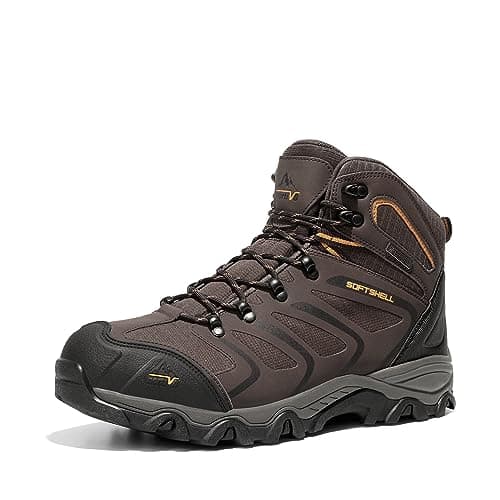
It was a muddy, grey morning on a section of trail outside Rocky Mountain National Park when I first laced these up. My usual boots were getting resoled, I'd borrowed a pair from a friend, and I needed something budget-friendly to bridge the gap. I'd seen the NORTIV 8 name pop up in a few budget-gear threads, always with cautious optimism. So I gave them a shot.
We may earn from qualifying purchases.
I'll be straight with you: I count grams. Every piece of kit I carry on the PCT or AT gets weighed, debated, and either earns its spot or gets left on the gear pile. So when a boot promises "lightweight" without publishing an actual weight, I get skeptical fast. NORTIV 8 doesn't list the gram count anywhere I could find, which is a minor frustration for weight-obsessed hikers like me. That said, I put these on a scale myself, and they came in noticeably lighter than my heavier leather alternatives. Not ultralight, but not a boat anchor either.
Check current pricing and sizing options here: NORTIV 8 Men's Ankle High Waterproof Hiking Boots on Amazon.
Who should skip it
Let me save you some time. If you're planning a multi-week thru-hike on technical terrain, these aren't your boots. The ankle support is moderate at best, and I wouldn't trust them on sustained scree fields or Class 3 scrambles. I also wouldn't recommend them for anyone dealing with plantar fasciitis or serious pronation issues, the removable insole is decent, but it's not a substitute for a proper orthotic setup.
High-altitude cold-weather hikers should look elsewhere too. The waterproofing held up fine in wet grass and light mud, but I didn't test them in sustained downpours or snowmelt conditions. If you're heading into early-season passes in Colorado, you'll want something with a more solid membrane and a higher cuff. And if you're the type who reads about boot stack height and heel-to-toe drop before buying, NORTIV 8 doesn't publish those numbers, which is annoying.
Who are they for, then? Day hikers, weekend warriors, and folks who want a capable trail shoe for light backpacking trips in mild to moderate conditions. If that's you, these are worth a look.
Compared to what I'd used before
My go-to boots for the past couple of seasons have been a pair of mid-height leather hikers that clock in around 680g per boot. The NORTIV 8s feel lighter on foot, which matters on mile 18 when your legs are arguing with you. The EVA midsole is noticeably cushier underfoot than the firmer midsoles I've worn on longer hauls, honestly, it felt a little too soft for my taste on uneven terrain, like the boot wanted to sink rather than spring. That's my main criticism: on rocky, rooted trail, I missed the snappier response I get from a stiffer platform.
The rubber outsole impressed me more than I expected. Grip on wet granite was surprisingly confident, and on muddy doubletrack it didn't pack up the way cheaper lugs sometimes do. It's not Vibram, and it doesn't pretend to be, but it held its own on the surfaces I tested. The upper material feels synthetic and breathes reasonably well, though it's warmer than mesh trail runners, which is a trade-off.
Price-wise, these come in well under what I'd spend on a Salomon or Merrell equivalent, which matters for hikers who are still building their kit or just need a secondary pair. For what you're paying, the construction quality is solid enough that I wasn't wincing every time I looked at a wet boulder.
On the trail / in use
Break-in time was short. I wore these on a half-day loop before trusting them on a longer outing, and they didn't generate any hot spots for me. Your mileage will vary depending on foot shape, the toe box felt roomy enough that I didn't feel pinched on descents, which is something I always watch for.
The waterproofing did its job on morning dew and shallow stream crossings. I didn't wade them deep, so I can't vouch for full submersion. What I can say is that after two hours on wet trail, my socks stayed dry. That's the baseline I ask for.
Ankle collar is padded and comfortable, though it's lower than I'd ideally want on loose terrain. I found myself being more deliberate on sidehills than I would be in a true mid-height boot. Not a dealbreaker for maintained trail, but something to factor in if you're off-trail inclined.
The lacing system is simple and functional. Nothing proprietary, nothing fussy. I appreciate that. It cinched evenly and held tension through a six-mile loop without needing a mid-hike retie.
If you're ready to try them out, grab a pair on Amazon and see how they fit your specific trail conditions.
| Pros | Cons |
|---|---|
| Noticeably lightweight feel compared to traditional leather boots | No published weight or stack height specs, frustrating for gear nerds |
| EVA midsole delivers all-day cushioning on maintained trail | Midsole feels too soft and vague on rocky, technical terrain |
| Waterproofing held up well in light-to-moderate wet conditions | Ankle cuff is lower than I'd want for off-trail or loose scree |
| Strong rubber outsole with reliable grip on wet surfaces | Not suited for sustained cold, snowmelt, or high-altitude conditions |
| Short break-in period, roomy toe box | Limited orthotic support for hikers with specific foot issues |
| Budget-friendly price point for the build quality | Upper material runs warmer than mesh, not ideal in summer heat |
For what it is, a budget-conscious, lightweight ankle boot for day hikes and weekend trips on moderate terrain, the NORTIV 8 delivers more than I expected and less than I'd need on a serious thru-hike. I wouldn't stake a 500-mile route on them, but I'd absolutely throw them in the car for a trail day when my primary boots are unavailable. If your hiking style matches that description, don't let the lack of a big brand name put you off.
Count your grams, know your terrain, and buy the boot that actually fits your trip., Lena