
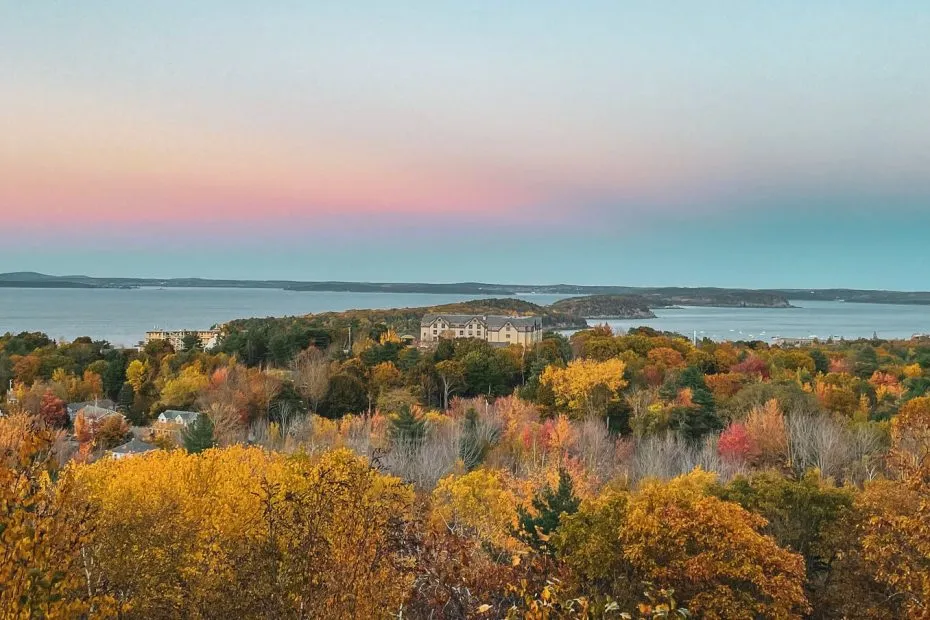
Embarking on a fall road trip from New York City to Acadia National Park is truly one of the most spectacular autumn experiences in North America. I've made this journey twice now, and each time I'm mesmerized by the transformation of the landscape into a canvas of reds, oranges, and golds. This 500-mile adventure offers not just the destination's beauty, but an incredible journey through New England's charming towns, coastal scenery, and mountainous terrain. In this guide, I'll share my tried-and-tested route, best viewing spots, and insider tips to make your NYC to Acadia National Park fall foliage road trip unforgettable.
Planning Your NYC to Acadia Fall Foliage Road Trip
When to Go: Timing Is Everything
The single most important factor for a successful NYC to Acadia National Park fall foliage adventure is timing. After several trips and countless hours of research, I can confidently say that mid-October typically offers the best fall colors in Acadia National Park. According to the National Park Service, peak foliage generally arrives around the second week of October, though this can vary by a week in either direction depending on that year's weather patterns.
The coastal location of Acadia means it experiences peak colors slightly later than inland areas of New England. When planning your trip, I recommend monitoring Maine's official fall foliage reports, which begin in September and are updated weekly. This resource has been invaluable for my trips.
For the ultimate experience, plan a 5-7 day trip that allows you to:
- Enjoy a scenic drive through New England with strategic stops
- Spend 2-3 full days exploring Acadia National Park
- Build in flexibility for weather-dependent activities
- Experience sunrise at Cadillac Mountain (requires advance reservation)
Essential Gear and Packing Tips
New England weather in October is notoriously unpredictable. During my first NYC to Acadia National Park fall foliage trip, we experienced everything from 70°F sunshine to near-freezing morning temperatures with fog. Here's my essential packing list:
Clothing
- Layered clothing (crucial for temperature changes)
- Waterproof hiking boots with good traction
- Waterproof jacket and pants
- Warm hat, gloves, and scarf
- Quick-dry hiking socks
- Comfortable base layers
Photography Gear
- Camera with fully charged batteries
- Tripod for sunrise/sunset shots
- Polarizing filter (reduces glare on water/foliage)
- Extra memory cards
- Lens cleaning kit (for foggy mornings)
Hiking Essentials
- Day pack with rain cover
- Hydration system or water bottles
- Trail snacks and emergency food
- First aid kit
- Headlamp or flashlight (for sunrise hikes)
- Trail maps (cell service can be spotty)
Road Trip Essentials
- Emergency car kit
- Cooler for food and drinks
- Offline maps (Google Maps, AllTrails Pro)
- Phone charger and power bank
- Cash for small towns and tolls
- Thermos for hot drinks
Accommodations: Book Early!
The biggest lesson I learned from my first NYC to Acadia National Park fall foliage trip: accommodations book up extremely quickly during peak season. I recommend making reservations at least 6-8 months in advance, especially for:
- Campgrounds within Acadia National Park
- Hotels and B&Bs in Bar Harbor
- Popular inns and hotels in towns along your route
On my first trip, we struggled to find accommodations in Bar Harbor and ended up staying 40 minutes away from the park. While we still had a fantastic time, the early mornings were tougher with the added commute. For my second trip, I booked well in advance and secured a charming B&B within walking distance of downtown Bar Harbor.
Check My Favorite New England Travel Guide on AmazonBest Routes and Scenic Drives
The drive from NYC to Acadia National Park spans approximately 500 miles and takes about 9-10 hours of pure driving time. However, the journey through New England's fall foliage is as important as the destination itself. Based on my experiences, I recommend these two primary route options:
Route 1: The Coastal Classic (My Preferred Route)
This route hugs the New England coastline and offers a perfect blend of charming seaside towns, historic sites, and beautiful fall colors. It's slightly longer but provides a more diverse experience.
Route Overview:
- NYC to Mystic, CT (I-95): 130 miles, 2.5 hours
- Mystic to Boston, MA (I-95): 100 miles, 2 hours
- Boston to Portsmouth, NH (I-95): 60 miles, 1 hour
- Portsmouth to Portland, ME (I-95): 55 miles, 1 hour
- Portland to Acadia National Park (Route 1): 175 miles, 3.5 hours
Total distance: Approximately 520 miles
Recommended time: 3-4 days with stops
Route 2: The Inland Adventure
This route takes you through more inland areas of New England, showcasing more mountains and rural landscapes with potentially earlier and more intense fall colors.
Route Overview:
- NYC to The Berkshires, MA (I-84, I-90): 150 miles, 3 hours
- The Berkshires to White Mountains, NH (I-91, I-93): 180 miles, 3.5 hours
- White Mountains to Augusta, ME (Route 302, I-95): 120 miles, 2.5 hours
- Augusta to Acadia National Park (Route 3): 80 miles, 1.5 hours
Total distance: Approximately 530 miles
Recommended time: 3-4 days with stops
Special Fall Foliage Detours Worth Taking
During my NYC to Acadia National Park fall foliage adventures, I discovered several detours that were absolutely worth the extra time:
For Coastal Route:
- Kancamagus Highway, NH: A 34-mile stretch of Route 112 through White Mountain National Forest. This was a highlight of my trip with stunning mountain views and vibrant foliage.
- Camden Hills State Park, ME: Drive up Mount Battie for panoramic views of Camden Harbor with its fall colors.
- Route 1A from Belfast to Ellsworth: A coastal alternative to I-95 with historic towns and harbor views framed by fall foliage.
For Inland Route:
- Mohawk Trail (Route 2) in Massachusetts: One of America's oldest scenic roads with excellent fall foliage views.
- Crawford Notch State Park, NH: Drive through this mountain pass for dramatic views and hiking opportunities.
- Grafton Notch Scenic Byway, ME: A less-traveled gem with waterfalls, gorges, and mountain views adorned with fall colors.
Driving Tips for Your Fall Road Trip
Fall driving in New England presents unique challenges. Here are my tips from experience:
- Leave NYC very early (4-5 AM) to avoid traffic around New York and Boston.
- Be prepared for sudden fog, especially along coastal areas and in the early morning.
- Watch for "leaf peeper" traffic that can suddenly slow or stop, especially at scenic overlooks.
- Keep your gas tank at least half full, as gas stations can be sparse in rural areas.
- Download offline maps, as cell service can be unreliable in mountainous and remote areas.
- Consider a physical road atlas as backup for navigation.

Stunning fall colors during my drive from New York to Acadia National Park
Having driven both routes, I personally prefer the Coastal Classic for a first-time NYC to Acadia National Park fall foliage road trip. It offers more services, accommodation options, and a greater variety of scenery. However, the Inland Adventure delivers more concentrated fall foliage and a deeper wilderness experience for those seeking it.
Check GPS Navigation Systems on AmazonMust-Stop Towns and Attractions Along the Way
The NYC to Acadia National Park fall foliage journey takes you through some of New England's most charming towns and attractions. Based on my road trips, here are the stops I consider essential for a truly memorable experience:
Connecticut Gems
Mystic, CT
This historic seaport town makes for the perfect first major stop on your journey, about 2.5 hours from NYC. During my trip, we spent a delightful half-day here exploring:
- Mystic Seaport Museum: America's largest maritime museum with historic vessels and a recreated 19th-century coastal village.
- Olde Mistick Village: A shopping area with unique boutiques perfect for picking up road trip snacks and New England souvenirs.
- B.F. Clyde's Cider Mill: America's oldest steam-powered cider mill (operating since 1881). Their hot apple cider and cider donuts are the perfect fall treat!
New Haven, CT
If you're taking the coastal route, New Haven makes for a quick but worthwhile stop:
- Yale University Campus: Take a brief walking tour of this historic Ivy League campus, which looks particularly beautiful surrounded by fall foliage.
- East Rock Park: A quick drive up to the summit offers panoramic views of the city and Long Island Sound, framed by fall colors.
- Frank Pepe Pizzeria Napoletana: If you're hungry, stop for what many consider America's best pizza at this New Haven institution.
Massachusetts Highlights
Boston, MA
While Boston deserves its own trip, it makes for an excellent overnight stop on your NYC to Acadia National Park fall foliage journey. During my trip, we spent an evening and morning here, focusing on:
- Freedom Trail: Walk a portion of this 2.5-mile path that passes 16 historical sites, particularly beautiful with fall colors in Boston Common.
- Boston Public Garden: The nation's first public botanical garden is stunning in autumn with its colorful trees reflected in the lagoon.
- Beacon Hill: This historic neighborhood with gas-lit streets and brick sidewalks is exceptionally charming in fall.
We stayed at a centrally located hotel, which allowed us to explore on foot and avoid the notorious Boston traffic and parking challenges.
Salem, MA
Just a 30-minute drive north of Boston, Salem is perfect for a fall visit, especially if you enjoy a touch of Halloween spirit with your fall foliage viewing:
- Salem Witch Museum: Learn about the infamous 1692 witch trials that defined the town's history.
- The House of the Seven Gables: Tour this 1668 colonial mansion that inspired Nathaniel Hawthorne's novel.
- Salem Common: This park offers beautiful fall foliage and is surrounded by historic architecture.
- Pickering Wharf: A waterfront dining and shopping area with views of fall colors across the harbor.
Note: If visiting in October, especially closer to Halloween, expect significant crowds in Salem.
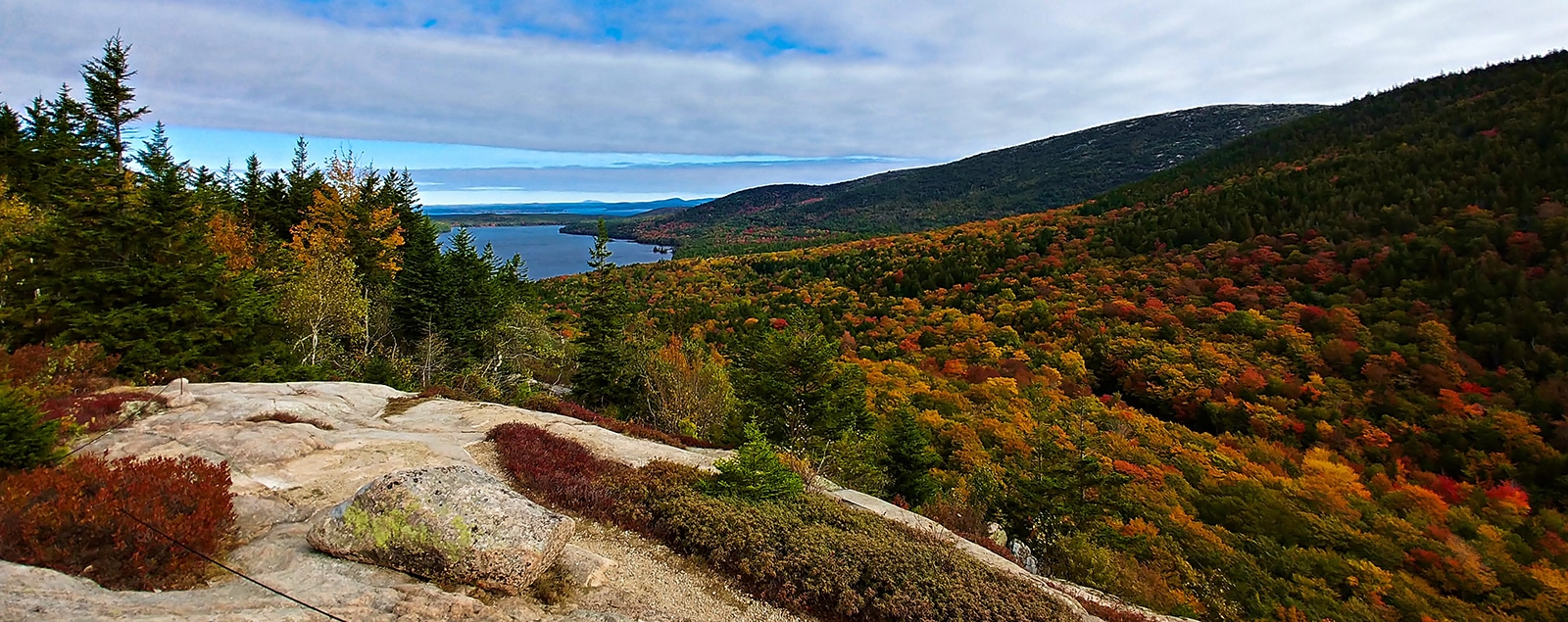
Beautiful fall foliage colors along the scenic New England route
Maine's Coastal Treasures
Portland, ME
Portland makes for an excellent final overnight stop before reaching Acadia, about 3 hours from Bar Harbor. The vibrant coastal city offers:
- Old Port District: Explore cobblestone streets lined with shops, galleries, and some of New England's best restaurants.
- Portland Head Light: Maine's oldest lighthouse (1791) in Fort Williams Park is surrounded by coastal fall foliage.
- Eastern Promenade: A 2.1-mile trail with spectacular views of Casco Bay and islands adorned in autumn colors.
- Allagash Brewing Company: After a day of driving, enjoy a tour and tasting at one of Maine's premier craft breweries.
During my trip, we spent one night in Portland, which gave us enough time to explore the Old Port and enjoy a seafood dinner before continuing to Acadia the next day.
Camden and Rockland, ME
These neighboring coastal towns, about 2 hours before Acadia, are worth a stop for their perfect blend of maritime heritage and fall colors:
- Camden Hills State Park: Drive or hike to the summit of Mount Battie for one of the best panoramic views of fall foliage meeting the ocean.
- Rockland Breakwater Lighthouse: Walk the nearly mile-long granite breakwater to this lighthouse with views of the harbor and mountains beyond.
- Camden Harbor Park: Enjoy lunch overlooking the harbor filled with sailing vessels against a backdrop of mountains in fall colors.
We spent about 3 hours exploring Camden and Rockland, which was just enough time for lunch, the Mount Battie drive, and a brief harbor walk.
Hidden Gems Off the Beaten Path
Some of my favorite discoveries on my NYC to Acadia National Park fall foliage trips were places I hadn't planned to visit but stumbled upon:
- Wiscasset, ME: Often called "the prettiest village in Maine," this town has beautifully preserved 18th and 19th-century homes. The view from the bridge with fall colors reflected in the Sheepscot River is worth the stop alone.
- Blue Hill, ME: Just southwest of Acadia, this artistic community offers stunning views of Blue Hill Bay with far fewer tourists than Bar Harbor.
- The Marshall Point Lighthouse in Port Clyde: This picturesque lighthouse (featured in the film Forrest Gump) is surrounded by coastal fall foliage.
- Damariscotta, ME: This charming riverside town is known for its annual Pumpkinfest in October, where giant pumpkins are transformed into boats and raced down the river.
When planning your stops, I recommend being flexible and allowing time for unexpected discoveries. Some of the most memorable moments from my NYC to Acadia National Park fall foliage trips came from spontaneous detours to places I spotted from the road.
Get Your National Parks Guide on AmazonExploring Acadia During Peak Fall Foliage
After driving nearly 500 miles from NYC, arriving in Acadia National Park during peak fall foliage feels like entering a painter's masterpiece. The park's unique geography—where mountains meet the Atlantic Ocean—creates one of the most spectacular autumn displays in North America. Here's my guide to making the most of your time in Acadia during fall:
When is Peak Fall Foliage in Acadia?
Based on my research and personal experiences visiting Acadia, peak fall foliage typically occurs around mid-October. According to the National Park Service, "The biggest question we hear in the fall is 'When is the best time to see fall colors?' The peak generally comes in mid-October."
However, several factors can influence the exact timing:
- The summer's rainfall and temperature patterns
- Early fall weather conditions
- Elevation differences (higher elevations change color earlier)
- Tree species (some change before others)
During my visits, I've found that the second week of October typically offers the best combination of vibrant colors and moderate crowds. The first week of October often shows early color changes, while the third week usually displays full peak colors but with a risk of leaf drop if there have been heavy winds or rain.
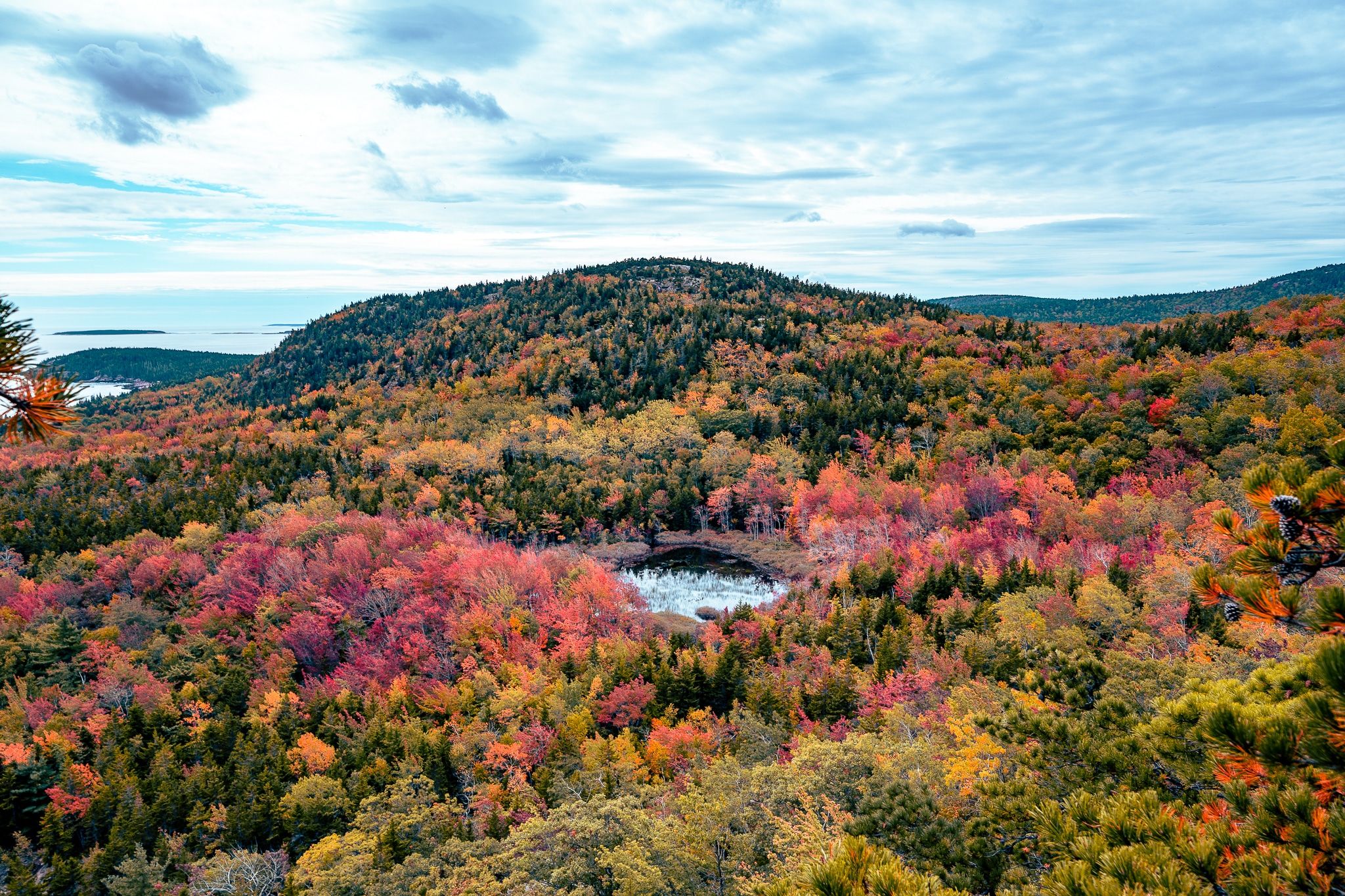
Peak fall colors at Jordan Pond in mid-October during my visit last year
Park Logistics During Fall Season
Visiting Acadia during fall requires some planning, as it coincides with one of the park's busiest periods. Here are the essential logistics to know:
- Park Entrance Fees: A 7-day vehicle pass costs $30 (as of 2023). I recommend purchasing online through Recreation.gov before your trip to avoid lines at entrance stations.
- Cadillac Summit Road Reservation: From late May to mid-October, you need a separate timed vehicle reservation to drive the Cadillac Summit Road, which provides access to one of the park's most spectacular foliage viewpoints. These reservations open 90 days in advance and sell out quickly, especially for sunrise times.
- Park Loop Road: This 27-mile scenic drive connects the park's major attractions and offers numerous pullouts with foliage views. It can get congested between 10 AM and 4 PM, so I recommend driving it early morning or late afternoon.
- Island Explorer Shuttle: This free shuttle service operates until Indigenous Peoples' Day (second Monday in October), making it an excellent option for the early fall season. It reduces parking headaches and connects Bar Harbor with major park destinations.
Top Fall Foliage Viewing Spots in Acadia
After exploring Acadia extensively during fall, these are my favorite locations for experiencing the park's autumn splendor:
Cadillac Mountain
As the highest point on the North Atlantic seaboard, Cadillac Mountain offers 360-degree views of fall colors contrasting with the blue ocean. I've visited at both sunrise and sunset, and each offers a different but equally spectacular experience:
- Sunrise: The first light of day illuminating the autumn landscape is breathtaking, but requires a vehicle reservation and very early rising.
- Sunset: The golden hour casts a warm glow over the fall foliage, and the mountain is often less crowded than at sunrise.
- Blue Hour Trail: This lesser-known section on the north side of Cadillac offers stunning views of Eagle Lake surrounded by fall colors.
Jordan Pond
This crystal-clear pond offers one of Acadia's most iconic views—the North and South Bubble mountains reflected in its waters, framed by fall foliage. For the best experience:
- Jordan Pond Path: The 3.3-mile loop around the pond is relatively flat and provides continuously changing perspectives of the colorful surroundings.
- Jordan Pond House: Stop for their famous popovers on the lawn with a view of the pond and fall colors (reservations recommended).
- Morning Light: Visit early for the best reflections and fewer crowds; the stillness of morning creates perfect mirror images on the pond's surface.
Ocean Path
This 4-mile (round trip) mostly flat trail runs parallel to Park Loop Road from Sand Beach to Otter Point, offering the unique experience of seeing fall foliage against the backdrop of the Atlantic Ocean:
- Thunder Hole: This natural inlet channels waves to create thunderous sounds and splashes, framed by colorful trees.
- Monument Cove: A small cove with a distinctive stone pillar and excellent foliage views.
- Otter Cliff: One of the highest coastal headlands north of Rio de Janeiro, with spectacular views of granite cliffs, crashing waves, and autumn colors.
Pro tip: This area is extremely popular. I recommend visiting very early morning or late afternoon to find parking and enjoy it with fewer crowds.
Schoodic Peninsula
Located on the mainland portion of Acadia, Schoodic Peninsula offers a quieter, more authentic Maine experience with equally impressive foliage:
- Schoodic Point: Watch powerful waves crash against pink granite shores with colorful forests as a backdrop.
- Schoodic Head: A moderate 2-mile (round trip) hike to views of Mount Desert Island across the water, surrounded by fall colors.
- Frazer Point: A picnic area with stunning views of Winter Harbor and surrounding fall foliage.
The Schoodic Peninsula receives about 10% of the visitors that the main park does, making it perfect for those seeking a more peaceful experience.
Photography Tips for Capturing Fall Foliage
Acadia in fall is a photographer's dream. Here are some tips I've learned from photographing fall foliage in the park:
- Golden Hours: The hour after sunrise and before sunset provides warm, directional light that makes fall colors pop.
- Polarizing Filter: Use this to reduce glare on water and wet leaves, enhancing color saturation.
- Reflections: Lakes and ponds act as mirrors for fall colors; Jordan Pond and Eagle Lake are excellent locations.
- Focal Length: Use a telephoto lens to compress scenes and emphasize layers of colorful mountains.
- Weather Watch: Slightly overcast days can produce more saturated colors than bright sunshine.
- Include Water: The contrast between blue water (ocean or lakes) and red/orange/yellow foliage creates striking images.
During my NYC to Acadia National Park fall foliage trip, I found that planning each day around lighting conditions made a huge difference in the quality of my experiences and photographs. Morning fog often creates mystical scenes that burn off by mid-morning, revealing vibrant colors.
Check New England Travel Guides on AmazonBest Hiking Trails for Fall Colors in Acadia
Hiking through Acadia during peak fall foliage offers an immersive experience unlike any other. The crisp autumn air, the crunch of leaves underfoot, and the kaleidoscope of colors surrounding you create memories that last a lifetime. After exploring numerous trails during my NYC to Acadia National Park fall foliage adventures, here are my recommendations for the best hikes categorized by difficulty:
Easy Trails with Spectacular Foliage
Jordan Pond Path
- Length: 3.3 miles (loop)
- Elevation Gain: Minimal, mostly flat
- Duration: 1.5-2 hours
- Fall Highlights: Reflections of colorful trees in the crystal-clear pond, views of the Bubbles mountains draped in autumn colors.
During my October visit, this trail provided constant postcard-worthy views as it circled the pond. The western side offers the classic view of the Bubbles reflected in Jordan Pond, while the eastern side provides more intimate forest scenery with maple trees in vibrant reds and yellows.
Insider Tip: The portion of the path with boardwalks through wetlands on the east side of the pond is particularly beautiful in fall, with rich red marsh grasses complementing the forest colors.
Jesup Path and Hemlock Road Loop
- Length: 1.5 miles (loop)
- Elevation Gain: Minimal
- Duration: 1 hour
- Fall Highlights: Beautiful boardwalk through a white birch forest and colorful marsh.
This lesser-known gem was one of my favorite discoveries. The trail begins near the Sieur de Monts Spring and features an elevated boardwalk through a birch forest where the golden leaves create a magical tunnel effect. The contrast of white birch trunks against yellow leaves and the red marsh vegetation makes this trail particularly photogenic.
Insider Tip: Early morning offers the best light and often a mystical fog that weaves through the birch trees, creating an ethereal atmosphere.
Moderate Hikes with Rewarding Views
Gorham Mountain Trail
- Length: 1.8 miles (round trip)
- Elevation Gain: 525 feet
- Duration: 1.5-2 hours
- Fall Highlights: Panoramic views of the coastline and surrounding mountains in full fall color.
This was perhaps the best "bang for your buck" hike I did in Acadia. The relatively short trail offers incredible rewards with 360-degree views from the summit. To the east, you see the Atlantic Ocean and Otter Cliff; to the west, the colorful forests extend toward the mountains of Mount Desert Island. The trail itself passes through sections of forest with vibrant maples and birches.
Insider Tip: Combine this with the Bowl Trail for a slightly longer hike that includes a hidden pond surrounded by fall colors.
South Bubble Mountain
- Length: 1.4 miles (round trip)
- Elevation Gain: 350 feet
- Duration: 1-1.5 hours
- Fall Highlights: Views of Jordan Pond from above, the famous Bubble Rock, and Eagle Lake surrounded by fall colors.
This hike offers some of the most iconic views in Acadia. From the summit, you look down upon Jordan Pond with mountains beyond, all adorned in fall colors. The trail itself climbs through a mixed forest that displays a full spectrum of autumn hues. Don't miss Bubble Rock, a glacial erratic perched precariously on the mountainside.
Insider Tip: Visit early morning when the sun illuminates the eastern side of Jordan Pond, creating a golden glow on the fall foliage.
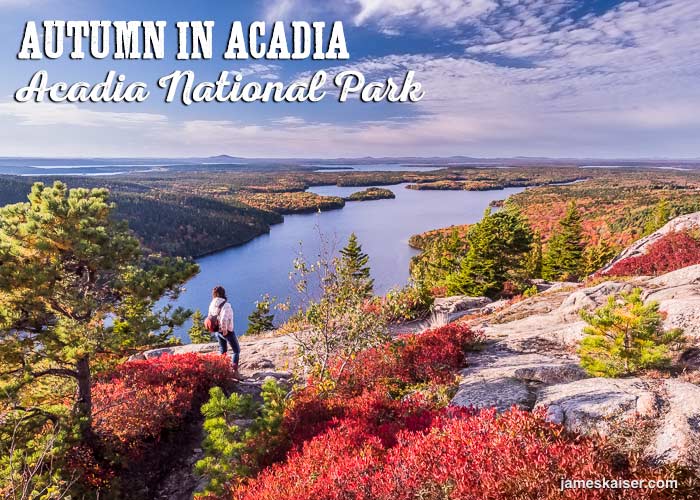
The vibrant autumn colors make Acadia's trails even more spectacular in fall
Challenging Trails for the Adventurous
Beehive Trail
- Length: 1.4 miles (loop with Bowl Trail)
- Elevation Gain: 450 feet
- Duration: 1.5-2 hours
- Fall Highlights: Thrilling exposed climb with spectacular views of Sand Beach and the colorful coastline.
This iconic Acadia trail is not for those with a fear of heights! It involves iron rungs, ladders, and narrow ledges as you climb the face of the Beehive. The reward is worth it: breathtaking views of the Atlantic Ocean and surrounding forests in their autumn glory. The trail is particularly beautiful in fall when the low-lying vegetation on the mountain turns vibrant red.
Insider Tip: Hike this trail early morning to avoid crowds and catch the sunrise lighting up the colorful landscape below. Descend via the Bowl Trail for a gentler route that passes a serene pond.
Cadillac North Ridge Trail
- Length: 4.4 miles (round trip)
- Elevation Gain: 1,118 feet
- Duration: 3-4 hours
- Fall Highlights: Continuous panoramic views, colorful forests, and the ultimate Cadillac summit experience.
For those who want to earn their Cadillac Mountain views, this trail provides a more rewarding alternative to driving. The path ascends gradually along open granite slopes that offer continuous views of Bar Harbor, Frenchman Bay, and the Porcupine Islands—all framed by fall colors. The northern exposure means you see different foliage patterns than from the south side of the mountain.
Insider Tip: This is an excellent sunrise hike if you don't have a vehicle reservation for the Cadillac Summit Road. Start very early with a headlamp to reach the summit for first light.
Hidden Gems: Less Crowded Fall Foliage Trails
During my NYC to Acadia National Park fall foliage trips, I discovered these lesser-known trails that offer spectacular autumn views with fewer people:
Wonderland Trail
- Length: 1.4 miles (round trip)
- Elevation Gain: Minimal
- Duration: 1 hour
- Fall Highlights: Coastal trail with unique combination of rocky shoreline and fall foliage.
Located on the "quiet side" of Mount Desert Island, this flat trail leads through a forest of spruce and birch trees to a rocky coastline. The contrast between the golden birches, evergreen spruce, and blue ocean creates a distinctive fall experience different from the more famous trails.
Flying Mountain Trail
- Length: 1.4 miles (loop)
- Elevation Gain: 275 feet
- Duration: 1 hour
- Fall Highlights: Views of Somes Sound—America's only fjord—surrounded by mountains of fall color.
Don't let the name intimidate you—this is one of the easiest "mountain" hikes in Acadia but offers disproportionately rewarding views. The summit provides a unique perspective of Somes Sound cutting through the colorful forests of Mount Desert Island. Being on the quieter side of the island means you'll likely have this view largely to yourself.
Fall Hiking Safety Tips
Hiking in Acadia during fall requires some special considerations:
- Shorter Daylight Hours: In October, sunset is much earlier than summer. Always carry a headlamp or flashlight.
- Slippery Conditions: Fallen leaves can hide trail markers and make granite surfaces extremely slippery, especially when wet.
- Variable Weather: Temperatures can fluctuate widely; dress in layers and be prepared for sudden changes.
- Trail Closures: Some trails (like the Precipice) may be closed for peregrine falcon nesting even into early fall. Check at visitor centers for current status.
- Water Crossings: Fall rain can make stream crossings more challenging than in summer.
On my fall trips to Acadia, I've experienced both 70°F sunny days and near-freezing mornings with frost. Being prepared for all conditions ensured I could fully enjoy the spectacular fall foliage regardless of weather changes.
Get Acadia Hiking Guidebook on AmazonMy Personal Experience: Lessons Learned and Tips
My journey from NYC to Acadia National Park fall foliage viewing has been filled with breathtaking vistas, unexpected discoveries, and yes—a few mistakes along the way. Here, I'll share my personal experiences and the wisdom I've gained from two autumn trips to help you create your own perfect adventure.
My First Trip: Lessons in Planning
My first NYC to Acadia National Park fall foliage adventure was in early October 2021. As a photographer eager to capture the spectacular autumn colors, I meticulously planned my route but made several rookie mistakes:
What Went Wrong:
- Accommodation Oversight: I waited until August to book accommodations near Acadia and found almost everything in Bar Harbor completely booked. We ended up staying 40 minutes away in Ellsworth, which meant very early mornings to reach sunrise locations.
- Timing Miscalculation: I arrived slightly too early (first week of October), and while there was some beautiful color, we missed the peak by about a week.
- Cadillac Mountain Surprise: I didn't know about the reservation system for Cadillac Summit Road and couldn't drive up for sunrise as planned.
- Underestimated Crowds: Even in early October, popular spots like Jordan Pond and Thunder Hole were extremely crowded between 10 AM and 4 PM.
- Weather Unpreparedness: I packed for mild autumn weather but encountered near-freezing temperatures on several mornings, limiting my time outdoors.
Despite these challenges, the trip was still magical. The partial fall colors were beautiful, and we adapted our plans to explore less crowded areas of the park. The lesson was clear: for a NYC to Acadia National Park fall foliage trip, preparation is everything.
My Second Trip: Getting It Right
Armed with experience, I planned a second trip for mid-October 2022, applying everything I'd learned:
What Went Right:
- Perfect Timing: By monitoring Maine's foliage reports and speaking with park rangers, I timed our visit to coincide with peak colors (October 12-15).
- Early Bookings: I reserved accommodations in February for our October trip, securing a charming B&B within walking distance of downtown Bar Harbor.
- Cadillac Sunrise Strategy: Unable to get a vehicle reservation, we hiked up the North Ridge Trail by headlamp for a spectacular sunrise experience.
- Off-Peak Exploration: We visited popular sites before 9 AM or after 4 PM, enjoying them with far fewer people.
- Weather Preparation: Proper layers, including thermal base layers and a quality down jacket, kept me comfortable during cold mornings and allowed for extended photography sessions.
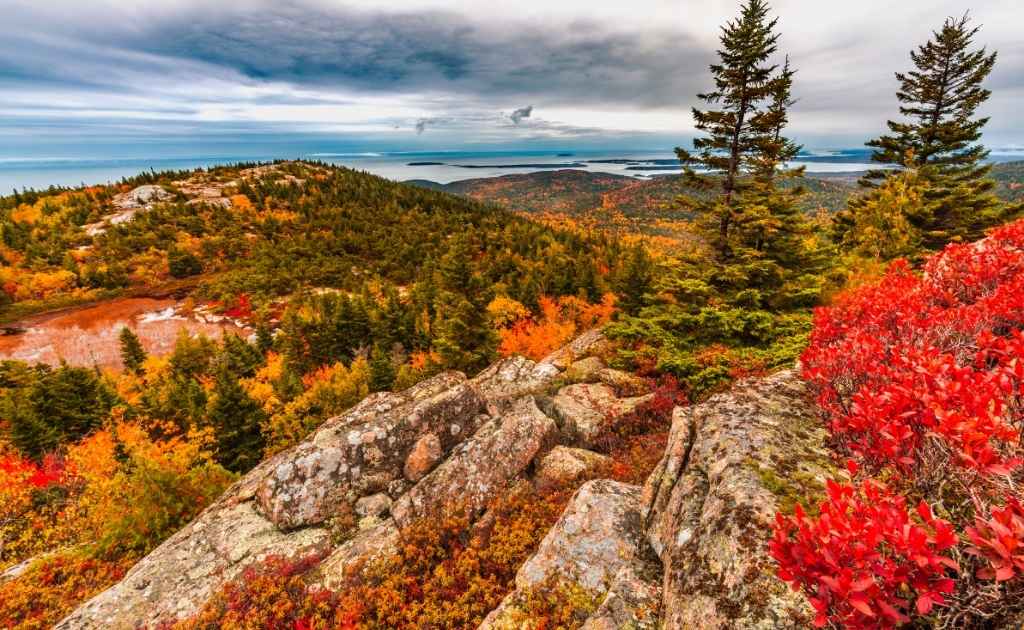
The magnificent view of fall colors I captured during my second trip to Acadia
Insider Tips From a Repeat Visitor
After two extensive NYC to Acadia National Park fall foliage trips, here are my best insider tips:
- The "Secret" Overlook: From the Park Loop Road, the pullout at Otter Cove provides a spectacular and often overlooked foliage view, especially at high tide when the colorful trees reflect in the cove.
- Best Photography Spot: The Boulder Beach area (unmarked but located between Thunder Hole and Otter Cliff) offers unique compositions of rounded rocks, crashing waves, and fall colors.
- Local Advice: Strike up conversations with park rangers. On my second trip, a ranger directed us to Eagle Lake when Jordan Pond was overcrowded, and we enjoyed equally stunning reflections with barely any other visitors.
- Sunrise Alternative: If you can't get a Cadillac reservation and don't want to hike in the dark, Otter Point offers an equally spectacular (and less crowded) sunrise experience with fall colors along the coastline.
- Rainy Day Gem: Don't despair if you encounter rain! The Asticou Azalea Garden in Northeast Harbor is spectacular in fall rain, when its Japanese-inspired design and fall colors have an ethereal quality.
What I Would Do Differently Next Time
Even after two trips, there's still room for improvement. For my next NYC to Acadia National Park fall foliage adventure, I would:
- Allocate more time to explore the Schoodic Peninsula section of the park, which I only briefly visited but found much less crowded with equally beautiful foliage.
- Take the mail boat to Isle au Haut, the remote section of Acadia that I've heard offers pristine fall experiences with very few visitors.
- Plan a longer stay (at least 5 days in Acadia itself) to allow for weather contingencies and more leisurely exploration.
- Bring a kayak or book a guided kayak tour to experience the fall colors from the water, especially around the Porcupine Islands.
- Visit the Carriage Roads during very early morning to experience the fog rising through the fall foliage—something a local photographer showed me pictures of that looked magical.
Visitor Reviews and Experiences
I've collected these authentic reviews from fellow travelers who made the NYC to Acadia National Park fall foliage trip:
Sarah L. (Amazon Review)
"The guidebook suggested mid-October for peak foliage, and it was spot on! We drove from NYC to Acadia with stops in Mystic and Portland, taking 3 days each way. The colors along the Kancamagus Highway in NH were the best I've ever seen. In Acadia, the Jordan Pond loop was magical with the reflections. Definitely make dinner reservations in Bar Harbor well in advance—we learned that the hard way!"
Mark T. (Reddit r/travel)
"Did the NYC to Acadia drive last October and it was worth every minute. Took the coastal route up and inland route back. Pro-tip: the free Island Explorer shuttle saved us from parking headaches in Acadia. The Beehive trail with fall colors was nerve-wracking but the most memorable hike of my life. Just watch for slippery leaves on those iron rungs!"
Emma K. (Quora)
"As someone who's done the NYC to Acadia fall trip three times now, my advice is to build in flexibility. We had our best experience when we booked accommodations with free cancellation in multiple towns and adjusted based on the foliage reports. Ended up spending extra days in Camden, ME when we saw the colors were peaking there earlier than Acadia. Don't miss the Schoodic Peninsula section of the park—it had the most vibrant reds we saw and barely any crowds."
Pros and Cons of a Fall Foliage Trip to Acadia
Pros:
- Unparalleled beauty with the unique combination of mountains, ocean, and fall colors
- Cooler temperatures make hiking more pleasant than summer months
- Fewer insects compared to summer (no mosquitoes during my October visits)
- Slightly reduced crowds compared to peak summer season
- Shoulder season rates at many accommodations (except during Columbus Day/Indigenous Peoples' Day weekend)
- The crisp air creates spectacular clarity for long-distance views
Cons:
- Weather unpredictability can affect foliage viewing and outdoor activities
- Shorter daylight hours limit the amount of exploring possible each day
- Many restaurants and businesses begin reducing hours or closing after Indigenous Peoples' Day
- The Island Explorer shuttle service ends in mid-October
- Some water activities may not be available or comfortable due to colder temperatures
- Peak foliage weekends can still be very crowded, especially at popular viewpoints
Conclusion
Embarking on a NYC to Acadia National Park fall foliage road trip is more than just a vacation—it's a journey through America's most spectacular autumn landscape. From the vibrant urban energy of New York City to the rugged coastal wilderness of Maine, this route offers an unparalleled diversity of experiences united by the common thread of fall's magnificent transformation.
The key to a successful trip lies in careful planning, particularly around timing and accommodations. Aim for mid-October for peak colors, book your stays well in advance, and build flexibility into your itinerary to accommodate weather changes and unexpected discoveries. Consider taking 7-10 days to fully enjoy the journey, allowing time to explore charming towns along the way rather than rushing straight to Acadia.
Whether you're hiking the granite peaks of Acadia, sampling lobster rolls in coastal villages, photographing reflections in Jordan Pond, or simply driving through tunnels of golden maples, the memories you'll create will last long after the leaves have fallen. The unique combination of mountains meeting ocean, all painted in autumn's palette, creates a sensory experience unlike any other in North America.
As I reflect on my own journeys from NYC to Acadia National Park fall foliage viewing, I'm reminded of a moment during my second trip: standing atop Cadillac Mountain at sunrise, watching the first light of day illuminate the islands of Frenchman Bay, each surrounded by forests of crimson, orange, and gold. In that moment, the long drive, the careful planning, and even the chilly pre-dawn hike all faded into insignificance. Some experiences are worth every effort, and this is undoubtedly one of them.
I hope this guide helps you create your own perfect autumn adventure. The road from NYC to Acadia National Park is calling, and fall's brilliant display awaits. Happy travels and spectacular fall foliage viewing!
For more resources on planning your perfect NYC to Acadia National Park fall foliage trip, check out our related guides:
- Complete NYC to Acadia Road Trip Itinerary
- How Long is the Drive to Acadia from NYC?
- NYC to Acadia National Park Scenic Drive
- Where to Stop Between NYC and Acadia
- NYC to Acadia by Bus or Train
- NYC to Acadia Camping Spots
- NYC to Acadia National Park Fall Foliage
- NYC to Acadia Travel Tips
- NYC to Acadia with Kids
- Cheapest Way to Get to Acadia from NYC
- NYC to Acadia Weekend Trip Guide
Frequently Asked Questions
When is the best time to see fall foliage in Acadia National Park?
The best time to see fall foliage in Acadia National Park is typically mid-October, around the second week of the month. According to the National Park Service, this is when colors generally reach their peak. However, timing can vary by a week or so depending on that year's weather conditions. The coastal location of Acadia means it often peaks slightly later than inland areas of New England. For the most accurate timing, monitor Maine's official fall foliage reports which begin in September and are updated weekly.
How long is the drive from NYC to Acadia National Park?
The direct drive from New York City to Acadia National Park covers approximately 500 miles and takes about 9-10 hours of pure driving time without stops. However, most travelers make this a multi-day journey with overnight stops to enjoy the scenery along the way and break up the long drive. Popular stopping points include Mystic (CT), Boston (MA), Portsmouth (NH), and Portland (ME). I recommend allocating at least 2-3 days for the drive each way to fully enjoy the journey, especially during fall foliage season when the route itself is a significant part of the experience.
Do I need reservations for Acadia National Park in October?
While general park admission doesn't require advance reservations in October, you do need a timed vehicle reservation to drive the Cadillac Summit Road during daylight hours from late May through mid-October. These reservations open 90 days in advance through Recreation.gov and are especially competitive for sunrise times. Reservations sell out quickly, so book as early as possible. If you can't secure a vehicle reservation, you can still hike to the summit via several trails or visit other spectacular viewpoints in the park that don't require special reservations.
Where should I stay when visiting Acadia for fall foliage?
Bar Harbor is the most popular and convenient place to stay when visiting Acadia, offering numerous hotels, B&Bs, and restaurants within walking distance. However, accommodations book up months in advance for fall foliage season, especially in Bar Harbor. Alternative options include Southwest Harbor and Northeast Harbor on Mount Desert Island, which offer a quieter experience with equally good access to the park. Ellsworth, about 20-30 minutes from the park entrance, provides more affordable options and better last-minute availability. For budget travelers, campgrounds inside and outside the park are excellent options, though they also require advance reservations during peak foliage season.
What are the best trails for seeing fall foliage in Acadia?
The best trails for fall foliage in Acadia offer varied perspectives of the colorful landscape. Jordan Pond Path provides stunning reflections of mountains and colorful trees in crystal-clear water. The Bubble Rock Trail offers elevated views of Jordan Pond surrounded by fall colors. Cadillac Mountain's North Ridge Trail gives panoramic vistas of the entire region's foliage. For a unique perspective of fall colors against the ocean, Ocean Path from Sand Beach to Otter Point is unbeatable. The less-visited Jesup Path features a boardwalk through golden birch forests that's particularly beautiful in fall. For those seeking easy access, the Park Loop Road has numerous pullouts with spectacular foliage views.
How crowded is Acadia during fall foliage season?
Acadia is quite busy during fall foliage season, particularly on weekends and around the Indigenous Peoples' Day/Columbus Day holiday weekend (which often coincides with peak foliage). Popular viewpoints like Cadillac Mountain, Jordan Pond, and Thunder Hole can be extremely crowded between 10 AM and 4 PM. However, the crowds are generally manageable with proper planning. Visiting popular spots very early morning (before 8 AM) or late afternoon (after 4 PM) provides a much more peaceful experience. Weekdays are significantly less crowded than weekends. Exploring the "quiet side" of Mount Desert Island (western side) or the Schoodic Peninsula section of the park offers beautiful fall colors with far fewer visitors.