

Weather & Fall Foliage Conditions in October
October Weather Patterns
When planning your visit to Acadia National Park in October, understanding the weather patterns is crucial. During my multiple October trips to Acadia, I've experienced firsthand how variable the conditions can be. Typically, daytime temperatures range from the mid-40s to mid-60s°F (7-18°C), creating perfect conditions for hiking and outdoor activities. Mornings and evenings are notably cooler, often dipping into the 30s°F, which makes layering essential.
October is considered one of the rainier months in Acadia, with an average of 8-10 rainy days. During my last visit, I encountered several foggy mornings that eventually cleared into beautiful sunny afternoons. This moisture actually enhances the fall colors, making them more vibrant after a light rain. However, this also means visitors should prepare for potentially wet conditions on trails.
What many first-time visitors don't realize about visiting Acadia in October is how quickly weather can change, especially on higher elevations like Cadillac Mountain. I've started hikes in sunshine only to encounter mist or light rain an hour later. The coastal location of the park means that ocean-influenced weather patterns can bring sudden changes. Always check the weather forecast each morning before heading out, as conditions from the previous day might completely change.
Peak Fall Foliage Timing
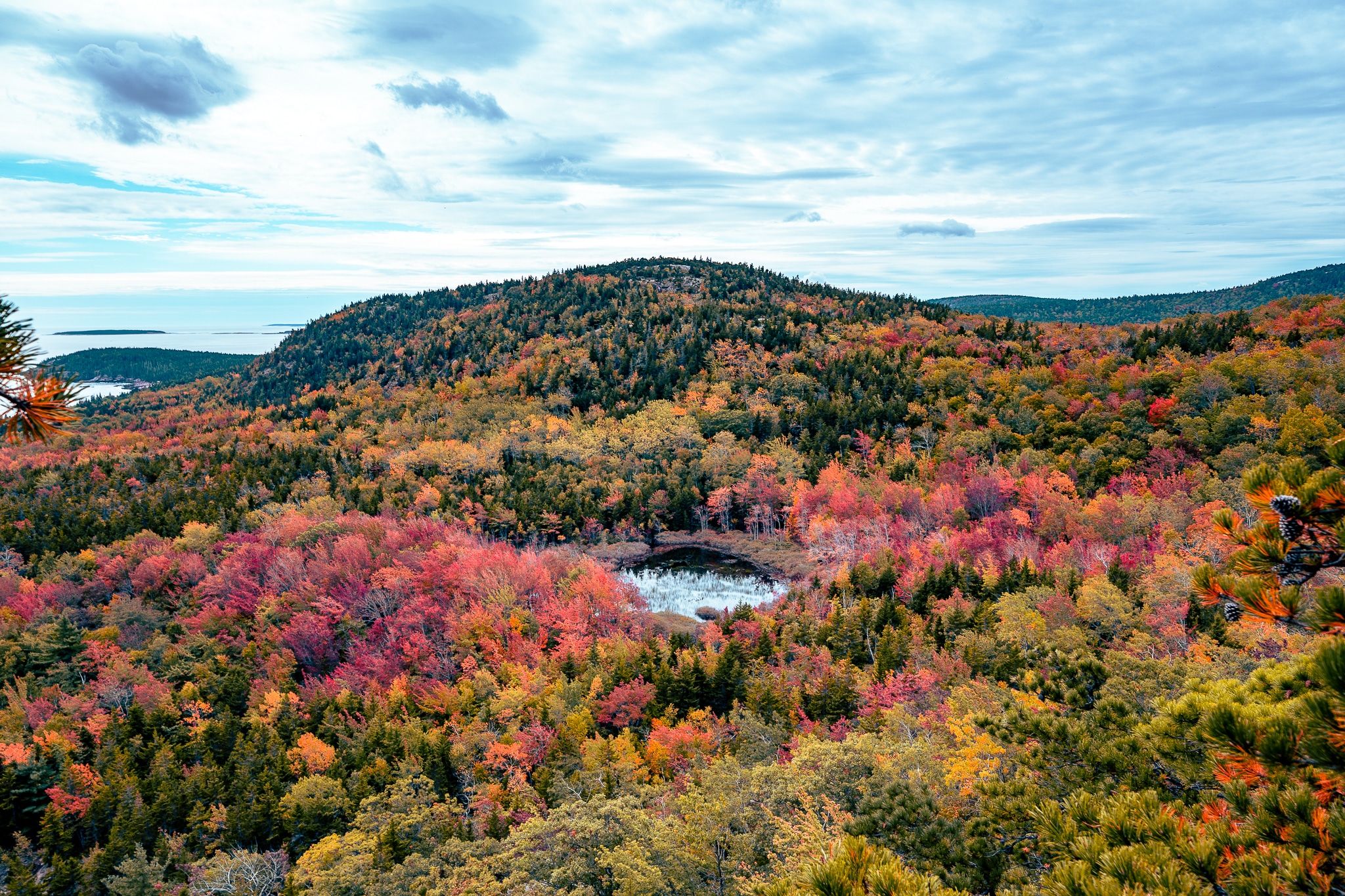
The spectacular display of fall colors is one of the main reasons to consider visiting Acadia in October. Based on historical data and my own observations, peak foliage in Acadia National Park typically occurs between the second and third weeks of October. However, this can shift by a week in either direction depending on that year's specific weather patterns.
In 2022 and 2023, peak colors arrived around October 15-20, creating a breathtaking display of vibrant reds, oranges, and yellows against the backdrop of Acadia's granite mountains and blue ocean waters. The park's diverse tree species contribute to a varied and rich color palette – the maples display brilliant reds, birches and aspens turn golden yellow, and oaks transition to deep russet tones.
If you're planning your trip with fall foliage as the priority, I recommend monitoring the Maine Fall Foliage Report in the weeks leading up to your visit. The eastern side of Mount Desert Island tends to display colors earlier than the western side, so plan your hiking itinerary accordingly if you're visiting during the transition period.
Crowd Expectations
One common misconception is that visiting Acadia in October means escaping the crowds. While it's true that visitation decreases after Labor Day, October brings a second wave of visitors specifically coming for the fall colors. Weekends during peak foliage can be nearly as busy as summer weekends, especially around the Columbus Day/Indigenous Peoples' Day holiday weekend.
Based on my experience, the first week of October typically has moderate crowds, with a significant increase during the middle two weeks as foliage reaches its peak. By the last week of October, crowds thin considerably as colors fade and temperatures drop. Weekdays are noticeably less crowded than weekends throughout the month.
Another factor influencing October crowds is cruise ships. Bar Harbor is a popular cruise destination, and numerous ships dock in October. On days when multiple cruise ships arrive, popular spots like Cadillac Mountain, Jordan Pond, and Thunder Hole can become quite congested from late morning to mid-afternoon. If you're looking to avoid these larger groups, plan to visit the most popular areas early in the morning or check the Bar Harbor cruise ship schedule to plan around days with fewer or no ships.
Pro Tip: October Weather Preparation
I always check the summit forecast for Cadillac Mountain separately from the general Bar Harbor forecast. The mountain can be 10-15°F colder and much windier than lower elevations. If you're planning sunrise at Cadillac Mountain in October, prepare for temperatures that might dip close to freezing with significant wind chill.
Best Hiking Trails for Fall Colors
Acadia's network of hiking trails provides stunning vistas year-round, but they take on a magical quality when draped in autumn colors. After exploring numerous trails during my October visits, I've compiled a list of the absolute best hikes for experiencing fall foliage in Acadia National Park. These recommendations balance scenic beauty, foliage visibility, and different difficulty levels.
Iconic Fall Hikes with Spectacular Views
The Hiking trails in Acadia in October transform into corridors of color, and certain paths stand out as absolute must-do experiences:
Jordan Pond Path: This relatively flat 3.3-mile loop around Jordan Pond offers consistent stunning views of the Bubble Mountains framed by vibrant fall foliage. The reflections of colorful trees on the pond's surface create perfect photo opportunities. I recommend hiking this trail in mid-morning when the light hits the surrounding hills beautifully. The proximity to Jordan Pond House also means you can reward yourself with their famous popovers after your walk.
Beehive Trail: For those seeking a more adventurous experience, the Beehive Trail delivers incredible autumn vistas as a reward for its challenging iron-rung sections. This 1.5-mile loop includes steep climbs with exposed sections, but the panoramic views of fall colors stretching toward the ocean make it worthwhile. The vibrant foliage contrasts dramatically with the blue of the Atlantic and the granite peaks. I suggest tackling this trail early in the morning to avoid crowds and capture the best light on the fall colors.
Precipice Trail: Often closed during summer for peregrine falcon nesting, the Precipice Trail typically reopens by October, making it a special fall opportunity. This challenging 2.1-mile trail features iron rungs, ladders, and narrow ledges, culminating in breathtaking views of the fall landscape. The eastern exposure offers excellent morning light for photography. Note that this trail isn't suitable for those with a fear of heights or children.
Less Crowded Alternatives for Autumn Serenity
While the iconic trails offer spectacular views, they can get crowded during peak foliage. During my visits to Acadia in October, I've discovered several less-frequented trails that offer equally stunning autumn experiences with more solitude:
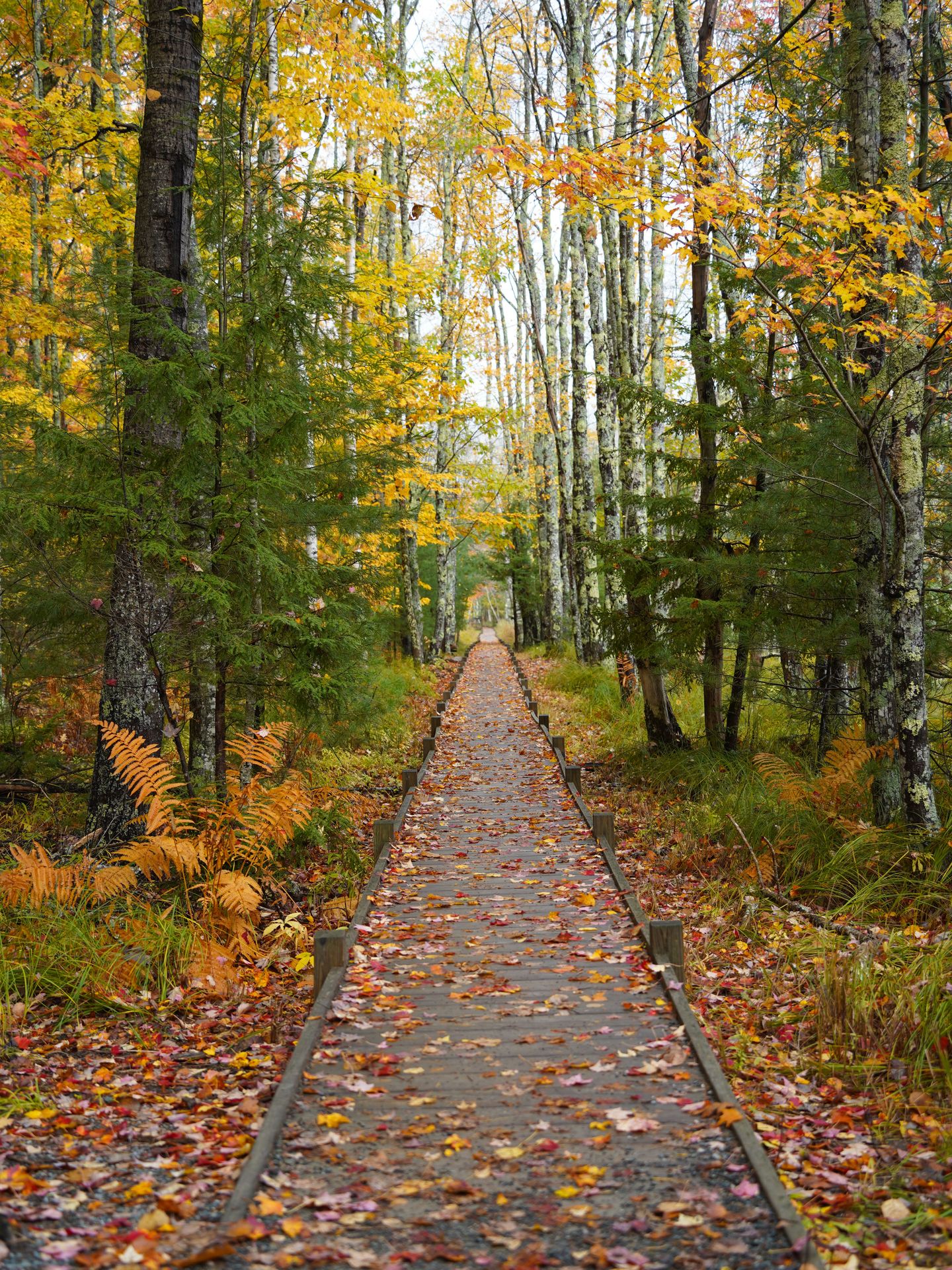
Jesup Path: This lesser-known gem features a beautiful boardwalk through a birch forest that turns golden in October. The white birch trunks create a stunning contrast with the yellow leaves and rich forest floor. Located near the Wild Gardens of Acadia, this easy walk is perfect for all ability levels and is particularly magical in early morning fog.
Flying Mountain Trail: Located on the quieter "quiet side" of Mount Desert Island, this short but rewarding 1.5-mile loop offers panoramic views of Somes Sound—the only true fjord on the East Coast—surrounded by autumn colors. The western side of the island typically has fewer visitors and provides a more peaceful hiking experience.
Wonderland Trail: For something completely different, this flat 1.4-mile trail leads through forest to a rocky coastline. While not known for mountaintop views, the contrast of fall colors against the ocean backdrop provides unique photographic opportunities that most visitors miss. The tide pools at the trail's end are fascinating to explore during low tide.
When visiting Acadia in October, I've found that timing is everything for the less crowded trails. Early mornings (before 9 AM) or later afternoons (after 3 PM) typically offer the most solitude, even during peak foliage weekends. Additionally, any day with light rain typically sees significantly reduced crowds but can offer atmospheric fog and mist that enhance the autumn experience.
Trail Safety Tips for Autumn Hiking
Autumn hiking in Acadia comes with specific considerations that differ from summer visits. Through trial and error during my October adventures, I've developed these essential safety practices:
Be prepared for shorter days: In October, sunset occurs much earlier than during summer months. By late October, the sun sets around 5:30 PM. Always check sunset times before starting afternoon hikes and carry a headlamp or flashlight just in case. I learned this lesson the hard way when I underestimated how quickly darkness falls and had to navigate the final mile of a trail using my phone flashlight.
Watch for slippery conditions: Fallen leaves can hide trail markers and create slippery surfaces, especially when wet. Acadia's granite surfaces become particularly slick after rain. Trekking poles and boots with good grip are invaluable during autumn hikes. I always test potentially slippery surfaces with a pole before putting my full weight on them.
Layer appropriately: October temperatures can fluctuate dramatically throughout the day. During a single hike up Pemetic Mountain, I experienced both sweaty conditions requiring just a t-shirt and cold wind that demanded a puffy jacket at the summit. The classic advice to avoid cotton clothing is particularly important in fall, as wet cotton can quickly lead to dangerous cooling if temperatures drop.
Ranger Tip:
During my last October visit, a park ranger shared that trails on the eastern side of the park tend to dry faster after rain compared to those on the western side. If you're visiting after a rainy day, prioritize eastern trails like Gorham Mountain or Beehive for drier conditions.
Essential Packing for October Visit
Proper preparation is crucial when visiting Acadia in October. The variable weather and unique conditions of fall in Maine require thoughtful packing. Based on my multiple autumn trips to Acadia, I've refined a packing list that addresses the specific challenges of this beautiful but unpredictable season.
Clothing and Layering Strategy
The key to comfort when visiting Acadia in October is a well-planned layering system. During my fall hikes, I've experienced temperature swings of 30°F within a single day. Here's the layering strategy I've perfected:
Base layer: Moisture-wicking fabrics are essential. I pack several lightweight, long-sleeve shirts made of merino wool or synthetic materials. These regulate temperature and stay warm even when damp from exertion or light rain.
Mid layer: Fleece or lightweight puffy jackets provide excellent insulation for chilly mornings and evenings. I always carry a compressible mid-layer in my pack even on seemingly warm days, as temperatures can drop quickly, especially at higher elevations or when the sun dips behind clouds.
Outer layer: A waterproof and windproof jacket is non-negotiable for October visits. Rain showers can develop quickly, and coastal winds can be surprisingly intense. Look for jackets with pit zips for ventilation during active hiking.
For lower body clothing, I recommend convertible hiking pants that can adapt to changing conditions. Morning hikes often start in full pants and transition to shorts as the day warms up. Additionally, pack a pair of thermal leggings to wear under hiking pants on particularly cold days.
Don't forget accessories: a warm hat, gloves, and a buff or neck gaiter provide remarkable additional warmth for minimal pack weight. I was once caught on Cadillac Mountain when an unexpected cold front moved in, and these small items made a significant difference in my comfort.
Essential Hiking Gear for Fall Conditions
Beyond clothing, certain gear items are particularly valuable when visiting Acadia in October. These recommendations come from personal experience and lessons sometimes learned the hard way:

BALEAF Women's Hiking Pants
These quick-dry, water-resistant pants have been my go-to for fall hiking in Acadia. The elastic waist and multiple pockets are perfect for carrying essentials.
Check Price on Amazon
Columbia Watertight II Rain Jacket
This lightweight waterproof jacket has saved me numerous times during sudden October rain showers. Packable and effective against both rain and wind.
Check Price on Amazon
NORTIV 8 Waterproof Hiking Boots
Proper footwear is crucial in fall when trails can be wet and slippery. These waterproof boots provide excellent traction and ankle support on Acadia's varied terrain.
Check Price on AmazonTrekking poles: These have become my non-negotiable gear item for October hikes. They provide stability on leaf-covered and potentially slippery trails, reduce impact on downhills, and can be used to test surface conditions after rain. Collapsible poles are ideal for travel and can be attached to your pack when not needed.
Headlamp: With earlier sunsets, a reliable headlamp with fresh batteries is essential. I always carry one even for day hikes that should finish well before dark. Weather changes or minor injuries can delay your return, and having a light source provides important safety insurance.
Microspikes: For late October visits, packable microspikes can be valuable. Early season frost or even occasional light snow can make morning trails slippery, particularly at higher elevations. These traction devices slip over your boots and provide significantly improved grip.
Photography Equipment and Tips
Acadia in October is a photographer's paradise. The combination of dramatic coastal scenery, granite peaks, and vibrant foliage creates endless photo opportunities. Based on my experiences photographing fall in Acadia, here are my equipment recommendations and tips:
Camera gear: While smartphones capture excellent images, a camera with a wider dynamic range helps manage the contrast between bright skies and shadowed valleys common in fall landscapes. I carry a mirrorless camera with 16-35mm wide angle and 24-105mm mid-range zoom lenses. A polarizing filter is particularly valuable in fall to reduce glare from wet leaves and enhance the richness of autumn colors.
Tripod: A lightweight travel tripod enables longer exposures in low light conditions, particularly useful for moody morning fog shots or capturing water motion along the coast. October's lower light levels make a tripod essential for sunrise/sunset photography.
Protection: Fall weather can be unpredictable, so I always carry lens cleaning cloths and rain protection for my camera. A simple rain sleeve weighs almost nothing but provides valuable protection during sudden showers.
Photography timing: The "golden hour" light of early morning and late afternoon creates magical conditions for autumn photography. However, I've found that overcast days actually provide excellent conditions for photographing fall foliage, as the diffused light reduces harsh contrasts and allows colors to appear more saturated.
Photography Tip from My Experience:
Don't limit your photography to the grand vistas. Some of my favorite fall images from Acadia focus on the smaller details - a single red maple leaf on a granite boulder, patterns of colorful leaves floating in tide pools, or the contrast of yellow birch leaves against their white trunks. These intimate landscapes often capture the essence of fall better than sweeping panoramas.
Accommodation Options
Finding the right place to stay when visiting Acadia in October requires balancing location, budget, and availability. October is a popular month due to fall foliage, so early reservations are essential. Drawing from my own stays and research, here's a comprehensive guide to accommodation options for your autumn visit.
Bar Harbor Lodging Options
Bar Harbor serves as the main gateway to Acadia National Park and offers the widest range of accommodations. Staying in town provides convenient access to restaurants, shops, and tour operators, plus you're just minutes from the park entrance. During my October visits, I've noticed several important considerations for Bar Harbor lodging:
Historic Inns and B&Bs: These charming accommodations often occupy Victorian-era homes and provide a quintessential New England experience. Many include breakfast featuring local ingredients and offer personalized recommendations for exploring the area. The Ivy Manor Inn and Acadia Hotel exemplify this category, offering cozy rooms with period furnishings. These properties tend to book quickly for October, often 6-8 months in advance.
Hotels and Motels: Bar Harbor offers several modern hotels and classic motor inns. While not as charming as historic B&Bs, they often provide more amenities like indoor pools and fitness centers. The Bar Harbor Inn offers premium harbor views, while more budget-friendly options like the Main Street Motel provide clean, comfortable rooms at lower rates. Many properties offer "shoulder season" discounts in October compared to peak summer prices.
Vacation Rentals: For families or extended stays, vacation rentals provide more space and kitchen facilities. October visitors benefit from increased availability and somewhat lower rates compared to summer. I've found rentals particularly valuable for their ability to accommodate early morning departures for sunrise hikes without disturbing other guests.
An important consideration for October visitors: many Bar Harbor businesses, including some accommodations, begin closing for the season in mid-October. While the most popular options remain open throughout the month, your choices narrow in late October. Always confirm operating dates when booking.
Accommodations Outside the Park
Expanding your accommodation search beyond Bar Harbor offers several advantages, particularly during the popular fall foliage season. These areas provide good value while still offering convenient access to the park:
Southwest Harbor and Northeast Harbor: These charming villages on the "quiet side" of Mount Desert Island offer a more relaxed atmosphere than Bar Harbor. During my stay in Southwest Harbor, I enjoyed significantly less traffic and more interaction with locals. These locations provide excellent access to less-visited trails and are typically 15-25 minutes from the main park loop road. The Where to stay near Acadia in October depends on your priorities, but these villages offer a perfect balance of convenience and tranquility.
Ellsworth: Located about 20-30 minutes from the park entrance, Ellsworth offers the most economical lodging options and the widest selection of chain hotels. This mainland town provides convenient access to grocery stores and big-box retailers for stocking up on supplies. During peak foliage weekends when Bar Harbor accommodations command premium prices, Ellsworth offers significant savings.
Trenton: Positioned between Ellsworth and Mount Desert Island, Trenton provides a strategic location with moderate pricing. Properties like the Acadia Sunrise Motel offer reasonable rates while keeping you close to the park. The short drive across the causeway to Mount Desert Island offers beautiful water views, especially at sunrise.
One strategy I've employed successfully is splitting my stay between different locations – perhaps starting in Bar Harbor for convenient park access, then moving to Southwest Harbor to explore the quieter side of the island. This approach provides a more comprehensive Acadia experience while potentially saving money on accommodations.
Camping in Autumn
For outdoor enthusiasts, camping provides an immersive way to experience Acadia's fall beauty. October camping offers the advantages of cooler temperatures and fewer insects than summer, but comes with some special considerations:
Park Campgrounds: Acadia National Park operates several campgrounds, but availability in October is limited. Blackwoods Campground remains open throughout October with sites available by reservation on Recreation.gov. Facilities are reduced after Columbus Day weekend, with only portable toilets available and no running water in late October. Seawall Campground typically closes mid-October, while Schoodic Woods Campground on the quieter Schoodic Peninsula remains open until Columbus Day.
Private Campgrounds: Several private campgrounds around Mount Desert Island stay open through most or all of October. Bar Harbor Campground and KOA Bar Harbor/Oceanside offer more amenities than park campgrounds, including hot showers and laundry facilities. These sites also tend to be more sheltered from wind, an important consideration for October camping.
Fall Camping Tips: Based on my October camping experiences, I strongly recommend bringing a sleeping bag rated at least 20°F colder than you expect to need. October nights can drop below freezing, especially in the latter half of the month. Additional insulation under your sleeping pad is also valuable as ground temperatures cool. A good three-season tent with a full rain fly is essential, as is a tarp for additional weather protection of your campsite.
During my visit to Acadia in October last year, I experienced how quickly campgrounds can fill during peak foliage weekends. Reservations made 6-12 months in advance are often necessary for campsites during the most popular fall color period.
Camping Insider Tip:
If you're camping in October, select a site with morning sun exposure. This natural warmth makes a remarkable difference in comfort when packing up on chilly autumn mornings. At Blackwoods Campground, sites on the eastern edges of loops generally receive better morning light.
Beyond Hiking: Other October Activities
While hiking is certainly a highlight when visiting Acadia in October, the park and surrounding areas offer numerous other activities that showcase the autumn splendor. These alternative experiences provide different perspectives on the fall landscape and can be excellent options during inclement weather or for rest days between hikes.
Scenic Drives and Viewpoints
Acadia offers some of the most picturesque roadways in the National Park system, made even more spectacular by autumn colors. The 27-mile Park Loop Road serves as the main scenic byway, connecting major attractions while providing numerous turnouts with stunning vistas. During my October visits, I've found early morning (before 9 AM) or late afternoon drives offer the best combination of good light and reduced traffic.
The drive up Cadillac Mountain is particularly stunning in fall, with panoramic views of islands, ocean, and foliage-covered mountains. Remember that Fall foliage in Acadia National Park looks different from different elevations, with coastal areas often changing later than higher regions. From October 1-22, reservations are required for the Cadillac Summit Road and should be booked well in advance through Recreation.gov.
Don't overlook the scenic drives beyond the main park roads. The route to Bass Harbor Head Lighthouse on the "quiet side" offers charming villages and coastal views framed by fall colors. The Schoodic Peninsula section of Acadia, accessible via a scenic drive or ferry, provides a less-visited alternative with equally impressive autumn scenery.
Biking the Carriage Roads
The 45 miles of carriage roads built by John D. Rockefeller Jr. offer an exceptional way to experience fall in Acadia. These crushed-stone pathways wind through forests and alongside lakes, providing intimate encounters with autumn colors without motor vehicle traffic. During my visits to Acadia in October, I've found biking to be one of the most immersive ways to experience the foliage.
Several bike rental companies operate in Bar Harbor through mid-October, offering standard bikes and electric-assist models. I particularly recommend e-bikes for those concerned about the rolling terrain—they make the experience accessible to a wider range of fitness levels while still providing an active outdoor experience. The carriage roads around Eagle Lake and Jordan Pond offer particularly scenic autumn riding.
When planning a carriage road cycling excursion in October, start earlier in the day than you might in summer. The shorter daylight hours and cooler temperatures make afternoon rides less comfortable. Always carry layers, as temperatures in shaded forest sections can be significantly cooler than in sunny open areas.
Water-Based Activities
While water activities are more commonly associated with summer visits, October offers unique opportunities to see the colorful landscape from the water. Kayak tours operate through mid-October (weather permitting) and provide a fascinating perspective of the fall foliage against the backdrop of Acadia's granite mountains.
During my last October visit to Acadia, I took a guided kayak tour of Frenchman Bay that highlighted the contrast between the blue water, rocky shoreline, and vibrant foliage. The calm, protected waters around the Porcupine Islands are ideal for paddling, even for beginners. Bring waterproof layers, as splashing and changing weather conditions are always possibilities.
For those preferring a more relaxed water experience, several boat tours operate from Bar Harbor through most of October. These range from nature cruises focusing on wildlife to schooner sails that combine history with stunning harbor views. The afternoon light on the autumn-colored shoreline makes for exceptional photography opportunities from the water.
When considering water activities, be aware that water temperatures in October average around 50-55°F (10-13°C). This means proper gear is essential for activities like kayaking where there's a possibility of getting wet. Most tour companies provide appropriate gear as part of their packages.
My October Experience in Acadia
After multiple autumn visits to Acadia National Park, I've accumulated a wealth of personal experiences that have shaped my understanding of this special place during the fall season. Let me share some of these stories and insights to help you plan your own October adventure.
A Week of Contrasts: My Recent October Visit
My most recent October trip to Acadia spanned the second week of the month, which proved to be a fascinating study in contrasts. The week began with unseasonably warm temperatures in the low 70s°F, with trees just beginning their color transformation. By midweek, a cold front swept through, bringing a day of steady rain followed by clearing skies and temperatures that dropped into the 40s°F during the day and low 30s°F at night.
This dramatic weather shift accelerated the foliage change before my eyes. Areas that had been predominantly green when I arrived were showing vibrant yellows and reds by week's end. This taught me an important lesson about visiting Acadia in October: the foliage progression isn't just about calendar dates but is heavily influenced by temperature fluctuations and precipitation patterns.
The changing conditions also affected wildlife activity. Early in the week, I spotted numerous monarch butterflies migrating through the park. After the cold front, these disappeared, but bird activity increased significantly as species like yellow-rumped warblers and white-throated sparrows foraged intensely before their southern migration.
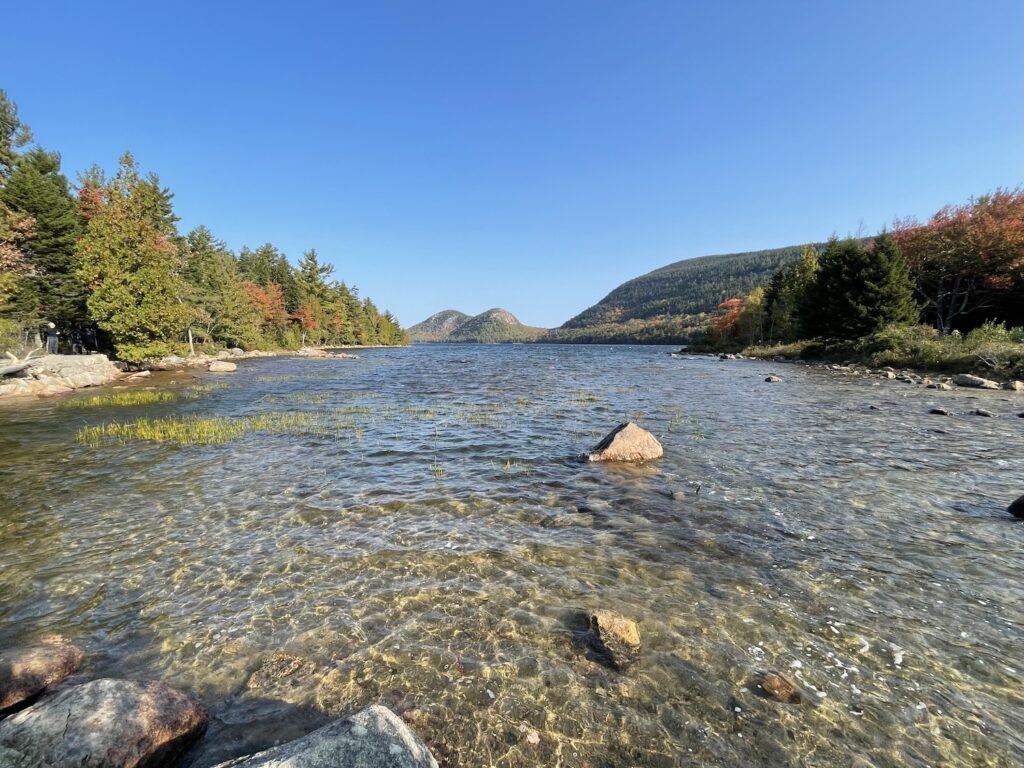
One particularly memorable morning, I arrived at Jordan Pond before sunrise to find the water completely still, creating perfect reflections of the surrounding fall colors and the Bubble Mountains. A light mist hovered just above the pond surface, adding an ethereal quality to the scene. These magical moments—often fleeting and dependent on specific weather conditions—are what make October in Acadia so special.
Lessons Learned and Advice to Share
Through trial and error during my October visits, I've learned several valuable lessons that might benefit first-time autumn visitors:
Flexibility is essential: My most successful Acadia trips have built flexibility into the itinerary. During one visit, three days of fog and drizzle threatened to derail my photography plans. Rather than forcing my original agenda, I pivoted to exploring the park's woodland trails, where the mist created moody, atmospheric conditions perfect for intimate forest photography. When the weather cleared, I then returned to the mountain summits and coastal areas.
Microclimate awareness: Acadia features remarkable microclimates within short distances. The western side of Mount Desert Island often experiences different weather than the eastern side. During one October visit, I encountered thick fog at Sand Beach while Jordan Pond, just a few miles away, enjoyed clear skies. Learning to check conditions in different park areas has helped me maximize good weather opportunities.
Early starts yield dividends: Rising early has consistently improved my October experiences. Beyond the obvious benefit of spectacular sunrises, morning hours offer wildlife sightings, empty trails, and parking availability at popular trailheads. The soft early light enhances fall colors, and morning fog often creates magical conditions in valleys and ponds before burning off.
Local connections matter: Some of my best experiences have come from conversations with locals. A casual chat with a Bar Harbor shopkeeper led me to a little-known viewpoint perfect for sunset photography. Another conversation with a longtime resident resulted in recommendations for fall bird watching locations I would never have discovered on my own.
Visitor Reviews and Experiences
While my experiences provide one perspective on visiting Acadia in October, other visitors offer valuable insights as well. Here are three revealing accounts I've gathered from fellow autumn travelers:
"We visited mid-October last year and were amazed by the colors, but the biggest surprise was how quickly weather conditions changed. We started one hike in sunshine and finished in dense fog. The ranger advised us to always carry an extra layer and rain gear, which saved us several times. My top tip: the Jesup Path was magical in morning mist with yellow birch leaves glowing against the fog." — Review from Reddit user exploring Acadia for five days in October 2023
"October was perfect for our family visit because our kids could actually enjoy the trails without summer heat. The Jordan Pond Path was manageable even for our 5-year-old, and the popovers at Jordan Pond House were a big hit. We stayed in Southwest Harbor which was quieter than Bar Harbor but still had enough open restaurants. Be aware that many businesses reduce hours after Columbus Day weekend." — Amazon review of an Acadia guidebook, from a family visitor in October 2022
"As a photographer, I found late October (24-28) less crowded but also past peak for foliage. Many leaves had fallen, creating beautiful carpet-like trails, but fewer colorful canopies. The trade-off was worth it for sunrise at Cadillac without reservation requirements and easy parking at popular spots. The lighting was exceptional for coastal photography with the lower autumn sun angle." — Quora response from a photographer who visits Acadia annually
These varied experiences highlight how visiting Acadia in October offers different rewards depending on your timing, interests, and expectations. Early October typically provides more reliable weather and business operations, mid-October offers peak foliage but larger crowds, and late October delivers solitude but requires more self-sufficiency as services reduce.
My Personal Recommendation
Based on multiple October visits, I personally prefer the second week of October for the sweet spot of advancing fall colors, moderate crowds (especially midweek), and most businesses still being open. However, if avoiding crowds is your priority, consider late October when the experience becomes more serene, though with slightly more limited services and potentially past-peak foliage.
Conclusion
Visiting Acadia in October offers a truly magical experience that combines the splendor of fall foliage with the park's inherent natural beauty. As the crowds of summer thin out and the landscape transforms into a canvas of vibrant reds, oranges, and golds, Acadia reveals a different character that captivates visitors in unique ways.
The key to a successful October visit lies in preparation and flexibility. Weather conditions can change rapidly, requiring appropriate clothing layers and gear. Trails that might be dry and easy in summer can become more challenging when covered with fallen leaves or slick from autumn rain. Yet these seasonal changes also create photographic opportunities and memorable moments that summer visitors never experience—misty harbors at dawn, the perfect reflection of colored trees in still ponds, or the crisp clarity of distant islands viewed from mountain summits on cool, clear days.
Accommodations require advance planning, especially for peak foliage weekends, but rewards await those who secure their lodging early. Whether you choose the convenience and amenities of Bar Harbor, the quieter atmosphere of the island's western communities, or the immersive experience of camping among the changing leaves, each option provides its own perspective on autumn in Acadia.
Beyond the popular hikes and scenic drives, take time to explore Acadia's less-visited corners. The carriage roads offer intimate forest experiences, while water activities provide unique perspectives of the colorful shoreline. The seasonal transition also affects wildlife behavior, creating opportunities to observe migratory birds and active mammals preparing for winter.
As businesses begin their seasonal closures in mid-to-late October, the park gradually returns to a quieter state that longtime visitors particularly appreciate. This progression from the energy of early autumn to the tranquility of late fall tells the complete story of Acadia's seasonal transition.
My personal experiences in Acadia during October have created some of my most treasured outdoor memories. The combination of sensory experiences—the sound of leaves crunching underfoot, the smell of earth and sea air, the touch of cool granite warmed by afternoon sun, and the visual feast of colors reflected in ocean waters—creates an immersive experience that keeps drawing me back year after year.
Whether you're planning your first visit to Acadia in October or returning to witness the autumn transformation once again, I hope the tips for visiting Acadia in October shared in this guide help you create your own meaningful connection with this spectacular corner of Maine during its most colorful season.
Frequently Asked Questions
Is October too cold to visit Acadia National Park?
October in Acadia offers comfortably cool temperatures that are ideal for hiking and outdoor activities. Daytime temperatures typically range from the mid-40s to mid-60s°F (7-18°C), while nights can drop into the 30s°F (1-4°C). These conditions are perfect for active pursuits, as you won't overheat on challenging trails. The cooler temperatures also mean fewer insects compared to summer months. While occasional cold snaps can bring near-freezing conditions, especially in late October, proper layering makes these entirely manageable. In my experience, the crisp autumn air enhances the sensory experience of fall colors and ocean views, making October weather an asset rather than a deterrent for most visitors.
When exactly is peak fall foliage in Acadia?
Peak fall foliage in Acadia National Park typically occurs between the second and third weeks of October, though this can vary by a week in either direction depending on that year's specific weather patterns. In recent years (2022-2023), the most vibrant colors appeared around October 15-20. The timing varies across the park's microclimates—higher elevations and inland areas change first, while coastal regions and lower elevations peak later. For the most accurate predictions, I recommend monitoring the Maine Fall Foliage Report in the weeks before your visit. Even when visiting slightly before or after peak, you'll still experience beautiful color transitions, either the fresh emerging yellows and oranges of early fall or the rich deep reds and russets of late autumn.
Are all facilities open in Acadia during October?
Acadia operates on a seasonal schedule with gradual closures throughout October. The park itself remains open year-round, but services and facilities begin to reduce after Columbus Day/Indigenous Peoples' Day weekend. The Hulls Cove Visitor Center typically remains open until October 31, while the Jordan Pond House restaurant often closes by mid-October. Campgrounds have staggered closings—Blackwoods remains open through October with reduced services (vault toilets only after mid-month), while others close earlier. Park Loop Road and most trails stay open, weather permitting, though the road typically closes on December 1. Most importantly, in 2023, the Cadillac Summit Road reservation system remained in effect only until October 22. Always check the official park website before your visit, as these dates can shift slightly from year to year.
How crowded is Acadia in October?
October visitation in Acadia creates a distinct pattern throughout the month. Early October sees moderate crowds, which increase significantly during the Columbus Day/Indigenous Peoples' Day holiday weekend and the peak foliage period (typically mid-month). During these peak times, popular spots like Cadillac Mountain, Jordan Pond, and the Beehive Trail can be nearly as busy as summer weekends, especially between 10am-3pm. However, even during busy periods, early mornings and late afternoons offer relative tranquility. By late October, crowds decrease substantially as foliage passes peak and temperatures cool. Another factor affecting crowds is cruise ship arrivals in Bar Harbor, which continue throughout October. Checking the cruise ship calendar can help you plan visits to popular attractions on days with fewer ships in port.
What should I pack for an October visit to Acadia?
For October in Acadia, versatile layering is essential due to variable temperatures and weather conditions. Start with moisture-wicking base layers, add insulating mid-layers like fleece or lightweight down, and top with a waterproof/windproof shell. Pack gloves, a warm hat, and extra socks, as extremities get cold quickly in autumn conditions. For footwear, waterproof hiking boots with good traction handle potentially wet and leaf-covered trails. Beyond clothing, essential gear includes a headlamp (for earlier sunsets), a water bottle, high-energy snacks, and a small first aid kit. For photography, bring a camera that performs well in varied lighting, extra batteries (which drain faster in cool weather), and lens cleaning supplies for misty conditions. Finally, don't forget binoculars for wildlife viewing and detailed fall foliage appreciation from scenic overlooks.
© 2025 WildernessPaths.com - Your Guide to America's Natural Treasures