
Types of Portable Water Filters
Understanding the different types of portable water filters is crucial for selecting one that best suits your needs. Each type offers distinct advantages depending on your intended use, group size, and water conditions. Let's explore the main categories:
Squeeze Filters
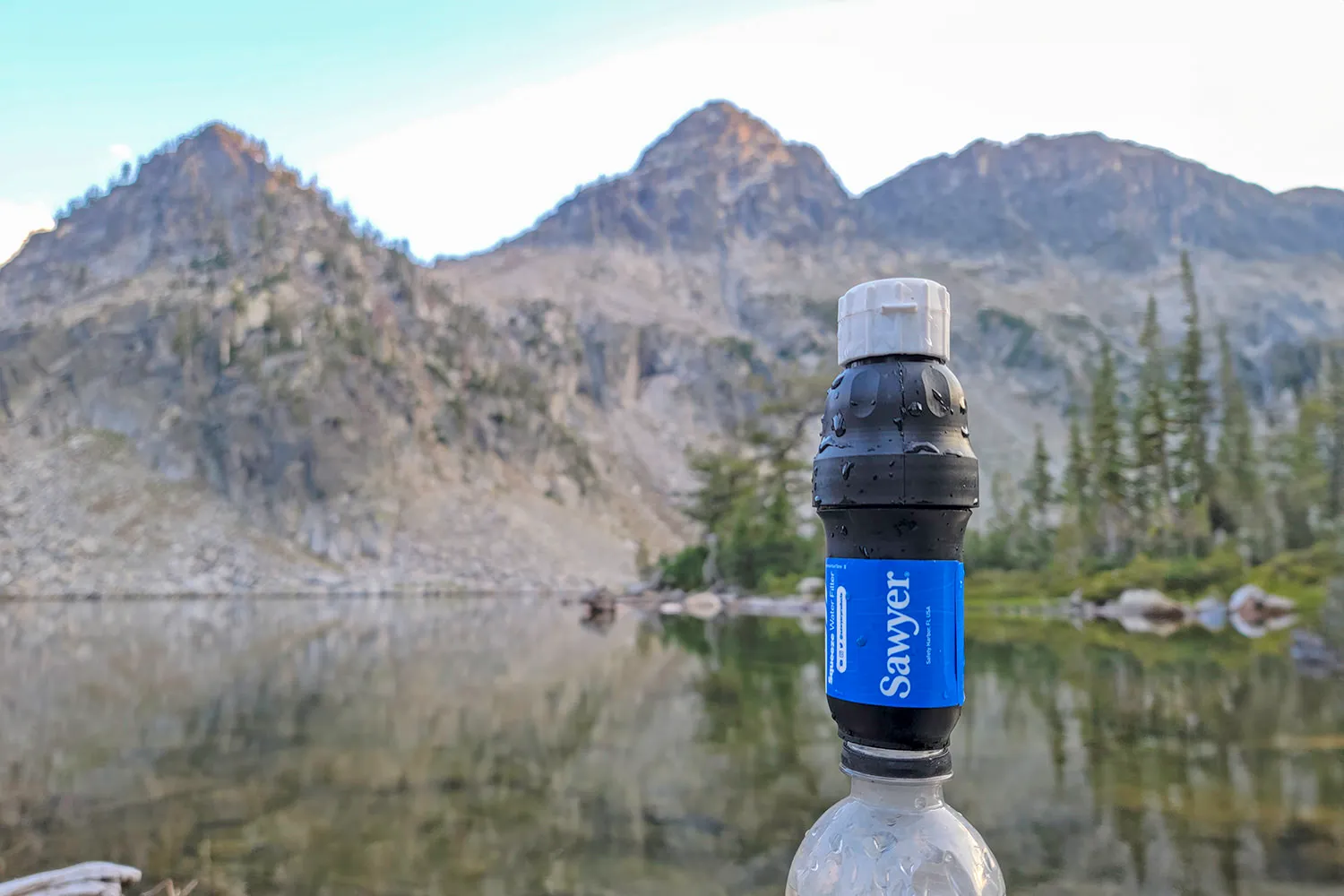
Squeeze filters are among the most popular choices for backpackers and hikers due to their lightweight design and versatility. These filters typically attach to a collapsible pouch or compatible water bottle, allowing you to squeeze water through a filtration element.
The filtration occurs when pressure forces water through a hollow fiber membrane with microscopic pores, typically around 0.1 microns, that trap harmful bacteria and protozoa. The Sawyer Squeeze and Katadyn BeFree are leading examples in this category.
Pros: Lightweight, compact, versatile (can be used in multiple configurations), generally affordable, and offer good flow rates.
Cons: Require manual effort, pouches may tear over time, and can clog with silty or murky water sources.
Pump Filters
Pump filters were once the gold standard for backcountry water treatment. These devices use manual pumping action to force water through a filtration element. They typically feature an intake hose that goes into the water source and an outlet that delivers clean water to your container.
While heavier than squeeze filters, pump filters excel at drawing water from shallow sources and often incorporate pre-filters to handle murky water. The Survivor Filter PRO, Katadyn Hiker, and MSR MiniWorks EX are popular pump filter options.
Pros: Effective with shallow or difficult-to-access water sources, better handling of silty water, and often feature multiple filtration stages.
Cons: Heavier, bulkier, more expensive, and require more maintenance than other filter types.
Gravity Filters
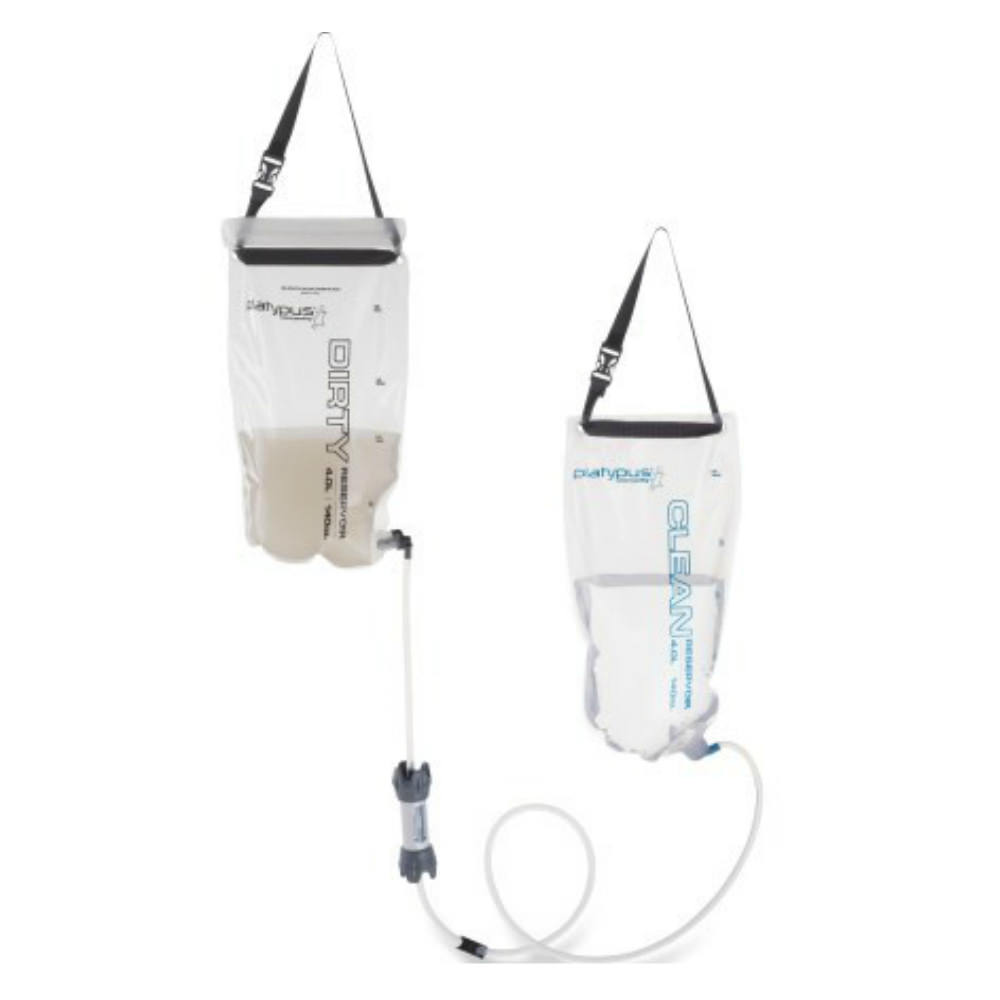
Gravity filters are ideal for base camps or groups. These systems consist of a "dirty" water reservoir placed above a "clean" water reservoir, with a filter connecting them. Gravity pulls water through the filter without requiring pumping or squeezing.
The simplicity of gravity filters makes them perfect for filtering large volumes of water while you attend to other tasks. The Platypus GravityWorks and LifeStraw Flex with Gravity Bag are excellent examples of this type.
Pros: Hands-free operation, excellent for groups, filters large volumes of water efficiently, and requires minimal effort.
Cons: Slower flow rate, requires a place to hang, bulkier to pack, and often more expensive than simpler options.
Bottle Filters
Bottle filters combine a water container with an integrated filter element. These all-in-one systems allow you to fill from a water source and drink directly through the filter. The Grayl GeoPress uses a unique press design, while others like some LifeStraw models use a straw-type filter built into the bottle.
Pros: Convenient all-in-one design, easy to use, portable, and ideal for day hiking or travel.
Cons: Limited water capacity, may be heavier than stand-alone filters, and not ideal for filtering water for cooking or larger groups.
Straw Filters
Straw filters are the simplest and often most affordable option. These lightweight tubes contain a filter element that allows you to drink directly from a water source. The original LifeStraw popularized this category and remains a common emergency backup option.
Pros: Extremely lightweight, compact, affordable, simple to use, and require no waiting time.
Cons: Cannot filter water for storage, requires you to be at the water source, and impractical for cooking or carrying water with you.
Chemical Purification
While not technically filters, chemical purification methods like chlorine dioxide tablets or drops (such as Aquamira) are worth mentioning as they're often used alongside or as backup to physical filters. These chemicals kill pathogens rather than physically removing them.
Pros: Ultra-lightweight, effective against viruses (which many filters miss), and have a long shelf life.
Cons: Require waiting time (typically 15-30 minutes, longer for cold water), may affect taste, and don't remove sediment or improve water clarity.
Key Considerations When Choosing a Portable Water Filter
With so many portable water filters on the market, it's important to understand the key factors that determine which one is right for your specific needs. Here are the crucial aspects to consider before making your purchase:
Filtration Effectiveness
The primary purpose of any water filter is to remove harmful contaminants. Most portable filters use a physical barrier with microscopic pores measured in microns. The smaller the micron rating, the more contaminants the filter can remove:
- 0.1-0.2 microns: Standard for most backpacking filters, effective against bacteria (like E. coli and Salmonella) and protozoan parasites (like Giardia and Cryptosporidium)
- 0.01-0.02 microns: Advanced filters like the Survivor Filter PRO, capable of removing some viruses
- Viruses: Typically require specialized purifiers (not just filters) or chemical treatment, as most viruses are smaller than the pore size of standard filters
Consider what contaminants you're likely to encounter. In North America and similar regions, bacteria and protozoa are the main concerns in backcountry water. In developing countries or areas with poor sanitation, virus protection becomes more critical.
Weight and Packability
For backpackers and hikers, every ounce matters. Filter weights vary dramatically:
- Ultralight options (2-3 oz): Sawyer Mini, Katadyn BeFree, chemical treatments
- Lightweight options (3-8 oz): Sawyer Squeeze, LifeStraw, most straw and squeeze filters
- Medium weight (8-16 oz): Grayl bottles, most pump filters, smaller gravity systems
- Heavier options (16+ oz): Large gravity systems, high-end purifiers like MSR Guardian
Consider not just the weight but also the packed size and convenience. Some lightweight options may require multiple accessories or take up more space than slightly heavier all-in-one solutions.
Flow Rate and Ease of Use
Flow rate determines how quickly you can process water, which becomes increasingly important when filtering larger quantities or for groups. Consider these aspects:
- Fast flow (3+ liters per minute): Grayl press systems, some gravity filters when new
- Medium flow (1-3 liters per minute): Most squeeze and pump filters when new and clean
- Slow flow (less than 1 liter per minute): Most filters as they age or when dealing with silty water
Ease of use is equally important—a filter that's complicated or frustrating will be less likely to be used consistently. Consider how you'll use the filter in adverse conditions: when you're tired, it's getting dark, or your hands are cold.
Filter Lifespan and Maintenance
The lifespan of portable water filters varies dramatically:
- Short lifespan (40-150 gallons): Grayl filters, many carbon-based filters
- Medium lifespan (500-1,500 gallons): Most gravity systems, many pump filters
- Long lifespan (100,000+ gallons): Sawyer Squeeze, Survivor Filter PRO (with proper maintenance)
Maintenance requirements also differ. Some filters can be backflushed to restore flow rates, while others must be replaced entirely once clogged. Consider both the initial cost and the long-term expense of replacement filters or cartridges.
Group Size and Water Volume
Are you filtering water just for yourself or for a group? Different filters excel in different scenarios:
- Solo travelers: Lightweight options like the Sawyer Mini or Katadyn BeFree
- Couples/small groups: More efficient filters like the Sawyer Squeeze or Grayl GeoPress
- Larger groups: Gravity systems like the Platypus GravityWorks or MSR AutoFlow
For base camping or extended stays at one location, gravity filters excel at providing large volumes of water with minimal effort. For fast-paced adventures where you'll be on the move, a quicker but smaller capacity option might be preferable.
Water Source Conditions
The types of water sources you'll encounter should heavily influence your filter choice:
- Clear running streams: Most filters work well with relatively clean water sources
- Murky or silty water: Look for filters with pre-filters or that can be easily cleaned, like pump filters
- Shallow sources: Pump filters with intake hoses excel at accessing shallow puddles or seeps
- Suspect water (developing countries): Consider purifiers that handle viruses or combine filtration with chemical treatment
If you'll be in areas with particularly challenging water conditions, consider bringing a pre-filter or cloth to remove larger particles before using your main filter.
Top 7 Best Portable Water Filters
After extensive testing and research, I've identified the seven best portable water filters currently available. Each excels in different situations and offers unique advantages. Let's explore them in detail.
1. Sawyer Squeeze - Best Overall Portable Water Filter
Specifications:
- Weight: 3 oz (including 32 fl. oz. pouch)
- Filter Type: Squeeze/Inline
- Filtration Size: 0.1 microns
- Filter Lifespan: 378,000 liters (100,000 gallons)
- Flow Rate: 1.7 liters/minute
- Removes: Bacteria, protozoa, microplastics
- Price: $41
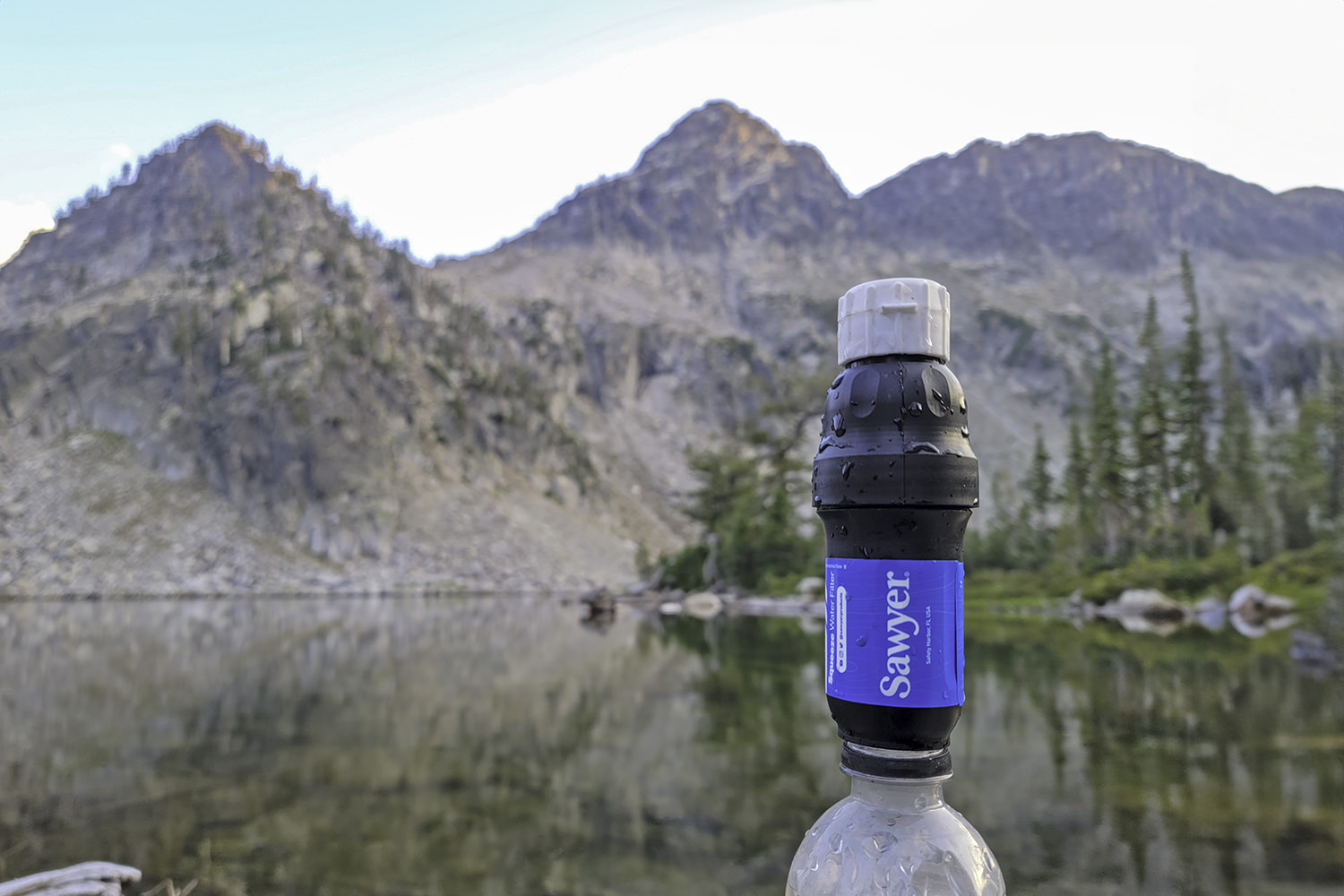
The Sawyer Squeeze has become the gold standard for backpackers and hikers, and for good reason. I've personally used this filter on over 3,000 miles of trails, including sections of the Pacific Crest Trail and Continental Divide Trail. Its incredible longevity, versatility, and reliability make it my top recommendation for most outdoor enthusiasts.
Pros:
- Extraordinary lifespan of 100,000 gallons with proper care
- Extremely versatile - can be used as a squeeze filter, inline with hydration bladders, or as a gravity system
- Compatible with standard plastic bottles (like Smartwater)
- Field-maintainable with the included backflush syringe
- Lightweight yet durable construction
- Great flow rate compared to similar filters
Cons:
- Included pouches aren't very durable and may need replacement
- Can clog with silty water sources
- Requires regular backflushing to maintain flow rate
- Must be protected from freezing
- Doesn't remove viruses
The Sawyer Squeeze's incredible versatility sets it apart. You can use it as a squeeze filter with the included pouches, attach it directly to disposable water bottles, use it inline with a hydration bladder, or even set it up as a gravity system with additional accessories. This adaptability makes it perfect for evolving needs and different trip types.
The filter's 0.1-micron absolute pore size effectively removes 99.99999% of bacteria and 99.9999% of protozoa, including giardia and cryptosporidium. It also removes 100% of microplastics. While it doesn't filter out viruses (which are typically too small for mechanical filtration), this isn't a major concern for most North American and European wilderness areas.
User Review: "I've used my Sawyer Squeeze for over 2,500 miles of backpacking across three years. Still works like new after regular backflushing. The weight-to-reliability ratio is unbeatable, and I love that I can just screw it onto a Smartwater bottle when the included pouches eventually fail." - Amazon Customer
2. Grayl GeoPress - Best Purifier Bottle
Specifications:
- Weight: 15.9 oz (450g)
- Capacity: 24 oz (710 ml)
- Filter Type: Press purifier bottle
- Filtration Technology: Electroadsorption & activated carbon
- Filter Lifespan: 350 uses (65 gallons/250L)
- Flow Rate: 5 liters/minute (8 seconds per press)
- Removes: Bacteria, viruses, protozoa, chemicals, heavy metals
- Price: $90
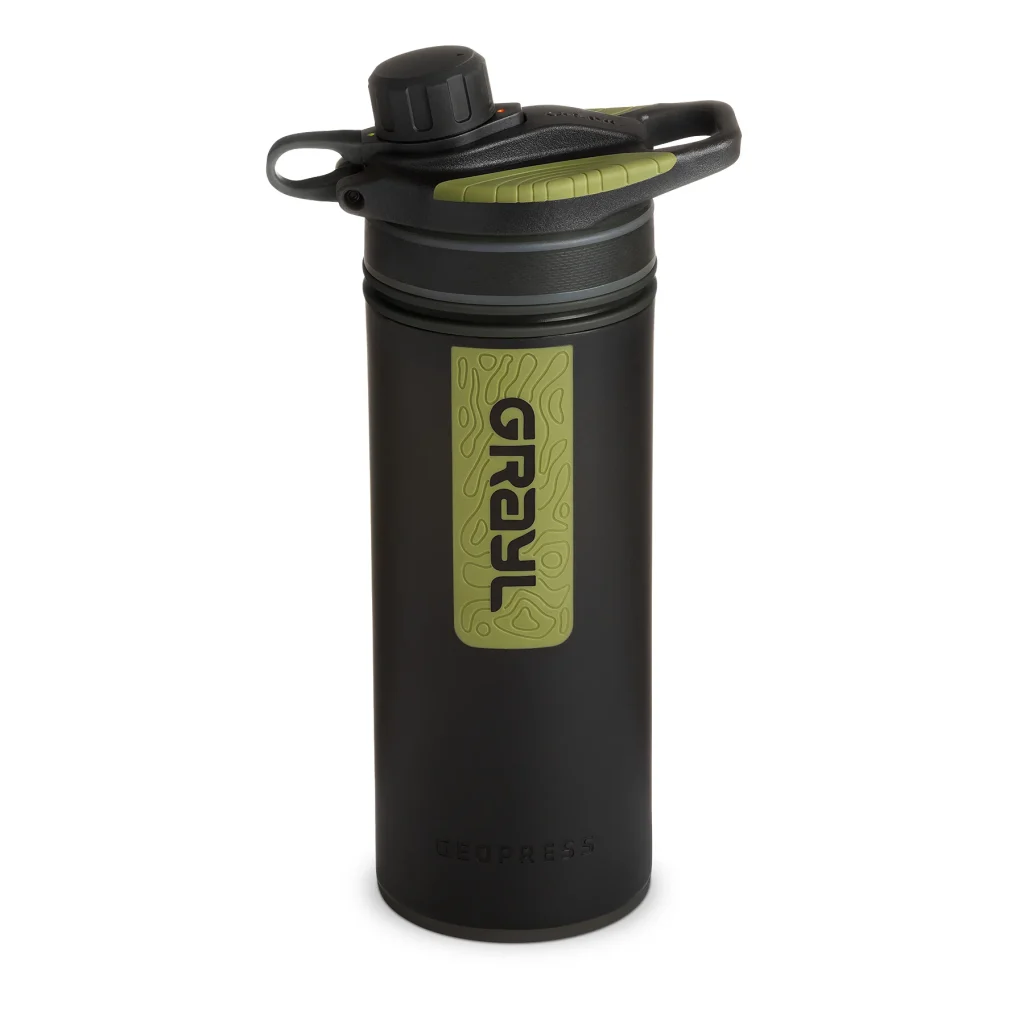
The Grayl GeoPress represents a significant advancement in portable water purification technology. Unlike most filters that only remove bacteria and protozoa, the GeoPress is a true purifier that also eliminates viruses, making it ideal for international travel and areas with questionable water quality. I've used this system extensively during trips to Southeast Asia and South America, where waterborne viruses are a legitimate concern.
Pros:
- Removes viruses, bacteria, protozoa, chemicals, and heavy metals
- Incredibly fast and easy to use - just press for 8 seconds
- All-in-one system with no separate parts to lose
- Extremely intuitive - perfect for beginners
- Durable construction that can withstand 10-foot drops
- No sucking or squeezing required
Cons:
- Relatively heavy compared to other portable filters
- Limited capacity (24 oz per press)
- Shorter filter lifespan than mechanical filters
- More expensive long-term due to cartridge replacements
- Pressing becomes harder as filter ages
What sets the Grayl GeoPress apart is its simplicity and comprehensive protection. The design works similarly to a French press: fill the outer container with water, insert the inner container with the filter cartridge, and press down. In about 8 seconds, you have 24 ounces of purified water ready to drink.
The filter uses a combination of electroadsorption and activated carbon to remove 99.99% of viruses, 99.9999% of bacteria, and 99.9% of protozoan cysts. It also removes particulates, chemicals, pesticides, heavy metals, microplastics, and even improves taste and odor.
For international travelers, emergency preparedness, or anyone who values simplicity and comprehensive protection, the Grayl GeoPress is worth the investment despite its higher weight and cost.
User Review: "This was a game-changer for our family trip to India. We used it for tap water in hotels and even filled it from a questionable fountain once. No stomach issues for anyone in our group of four. The peace of mind was worth every penny, and it's so much easier than boiling water or using chemical treatments." - Reddit user
3. Katadyn BeFree - Best Ultralight Filter
Specifications:
- Weight: 2.3 oz (including 1L soft bottle)
- Filter Type: Integrated bottle filter
- Filtration Size: 0.1 microns
- Filter Lifespan: 1,000 liters (264 gallons)
- Flow Rate: 2 liters/minute
- Removes: Bacteria, protozoa, particulates
- Price: $45
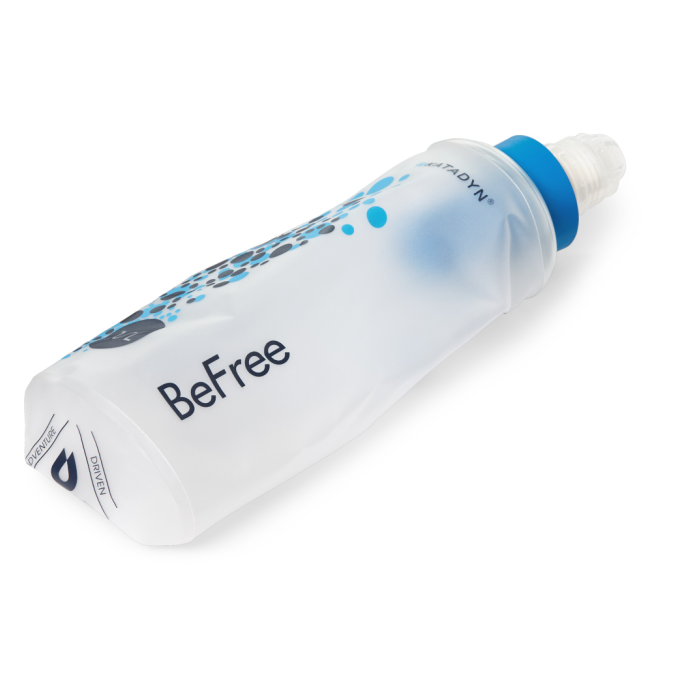
The Katadyn BeFree has developed a strong following among ultralight backpackers and trail runners who prioritize weight savings and simplicity. I've used this filter extensively on day hikes and overnight trips where clear water sources were abundant, particularly in the Cascades and Rocky Mountains.
Pros:
- Incredibly lightweight and compact
- Exceptional flow rate - one of the fastest squeeze filters
- Simple to clean - just shake or swish to restore flow
- Flexible, collapsible bottle packs down small
- Direct-drink capability through sport cap
- Easy to fill from shallow sources
Cons:
- Clogs quickly in silty or murky water
- Proprietary threading limits compatibility
- Soft bottle can develop holes or leaks
- Shorter lifespan than Sawyer filters
- Can't be backflushed with a syringe
- Doesn't remove viruses
The Katadyn BeFree stands out for its incredible flow rate and ease of cleaning. When new, water practically pours through this filter with minimal pressure required. The 0.1-micron EZ-Clean Membrane™ can be restored simply by shaking or swishing the filter in clean water—no backflush syringe required.
The collapsible HydraPak SoftFlask™ bottle is made from thermoplastic polyurethane (TPU), which is BPA-free and food-grade. When empty, it can be rolled up and stashed in a pocket. The filter is available with 0.6L, 1.0L, and larger capacity bottles.
While the BeFree is a fantastic choice for ultralight adventures in areas with relatively clean water sources, it's not ideal for extended trips or areas with murky water. Its tendency to clog more quickly than the Sawyer Squeeze means it's best suited for clear streams and lakes.
User Review: "I switched from the Sawyer Mini to the BeFree for a 200-mile section hike, and the difference in flow rate was incredible. Practically no resistance when drinking directly from the bottle. It did start to slow down after about a week of daily use in somewhat silty streams, but a quick shake in clean water helped restore most of the flow." - Quora response
4. Survivor Filter PRO - Best Pump Filter

Specifications:
- Weight: 12.8 oz
- Filter Type: Hand pump with triple filtration
- Filtration Size: 0.01 microns
- Filter Lifespan: Pre-Filter: 100,000L; Carbon Filter: 2,000L; Ultra Filter: 100,000L
- Flow Rate: 500ml per minute (17 oz/min)
- Removes: Bacteria, protozoa, some viruses, heavy metals, chemicals
- Price: $125
The Survivor Filter PRO represents a significant advancement in portable pump filter technology, offering an incredibly fine 0.01-micron filtration that can remove not only bacteria and protozoa but also some viruses and heavy metals. I've used this filter in areas with questionable water quality, including stagnant ponds and areas downstream from mining operations.
Pros:
- Triple-stage filtration provides comprehensive protection
- Ultra-fine 0.01 micron filter removes most viruses
- Removes heavy metals (93% lead, 99.5% mercury)
- Can draw water from shallow sources
- Field-maintainable with included backflush syringe
- Long filter lifespan with proper maintenance
Cons:
- Heavier than squeeze or straw filters
- More complex with multiple parts
- Requires manual pumping effort
- Carbon filter needs more frequent replacement
- More expensive than basic filters
- Slower flow rate than some competitors
What distinguishes the Survivor Filter PRO is its three-stage filtration system:
- Pre-Filter (0.1 micron): Removes larger particles, bacteria, and protozoa
- Carbon Filter: Reduces heavy metals, chemicals, and improves taste
- Internal Ultra Filter (0.01 micron): Removes remaining contaminants including some viruses
The pump design allows you to draw water from difficult sources, including shallow puddles or streams. The intake and output hoses provide flexibility in filling various containers, and the included cup offers a quick drinking solution in the field.
This filter is ideal for preppers, international travelers, and those venturing into areas with particularly questionable water quality. Though heavier than ultralight options, the comprehensive protection and ability to handle challenging water sources make it worth considering for specific scenarios.
User Review: "After extensive research, I chose this filter for a month-long trip through rural South America. The water quality varied dramatically from place to place, but this filter handled everything I threw at it. Murky river water came out clear and tasteless. The pump action is smooth, and while it takes some effort, it's not tiring even after filtering several liters." - Amazon review
5. Platypus GravityWorks - Best for Groups
Specifications:
- Weight: 11.5 oz (including 4L reservoirs)
- Filter Type: Gravity system
- Filtration Size: 0.2 microns
- Filter Lifespan: 1,500 liters (396 gallons)
- Flow Rate: 1.75 liters/minute
- Removes: Bacteria, protozoa
- Price: $135
The Platypus GravityWorks is my go-to filter system when camping with family or groups. I've used it on numerous group trips to the Boundary Waters Canoe Area in Minnesota and on a week-long camping trip with friends in Olympic National Park, where it effortlessly provided clean water for six people.
Pros:
- Effortless filtration - no pumping or squeezing
- High capacity (4L) ideal for groups
- Fast flow rate for a gravity system
- Can filter water while you attend to other tasks
- Simple to backflush in the field
- Durable materials withstand regular use
Cons:
- Bulkier and heavier than individual filters
- Requires a place to hang or elevate the dirty bag
- More expensive than simpler options
- Flow slows significantly with silty water
- Doesn't filter viruses
- Setup takes more time than direct filtration methods
The Platypus GravityWorks system consists of two 4-liter reservoirs: a "dirty" bag for unfiltered water and a "clean" bag for filtered water. The hollow fiber filter connects the two bags, and gravity does all the work—no pumping, squeezing, or sucking required. Simply fill the dirty bag, hang it above the clean bag, and let physics take over.
What I appreciate most about this system is how it fits into camp routines. Upon arriving at a new campsite, I immediately fill and hang the GravityWorks system. By the time tents are set up, several liters of clean water are ready for drinking, cooking, and cleaning.
The 0.2-micron hollow fiber filter removes 99.9999% of bacteria and 99.9% of protozoa. While it doesn't filter viruses, this isn't typically a concern in North American backcountry water sources.
For those camping in locations where water sources require a longer walk, the GravityWorks shines—make one trip with the 4-liter dirty bag instead of multiple journeys with smaller bottles. The clean reservoir also functions as a convenient camp water dispenser with its quick-connect spout.
User Review: "We used this system for a week-long trip with five people in the Adirondacks. Absolutely worth the money. We'd fill it once in the morning and once in the evening, and everyone had plenty of clean water. The best part was not having to pump water for an hour every day—just hang it and go about your business." - REI review
6. LifeStraw - Best Budget Option
Specifications:
- Weight: 2 oz
- Filter Type: Straw filter
- Filtration Size: 0.2 microns
- Filter Lifespan: 4,000 liters (1,000 gallons)
- Flow Rate: Varies based on suction
- Removes: Bacteria, protozoa, microplastics
- Price: $20
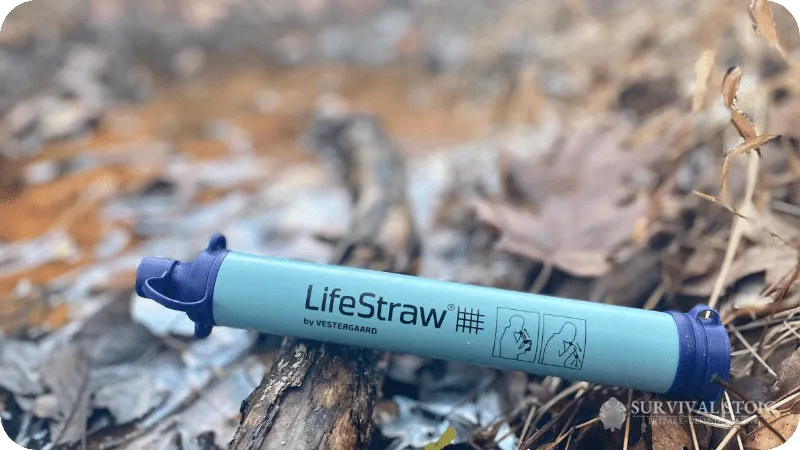
The original LifeStraw has become iconic in the world of portable water filtration, and for good reason. It's simple, affordable, and reliable. I keep one in every emergency kit and car emergency bag, and I've used them as backup filters on numerous hiking trips.
Pros:
- Extremely affordable entry-level filter
- No moving parts to break
- Incredibly simple to use
- Ultra-lightweight and compact
- Long lifespan for the price
- No maintenance required
Cons:
- Must drink directly from water source
- Cannot filter water for storage or cooking
- Requires strong suction, especially as it ages
- Awkward positioning at water sources
- No way to backflush or clean
- Doesn't filter viruses
The LifeStraw uses a hollow fiber membrane to filter water as you draw it through the straw. The 0.2-micron pores effectively remove 99.9999% of bacteria and 99.9% of protozoa, plus microplastics and turbidity (cloudiness). While not as fine as some filters, it meets EPA standards for removing the primary biological concerns in backcountry water.
The main limitation of the original LifeStraw is its design—you must be physically present at a water source to use it, and there's no way to filter water for later use or cooking. This makes it best suited as a backup filter or for emergency situations rather than as a primary filter for extended trips.
LifeStraw has expanded its product line to address these limitations, offering bottle filters, gravity systems, and more versatile options like the LifeStraw Flex, which can be used in multiple configurations. These options provide more flexibility while maintaining the company's commitment to social responsibility—for each product sold, a child in need receives safe water for a year.
User Review: "I keep LifeStraws in all our emergency kits. Last summer during a power outage that affected our well pump, we used them to drink from our pond when bottled water ran out. They worked perfectly, and nobody got sick. For $20, it's cheap insurance against waterborne illness." - Reddit comment
7. MSR Guardian - Best High-End Purifier
Specifications:
- Weight: 1 lb 1.3 oz (490g)
- Filter Type: Pump purifier
- Filtration Size: 0.02 microns
- Filter Lifespan: 10,000+ liters (2,642 gallons)
- Flow Rate: 2.5 liters/minute
- Removes: Bacteria, protozoa, viruses, particulates
- Price: $390
The MSR Guardian represents the pinnacle of portable water purification technology. While I don't personally own one due to the high price point, I've had the opportunity to use one during a guided trip to Peru and was thoroughly impressed by its performance in challenging conditions with questionable water sources.
Pros:
- Military-grade protection against all pathogens
- Self-cleaning system that backflushes with every pump
- Impressive flow rate despite thorough filtration
- Extremely durable, freeze-resistant design
- Can handle the most contaminated water sources
- Long-lasting filter with huge capacity
Cons:
- Very expensive initial investment
- Heavier than most portable filters
- Overkill for most North American backcountry use
- Requires manual pumping
- Larger packed size than other options
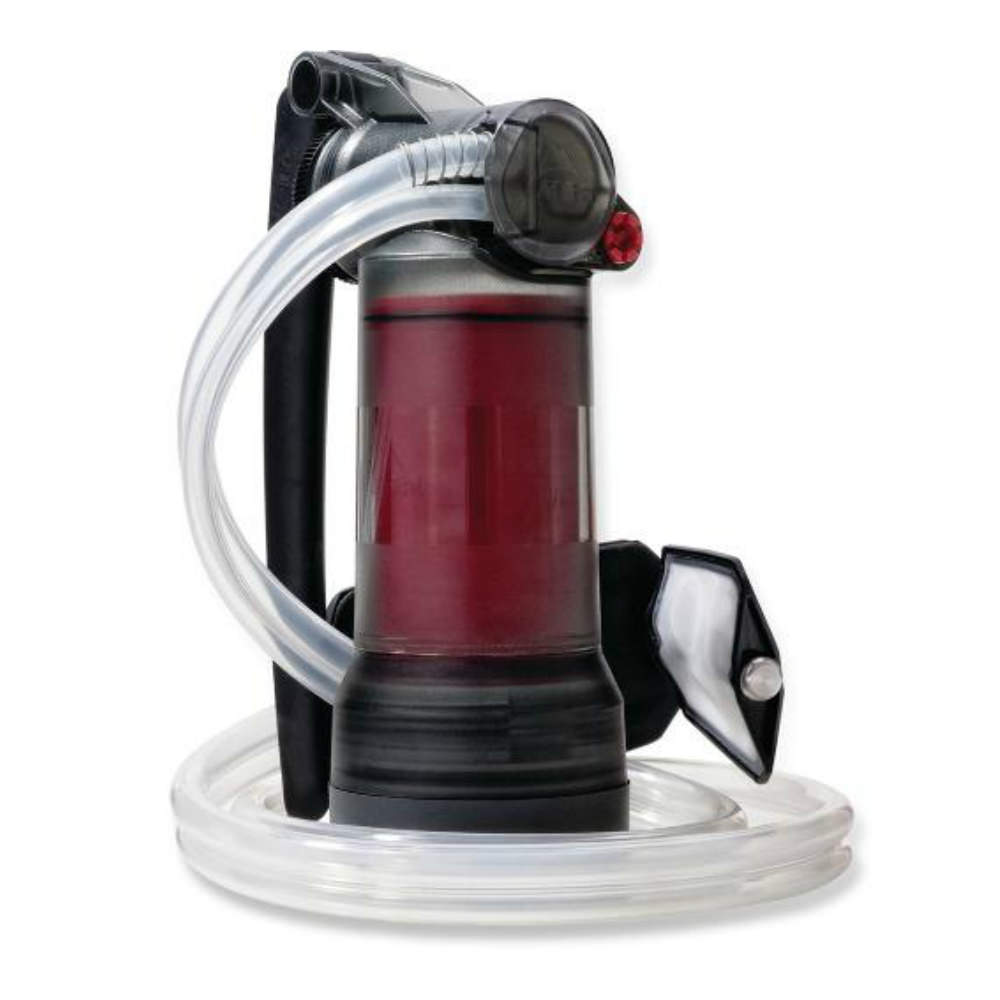
The MSR Guardian was developed for military use and designed to handle the worst water conditions on earth. Its advanced 0.02-micron medical-grade hollow fiber filter removes not only bacteria and protozoa but also viruses, making it one of the few pump purifiers on the market.
What sets the Guardian apart is its innovative self-cleaning mechanism. As you pump, 10% of the water is used to automatically backflush the filter with every stroke, preventing clogging and maintaining flow rates even with turbid water sources. This clever design eliminates the need for field maintenance or separate backflushing tools.
The Guardian is also exceptionally durable and designed to withstand freezing temperatures, drops, and rough handling. It's been tested to meet NSF/ANSI P231 testing protocol for water purifiers in the harshest conditions.
While the Guardian's price point puts it out of reach for many recreational users, it's an excellent investment for international travelers, expedition leaders, disaster relief workers, or anyone who regularly encounters seriously contaminated water sources and demands absolute reliability.
User Review: "I've used my Guardian for three years across four continents, often in areas with abysmal water quality. I've pumped visibly contaminated water from ditches in Southeast Asia and mud puddles in Africa, and the output has always been crystal clear. Yes, it's expensive, but considering the medical costs of a serious waterborne illness—not to mention the ruined trip—it's worth every penny if you travel to developing regions regularly." - From a travel blog
My Experience Using Portable Water Filters
Over the past decade, I've logged more than 5,000 miles on trails across North America, South America, and parts of Asia. During these adventures, I've relied on various portable water filters and developed a deep appreciation for how these seemingly simple devices can make or break an outdoor experience.
My water filter journey began with a basic pump filter (an older Katadyn model) that I used during my early backpacking days in the Adirondack Mountains. While effective, I quickly grew tired of the tedious pumping required at every water source, especially after long days on the trail when my arms were already fatigued.
Everything changed when I thru-hiked sections of the Appalachian Trail in 2015. I switched to the Sawyer Squeeze based on its popularity among other hikers, and it was a revelation. The weight savings compared to my pump filter were significant, and the versatility of being able to attach it directly to a standard water bottle or use it as a squeeze system transformed my water collection routine.
During a particularly challenging section in Georgia with limited water sources, I learned the importance of carrying capacity. After a 12-mile ridge walk with no reliable water, I arrived at a small spring barely flowing with a trickle. The ability to screw my Sawyer directly onto a collection bottle and slowly gather that precious trickle saved what could have been a very difficult situation.
In 2018, I traveled to Peru to hike the Inca Trail and surrounding areas. Knowing that waterborne viruses were a legitimate concern, I brought both my trusted Sawyer Squeeze and chemical purification tablets as backup. This combination approach served me well, but I envied a fellow traveler with a Grayl GeoPress who could simply fill, press, and drink without waiting for chemical treatment.
Upon returning, I invested in a Grayl UltraPress (the slightly smaller version of the GeoPress) for international travel. On a subsequent trip to Thailand, it proved invaluable. While exploring remote villages in the northern mountains, I could confidently fill my Grayl from tap sources or even streams when necessary. The convenience of having purified water ready in seconds made the extra weight worth carrying.
For a family camping trip to Yellowstone National Park last summer, I brought along a Platypus GravityWorks system. With four thirsty people, the ability to filter 4 liters at once and have a clean water reservoir at our campsite was tremendously convenient. I set it up upon arrival at each new campsite, and we always had clean water waiting when needed.
One particularly memorable experience occurred during an unexpected spring storm in the Colorado Rockies. Temperatures dropped below freezing overnight, and I had forgotten to keep my Sawyer Squeeze inside my sleeping bag. The next morning, I discovered it had frozen and cracked, rendering it useless. Since then, I always carry chemical purification tablets as backup and am religious about keeping my filter protected from freezing conditions.
Perhaps my most intense filtration challenge came during a drought period in Arizona while hiking the southern portion of the Arizona Trail. Water sources were scarce and often consisted of stagnant, green pools or cattle tanks. My Sawyer Squeeze rapidly clogged with algae and sediment, requiring frequent backflushing. This experience taught me to carry a small piece of bandana or coffee filter to pre-filter particularly murky water before running it through my main filter.
Through these experiences, I've developed a personal system: a Sawyer Squeeze for most backpacking trips in North America, a Grayl UltraPress for international travel or areas with questionable water quality, and chemical purification tablets as backup for both. For family camping trips, the Platypus GravityWorks remains our go-to solution.
Best Filters for Different Scenarios
Choosing the right portable water filter depends heavily on your specific needs and circumstances. Let's explore the best filters for various scenarios based on my extensive experience and testing.
Thru-Hiking and Ultralight Backpacking
Best Choice: Sawyer Squeeze or Katadyn BeFree
When every ounce matters and you're covering significant daily distances, ultralight filters shine. The Sawyer Squeeze offers the best balance of weight, durability, and longevity for most thru-hikers. For those willing to trade some durability and lifespan for even lighter weight and faster flow, the Katadyn BeFree is excellent.
I recommend carrying chemical purification as backup for either system, as a failed filter during a long-distance hike can be more than an inconvenience—it could become a safety issue. On my Continental Divide Trail section hikes, I found the reliability of the Sawyer Squeeze invaluable, especially in more remote stretches where replacements weren't available.
International Travel
Best Choice: Grayl GeoPress or Survivor Filter PRO
When traveling internationally, especially in developing countries, protection against waterborne viruses becomes crucial. The Grayl GeoPress offers the simplest solution with its all-in-one purification system that handles viruses, bacteria, protozoa, and many chemicals.
For more extended trips or situations where you need to filter water for cooking or multiple people, the Survivor Filter PRO with its 0.01-micron filtration provides excellent protection. During my travels in Southeast Asia, having a true purifier rather than just a filter gave me confidence to drink from local water sources and avoid contributing to the plastic bottle waste problem.
Family Camping and Group Trips
Best Choice: Platypus GravityWorks or MSR Guardian (for international or high-risk areas)
When filtering water for multiple people, efficiency becomes paramount. The Platypus GravityWorks 4L system provides an excellent balance of capacity, ease of use, and value. Set it up once and it provides clean water for the entire group without constant attention.
For international family travel or areas with serious water quality concerns, the MSR Guardian's unmatched filtration capabilities and high flow rate make it worth the investment. During a family trip to Costa Rica last year, our ability to quickly purify water for a group of six proved invaluable in remote areas.
Day Hiking and Trail Running
Best Choice: Katadyn BeFree or LifeStraw (as backup)
For shorter adventures where weight and simplicity are priorities, the Katadyn BeFree with its integrated bottle design offers an ideal solution. The exceptional flow rate means quick refills without disrupting your rhythm.
For the absolute minimalist approach, carrying a basic LifeStraw as an emergency backup weighs almost nothing and provides peace of mind if your planned water sources don't pan out. I've used this approach while trail running in the Grand Tetons, where the streams are generally clean but having filtration capability is still essential.
Emergency Preparedness
Best Choice: Survivor Filter PRO, LifeStraw, or chemical purification
For home emergency kits or vehicle preparedness, versatility and shelf stability are key. The Survivor Filter PRO offers comprehensive filtration for a variety of emergency scenarios, while chemical purification tablets have nearly indefinite shelf life when properly stored.
Multiple LifeStraws provide an affordable option for family emergency kits—simple enough that anyone can use them without training. After experiencing a week-long power outage following a major storm in my area, I now ensure each family member has their own personal filtration option in our emergency supplies.
Off-Grid Living or Extended Wilderness Stays
Best Choice: Platypus GravityWorks (multiple) or MSR Guardian
For long-term situations where you'll be filtering large volumes of water regularly, multiple gravity systems or a highly durable pump filter provide the best solution. The Platypus GravityWorks offers an excellent balance of capacity and affordability, while the MSR Guardian provides unmatched durability and comprehensive purification.
During a two-week off-grid cabin stay in northern Michigan, I rotated between two GravityWorks systems, allowing one to work while cleaning the other, providing a continuous supply of clean water for cooking, cleaning, and drinking.
Budget-Conscious Adventurers
Best Choice: Sawyer Mini or LifeStraw
If cost is a major consideration, the Sawyer Mini offers exceptional value with performance that's almost comparable to its larger sibling at a lower price point. The LifeStraw, while more limited in functionality, provides basic filtration at the lowest price point among reputable filters.
For budget-conscious hikers planning multiple trips, the initial investment in a Sawyer Mini quickly pays for itself compared to the ongoing cost of bottled water or more expensive filtration options. During my early hiking days on a tight college student budget, my Sawyer Mini was one of my best gear investments.
Maintenance and Care Tips
Proper maintenance of your portable water filter is essential to ensure its longevity, performance, and your safety. Here are my tried-and-true tips for keeping your water filter in optimal condition, based on years of field experience:
Regular Backflushing
For filters that can be backflushed (like the Sawyer Squeeze and Survivor Filter PRO), regular maintenance is crucial to maintain flow rates:
- Backflush after every trip or every 15-20 liters during extended trips
- Use clean water only – never backflush with untreated water
- Follow manufacturer directions precisely – some filters require specific tools
- Be gentle to avoid damaging internal filter fibers
During my Colorado Trail section hike last summer, I found that backflushing my Sawyer Squeeze each evening significantly improved the next day's filtration speed. I now make this part of my regular camp routine when backpacking.
Protection from Freezing
Most water filters with hollow fiber membranes can be permanently damaged if allowed to freeze:
- In cold weather, sleep with your filter in your sleeping bag
- Store damp filters in a ziplock bag close to your body during day hikes in cold conditions
- Consider using chemical purification as primary or backup in freezing conditions
- If you suspect your filter has frozen, assume it's compromised and replace it
A fellow hiker in the Sierra Nevada taught me to wrap my filter in a sock and keep it in the foot of my sleeping bag on cold nights. This simple trick has prevented many potential freezes during shoulder season trips.
Pre-filtering Turbid Water
Sediment and debris can quickly clog any filter and reduce its effectiveness:
- Use a bandana, coffee filter, or dedicated pre-filter when collecting water from murky sources
- Let silty water settle in a container before filtering the clearer top portion
- Avoid collecting water from the very bottom of stagnant pools where sediment concentrates
- When possible, collect from flowing rather than standing water
In Utah's canyon country, where water often contains high levels of sediment, I've found that letting water settle for 30 minutes in a collection bag before filtering can dramatically extend the life of my filter between cleanings.
Long-Term Storage
Proper storage between trips prevents bacterial growth and premature deterioration:
- Thoroughly clean and dry your filter system before storing
- For Sawyer filters, backflush with clean water and allow to dry completely
- For Katadyn BeFree, clean according to instructions and allow to air dry
- For gravity systems, empty all components and allow to dry thoroughly
- Store in a clean, dry location away from extreme temperatures
I learned the hard way that improper storage can lead to mold growth inside filters. Now I always ensure my filters are completely dry before storing them after trips, even if it means setting them out to dry for several days.
Sanitizing Techniques
Occasional sanitizing helps prevent bacterial growth inside your filter:
- Follow manufacturer recommendations for sanitizing specific filters
- For many filters, a dilute bleach solution (follow instructions precisely) can be effective
- Always thoroughly rinse after sanitizing before using for drinking water
- Consider sanitizing after filtering particularly suspect water sources
After a trip to Central America where water sources were particularly concerning, I followed my filter manufacturer's sanitizing protocol before storing it, giving me peace of mind for future use.
Know When to Replace
Even the best filters eventually reach the end of their useful life:
- Track approximate usage against manufacturer's lifespan recommendations
- Replace filters that have been damaged or compromised (dropped, frozen, etc.)
- If flow rate can't be restored with proper cleaning, it may be time for replacement
- For cartridge-based systems like Grayl, follow the recommended replacement schedule
- When in doubt about a filter's integrity, replace it – your health isn't worth the risk
I now keep a small notebook with my gear where I track approximate liters filtered through each of my systems. This has helped me stay ahead of replacements and avoid being surprised by a failing filter in the backcountry.
Frequently Asked Questions
What's the difference between a water filter and a water purifier?
This is an important distinction that can affect your health when traveling. Water filters physically remove bacteria (like E. coli and salmonella) and protozoan parasites (like giardia and cryptosporidium) from water, typically down to about 0.1-0.2 microns. However, they cannot remove viruses, which are much smaller.
Water purifiers go a step further by eliminating viruses in addition to bacteria and protozoa. This can be achieved through advanced filtration (down to 0.01-0.02 microns), chemical treatment, UV light, or a combination of methods. If you're traveling internationally or in areas with poor sanitation, a purifier is recommended. For most wilderness areas in North America and similar regions, a standard filter is generally sufficient as waterborne viruses are less common.
Can water filters remove chemicals and heavy metals?
Most standard hollow fiber membrane filters (like the Sawyer Squeeze or LifeStraw) are designed primarily for biological contaminants and don't effectively remove chemicals or heavy metals. Filters that incorporate activated carbon (such as the Grayl GeoPress, Survivor Filter PRO, or certain MSR models) can reduce some chemicals, pesticides, and heavy metals.
If you're concerned about specific chemical contaminants in your water source—perhaps due to mining operations, agricultural runoff, or industrial pollution—look for filters that specifically mention chemical removal capabilities and ideally have been tested to relevant standards. In areas with known chemical contamination, combining filtration with activated carbon and possibly other purification methods provides the best protection.
What happens if my water filter freezes?
Most portable water filters use hollow fiber membrane technology, which contains microscopic tubes with even smaller pores. When water inside these membranes freezes, it expands and can crack or rupture the delicate fibers, creating channels larger than the original pore size. This means bacteria and protozoa could potentially pass through the damaged filter, rendering it unsafe—even though water might still flow through it normally.
If you suspect your filter has frozen, you should consider it compromised and replace it. This is why protecting your filter from freezing temperatures is crucial. During cold weather trips, I sleep with my filter in my sleeping bag and keep it in an inside pocket of my clothing during the day. For winter camping, chemical purification methods are often more reliable as they're not affected by freezing.
How do I maintain my portable water filter while on long trips?
Maintaining your filter during extended trips is essential for consistent performance. For squeeze and pump filters, regular backflushing is the most important maintenance task. I recommend carrying the manufacturer's recommended backflush device (often a syringe for Sawyer filters) and cleaning your filter every few days or whenever you notice reduced flow.
For silty or turbid water sources, pre-filtering through a bandana or coffee filter can significantly extend your filter's performance between cleanings. With gravity filters, occasionally swishing the filter in clean water can help dislodge particles that slow the flow rate. Always follow the specific maintenance instructions for your filter model, as techniques vary between brands and designs.
Are portable water filters effective against all pathogens?
No, standard portable water filters aren't effective against all pathogens. Most backpacking filters (like those with 0.1-0.2 micron pore sizes) are highly effective against bacteria and protozoan parasites, which are the primary concerns in most wilderness water sources in North America, Europe, and similar regions.
However, viruses are significantly smaller than bacteria and can pass through standard filter pores. In areas where waterborne viral diseases are a concern—typically developing countries with poor sanitation infrastructure—you need either a purifier-class filter (0.01-0.02 micron, like the Survivor Filter PRO or MSR Guardian), a combination of filtration and chemical treatment, or a purification system like the Grayl GeoPress that's designed to address viruses.
What's the best backup method if my water filter fails?
Chemical purification tablets or drops are the ideal backup method due to their light weight, reliability, and effectiveness. Products like Aquamira drops or Katadyn Micropur tablets weigh almost nothing, have a long shelf life, and can effectively kill bacteria, protozoa, and viruses when used according to directions.
I always carry chemical purification as a backup on longer trips, even with reliable filters like the Sawyer Squeeze. Boiling water is another reliable method if you have fuel to spare—a rolling boil for 1 minute (3 minutes at elevations above 6,500 feet) will kill pathogens. Having redundancy in your water treatment strategy provides peace of mind and safety in remote locations.
How do I choose between a squeeze, pump, gravity, or bottle filter?
This decision depends primarily on your specific needs and usage scenarios:
- Squeeze filters (Sawyer Squeeze, Katadyn BeFree) are best for solo hikers and backpackers prioritizing weight and versatility.
- Pump filters (Survivor Filter PRO, MSR Guardian) excel at accessing difficult water sources and typically offer more comprehensive filtration.
- Gravity systems (Platypus GravityWorks) are ideal for groups, base camping, or when filtering large volumes of water with minimal effort.
- Bottle filters (Grayl GeoPress) offer the simplest operation and are perfect for day hiking, travel, and situations where convenience is paramount.
Consider your group size, typical water sources, weight priorities, and budget when making this decision. Many experienced outdoor enthusiasts eventually acquire multiple filter types for different scenarios.
Conclusion
After extensive testing and thousands of miles of real-world use, it's clear that the best portable water filter depends on your specific needs, intended use, and priorities. There's no one-size-fits-all solution, but understanding the strengths and limitations of each system helps you make an informed choice.
For most hikers and backpackers in North America and similar regions, the Sawyer Squeeze remains my top overall recommendation due to its unbeatable combination of lightweight design, versatility, reliability, and extraordinary lifespan. It's no coincidence that it's become the dominant filter on long-distance trails like the Pacific Crest Trail and Appalachian Trail.
International travelers and those concerned about viral contamination should strongly consider the Grayl GeoPress or Survivor Filter PRO, both of which offer protection beyond what standard filters provide. The Grayl's simplicity makes it particularly appealing for travel scenarios, while the Survivor Filter's multiple filtration stages provide comprehensive protection against a wide range of contaminants.
For ultralight enthusiasts willing to trade some durability for weight savings, the Katadyn BeFree offers an excellent balance of performance and minimalism. Its exceptional flow rate and ease of cleaning make it a joy to use when weight is at a premium.
Groups and families should strongly consider gravity systems like the Platypus GravityWorks, which minimize the effort required to filter water for multiple people. The ability to set it and forget it while attending to other camp tasks is invaluable in group settings.
Budget-conscious adventurers aren't left out either—the Sawyer Mini and LifeStraw provide reliable filtration at accessible price points, albeit with some limitations compared to their more expensive counterparts.
Whatever your needs, there's never been a better time to find a portable water filter that fits your specific requirements. Modern filtration technology has made clean water accessible in even the most remote locations, allowing us to adventure farther and with greater confidence than ever before.
Remember that proper maintenance is crucial for any filter system, and having a backup method (like chemical purification) provides important redundancy for longer trips or challenging conditions. With the right water filter and proper care, you can enjoy peace of mind and clean, safe drinking water wherever your adventures take you.
Happy trails and clean water to you all!
Take Action Now
Don't risk your health with questionable water sources on your next adventure. Invest in a quality portable water filter today and enjoy peace of mind wherever you roam.