

When you're miles away from civilization with nothing but your backpack and the great outdoors surrounding you, access to clean drinking water becomes paramount. Finding the best portable water filter for hiking isn't just about convenience—it's about survival and staying healthy on the trail. After testing dozens of models across thousands of miles of wilderness, I've compiled this comprehensive guide to help you choose the perfect filtration system for your next adventure. From ultralight options for thru-hikers to robust filters for group expeditions, this guide covers it all. Before we dive in, check out our complete collection of hiking gear reviews at WildernessPaths.com for more outdoor essentials.
Understanding Water Filtration: What Lurks in Backcountry Water
Before diving into specific products, it's essential to understand what we're actually filtering out of backcountry water. Even the most pristine-looking mountain stream can harbor invisible threats that can quickly turn your dream hiking trip into a nightmare.
When I first started hiking long trails, I learned the hard way that crystal-clear water doesn't necessarily mean safe water. During my hike through the Colorado Rockies, I foolishly drank from a gorgeous alpine stream without filtering. What followed was three miserable days of gastrointestinal distress that nearly ended my trip. This experience taught me that understanding water contaminants is just as important as knowing which filter to use.
Here's what might be hiding in your backcountry water source:
Bacteria and Protozoa: The Common Culprits
The most common water contaminants in North American wilderness are bacteria (like E. coli and Salmonella) and protozoa (such as Giardia and Cryptosporidium). These microorganisms typically come from animal and human waste and can cause serious gastrointestinal issues including vomiting, diarrhea, and severe dehydration. Most standard water filters with a pore size of 0.1 to 0.2 microns can effectively remove these threats.
Park rangers in the Sierras told me that Giardia infections spike dramatically during peak hiking season. When hiking the John Muir Trail last summer, I witnessed several fellow hikers being evacuated due to severe dehydration from waterborne illnesses. This reinforced my commitment to never skipping filtration, no matter how pristine the water source looks.
Viruses: The International Concern
Viruses like hepatitis A, rotavirus, and norovirus are smaller than bacteria—typically between 0.02 to 0.03 microns. Standard backpacking filters don't remove viruses, which is why purifiers (rather than just filters) are recommended for international travel, especially in developing regions where water treatment infrastructure may be inadequate.
When I hiked through certain parts of Central America, I made sure to use a combination of filtration and purification methods. The additional peace of mind was well worth the slight extra weight and preparation time.
Chemicals and Heavy Metals: The Hidden Dangers
In some areas, particularly those near current or historical mining operations, agricultural regions, or industrial sites, water may contain harmful chemicals or heavy metals. Most standard hiking filters aren't designed to remove these contaminants, though some incorporate activated carbon which can help reduce certain chemicals, pesticides, and improve taste.
During a trek through an old mining district in Colorado, I brought a specialized filter with heavy metal reduction capabilities. Local knowledge from rangers and research before your trip can help you identify if this might be a concern for your destination.
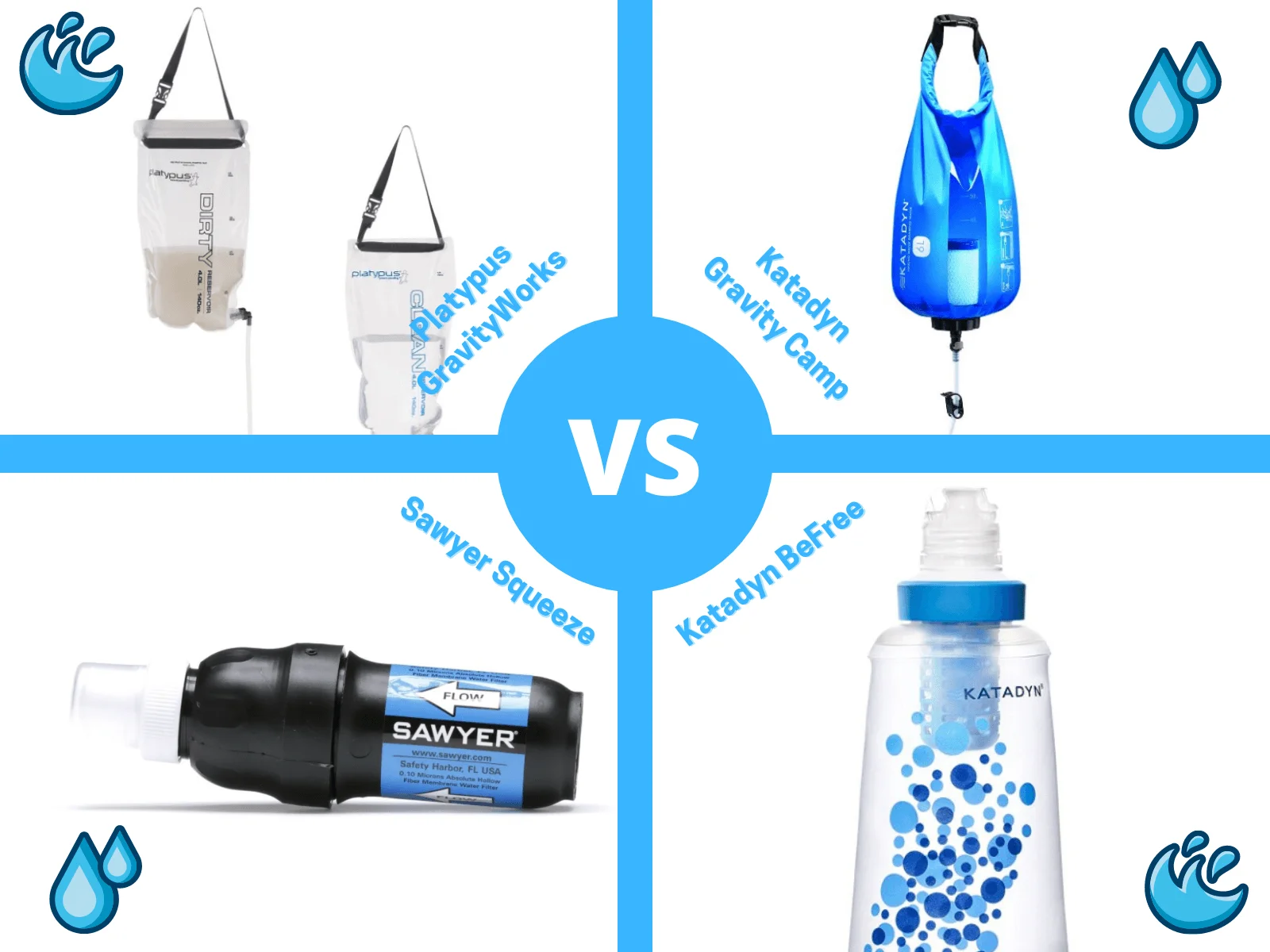
Types of Portable Water Filters for Hikers
When it comes to choosing the best portable water filter for hiking, understanding the different types available is crucial. Each filtration method comes with its own set of advantages and limitations. After years of testing various systems across different terrains and conditions, I've learned that no single filter type is perfect for every situation.
Squeeze Filters: Ultralight Champions
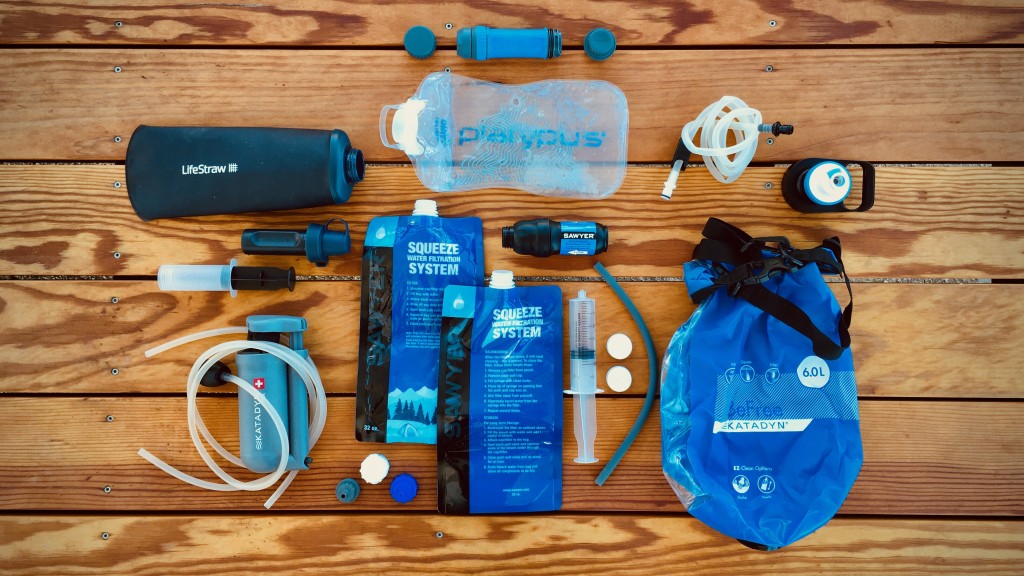
Squeeze filters have become incredibly popular among hikers, particularly those focused on minimizing weight. These systems typically consist of a hollow fiber filter element that attaches to a collapsible reservoir or water bottle. By applying pressure (squeezing), water is forced through the filter membrane, removing pathogens.
The major advantages of squeeze filters include their lightweight design (typically 2-4 ounces), compact size, and relatively fast filtration rate. They're perfect for solo hikers and those focusing on covering long distances with minimal weight. During my Pacific Crest Trail thru-hike, my squeeze filter became my trusted companion—small enough to fit in my hip belt pocket but capable of providing clean water whenever I needed it.
The main drawbacks include the physical effort required (hand fatigue can be real after filtering multiple liters), limited flow rate compared to other systems, and the need for regular maintenance to prevent clogging. Many squeeze filters can freeze in cold temperatures, potentially damaging the filter element.
Gravity Filters: Group Efficiency
Gravity filters take the effort out of water filtration by using—you guessed it—gravity to move water through the filter element. These systems typically feature two reservoirs (one "dirty" and one "clean") connected by a hose with an inline filter. Hang the dirty water bag higher than the clean one, and let physics do the work.
The greatest benefit of gravity filters is convenience, especially for groups. Fill the dirty reservoir once, hang it up, and you can filter several liters without any pumping or squeezing. When I guided a group of six hikers through the Olympic Peninsula last year, our gravity filter system saved us countless hours that would have been spent filtering individual water bottles.
The downsides include greater weight and bulk compared to squeeze systems, difficulty in filtering from shallow sources, and the need for suitable hanging points. They're also typically more expensive than simpler filtration methods.
Pump Filters: Versatile Workhorses
Pump filters were once the standard for backcountry water treatment. These mechanical systems use a hand pump to force water through a filter element. While they've lost some popularity to lighter alternatives, they offer unique advantages that keep them relevant for certain situations.
The main benefits include the ability to filter from very shallow sources (even puddles), predictable flow rates regardless of water quality, and durability in freezing conditions (when properly cared for). Some high-end pump filters can even remove viruses, making them suitable for international travel.
The disadvantages are significant, though: they're heavier (often 11-20 ounces), bulkier, more expensive, and require manual pumping that can be tiring. During a kayaking expedition in Alaska, however, I found a pump filter invaluable for extracting water from shallow tidal pools when other water sources weren't available.
Chemical Treatment: The Ultralight Backup
Chemical treatments using chlorine dioxide or iodine aren't technically filters, but they're an important water treatment option. These ultralight drops or tablets kill pathogens rather than physically removing them.
The major advantages are minimal weight (just a few ounces), compact size, and simplicity. They're perfect as a backup system or for ultralight adventures. I always keep a small bottle of water treatment drops in my emergency kit, even when carrying a primary filter.
The disadvantages include treatment time (typically 15 minutes to 4 hours depending on the contaminant), inability to remove sediment or improve water clarity, and the slight chemical taste they can impart to water. Unlike filters, most chemical treatments can effectively kill viruses as well as bacteria and protozoa.
UV Purifiers: High-Tech Solution
UV purifiers use ultraviolet light to neutralize microorganisms by disrupting their DNA. These battery-powered devices are inserted into a water container, stirred for 60-90 seconds, and the UV light deactivates bacteria, protozoa, and viruses.
The advantages include their effectiveness against viruses, quick treatment time, and ease of use. The significant disadvantages are battery dependence, ineffectiveness in cloudy water, inability to improve water clarity, and relatively high cost. I've found UV purifiers work best when combined with a pre-filter in situations where viral contamination is a concern.
Expert Tip: Filter Freezing Prevention
Many hollow fiber filters can be permanently damaged if water inside them freezes, as the expanding ice breaks the delicate fibers. During cold-weather hiking, I always sleep with my filter inside my sleeping bag and carry it in an inner pocket during the day. Chemical purification methods aren't affected by freezing temperatures, making them a reliable backup in winter conditions.
Top 5 Portable Water Filters for Hiking
After testing dozens of water filters across various terrains and conditions, I've narrowed down the absolute best portable water filters for hiking. Each of these filters excels in different scenarios, and understanding their strengths and weaknesses will help you choose the right one for your adventures.
1. Sawyer Squeeze: The All-Around Champion
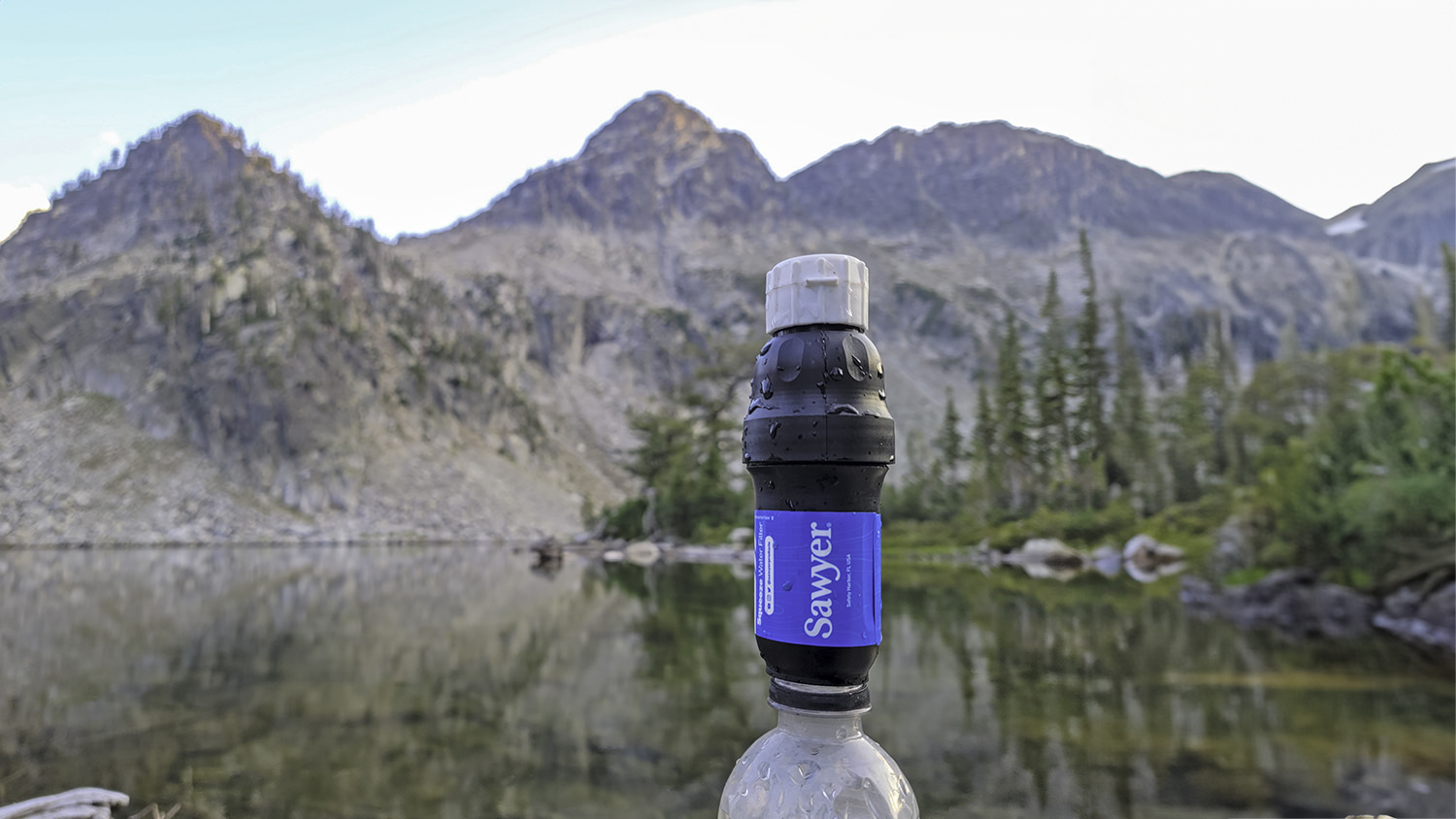
Weight: 3 oz (85g)
Filter Medium: Hollow fiber
Flow Rate: 1.7 liters per minute
Filter Life: 378,000 liters (100,000 gallons)
Effective Against: Bacteria, protozoa, microplastics
The Sawyer Squeeze has earned its reputation as the gold standard in backpacking water filters. With over 6,000 miles of personal testing across varied terrain, I can confidently say it's one of the most reliable filters on the market. Its 0.1-micron absolute filtration removes 99.99999% of all bacteria and 99.9999% of all protozoa, including giardia and cryptosporidium.
What sets the Sawyer Squeeze apart is its incredible versatility. It can be used as a squeeze filter, inline with hydration bladders, or even set up as a gravity system. I particularly appreciate its compatibility with standard threaded water bottles (28mm threads, like Smartwater bottles), which means you can filter directly into your drinking container without needing to carry the included pouches.
The filter's extraordinary lifespan of 378,000 liters makes it essentially a lifetime purchase for most hikers, though regular backflushing with the included syringe is necessary to maintain flow rates. While the included squeeze pouches aren't particularly durable, pairing this filter with a more robust collection bag like the CNOC Vecto creates an incredibly reliable system.
Pros: Lightweight, extremely long lifespan, versatile configuration options, great flow rate, affordable
Cons: Included pouches lack durability, requires regular backflushing, can be damaged by freezing
2. Katadyn BeFree: Speed Demon
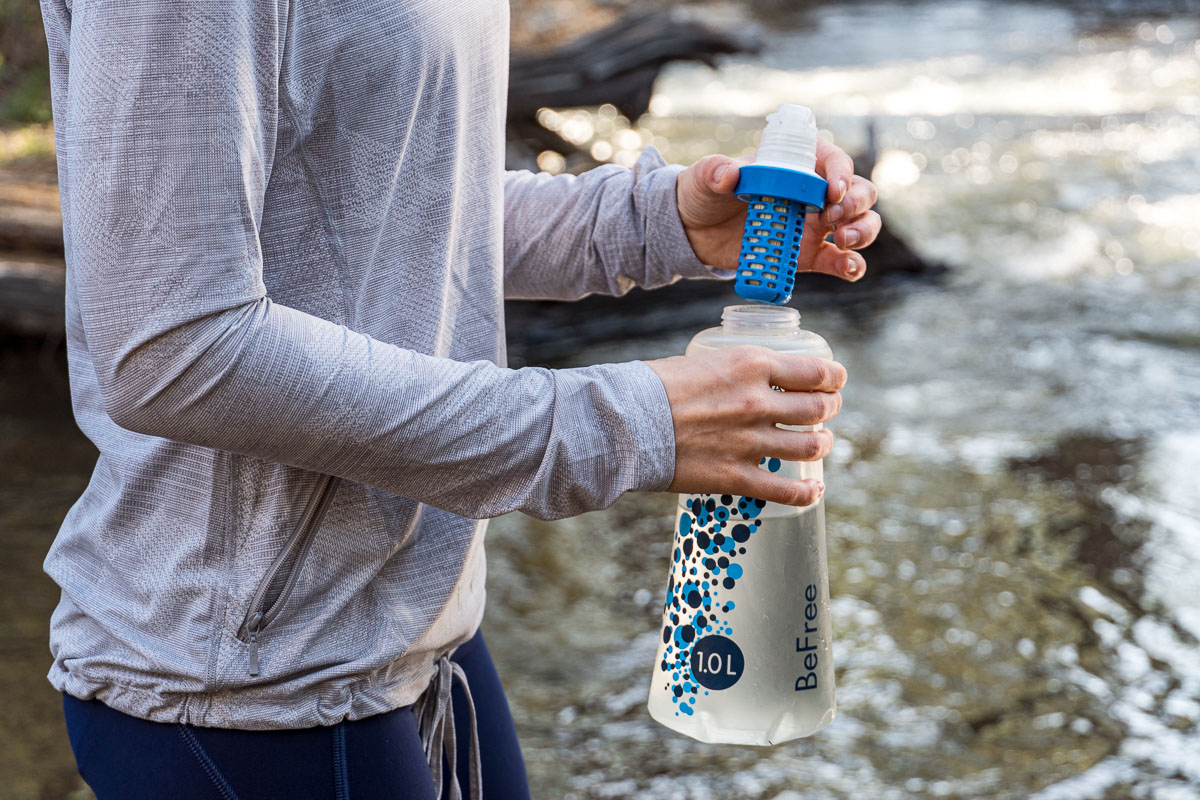
Weight: 2.3 oz (65g)
Filter Medium: Hollow fiber
Flow Rate: 2 liters per minute
Filter Life: 1,000 liters
Effective Against: Bacteria, protozoa
If speed is your priority, the Katadyn BeFree deserves your attention. With the fastest flow rate among lightweight filters, this compact system allows you to fill a liter bottle in about 30 seconds. During my fast-paced section hikes on the Appalachian Trail, the BeFree's rapid filtration made water breaks incredibly efficient.
The BeFree's EZ-Clean Membrane technology is another standout feature. Unlike the Sawyer Squeeze that requires a backflush syringe, the BeFree filter can be cleaned simply by swishing it in water and shaking—making field maintenance a breeze. I've found this especially useful during longer trips where minimizing maintenance complexity is valuable.
The filter comes with a collapsible HydraPak flask that's more durable than Sawyer's pouches, though still susceptible to punctures over time. The major limitation of the BeFree is its proprietary threading that only fits specific bottles and reservoirs with a 42mm mouth.
Another consideration is the relatively short lifespan of 1,000 liters—significantly less than the Sawyer Squeeze. In my experience, the BeFree's flow rate also diminishes more quickly when used with silty or murky water sources, though it recovers well after cleaning.
Pros: Ultralight, fastest flow rate in its class, easy field cleaning, compact
Cons: Limited bottle compatibility, shorter lifespan, clogs more easily in silty water
3. Platypus GravityWorks: Group Camping Champion
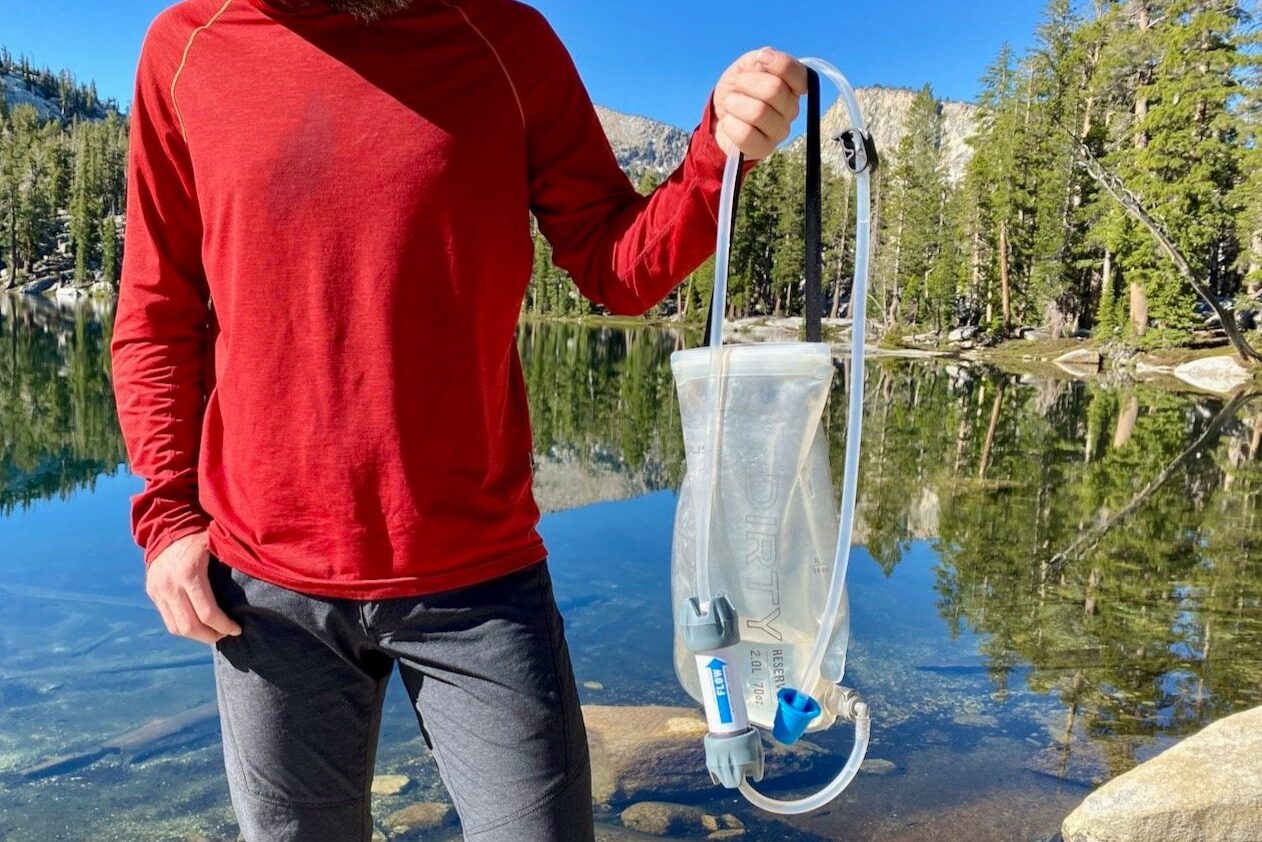
Weight: 11.5 oz (326g)
Filter Medium: Hollow fiber
Flow Rate: 1.75 liters per minute
Filter Life: 1,500 liters
Effective Against: Bacteria, protozoa, particulates
When I'm leading group trips or setting up a basecamp for multiple days, the Platypus GravityWorks is my go-to filtration system. This gravity-fed filter takes the labor out of water treatment by letting physics do the work. The 4-liter system includes two reservoirs—one for dirty water and one for clean—connected by a hose with an inline filter.
The beauty of the GravityWorks is its efficiency for filtering large quantities of water. During a week-long trip in the Cascades with four friends, we could filter enough water for the entire group in minutes while setting up camp. Simply fill the dirty reservoir, hang it from a tree branch, and let gravity push the water through the filter into the clean reservoir.
With a flow rate of 1.75 liters per minute, it's nearly as fast as the BeFree but without requiring any effort once set up. The system's 0.2-micron filter effectively removes bacteria and protozoa, while the 4-liter capacity means fewer trips to the water source.
The main downsides are weight and bulk—at 11.5 ounces, this isn't the system for ultralight solo adventures. It also requires suitable hanging points and can be challenging to fill from shallow water sources. The zip-top on the reservoirs can be difficult to close in cold weather, but the overall durability of the system is excellent.
Pros: No pumping or squeezing required, excellent for groups, large capacity, good flow rate
Cons: Heavy, bulky, requires suitable hanging locations, more expensive
4. MSR Guardian: The Premium Purifier
Weight: 17.3 oz (490g)
Filter Medium: Medical-grade fibers
Flow Rate: 2.5 liters per minute
Filter Life: 10,000+ liters
Effective Against: Bacteria, protozoa, particulates, viruses
The MSR Guardian represents the gold standard in water purification for the most demanding conditions. Unlike standard filters, the Guardian's advanced technology removes viruses in addition to bacteria and protozoa, making it ideal for international travel or areas with serious water quality concerns.
When I led an expedition to remote areas of Central America with questionable water sources, the Guardian provided peace of mind worth its considerable weight. Its military-grade construction is virtually indestructible, and the self-cleaning mechanism—which flushes contaminants with each pump stroke—means you'll never need to manually backflush or clean the filter element.
With a 0.02-micron pore size (compared to 0.1 or 0.2 in standard filters), the Guardian provides hospital-grade water purification in the field. It works exceptionally well with turbid water sources that would quickly clog lesser filters, and its robust design prevents freezing damage in cold conditions.
The obvious drawbacks are weight (17.3 ounces) and price—it's by far the most expensive option on this list. However, for expeditions where water quality is unknown or highly suspect, or for international travel where viral contaminants are a concern, the Guardian's unmatched protection justifies these compromises.
Pros: Removes viruses, self-cleaning, extremely durable, works with turbid water, freeze-resistant
Cons: Very expensive, heavy, requires manual pumping
5. Aquamira Water Treatment Drops: Ultralight Backup
Weight: 3 oz (85g)
Treatment Type: Chemical (chlorine dioxide)
Treatment Time: 15 minutes to 4 hours
Treatment Capacity: 30 gallons per set
Effective Against: Bacteria, protozoa, viruses
While not a filter in the traditional sense, no discussion of water treatment would be complete without mentioning Aquamira drops. This chemical treatment uses chlorine dioxide to effectively kill bacteria, protozoa (including cryptosporidium with sufficient treatment time), and viruses—something physical filters can't typically achieve.
At just 3 ounces for the complete kit, Aquamira is the lightest option on this list and takes up minimal space in your pack. I always carry Aquamira as a backup to my primary filter, particularly on remote treks where a broken or frozen filter could create a dangerous situation.
The treatment process is simple but does require some patience. Mix drops from the two bottles, wait five minutes for the chemical reaction, add to your water, then wait 15 minutes for most pathogens (or up to 4 hours for cryptosporidium in very cold water). The drops leave minimal taste compared to iodine treatments and are safe for long-term use.
The main disadvantages are treatment time and the inability to remove particulates or improve cloudy water. For best results in silty water, pre-filtering through a bandana or coffee filter is recommended. Despite these limitations, Aquamira's combination of effectiveness, weight, and reliability make it an essential component of my emergency kit.
Pros: Ultralight, compact, effective against viruses, can't break, inexpensive
Cons: Requires waiting time, doesn't filter particulates, slight chemical taste
Comparison: Finding Your Perfect Filter
Choosing the best portable water filter for hiking depends on your specific needs, trail conditions, and preferences. This comparison will help you identify which filter is right for your particular hiking style and circumstances.
| Filter | Weight | Flow Rate | Filter Life | Virus Protection | Ease of Use | Price Range | Best For |
|---|---|---|---|---|---|---|---|
| Sawyer Squeeze | 3 oz | 1.7 L/min | 378,000 L | No | ★★★★☆ | $ | Solo thru-hikers, versatility |
| Katadyn BeFree | 2.3 oz | 2.0 L/min | 1,000 L | No | ★★★★★ | $$ | Ultralight, speed, easy cleaning |
| Platypus GravityWorks | 11.5 oz | 1.75 L/min | 1,500 L | No | ★★★★☆ | $$$ | Groups, basecamp |
| MSR Guardian | 17.3 oz | 2.5 L/min | 10,000+ L | Yes | ★★★☆☆ | $$$$$ | International travel, extreme conditions |
| Aquamira Drops | 3 oz | N/A | 30 gal/kit | Yes | ★★★☆☆ | $ | Backup, ultralight, virus protection |
Choosing Based on Hiking Style
Your hiking style should heavily influence your filter choice. Here's my recommendation for different types of adventures:
- Solo Thru-Hiking/Ultralight: The Sawyer Squeeze or Katadyn BeFree are your best options. The BeFree offers faster flow rates and easier cleaning, while the Squeeze provides unmatched longevity and versatility. I prefer the Squeeze for long-distance thru-hikes and the BeFree for shorter trips or when speed is essential.
- Group Backpacking: The Platypus GravityWorks shines here. The ability to filter 4 liters at once while performing camp tasks makes it the most efficient option for 3+ people. The weight can be distributed among group members, offsetting its main disadvantage.
- International/Remote Expeditions: The MSR Guardian is worth its weight and cost when water quality is truly questionable or viral contamination is likely. Alternatively, a standard filter paired with Aquamira drops provides comprehensive protection at a lower weight and cost.
- Winter/Alpine Adventures: Chemical treatment like Aquamira or a pump filter like the Guardian avoids the freezing concerns associated with hollow fiber filters. If using a Squeeze or BeFree in cold conditions, sleeping with it in your sleeping bag is essential.
- Budget Conscious: The Sawyer Squeeze offers the best value proposition due to its moderate price and extraordinary lifespan. The initial investment amortized over its full life makes it pennies per liter.
Real User Experiences
"I've used my Sawyer Squeeze for over 3,000 miles across the PCT, Colorado Trail, and numerous weekend trips. It's still going strong after regular backflushing. The biggest pro is its versatility—I can use it as a squeeze filter, gravity system, or drink straight through it. The only con is that I have to be vigilant about keeping it from freezing in shoulder season trips."
— Alex R., Amazon review
"The Katadyn BeFree or Sawyer Squeeze are the two best. I personally use a BeFree with a CNOC bladder. The combination gives you the fast flow rate of the BeFree with the durability and convenience of the CNOC collection bag. After trying multiple filters, this setup has proven most reliable for my style of hiking."
— u/Vecii, Reddit r/backpacking
"I just finished a trip with a CNOC gravity bag and Aquamira backcountry plus filter. Worked great, highly recommend. The Aquamira filters do a better job of removing odd tastes and colors than the Sawyers. For group trips, nothing beats the convenience of a good gravity system—fill it once and everyone can get clean water while you prepare dinner or set up camp."
— u/BillyRubenJoeBob, Reddit r/backpacking
My Experience: Real-World Testing
Through years of backpacking across various terrains—from the parched deserts of Arizona to the pristine alpine lakes of the Rockies—I've had ample opportunity to test these portable water filters for hiking in real-world conditions. My experiences have shaped my recommendations and highlighted important aspects of filter performance that don't always appear on specification sheets.
My Four-Season Testing Protocol
I believe a water filter truly proves its worth in challenging conditions. That's why my testing protocol involves using each filter across all four seasons and in diverse water sources, from crystal clear mountain streams to murky desert tanks frequented by cattle. This comprehensive approach reveals strengths and weaknesses that might not emerge in limited use.
During summer in the Grand Canyon, I tested flow rates in high temperatures and with silty Colorado River water—conditions notorious for challenging filters. The Sawyer Squeeze maintained decent performance after backflushing, while the BeFree initially flowed faster but clogged more quickly and was harder to restore to full performance.
Winter testing in the Cascades focused on freezing concerns. I developed a system of keeping filters in inner jacket pockets during day hikes and inside my sleeping bag at night. Despite these precautions, I once accidentally left my Sawyer Squeeze outside overnight in sub-freezing temperatures. While it didn't appear damaged, I replaced it immediately rather than risk microfractures that might compromise filtration.
Lessons from the John Muir Trail
My 211-mile John Muir Trail thru-hike provided valuable insights into filter longevity and maintenance. I started with a brand new Sawyer Squeeze and documented its performance throughout the journey. The initial flow rate was impressive—filling a liter bottle in under a minute with moderate pressure.
By day seven, I noticed a slight decrease in flow rate, particularly when filtering from lakes with visible algae. A thorough backflushing restored most of the performance, but I learned to be more selective about water sources when possible, choosing flowing streams over stagnant ponds.
A ranger at Muir Trail Ranch shared an excellent tip: using a bandana as a pre-filter when collecting particularly murky water. This simple addition significantly reduced the frequency of required backflushing and maintained better flow rates throughout the trip.
The most remarkable insight came from fellow hikers who had been using the same Sawyer Squeeze for multiple long trails. One PCT thru-hiker showed me his Squeeze that had filtered water for over 5,000 miles across multiple years and trails—still functioning well with regular maintenance. This real-world demonstration of longevity far exceeded my expectations from manufacturer specifications.
Group Trip Revelations in Olympic National Park
Leading a group of six hikers through Olympic National Park's temperate rainforest revealed the stark contrast between individual filtering methods and group-oriented systems. Each hiker initially used their own preferred filter—ranging from the Sawyer Mini to the Katadyn BeFree.
By the second day, it became clear that the individual filtering was creating bottlenecks at water sources and camp. I introduced a Platypus GravityWorks system, and the efficiency difference was remarkable. We could collect 4 liters at once, start the filtration process, and continue with camp chores while gravity did the work.
An unexpected benefit of the gravity system emerged during a heavy rainstorm. Rather than everyone standing exposed at the water source individually filtering, one quick collection trip provided water for the entire group. The additional weight of the GravityWorks system (11.5 oz versus multiple 2-3 oz personal filters) was easily justified by the time savings and convenience.
Seasonal Adaptations
Through these experiences, I've developed a seasonal approach to water filtration that has served me well:
- Spring (Snowmelt Season): The high water volume and generally clear mountain streams make this an ideal time for the fast flow of the Katadyn BeFree.
- Summer: With lower water levels and more biological activity, I prefer the more clog-resistant Sawyer Squeeze for solo trips or the GravityWorks for group adventures.
- Fall: As temperatures drop and water sources become less reliable, I rely on the Sawyer Squeeze with a CNOC Vecto 3L bag to carry more water between sources.
- Winter: To avoid freezing concerns with hollow fiber filters, I often switch to Aquamira drops or carry them as a backup to a carefully protected Sawyer Squeeze.
These experiences have taught me that there's no perfect "one-size-fits-all" water filter, but understanding each system's strengths allows me to choose the right tool for each specific adventure. The best portable water filter for hiking isn't a single product—it's having the knowledge to select the appropriate filtration system for your particular trip's conditions, group size, and water sources.
Ranger Advice: Water Source Selection
During a backcountry ranger encounter in Yosemite, I received invaluable advice on water source selection. The ranger recommended looking for water sources that are: 1) Moving rather than stagnant, 2) Clear rather than cloudy, 3) Away from obvious animal activity, and 4) Upstream from human camping areas. Even with a reliable filter, starting with the cleanest possible water reduces maintenance needs and extends filter life. As the ranger memorably put it: "A filter is your second line of defense—smart water collection is your first."
Frequently Asked Questions
How do I prevent my water filter from freezing in cold weather?
Freezing is one of the biggest threats to hollow fiber filters like the Sawyer Squeeze and Katadyn BeFree. When water inside these filters freezes, it expands and can create micro-fractures in the filter fibers, potentially compromising their effectiveness without visible damage. To prevent freezing:
- Sleep with your filter inside your sleeping bag at night
- Carry your filter in an inner pocket close to your body heat during the day
- Blow air back through the filter to remove as much water as possible after each use
- Consider switching to chemical treatment or a purifier designed for cold weather use when temperatures will remain below freezing
If you suspect your filter may have frozen, the safest approach is to replace it or switch to a backup purification method like Aquamira drops or boiling.
What's the difference between a water filter and a water purifier?
This is a crucial distinction that many hikers misunderstand. The primary difference between filters and purifiers is what they remove from water:
- Water Filters typically remove bacteria (like E. coli, Salmonella) and protozoan parasites (like Giardia and Cryptosporidium) through physical filtration. Most backpacking filters have pore sizes between 0.1 and 0.2 microns.
- Water Purifiers remove or kill viruses in addition to bacteria and protozoa. Viruses are much smaller (typically 0.02-0.03 microns) and require either chemical treatment, UV light, or specially designed filtration systems.
In most wilderness areas of the United States and Canada, a standard water filter is sufficient because viral contamination of backcountry water sources is uncommon. However, when traveling internationally or in heavily used recreation areas with poor sanitation, a purifier provides additional protection against viral waterborne illnesses like hepatitis A, rotavirus, and norovirus.
I typically rely on a standard portable water filter for most North American backcountry trips, but switch to a purifier (or combine filtration with chemical purification) when traveling internationally.
How often should I replace my water filter?
Replacement frequency varies dramatically depending on the filter model, usage conditions, and maintenance practices:
- Sawyer Squeeze: With proper care and regular backflushing, these filters can last for their rated 378,000 liters—effectively a lifetime of use for most hikers. Replace if flow rate can't be restored with cleaning or if the filter freezes.
- Katadyn BeFree: The manufacturer recommends replacement after approximately 1,000 liters, though many users report significantly shorter lifespans when using the filter in silty or algae-rich water. Replace when flow rate can no longer be adequately restored by cleaning.
- Platypus GravityWorks: The filter cartridge should last for about 1,500 liters with proper care. Replace when flow rate diminishes significantly despite cleaning.
- Chemical treatments: These have expiration dates printed on the packaging. Aquamira drops typically have a 4-year shelf life when unopened, and about 1 year after opening.
As a best portable water filter for hiking best practice, I recommend testing your filter at home before each major trip. If the flow rate has diminished significantly and cannot be restored with cleaning, it's time for a replacement—regardless of the manufacturer's stated lifespan.
Can I drink saltwater using these filters?
No, standard portable water filters for hiking cannot make saltwater (or brackish water) potable. These filters remove biological contaminants and some chemical impurities, but they cannot remove dissolved salts and minerals. Desalination requires specialized equipment like reverse osmosis systems, which are typically much larger and more energy-intensive than backpacking water filters.
If you're hiking in coastal areas where saltwater intrusion might be an issue, research freshwater sources carefully before your trip and carry additional water capacity if needed. In true emergency situations where only saltwater is available, solar stills or emergency desalination devices would be required.
Should I filter clear mountain spring water?
Yes, even clear, pristine-looking mountain springs should be filtered or purified before drinking. While beautiful alpine springs might look perfectly safe, they can still harbor invisible pathogens from wildlife, grazing animals, or even previous human visitors.
During a ranger-led program in Rocky Mountain National Park, I learned that water sampling studies have found Giardia present in even the most remote alpine water sources, likely introduced by wildlife like beaver and marmots. The effort of filtering or treating water is minimal compared to the potential consequences of waterborne illness miles from medical help.
The one potential exception might be water from a verified, tested spring source that emerges directly from the ground—but even then, contamination can occur between the source and your collection point. When in doubt, filter or treat your water.
Conclusion
After thousands of miles on trail and countless liters of filtered water, I've found that the ideal portable water filter for hiking depends greatly on your specific needs, trip style, and conditions. There's no single "best" option for everyone, but there are excellent choices for each type of adventure.
For solo backpacking and thru-hiking where weight and reliability are paramount, the Sawyer Squeeze remains my top recommendation. Its incredible longevity, versatility, and reasonable price make it the gold standard for individual hikers. Those prioritizing absolute lightest weight and fastest flow might prefer the Katadyn BeFree, especially for shorter trips or in regions with cleaner water sources.
Group trips and basecamp scenarios are where the Platypus GravityWorks truly shines. The ability to filter large quantities of water with minimal effort transforms what could be a tedious chore into a simple background task. The weight penalty becomes negligible when distributed among multiple hikers.
For international travel or regions with serious water quality concerns, the MSR Guardian provides unmatched protection against the full spectrum of waterborne pathogens. Its hefty price and weight are justified by the peace of mind it provides in truly questionable conditions.
And let's not forget the humble chemical treatment options like Aquamira, which serve admirably as ultralight primary treatment for experienced hikers or as essential backups for anyone venturing into remote areas.
Remember that even the best portable water filter for hiking is only effective when used correctly and maintained properly. Regular cleaning, freezing prevention, and proper storage are essential for ensuring your chosen filtration system performs when you need it most.
As you plan your next adventure, consider not just the weight and cost of your water treatment system, but also the specific conditions you'll encounter, the number of people in your group, and your personal preferences for convenience versus simplicity. The right choice will keep you safely hydrated mile after mile, from local weekend trips to epic long-distance journeys.
Whichever filter you choose, the ability to transform questionable backcountry water into clean, safe drinking water is nothing short of miraculous—one of the technologies that has most dramatically improved the hiking and backpacking experience in recent decades. Drink up, stay healthy, and happy trails!
For more information on portable water filters for backpacking and other essential gear reviews, be sure to explore our other articles on WildernessPaths.com.
Ready for your next adventure?
Get prepared with the right water filtration system for your hiking style.
Shop Water Filters on AmazonThis article contains affiliate links. If you purchase products through these links, we may earn a small commission at no additional cost to you. This helps support our research and testing of outdoor gear. Read more about our affiliate policy here.
External Resources: CDC Backcountry Water Treatment Guidance | EPA Drinking Water Standards
Last updated: July 2025
Related Articles:
- Comprehensive Guide to Portable Water Filters
- Best Portable Water Filters for International Travel
- Top Water Filters for Family Camping Trips
- Emergency Water Filtration Systems: A Complete Guide
- Ultralight Water Filters for Backpacking Expeditions
- Water Purification for International Trekking
- Survival Water Filtration Techniques and Tools
- Comparing Straw-Style Water Filters
- Pump Water Filters: Comprehensive Review
- Gravity Filters for Group Expeditions