

What Is a Gravity Portable Water Filter?
A gravity portable water filter is a simple yet ingenious system that uses gravity—rather than pressure, pumping, or electricity—to push water through a filtration element. These systems typically consist of two chambers: an upper "dirty" water reservoir and a lower "clean" water container. The filtration occurs as water passes from the upper chamber through the filter into the lower chamber.
These filters have become increasingly popular among hikers, campers, and outdoor enthusiasts because they offer a hands-free filtration method that can process large volumes of water with minimal effort. Unlike pump filters that require manual labor or straw-style filters that only allow you to drink directly from the source, gravity filters can produce clean water for storage and later use.
Types of Gravity Portable Water Filters
There are several types of gravity portable water filters available on the market:
- Dual-Bag Systems: These feature two separate bags—one for dirty water and one for clean water—connected by a filter. Examples include the Platypus GravityWorks and LifeStraw Peak Series.
- Stainless Steel Countertop Systems: While larger and heavier, these durable filters like the Berkey and Alexapure Pro are perfect for base camps, off-grid cabins, or emergency preparedness.
- Collapsible Bag Systems: Ultra-lightweight options that pack down small, perfect for backpacking. The LifeStraw Peak Gravity and Katadyn BeFree Gravity are popular choices.
- Bottle-Compatible Systems: Some gravity filters can attach directly to standard water bottles for added versatility.
While gravity filters excel in group settings and base camps, they may not be the fastest solution for on-the-go hydration. For quick water access while hiking, many backpackers complement their gravity system with a straw-style portable water filter or pump portable water filter.
How Do Gravity Water Filters Work?

Gravity portable water filters operate on a beautifully simple principle: water flows downward through a filter element, removing harmful contaminants along the way. The filtering process typically involves several stages:
Filtration Technologies
Most gravity water filters use one or more of these filtration methods:
- Hollow Fiber Membrane: These microfiltration elements contain thousands of tiny U-shaped microtubes with pores around 0.1 to 0.2 microns in size. Water molecules pass through, but bacteria, protozoa, and other pathogens get trapped. The Platypus GravityWorks and LifeStraw Peak Series use this technology.
- Activated Carbon: Carbon filters adsorb chemicals, pesticides, heavy metals, and compounds that cause bad taste and odor. Many premium filters incorporate carbon as a secondary filtration stage.
- Ceramic Elements: Ceramic filters have microscopic pores that physically block pathogens. They're durable and can be scrubbed clean when they begin to clog. The Doulton and Aquacera filters use ceramic technology.
- Ion Exchange Resins: Some advanced filters include ion exchange to remove heavy metals and dissolved minerals. The Waterdrop King Tank employs this technology.
The effectiveness of any gravity filter depends on the size of its microscopic pores, measured in microns. Most backpacking-oriented filters feature a pore size of 0.1 to 0.2 microns, which is sufficient to remove bacteria (like E. coli and Salmonella) and protozoa (such as Giardia and Cryptosporidium). However, these standard filters cannot remove viruses, which are much smaller.
For international travel or areas with viral contamination concerns, you'll need a purifier with smaller pores (typically 0.01 microns or less) or additional treatment methods like UV light or chemical disinfection.
Flow Rate and Capacity
The speed at which water passes through a gravity filter—its flow rate—varies significantly between models. Premium outdoor-focused filters like the Platypus GravityWorks can filter 1.75 liters per minute, while larger home systems like the Berkey filters are slower but have greater capacity.
Filter capacity refers to how much water a filter can process before requiring replacement. This ranges from 1,000 liters for entry-level models to 100,000+ liters for premium filters. In practice, water quality dramatically affects filter lifespan—clearer water sources mean longer filter life.
Top 7 Gravity Portable Water Filters of 2025
After extensive testing across various wilderness environments and water sources, I've compiled this definitive list of the best gravity portable water filters available today. Each has been evaluated based on filtration effectiveness, flow rate, capacity, weight, ease of use, and overall value.
1. Platypus GravityWorks 4L

The Platypus GravityWorks consistently ranks as the best overall gravity filter for outdoor adventures, and for good reason. After using it on multiple backpacking trips across the Appalachian Trail and Rocky Mountains, I can confirm it delivers exceptional performance for groups and extended wilderness stays.
What sets the GravityWorks apart is its perfect combination of speed, capacity, and ease of use. The system comes with two 4-liter bags—one labeled "dirty" and one "clean"—connected by a hollow fiber filter. Simply fill the dirty bag, hang it from a tree branch, and let gravity do the work. The flow rate is impressive at 1.75 liters per minute, meaning you can filter enough water for a group of 4 in under 10 minutes.
Pros:
- Fastest flow rate among portable gravity filters
- Excellent filtration performance (0.2-micron pore size)
- Versatile compatibility with hydration reservoirs and water bottles
- Easy backflushing to restore flow when filter begins to clog
- Relatively lightweight for the capacity (11.5 oz)
Cons:
- Zip-top can be difficult to close, especially in cold weather
- Challenging to fill from shallow water sources
- Doesn't filter viruses (like most backpacking filters)
- Higher price point than some competitors
2. LifeStraw Peak Series Gravity 3L
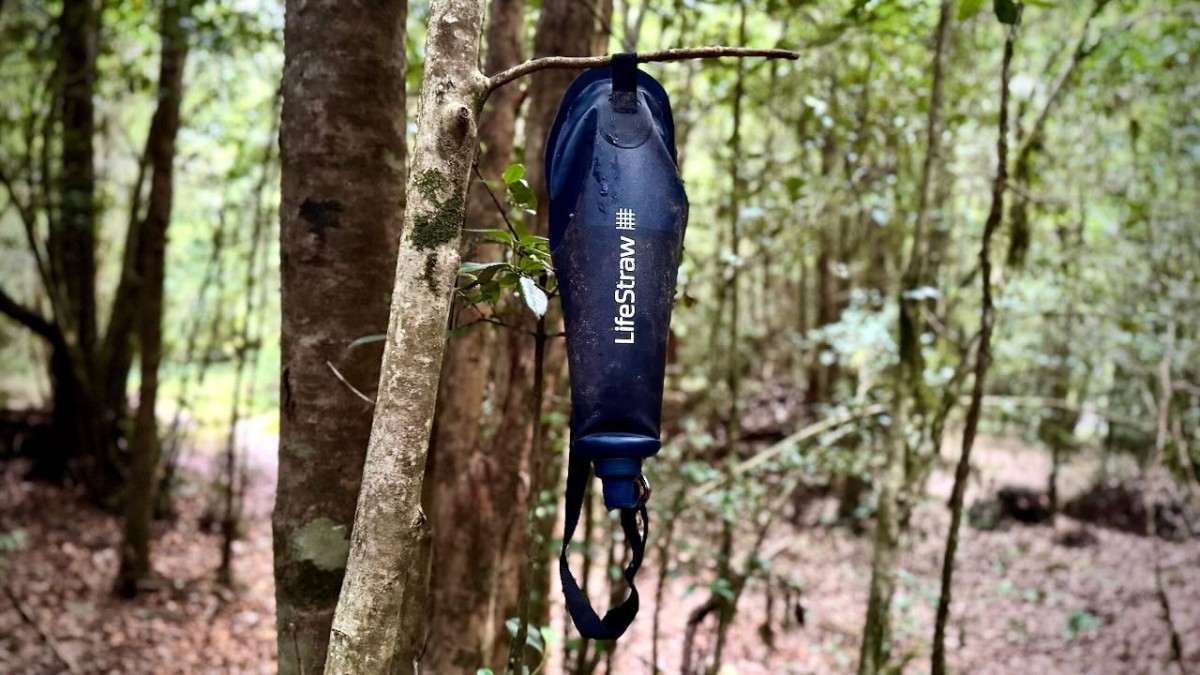
The LifeStraw Peak Series Gravity 3L is a standout ultralight option that I've personally tested across three seasons. Released in 2022, this system represented a significant upgrade to LifeStraw's previous offerings, with improved durability, flow rate, and usability features.
What impresses me most about the Peak Gravity is its versatility. The hollow-core membrane microfilter can be removed and used directly as a straw from water sources or attached to compatible water bottles. This adaptability makes it one of the most flexible water treatment systems available. At just 8.1 ounces, it's considerably lighter than the Platypus GravityWorks while still offering excellent filtration capability.
During my tests in the Grand Tetons, the Peak Gravity consistently produced clean, great-tasting water even from suspect alpine lakes. The filter's 2,000-gallon capacity is twice that of many competitors, making it an exceptional value over time.
Pros:
- Ultralight design perfect for backpacking (8.1 oz)
- Multi-functional filter works as gravity system, straw, or bottle adapter
- Extended filter life (2,000 gallons)
- Durable construction with reinforced hanging points
- Excellent value for the performance
Cons:
- Smaller capacity than some competitors (3L vs. 4L)
- Slightly slower flow rate than Platypus
- Requires careful handling to prevent creasing damage at fold points
- Can be tricky to properly seal the bag
3. Berkey Water Filter System

The Big Berkey is the gold standard for gravity water filtration, though it's more suited for base camps, off-grid cabins, and home emergency preparedness than backpacking due to its weight and size. I've used a Berkey at our mountain cabin for over five years, and it's been unfailingly reliable through multiple power outages and spring runoff seasons.
What truly sets Berkey filters apart is their unmatched contaminant removal capabilities. Using Black Berkey purification elements, the system removes over 200 contaminants including bacteria, viruses, parasites, heavy metals, pharmaceuticals, pesticides, and volatile organic compounds. In laboratory testing, Berkey filters consistently outperform competitors in removing lead, chlorine, and other harmful substances.
The stainless steel construction is virtually indestructible, and the system requires no electricity or water pressure to operate. Each filter element can process up to 3,000 gallons, meaning a two-filter system can purify 6,000 gallons before replacement is needed—enough for a family of four for several years.
Pros:
- Superior contaminant removal (including viruses)
- Extremely long filter life (6,000 gallons with two elements)
- Durable stainless steel construction
- No electricity required
- Excellent for emergency preparedness
Cons:
- Heavy and bulky (not suitable for backpacking)
- Higher upfront cost
- Requires separate fluoride filters for fluoride removal
- Filters need priming before first use
4. Waterdrop King Tank Gravity-Fed System
The Waterdrop King Tank is a newer entrant to the gravity filter market that has quickly earned high marks for its impressive flow rate and comprehensive contaminant removal. In lab testing, it outperformed many competitors at reducing contaminants while maintaining a faster flow rate.
What makes the Waterdrop King Tank special is its combination of carbon filtration and ion exchange technology. This dual-action approach effectively tackles both biological contaminants and chemical pollutants. It's also one of the few stainless steel gravity systems to earn NSF 372 certification for lead-free design.
Pros:
- Fastest flow rate among countertop systems (4 GPH)
- NSF 372 certified for lead-free design
- Excellent contaminant reduction capabilities
- Includes stainless steel/glass spigot
- Affordable filter replacement costs
Cons:
- Complicated setup process
- Filters require manual priming
- Thinner stainless steel than some competitors
- Limited performance certifications
5. MSR AutoFlow XL Gravity Filter
The MSR AutoFlow XL is the high-capacity champion of backpacking gravity filters. With its massive 10-liter reservoir, it's perfect for large groups, base camps, or areas where water sources are scarce and you need to collect a lot at once.
I tested the AutoFlow XL during a week-long trip with six people in the Wind River Range, and its large capacity was a game-changer for camp life. The built-in sediment trap is particularly useful when filtering from silty or turbid water sources, helping to extend filter life.
Pros:
- Largest capacity among portable gravity filters (10L)
- Built-in sediment catcher
- Adaptable to various containers
- Durable construction for backcountry use
- Can function as a shower or handwashing station
Cons:
- Slowest flow rate among major gravity filters
- Requires frequent backflushing with turbid water
- Heavy compared to smaller options
- Needs strong anchors to support full weight
6. Alexapure Pro Gravity Water Filter
The Alexapure Pro is a serious contender in the stainless steel gravity filter category, offering performance comparable to Berkey at a slightly lower price point. What sets it apart is its ability to filter untreated water sources including rivers and lakes, making it excellent for off-grid living and emergency preparedness.
The Alexapure uses a hybrid ceramic-carbon filter technology that effectively removes bacteria, protozoa, and many viruses, as well as a wide range of chemical contaminants. Unlike some competitors that require additional filters for fluoride removal, the Alexapure's standard filter can address fluoride (though test results show varying effectiveness).
Pros:
- Excellent contaminant removal including bacteria and many viruses
- High-quality stainless steel construction
- No filter priming required
- Can filter untreated surface water
- Long filter life (5,000 gallons per element)
Cons:
- Relatively slow flow rate
- Higher ongoing maintenance cost
- Mixed results with fluoride removal in testing
- No performance certifications
7. SimPure Gravity Water Filter
The SimPure Gravity Water Filter provides excellent performance at a budget-friendly price point. It features a similar 3L collapsible bag design to the LifeStraw Peak Gravity but at a significantly lower cost, making it an excellent entry point for those new to gravity filtration.
While it doesn't quite match the flow rate or durability of premium options, the SimPure delivers on the fundamentals: it effectively removes bacteria and protozoa, packs down small, and functions reliably in the field. The included tree strap is a thoughtful addition that makes hanging the filter easier when camping.
Pros:
- Excellent value for money
- Lightweight and packable design
- Includes tree strap for hanging
- Good filter lifespan
- Simple setup and operation
Cons:
- Slower flow rate than premium models
- Less durable material than higher-end options
- Limited track record compared to established brands
- No additional versatility features
Head-to-Head Comparison
With so many gravity filter options available, it's helpful to compare their key features directly. Here's how our top picks stack up against each other:
My Experience with Gravity Water Filters
Over the past decade, I've relied on gravity water filters across hundreds of miles of hiking trails and countless nights under the stars. Here are some personal insights from my adventures that might help you make the right choice for your needs.
High Country Challenge
During a week-long trek through Wyoming's Wind River Range, our group of four relied exclusively on the Platypus GravityWorks for all our water needs. The high alpine environment presented crystal-clear lakes and streams that were nonetheless contaminated with Giardia from wildlife. Each evening, we'd set up camp near a water source, fill our 4-liter dirty bag, and hang it from a convenient tree branch.
What impressed me most was how the GravityWorks transformed our camp routine. While the filter did its work, we could focus on setting up tents, preparing dinner, or simply relaxing after a long day's hike. Within 15 minutes, we'd have enough filtered water for cooking, drinking, and filling everyone's bottles for the next day.
One morning, we encountered a silty stream that quickly began to slow the filter's flow rate. The backflushing feature proved invaluable—simply reversing the flow for a few seconds cleared the particulates and restored performance. This is a feature I now consider essential for any gravity filter.
Desert Survival
In the desert southwest, water sources are precious and often less than appetizing. During a three-day trek through Grand Staircase-Escalante National Monument, we came across a stagnant pool that was our only water option for miles. The LifeStraw Peak Gravity system proved its worth here—not only did it filter out the visible particulates, but it also removed the unpleasant taste and odor.
The real test came when I used the filtration straw directly from a muddy puddle during an unexpected detour. Despite the challenging source, the water tasted clean and caused no ill effects. This versatility—being able to use the same filter in multiple configurations—has made the LifeStraw Peak Series my go-to for solo adventures where weight is critical.
Ranger Wisdom
While trekking in Glacier National Park, I had an enlightening conversation with a backcountry ranger who had been using gravity filters for over 20 years. She emphasized the importance of choosing a filter based on your specific needs rather than just following trends.
Her advice: "For weekend warriors, lightweight is king. For expedition groups or base camps, capacity and durability matter more than saving a few ounces."
She also shared a clever trick for protecting collapsible bag filters in freezing conditions—keeping them in your sleeping bag at night prevents the filter membranes from cracking, a fatal flaw that can render your filter useless without any visible damage.
Real User Reviews
"After struggling with pump filters for years, switching to the Platypus GravityWorks was a game-changer. We used it for a family of four on a week-long trip in the Sierras, and never once did we have to wait for water. The convenience of setting it up at camp and going about other tasks is priceless."
— Michael T., verified Amazon purchase
"The LifeStraw Peak Gravity filter is my go-to for ultralight backpacking. At first I was skeptical about the durability of the bag, but I'm now 500+ miles into using it and it's held up perfectly. The versatility of being able to use the filter as a straw directly from water sources has saved me multiple times when I didn't want to stop and set up the whole gravity system."
— Sarah K., from Reddit r/Ultralight
"Our Berkey has been a lifesaver during multiple power outages and boil water advisories. We've had it for over 5 years now and only replaced the filters once. Yes, it's expensive upfront, but the peace of mind and long-term value are worth every penny. The water tastes better than anything bottled."
— James L., verified purchase from Berkey
How to Choose the Best Gravity Water Filter
Selecting the right gravity water filter depends on your specific needs, budget, and intended use. Here are the key factors to consider:
Intended Use
First, determine how you'll primarily use your filter:
- Backpacking and Hiking: Prioritize lightweight, packable options like the LifeStraw Peak Gravity or Platypus GravityWorks.
- Base Camping: Larger capacity systems like the MSR AutoFlow XL shine when you have a fixed location and need water for multiple people.
- Home Emergency Preparedness: Durable, comprehensive filtration systems like Berkey or Alexapure Pro are ideal for long-term reliability without power.
- International Travel: Consider systems that address viruses as well as bacteria and protozoa.
Filtration Effectiveness
Different filters remove different contaminants:
- Bacteria and Protozoa: All quality filters with 0.2 micron or smaller pores will remove these common pathogens.
- Viruses: Most portable backpacking filters do not remove viruses due to their tiny size. For virus protection, look to stainless steel systems like Berkey or consider adding chemical treatment.
- Chemicals and Heavy Metals: Activated carbon filtration is necessary for removing chemical contaminants, pesticides, and improving taste.
- Sediment: Consider systems with pre-filters or easy backflushing if you'll be filtering particularly turbid water sources.
Capacity and Flow Rate
Consider how much water you'll need to filter at once:
- Solo Hikers: 2-3 liter capacity is typically sufficient.
- Small Groups (2-4): 4-liter systems like the Platypus GravityWorks offer a good balance.
- Larger Groups: Consider 6-10 liter systems like the MSR AutoFlow XL.
- Flow Rate: Faster flow rates (1.5+ liters/minute) mean less waiting, particularly important for groups.
Weight and Packability
If you're carrying your filter in a backpack, weight and packed size matter:
- Ultralight Backpacking: Sub-10 oz options like the LifeStraw Peak Gravity minimize weight impact.
- Car Camping/Base Camp: Heavier systems offer greater durability and capacity when weight isn't a primary concern.
- Collapsible vs. Rigid: Collapsible bags pack down smaller but may be more prone to punctures or tears over time.
Durability and Maintenance
Consider the long-term ownership costs and maintenance requirements:
- Filter Lifespan: Ranges from 1,000 to 6,000+ gallons depending on the model.
- Replacement Cost: Factor in the cost of replacement filters when comparing overall value.
- Ease of Cleaning: Some filters can be backflushed in the field, while others require more complex maintenance.
- Material Quality: Stainless steel systems offer greater durability but at the cost of weight, while collapsible bags may develop leaks over time.
Seasonal Considerations
Water filtration needs change with the seasons:
Summer: During hot summer months, your water consumption increases dramatically, making faster flow rates and larger capacity systems more valuable. In many popular hiking areas, summer also means more crowded water sources, so having a filter that works quickly becomes especially important when others are waiting.
Winter: Freezing temperatures present a significant challenge for all water filters. Most microfilter membranes will be permanently damaged if they freeze while wet. If you're winter camping, you'll need to either keep your filter in your sleeping bag overnight or rely on alternative methods like melting snow and boiling water, or using chemical purification.
Spring: Snowmelt season often means higher water levels and more turbidity. This is when pre-filters and easy backflushing systems prove their worth, as they prevent rapid clogging from sediment-laden water sources.
Fall: With water sources potentially drying up in many regions, higher-capacity systems allow you to collect and store more water when you do find a viable source.
Frequently Asked Questions
Do gravity water filters remove viruses?
Most portable gravity water filters designed for backpacking (like the Platypus GravityWorks and LifeStraw Peak) do not remove viruses due to their extremely small size. These filters typically use hollow fiber membrane technology with pores around 0.1-0.2 microns, which effectively captures bacteria and protozoa but not viruses (which can be as small as 0.02 microns). For comprehensive virus protection, you'll need either a purifier-grade system like the Berkey or Alexapure Pro, or to combine filtration with chemical or UV treatment. In North America, viruses in backcountry water sources are rare, but international travelers should consider virus protection more carefully.
How often do I need to replace gravity filter elements?
Replacement frequency varies dramatically between filter types and brands, as well as water quality. Backpacking-oriented filters like the Platypus GravityWorks typically last 1,500 gallons before requiring replacement, while premium stainless steel systems like Berkey can last 3,000 gallons per element (6,000 gallons for a two-element system). The clearer your water source, the longer your filter will last. Signs that it's time to replace your filter include significantly reduced flow rates that don't improve with cleaning, unusual tastes or odors in the filtered water, or reaching the manufacturer's recommended replacement threshold. Always follow manufacturer guidelines, as using a filter beyond its effective lifespan may compromise water safety.
Can gravity filters handle muddy or silty water?
Gravity filters can handle moderately turbid water, but their performance degrades quickly with extremely silty or muddy sources. When filtering turbid water, sediment rapidly accumulates on the filter surface, dramatically slowing flow rates. Systems with integrated pre-filters or sediment traps (like the MSR AutoFlow XL) handle turbid water better than basic models. If you regularly encounter murky water sources, look for filters with easy field-cleaning capabilities like backflushing. A helpful technique is pre-filtering through a bandana or coffee filter to remove larger particles before running water through your main filter. With particularly challenging water sources, allowing the water to settle in a container before filtering can significantly improve filter performance and lifespan.
Are gravity filters better than pump filters?
Neither gravity nor pump filters are universally "better"—they excel in different scenarios. Gravity filters offer hands-free operation, making them ideal for camp settings where you can set them up and attend to other tasks. They're particularly effective for filtering larger quantities of water for groups. Pump filters provide immediate filtration without setup time and work better with shallow or hard-to-access water sources where filling a gravity bag might be challenging. They also typically filter water faster for immediate consumption. Many experienced backpackers eventually own both types: a gravity filter for camp use and a compact pump or squeeze filter for quick access while on the move. The best choice depends on your specific needs, group size, and typical water sources.
Can gravity filters freeze in cold weather?
Yes, and freezing is potentially catastrophic for most water filters. When water inside hollow fiber membrane filters freezes, the expanding ice can crack the microscopic fibers, creating channels large enough for pathogens to pass through—often with no visible damage to indicate the filter is compromised. If you're backpacking in freezing conditions, you must take precautions to prevent your filter from freezing. Common strategies include: sleeping with your filter inside your sleeping bag, storing the filter in an inside pocket of your clothing during day hikes, draining and shaking out as much water as possible after each use, and in extreme conditions, switching to alternative purification methods like boiling or chemical treatment. Some premium filters advertise "freeze resistance," but no filter is completely immune to freeze damage.
Are gravity water filters worth it for emergency preparedness?
Absolutely—gravity water filters are among the most valuable emergency preparedness investments you can make. In disaster situations where municipal water systems fail or become contaminated, a quality gravity filter can provide your household with safe drinking water without requiring electricity, water pressure, or consumable resources (beyond the eventual filter replacement). Stainless steel gravity systems like the Berkey or Alexapure Pro are particularly well-suited for emergency scenarios due to their durability, comprehensive contaminant removal capabilities, and extended filter life. For comprehensive preparedness, consider a system that addresses viruses as well as bacteria and protozoa. Many emergency management professionals recommend storing at least one gallon of water per person per day for emergency situations, and a gravity filter gives you the ability to safely replenish that supply from questionable water sources if necessary.
Conclusion
After extensively testing the market's top gravity portable water filters across various environments and water conditions, it's clear that there isn't a single "best" option for everyone. Your ideal gravity filter depends on your specific needs, budget, and intended use.
For most backpackers seeking balance between weight, capacity, and performance, the Platypus GravityWorks remains the gold standard. Its fast flow rate, easy maintenance, and versatile capacity make it perfect for small groups and extended trips. Ultralight enthusiasts will appreciate the LifeStraw Peak Gravity series, which offers exceptional versatility and impressive weight savings without major performance compromises.
Those focused on home use or emergency preparedness should strongly consider stainless steel systems like the Berkey or Alexapure Pro, which offer comprehensive contaminant removal including viruses—something most portable backpacking filters can't match.
No matter which gravity filter you choose, proper maintenance is essential for optimal performance and longevity. Always follow the manufacturer's cleaning instructions, protect your filter from freezing temperatures, and replace filter elements according to recommended schedules.
As someone who has relied on gravity water filters for countless wilderness adventures, I can attest that few gear investments deliver more practical value. The ability to transform questionable water sources into safe, clean drinking water—without electricity or complex equipment—provides both peace of mind and genuine security whether you're deep in the backcountry or preparing for uncertain times.
Remember that the best gravity portable water filter is the one that meets your specific needs and that you'll actually use consistently. Consider your typical group size, water sources, weight sensitivity, and budget when making your selection. With the right gravity filter system and proper care, you'll enjoy safe, clean water wherever your adventures take you.
Be sure to explore our other guides on water filtration options including portable water filters, hiking water filters, travel water filters, camping water filters, emergency water filters, backpacking water filters, international travel water filters, and survival water filters to find the perfect solution for your specific needs.