
When venturing into the wilderness or traveling to areas with questionable water quality, a reliable straw-style portable water filter becomes your lifeline to safe hydration. These compact filtration systems have revolutionized outdoor adventures by providing immediate access to clean drinking water from natural sources. As an avid hiker who's tested dozens of filtration systems across various terrains and water conditions, I'm excited to share this comprehensive guide to help you choose the perfect water filter for your specific needs. Visit Wilderness Paths for more outdoor gear recommendations.
How Straw-Style Water Filters Work
Straw-style portable water filters represent one of the most innovative developments in outdoor gear over the past decade. These lightweight devices have transformed how adventurers access clean drinking water in the wilderness. But how exactly do these compact filtration systems work their magic?
At their core, straw-style portable water filters use mechanical filtration to remove harmful contaminants from water. When you draw water through the straw, it passes through a sophisticated internal filtration media—typically hollow fiber membrane technology—that physically blocks bacteria, protozoa, parasites, and particulates while allowing clean water molecules to pass through.
The effectiveness of a straw-style portable water filter is primarily determined by its pore size, measured in microns. For context, a human hair is approximately 70 microns thick. Most pathogenic bacteria range from 0.2 to 10 microns in size, while protozoa and parasites are typically 1-15 microns. The industry standard for quality portable filters is 0.2 microns or smaller, though some premium models now offer filtration down to 0.05 microns.
Key Components of a Straw-Style Filter:
- Intake valve: Where unfiltered water enters the system
- Pre-filter or sediment screen: Removes larger particles to prevent clogging
- Main filtration element: Usually hollow fiber membrane or activated carbon
- Housing: Typically durable BPA-free plastic that contains the filter elements
- Mouthpiece: The clean end where filtered water exits for drinking
Many advanced straw filters incorporate multi-stage filtration systems. For example, the Survivor Filter employs a three-stage process: a pre-filter for sediment, an ultra-filter for pathogens, and an activated carbon filter for chemicals and improved taste. This multi-layered approach provides more comprehensive protection than single-stage systems.
It's important to note what straw-style filters cannot do. Most standard models do not remove viruses (which are typically 0.004 to 0.1 microns in size), dissolved chemicals, heavy metals, or salt. Some premium models incorporate additional filtration media like activated carbon to reduce chemical contaminants and improve taste, but this varies significantly between brands and models.
Top Straw-Style Portable Water Filters Compared
After extensive field testing across various environments and water conditions, I've identified the top straw-style portable water filters that consistently outperform the competition. Each has distinct advantages that might make it the ideal choice depending on your specific needs.

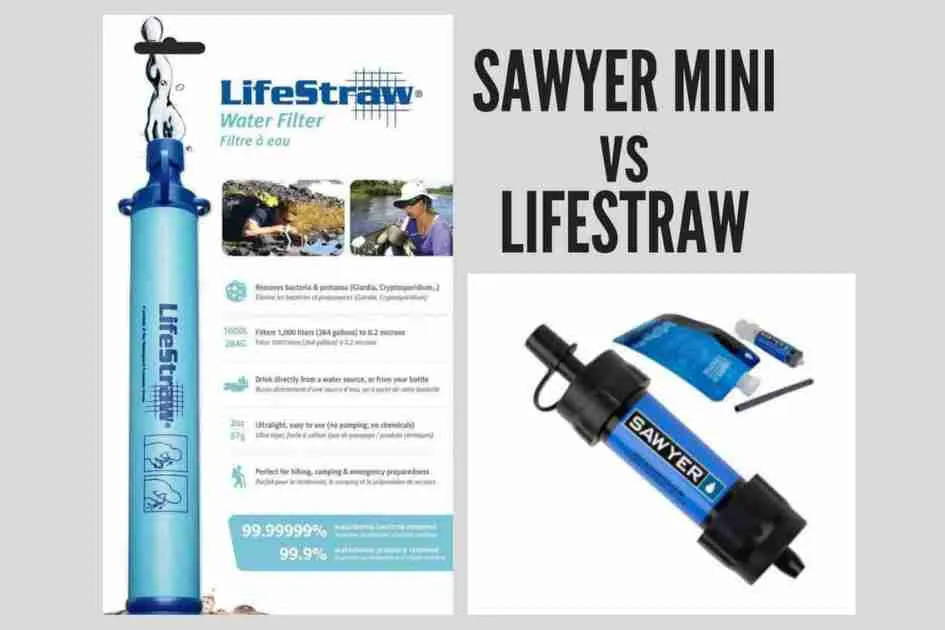
1. Sawyer MINI Water Filtration System
Pore Size: 0.1 microns
Weight: 2 ounces (3.7 oz with accessories)
Filter Life: 100,000 gallons (378,541 liters)
Price Range: $20-30
Best For: Versatility, long-term use, backpackers
Pros:
- Exceptional versatility (can be used as a straw, attached to included pouch, screwed onto water bottles, or connected to hydration bladders)
- Unmatched longevity with a 100,000-gallon lifespan
- Lightweight and extremely compact
- Includes backflushing syringe to extend filter life
- Best overall value for money
Cons:
- Prone to clogging with turbid water
- Requires regular backflushing maintenance
- Squeeze bags can tear or split over time
- Doesn't filter viruses
2. LifeStraw Personal Water Filter
Pore Size: 0.2 microns
Weight: 1.6 ounces (46g)
Filter Life: 1,000 gallons (4,000 liters)
Price Range: $15-20
Best For: Simplicity, emergency preparedness, budget-conscious buyers
Pros:
- Iconic design that's extremely intuitive to use
- Lightest option among major brands
- No moving parts to break
- Typically the most affordable quality option
- Social impact (one purchase provides a child with clean water for a year)
Cons:
- Limited to direct-from-source drinking only
- No way to filter water into a container
- Requires significant suction effort
- Shorter filter life than competitors
- Water continues to drip from both ends after use
3. Survivor Filter Personal Water Filter
Pore Size: 0.05 microns (finest filtration available)
Weight: 3.5 ounces
Filter Life: Cotton pre-filter and carbon filter: 1,000 liters each; Ultra Filter: 100,000 liters
Price Range: $25-35
Best For: Superior filtration, international travel, technical users
Pros:
- Superior filtration at 0.05 microns (400% better than LifeStraw's 0.2 microns)
- Triple filtration system (cotton pre-filter, ultra filter, and carbon filter)
- Reduces some heavy metals (89% of lead and mercury)
- Can filter virus (tested against Phi X-174)
- Filters can be disassembled for cleaning
Cons:
- Heavier than both Sawyer MINI and LifeStraw
- More expensive than basic options
- Carbon and cotton filters need more frequent replacement than main filter
- Slower flow rate (200ml per minute)
Comparison Chart: Key Features
| Feature | Sawyer MINI | LifeStraw | Survivor Filter |
|---|---|---|---|
| Pore Size | 0.1 microns | 0.2 microns | 0.05 microns |
| Weight | 2 oz (3.7 oz with accessories) | 1.6 oz | 3.5 oz |
| Filter Life | 100,000 gallons | 1,000 gallons | Ultra filter: 100,000 liters Other filters: 1,000 liters |
| Filtration Method | Hollow fiber | Hollow fiber | Triple-stage (Cotton, Ultra, Carbon) |
| Uses | Straw, squeeze, bottle, inline | Straw only | Straw, bottle attachment |
| Removes Bacteria | Yes (99.99999%) | Yes (99.999999%) | Yes (99.999%) |
| Removes Parasites | Yes (99.9999%) | Yes (99.999%) | Yes (99.999%) |
| Removes Viruses | No | No | Yes (99.999% of tested Phi X-174) |
| Reduces Heavy Metals | No | No | Yes (89% of lead and mercury) |
| Warranty | Lifetime | Manufacturer's | Lifetime |
These three industry leaders in straw-style portable water filters each excel in different areas. The Sawyer MINI offers unmatched versatility and longevity, making it the best all-around choice for most users. The original LifeStraw remains the most straightforward option with the lightest weight and simplest design. The Survivor Filter provides the most advanced filtration technology, potentially making it the safest option for international travel or areas with concerning water quality.
Filtration Technology Explained
Understanding the technology behind straw-style portable water filters can help you make an informed decision about which system best meets your needs. Let's dive into the science of water filtration and how these compact devices protect you from waterborne pathogens.

Hollow Fiber Membrane Technology
The most common filtration technology used in straw-style filters is hollow fiber membrane. This innovative system consists of thousands of tiny U-shaped microtubes with microscopic pores. When water passes through these tubes:
- The pores physically block bacteria, protozoa, parasites, and particulates
- Clean water molecules flow through the pores freely
- Contaminants larger than the pore size cannot pass through
The effectiveness of hollow fiber membrane is directly related to the pore size. The industry standard for wilderness water filtration is 0.2 microns or smaller, which effectively removes the most common pathogenic threats in North American and European wilderness areas.
Activated Carbon Filtration
Some advanced straw filters, like the Survivor Filter, incorporate activated carbon filters as an additional stage of filtration. Activated carbon works through adsorption—the process where contaminants stick to the carbon's surface. This technology excels at:
- Reducing chemicals like chlorine, pesticides, and some industrial pollutants
- Improving taste and odor
- Capturing some heavy metals, though effectiveness varies by metal and filter design
Activated carbon complements mechanical filtration but doesn't replace it. The combination of both technologies provides more comprehensive water purification than either method alone.
Ion Exchange Technology
Some premium filters incorporate ion exchange materials, which work by swapping harmful ions (like lead or mercury) with harmless ones (like sodium or potassium). This technology is less common in portable straw filters but can be found in more sophisticated multi-stage systems.
The Survivor Filter stands out in this category by incorporating materials that can reduce lead and mercury by approximately 89%, according to their testing. This additional protection becomes valuable in areas with potential industrial or mining contamination.
Understanding Filtration Limitations
While straw-style filters are remarkable tools for wilderness water treatment, it's essential to understand their limitations:
What Most Straw Filters Cannot Remove:
- Viruses: Most standard filters (except specialized ones like Survivor Filter) don't remove viruses due to their extremely small size (0.004 to 0.1 microns)
- Dissolved salts: Straw filters cannot desalinate water
- Most chemicals and pesticides: Unless specifically equipped with activated carbon
- Heavy metals: Unless designed with specific metal-reducing technologies
- Radioactive materials: Most portable filters offer no protection against radioactive contamination
For more comprehensive protection in areas where these contaminants are a concern, you might need to combine filtration with other purification methods like chemical treatment or UV sterilization. The best portable water filter for international travel might include multiple purification technologies.
Best Uses for Portable Water Filters
Straw-style portable water filters have revolutionized how we access clean drinking water in various scenarios. Understanding the ideal applications for these devices will help you maximize their effectiveness and ensure you're properly prepared for your specific needs.
Hiking and Day Trips
For short hiking excursions and day trips, a straw-style portable water filter can significantly reduce the amount of water you need to carry. This lightens your load and provides freedom to extend your adventure if desired.
Ideal filter choice: The best portable water filter for hiking is typically the Sawyer MINI due to its versatility and lightweight design. It allows you to drink directly from water sources or quickly filter water into a bottle for later consumption.
Pro tip: When hiking in areas with plentiful water sources, carry just 1-2 liters and refill as needed using your filter. This can reduce your pack weight by 2-4 pounds compared to carrying a full day's water supply.
Backpacking and Multi-Day Adventures
For extended wilderness adventures, a reliable water filter becomes even more crucial. The ability to safely hydrate from natural sources can make or break your trip.
Ideal filter choice: The best portable water filter for backpacking is often the Sawyer MINI or Sawyer Squeeze due to their durability, long lifespan, and multiple configuration options. The ability to attach these filters to various containers makes them particularly valuable for extended trips.
Strategy: For backpacking, consider how you'll be collecting and storing water. A filter that can attach to standard water bottles or hydration bladders provides maximum flexibility. The ability to filter water into a container for cooking or carrying to dry campsites is invaluable on longer trips.
Emergency Preparedness
Water filters play a critical role in emergency kits and disaster preparedness. When municipal water systems fail, a portable filter can provide immediate access to safe drinking water.
Ideal filter choice: The best portable water filter for emergency use is typically the LifeStraw due to its simplicity, long shelf life, and intuitive operation. Having multiple LifeStraws in your emergency kit ensures your family can access clean water with minimal training or setup.
Best practice: Store your emergency water filters in easily accessible locations known to all family members. Include brief written instructions for family members who might be unfamiliar with their operation.
International Travel
When traveling to regions with questionable water quality, a portable water filter can provide peace of mind and reduce reliance on bottled water.
Ideal filter choice: For international travel, especially in developing regions, the Survivor Filter offers the most comprehensive protection due to its ability to filter some viruses and reduce heavy metals. Its multi-stage filtration system provides an extra layer of security in unknown water conditions.
Consideration: In areas with significant industrial pollution or known viral contamination, consider pairing your filter with chemical purification tablets for complete protection. The best portable water filter for international travel might be one component of a multi-stage purification approach.
Maintenance and Longevity Tips
Proper maintenance of your straw-style portable water filter is crucial for ensuring its effectiveness and maximizing its lifespan. With correct care, quality filters can provide reliable service for hundreds or even thousands of liters of water. Here's how to get the most from your investment:

Regular Backflushing
The most important maintenance task for hollow fiber membrane filters is regular backflushing, which reverses the flow of clean water through the filter to dislodge trapped particles.
- Sawyer MINI/Squeeze: Backflush after every outing or when flow rate diminishes using the included syringe. Fill the syringe with clean water and forcefully push water backward through the filter.
- LifeStraw: Blow air back through the mouthpiece after each use to clear water and extend filter life.
- Survivor Filter: Disassemble and rinse the pre-filter, then use clean water to backflush the main filter components.
For best results, backflush your filter after every trip, or daily during extended expeditions, especially when filtering turbid or sediment-heavy water.
Pre-filtering Turbid Water
One of the simplest ways to extend your filter's life is to pre-filter visibly dirty water before running it through your straw filter.
Field technique: Use a bandana, buff, or coffee filter to strain water with visible sediment before filtering it. Allow silty water to settle in a container, then carefully pour the clearer water from the top into your filter, avoiding the settled sediment at the bottom.
Proper Storage
Correct storage prevents damage to filter elements and prevents bacterial growth between uses.
- Short-term storage: After backflushing, allow filters to dry completely before storing to prevent mold growth.
- Long-term storage: For storage longer than a month, disinfect your filter according to manufacturer instructions, then ensure it's completely dry before storing.
- Freezing prevention: Never allow your filter to freeze when wet, as ice crystals can permanently damage hollow fiber membranes. Keep your filter in your sleeping bag on cold nights.
Warning: A frozen filter is a damaged filter!
If your water filter freezes while wet, you should assume the internal membranes are compromised. Replace the filter rather than risking your health with a potentially damaged unit.
Understanding Filter Lifespan
Each filter has a finite lifespan, after which its effectiveness in removing pathogens diminishes. Knowing your filter's limitations is crucial for safe use:
- Sawyer MINI: Rated for an impressive 100,000 gallons (378,541 liters) with proper care.
- LifeStraw: Designed to filter 1,000 gallons (4,000 liters) before replacement.
- Survivor Filter: The ultra filter lasts up to 100,000 liters, while the carbon filter and cotton pre-filter should be replaced after 1,000 liters.
Keep track of approximate usage to know when replacement is necessary. For most recreational users, a quality filter like the Sawyer MINI can last for many years of regular weekend adventures with proper maintenance.
As someone who has used straw-style portable water filters extensively in the backcountry, I can attest that proper maintenance makes all the difference in filter performance and longevity. A well-maintained filter is a reliable filter.
My Experience with Straw Filters
After testing dozens of water filters across five continents and countless wilderness expeditions, I've developed some strong opinions about which straw-style portable water filters excel in various conditions. Let me share some personal experiences that might help inform your decision.
Appalachian Trail: The Sawyer MINI's Durability Test
During my section hike of the Appalachian Trail's northern portion, I relied exclusively on a Sawyer MINI for water treatment. Over 30 days and approximately 300 miles, I filtered water from streams, ponds, and even questionable sources near shelters.
The Sawyer MINI became my trusted companion, filtering approximately 90 liters of water during the trip. What impressed me most was its versatility—I could drink directly from water sources when taking quick breaks, filter water into my cooking pot at camp, or fill my hydration bladder for longer waterless stretches.
One particular instance stands out. After a three-day rainstorm in the White Mountains of New Hampshire, all water sources were running high and muddy. By pre-filtering through my bandana and carefully backflushing each evening, the Sawyer MINI maintained adequate flow rates despite the challenging conditions. While the squeeze bag developed a small leak by the trip's end, the filter itself remained flawless.
International Travel: Putting the Survivor Filter to the Test
During a three-week photography trip through rural Southeast Asia, I chose the Survivor Filter as my primary water purification method. The advanced filtration capabilities gave me confidence in areas with questionable water quality.
The triple filtration system proved its worth in a small Cambodian village where the local water had a distinct chemical odor. While other travelers relied exclusively on bottled water, my Survivor Filter removed both the concerning smell and discoloration. The ability to attach it to standard water bottles meant I could fill and filter water in my hotel room each evening, drastically reducing my plastic waste footprint.
The slower flow rate was noticeable compared to the Sawyer systems, but the superior filtration made this an acceptable trade-off. I particularly appreciated the ability to disassemble and visually inspect the filter elements, which provided peace of mind when dealing with particularly dubious water sources.
Emergency Preparedness: LifeStraw's Simplicity Shines
When a hurricane disrupted municipal water service in my Florida community for nearly a week, my emergency preparations were put to the test. I had stashed several LifeStraws in our emergency kit, which proved invaluable when our stored water began running low on day four.
What stood out was the LifeStraw's intuitive design—even family members with no prior experience could use it effectively without instruction. We collected rainwater in buckets, which provided a convenient source for direct filtering. The lack of moving parts or complex maintenance requirements made the LifeStraw ideal for this scenario.
The main limitation became apparent quickly: the inability to filter water into containers for cooking or washing. This reinforced my belief that the LifeStraw excels as an emergency backup but has limitations for primary water treatment in extended scenarios.
Real User Experiences from the Trail
"I've used my Sawyer MINI for over 2,000 miles of hiking, including the entire Pacific Crest Trail. With regular backflushing, it's still going strong. The versatility to use it as a straw, squeeze filter, or inline with my hydration bladder makes it the perfect all-around filter." - Michael R., Thru-Hiker
"The LifeStraw was perfect for my first backpacking trip. Super intuitive to use and weighs almost nothing. My only complaint is that you have to get down on your belly to drink from shallow water sources, and there's no way to filter water into a bottle." - Sarah K., Weekend Backpacker
"After getting sick from water in Central America despite using a standard filter, I invested in the Survivor Filter for my next trip. The peace of mind from knowing it filters viruses was worth every penny, and the water actually tasted better thanks to the carbon filter." - James T., International Traveler
Based on these experiences and hundreds of trail days testing various filtration systems, my personal recommendation aligns with what the data shows: the Sawyer MINI offers the best combination of versatility, durability, and value for most users. However, specific scenarios might call for the simplicity of a LifeStraw or the advanced filtration of a Survivor Filter.
As a passionate advocate for responsible wilderness exploration, I encourage every outdoor enthusiast to invest in a quality straw-style portable water filter and learn to use it properly. The right filter not only provides safety and convenience but also reduces the environmental impact of disposable water bottles in beautiful natural spaces.
Frequently Asked Questions
Are straw-style water filters effective against all waterborne pathogens?
Most standard straw-style water filters are effective against bacteria (like E. coli and Salmonella) and protozoa (like Giardia and Cryptosporidium), but not against viruses due to their extremely small size. Standard filters like the LifeStraw and Sawyer MINI have pore sizes of 0.1-0.2 microns, while most viruses are 0.004-0.1 microns. For complete protection including viruses, you need either a specialized filter with smaller pores (like the Survivor Filter which claims some viral filtration) or a combination of filtration and purification methods (like UV treatment or chemical purification).
How do I know when it's time to replace my water filter?
The three main indicators that your filter needs replacement are: 1) Reaching the manufacturer's stated capacity (e.g., 1,000 gallons for LifeStraw, 100,000 gallons for Sawyer MINI); 2) Significantly reduced flow rate that doesn't improve after thorough backflushing; and 3) Any damage to the filter, including freezing when wet or visible cracks. The LifeStraw will stop allowing water through when it reaches the end of its effective life. The Sawyer filters typically maintain flow much longer but should be replaced if backflushing no longer improves flow rate. Always err on the side of caution—your health is worth more than the cost of a replacement filter.
Can I filter salt water with a straw-style water filter?
No, standard straw-style portable water filters cannot remove salt from seawater. These filters work through mechanical filtration that blocks particles and organisms larger than their pore size. Dissolved salts and minerals are much smaller than these pores and pass through freely. Desalination requires different technologies like reverse osmosis or distillation. If you need to purify saltwater in a survival situation, you would need specialized desalination equipment or would need to distill the water through evaporation and condensation.
What's the difference between a water filter and a water purifier?
The key difference between water filters and water purifiers is their effectiveness against different types of contaminants. Water filters primarily work through mechanical filtration to remove protozoa, bacteria, and particulates, but typically don't remove viruses due to their extremely small size. Water purifiers, on the other hand, address all these contaminants plus viruses, either through ultra-fine filtration (sub-0.01 micron), chemical treatment, UV light, or a combination of these methods. In North America and similar regions where viral contamination of wilderness water is uncommon, a quality filter is generally sufficient. For international travel or areas with poor sanitation, a purifier or combination approach is recommended for comprehensive protection.
Conclusion
After extensive research and personal testing of the market's leading straw-style portable water filters, it's clear that these compact devices have revolutionized how outdoor enthusiasts access clean water. The right filter can provide years of reliable service, significantly reduce pack weight, and offer crucial protection against waterborne pathogens.
For most users, the Sawyer MINI represents the best overall value and performance. Its unmatched versatility, incredible longevity, and proven effectiveness against bacteria and protozoa make it suitable for everything from casual day hikes to extended wilderness expeditions. The ability to use it in multiple configurations—as a straw, with the squeeze pouch, attached to bottles, or inline with hydration systems—provides adaptability to virtually any scenario.
Those prioritizing absolute simplicity and intuitiveness might prefer the original LifeStraw. Its straightforward design and operation make it ideal for emergency kits or occasional outdoor adventures where minimal weight and ease of use are paramount.
For international travelers or those concerned about more comprehensive filtration, including some viral protection and heavy metal reduction, the Survivor Filter offers advanced multi-stage filtration that goes beyond the capabilities of standard straw filters.
Remember that proper maintenance is crucial for any water filter's performance and longevity. Regular backflushing, protection from freezing, and appropriate storage will ensure your chosen filter provides reliable service through countless adventures.
Whether you're planning a camping trip, preparing for potential emergencies, or exploring remote international destinations, investing in a quality straw-style portable water filter provides both safety and peace of mind. Access to clean drinking water is fundamental to outdoor enjoyment and survival—choose your filtration system wisely, maintain it properly, and drink confidently wherever your adventures take you.
For more comprehensive guides on outdoor gear and wilderness skills, visit Wilderness Paths, your resource for thoughtful outdoor adventure preparation.
Additional Resources
- Complete Guide to Portable Water Filters
- Choosing the Right Water Filter for Hiking
- Water Filtration for International Travel
- Top Water Filters for Camping
- Emergency Water Filtration Solutions
- Backpacking Water Filter Guide
- Survival Water Filtration Systems
- Pump-Style Water Filters Explained
- Gravity Water Filtration Systems