
Best Time of Year to Bike Acadia National Park: A Complete Seasonal Guide
Exploring Acadia National Park on two wheels offers an unparalleled way to experience the stunning landscapes of Maine's coastal treasure. As someone who's biked these magnificent trails across all four seasons, I'm excited to share my comprehensive guide on the best time of year to bike Acadia National Park. Whether you're planning your first visit or returning to discover new routes, this guide will help you make the most of your cycling adventure in one of America's most beloved national parks. For even more outdoor adventure inspiration, be sure to check out our main site at Wilderness Paths.
Understanding Acadia's Unique Geography and Biking Terrain
Before we dive into seasonal considerations for biking in Acadia National Park, it's important to understand the unique terrain that makes this destination a cyclist's paradise. Located on Mount Desert Island along Maine's rugged coastline, Acadia offers diverse landscapes ranging from rocky shores and sandy beaches to dense forests and mountain peaks.
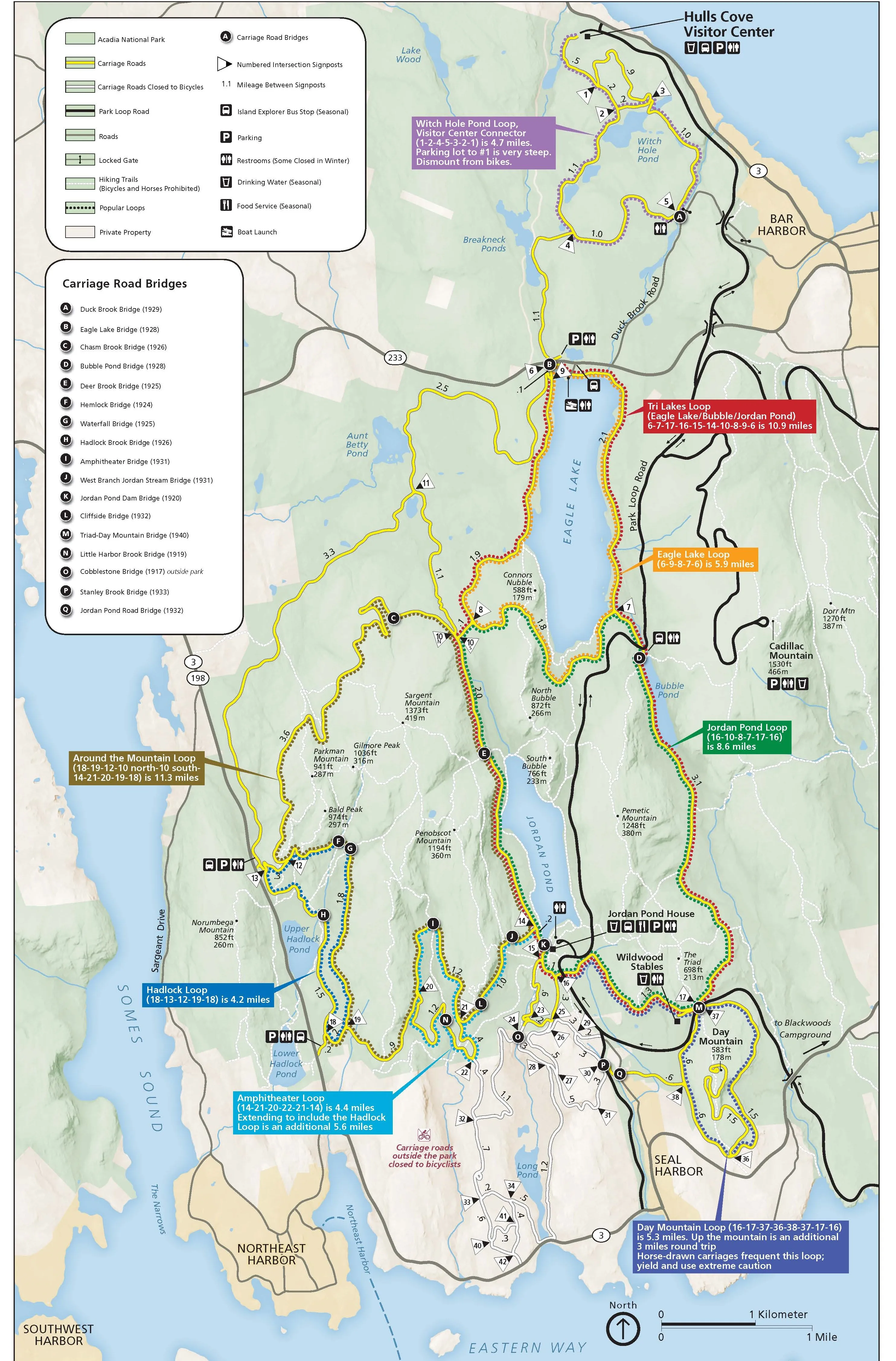
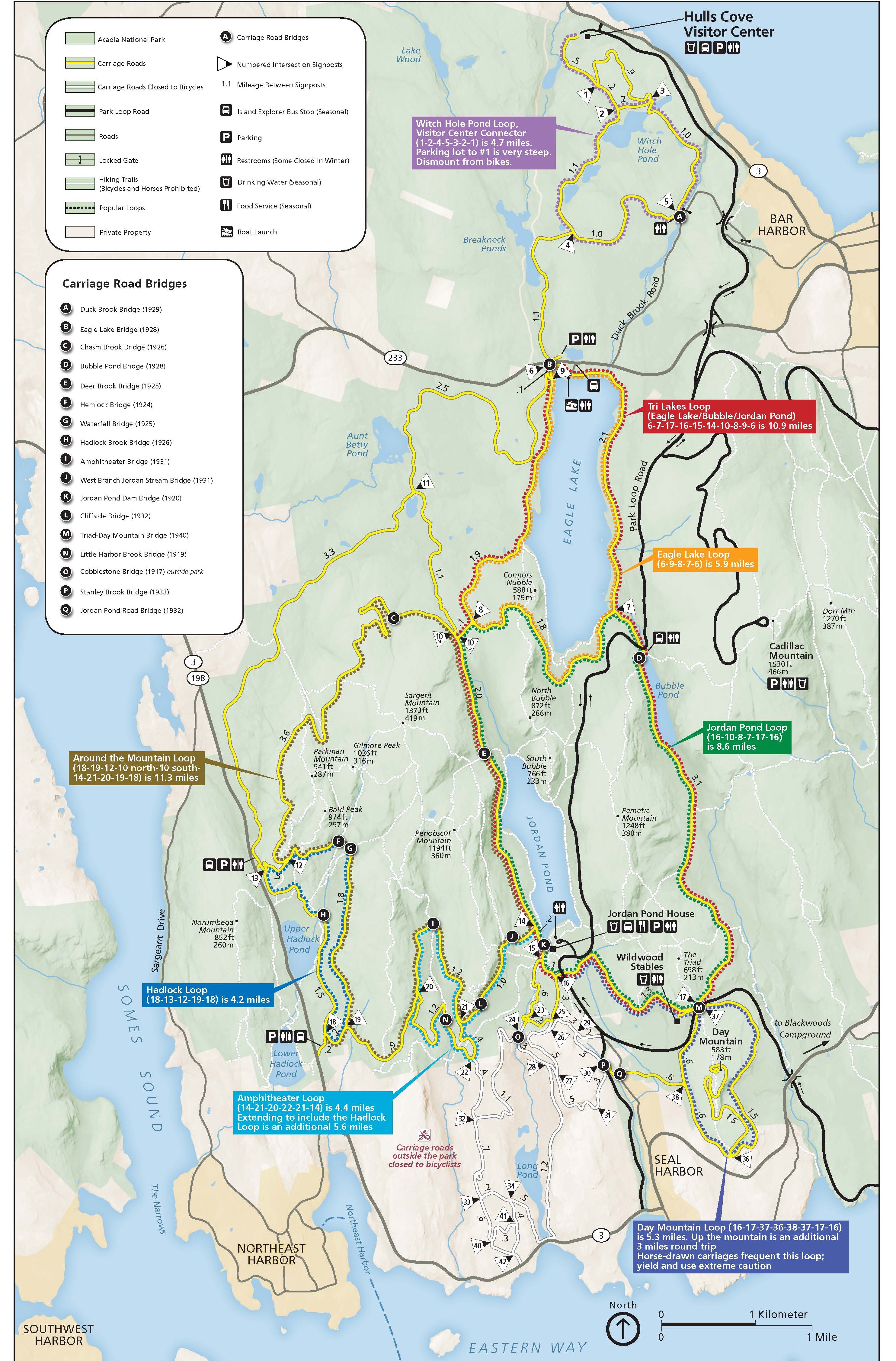
What truly sets Acadia apart for cyclists is its historic carriage road system. Built between 1913 and 1940 under the direction of philanthropist John D. Rockefeller Jr., these 45 miles of crushed-stone roads were specifically designed for carriages—and now bicycles—to navigate the park without interference from motor vehicles. The carriage roads wind through some of the most scenic parts of the park, featuring 17 stone bridges, each with its unique design using native materials.
The Historic Carriage Roads: A Cyclist's Paradise
The carriage roads have several key features that make them ideal for cycling:
- Motor-free environment: No cars means peaceful, safe cycling
- Crushed gravel surface: Smooth enough for standard bikes but with good traction
- Moderate grades: Engineered with carriages in mind, the steepest grades rarely exceed 10%
- Scenic vistas: Designed to showcase the best views of mountains, lakes, and forests
- Well-maintained: Regularly groomed and preserved by the National Park Service and Friends of Acadia
Park Loop Road vs. Carriage Roads: What's the Difference?
While the carriage roads are the primary focus for most cyclists visiting Acadia, it's worth understanding the difference between these and the Park Loop Road:
Carriage Roads
- 45 miles of crushed gravel surfaces
- No motor vehicles allowed
- Moderate grades suitable for most cyclists
- Shared with pedestrians and horses
- Best for leisure riding and nature immersion
- Some sections close seasonally due to weather
Park Loop Road
- 27-mile paved scenic drive
- Shared with motor vehicles
- Sections can be very congested during peak season
- More challenging elevation changes
- Portions closed in winter (December through mid-April)
- Better for experienced road cyclists comfortable with traffic
I highly recommend focusing on the carriage roads for a more enjoyable, stress-free cycling experience in Acadia, especially if you're visiting with family or are a casual cyclist. The carriage roads of Acadia provide the perfect balance of accessibility and natural immersion that makes for an unforgettable biking experience.
Spring Biking in Acadia (March-May)

Spring in Acadia National Park brings renewal and rebirth, as the landscape awakens from its winter slumber. For cyclists, spring offers a mixed bag of opportunities and challenges that require careful planning. Understanding the seasonal transitions is key to determining if spring is the best time of year to bike Acadia National Park for your particular preferences.
Weather Conditions and Trail Accessibility
Spring weather in Acadia is highly variable and can dramatically impact your cycling experience:
- Early Spring (March-early April): Many carriage roads remain closed due to mud season and spring thaw. The softer ground can be damaged by bikes, which is why the National Park Service often restricts access during this period.
- Mid-Spring (late April-early May): Carriage roads typically begin reopening, starting with pedestrian access, then gradually opening to cyclists as conditions improve.
- Late Spring (mid-May): Most carriage roads are usually open and suitable for cycling, though some shaded areas may remain wet or muddy.
During spring thaw, the NPS and Friends of Acadia work diligently to protect the carriage roads. As noted on the NPS website: "Walking, bicycling and riding horses in such conditions can cause ruts and potholes that channel water and exacerbate erosion." Always respect closures and check the Acadia Alerts page before planning spring cycling activities.
Pros and Cons of Spring Cycling
Pros
- Significantly fewer crowds compared to summer
- Blooming wildflowers and vibrant new foliage
- Wildlife is more active and visible
- More affordable accommodations and bike rentals
- Pleasant temperatures for cycling (50-65°F by May)
- Bird migration season offers excellent bird watching opportunities
Cons
- Limited carriage road accessibility, especially in early spring
- Unpredictable weather conditions
- More frequent rain showers
- Colder mornings and evenings requiring extra layers
- Some facilities and amenities may not yet be open
- Muddy sections can make cycling challenging
According to Reddit user CharmedInTheCity: "I was there mid-August on a Monday, perfect weather, on probably the most popular route, and it didn't feel crowded at all. I think you'll be fine any day, maybe not a weekend if you're concerned about crowds but even then I think you'd be fine." Spring offers an even less crowded experience than the summer months this user describes.
For cyclists seeking to explore Acadia National Park with minimal crowds while still enjoying comfortable temperatures, late May emerges as a sweet spot in the spring season and could be considered one of the best times of year to bike Acadia National Park.
Summer Biking in Acadia (June-August)
Summer represents peak season in Acadia National Park, drawing visitors from around the world to its scenic beauty. This is when all trails and carriage roads are reliably open, the weather is most predictable, and days are longest—offering extended cycling opportunities from dawn until dusk. But is summer truly the best time of year to bike Acadia National Park? The answer depends largely on your tolerance for crowds and your ability to plan strategically.
Managing the Peak Season Crowds
With over 4 million annual visitors to Acadia and the majority arriving during summer, managing crowds becomes essential for an enjoyable cycling experience. According to visitation data, July and August each average over 750,000 visitors—making them the busiest months in the park.

To avoid the worst of summer crowds while cycling:
- Start early: Begin your ride by 7:00-8:00 AM to enjoy several hours of relatively quiet trails before the midday rush.
- Explore less popular routes: While Eagle Lake and Jordan Pond are stunning, they're also the busiest areas. Consider the western side of the park for a quieter experience.
- Weekdays over weekends: Tuesday through Thursday typically see fewer visitors than Friday through Monday.
- Avoid cruise ship days: Bar Harbor receives numerous cruise ships during summer. Check the cruise ship schedule and plan accordingly.
- Use the Island Explorer shuttle: This free shuttle service includes bike racks and can help you access trailheads without parking struggles.
Best Summer Routes for Maximum Scenic Value
Summer allows access to all of Acadia's carriage roads, opening up numerous cycling possibilities. Here are three outstanding routes that showcase the best of summer in Acadia:
Around the Mountain Loop (11.3 miles)
This challenging but rewarding route offers some of the most spectacular views in the park, particularly the vistas overlooking Eagle Lake. The elevation gain (about 1,000 feet) is substantial but manageable when spread across the loop. Summer brings lush greenery and crystal-clear lake views that make the effort worthwhile.
Best time: Early morning (7:00-10:00 AM) to avoid crowds and heat
Pro tip: Consider renting an e-bike if you're concerned about the elevation gain but don't want to miss these incredible views.
Witch Hole Pond Loop (4.7 miles)
Perfect for families and casual cyclists, this shorter loop offers beautiful pond views and gentle terrain. Summer brings water lilies to Witch Hole Pond, creating picturesque photo opportunities. This route connects easily to Bar Harbor, making it convenient for those staying in town.
Best time: Late afternoon when day visitors start leaving
Pro tip: This is one of the less crowded loops even during peak season, making it ideal for a relaxed ride.
Tri Lakes Loop (10.6 miles)
This intermediate route circles Eagle Lake, Jordan Pond, and Bubble Pond, offering diverse scenery and swimming opportunities on hot summer days. The varied terrain provides a good mix of easy cruising and moderate climbs.
Best time: Early morning or early evening
Pro tip: Consider a stop at Jordan Pond House for their famous popovers—a delightful cycling break tradition since the 1890s!
Early Morning and Evening Strategies
The golden hours—early morning and late evening—offer the best summer cycling experiences in Acadia. During these times, you'll enjoy:
- Cooler temperatures (60s-70s°F vs. 80s°F midday)
- Dramatically reduced crowds
- Better wildlife viewing opportunities
- Magical lighting for photography
- Easier parking at popular trailheads
Summer certainly offers reliable conditions that make it a strong contender for the best time of year to bike Acadia National Park, especially if you employ strategic timing to avoid the peak crowds. The consistent weather, long daylight hours, and full access to all carriage roads create excellent cycling conditions for riders of all abilities.
If visiting during summer, consider staying at accommodations with easy access to carriage road entry points—this can help you avoid parking challenges and get an early start. For example, strategic parking locations can make or break your summer cycling experience.
Fall Biking in Acadia (September-November)
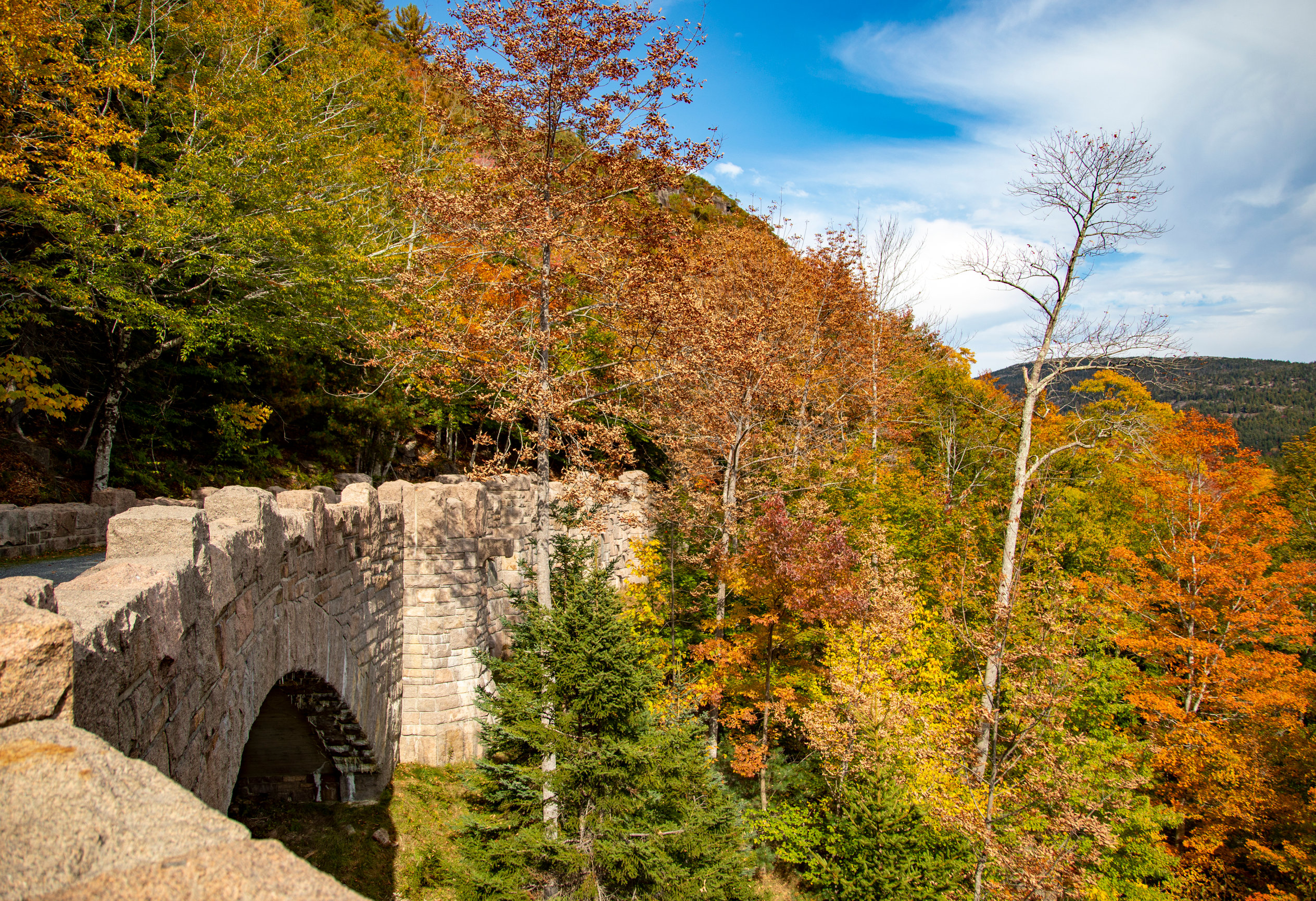
Fall transforms Acadia National Park into a breathtaking tapestry of red, orange, and gold, creating what many consider the most spectacular backdrop for cycling in the park. For many experienced visitors—myself included—autumn represents the absolute best time of year to bike Acadia National Park, offering a perfect balance of comfortable conditions and stunning scenery.
Experiencing the Fall Foliage on Two Wheels
The fall color progression in Acadia typically follows this timeline:
- Late September: Early color appears, primarily in swampy areas and understory vegetation
- Early-Mid October: Peak foliage typically occurs, with the most vibrant colors spreading across the landscape
- Late October: Colors begin to fade but still offer beautiful cycling conditions
- November: Most leaves have fallen, but the open canopy provides expanded views
According to Lost with Lydia's travel blog, "The vast majority of visitors come to Acadia in the summer or fall. You can't go wrong in either season, but I personally loved visiting in the fall. The fall offers fewer cruise ship crowds than the summer, the Precipice trail is more likely to be open (it is often closed for most of the summer), and the fall foliage is beautiful. Fall foliage usually peaks in mid-October."
The carriage roads become particularly magical in fall, as the crushed stone surface contrasts beautifully with the colorful fallen leaves. The cooler temperatures—typically ranging from the 40s to 60s°F—create ideal conditions for cycling, allowing you to ride comfortably for longer periods without overheating.
Weather Considerations and Preparation
Fall weather in Acadia requires more preparation than summer, but this extra effort is rewarded with exceptional cycling experiences:
What to Expect
- Chilly mornings (sometimes near freezing in late fall)
- Comfortable midday temperatures (50s-60s°F in early fall)
- Shorter daylight hours (plan rides accordingly)
- Occasional rainfall (more frequent in November)
- Variable wind conditions (bring windproof layers)
- Less humid conditions than summer
How to Prepare
- Dress in layers that can be adjusted throughout the day
- Pack a waterproof jacket for unexpected showers
- Bring gloves for early morning or late afternoon rides
- Use a backpack for carrying shed layers
- Start rides later in morning to allow trails to warm up
- Carry a headlamp in case your ride extends past sunset
The Perfect Fall Cycling Itinerary
To maximize your fall cycling experience in Acadia, I recommend this three-day itinerary designed to showcase the best of autumn in the park:
Day 1: Jordan Pond and Eagle Lake Circuit (12-15 miles)
Morning: Begin at the Hulls Cove Visitor Center and take the carriage roads south toward Jordan Pond. The morning light illuminates the eastern faces of the mountains, creating stunning reflections on the pond.
Midday: Enjoy lunch at Jordan Pond House (reservations recommended during foliage season). Their traditional popovers make a perfect cycling break.
Afternoon: Continue north to Eagle Lake, where the western shoreline offers some of the most vibrant fall colors in the park. Return to Hulls Cove as the afternoon light casts a golden glow on the landscape.
Highlights: Jordan Pond reflections, Bubble Mountains views, Eagle Lake western shore colors
Day 2: Witch Hole Pond and Paradise Hill (8-10 miles)
Morning: Start from Bar Harbor and enter the carriage roads at Duck Brook Bridge. This route offers a gentler cycling experience with stunning wetland foliage.
Midday: Explore the northern section of carriage roads around Paradise Hill, where maple trees create vibrant canopies of red and orange.
Afternoon: Return via Witch Hole Pond, where fall reflections double the color impact. This shorter route leaves time for exploration in Bar Harbor.
Highlights: Duck Brook Bridge, Paradise Hill maples, Witch Hole Pond reflections
Day 3: Around the Mountain Challenge (11-13 miles)
Full Day: This signature route deserves a full day during fall. The elevation gain provides panoramic views of fall foliage across the entire island. Start early to allow plenty of time for photos and rest stops.
Highlights: Sweeping vistas from Parkman Mountain, Sargent Mountain perspectives, Amphitheater Bridge
Fall represents a sweet spot for cycling in Acadia—the summer crowds have diminished, the weather remains comfortable, and the scenery reaches its annual peak of beauty. The combination of these factors makes autumn a strong contender for the best time of year to bike Acadia National Park, especially for photographers and nature enthusiasts.
For additional information about experiencing Acadia's fall splendor beyond cycling, check out my guide to seasonal transitions in Acadia.
Winter Biking in Acadia (December-February)
Winter presents the most challenging yet serene season for cycling in Acadia National Park. While most visitors wouldn't consider this the best time of year to bike Acadia National Park, it offers unique experiences for adventurous cyclists willing to prepare properly. During winter, visitation drops dramatically—from hundreds of thousands monthly in summer to just 10,000-15,000 per month—creating an almost private park experience.
Specialized Gear for Winter Riding
Winter cycling in Acadia requires specialized equipment to handle snow, ice, and cold temperatures:
Essential Winter Cycling Gear
- Fat bikes: Wide tires (3.8-5 inches) provide better traction and float on snow
- Studded tires: Metal studs improve grip on icy surfaces
- Insulated cycling boots: Keep feet warm in sub-freezing temperatures
- Bar mitts: Handlebar-mounted covers protect hands while allowing dexterity
- Merino wool base layers: Moisture-wicking and warm even when damp
- Windproof outer layers: Essential for comfort in coastal winter conditions
- Neck gaiter and winter helmet: Protect vulnerable facial areas from wind and cold
I recommend investing in or renting a proper fat bike for winter riding in Acadia. These specialized bikes with ultra-wide tires provide the stability and float needed to navigate snow-covered carriage roads. Standard mountain bikes or hybrids typically struggle in winter conditions.
According to a Facebook post from an Acadia winter cyclist: "We encountered only a few spots with snow or ice and we could easily get around those while still on the path. The trails to and from Beehive were clear." However, conditions can change rapidly with new snowfall or freeze-thaw cycles.
If you're visiting without specialized winter cycling gear, consider trying other winter activities in the park like cross-country skiing or snowshoeing, which may be more accessible with rental equipment from local outfitters.
Safety Considerations and Trail Closures
Winter cycling in Acadia comes with important safety considerations:
- Limited park services: Most facilities close for winter, including visitor centers and restrooms
- Road closures: Sections of Park Loop Road close from December through mid-April
- Carriage road restrictions: When groomed for cross-country skiing, bikes are not permitted on certain carriage roads
- Limited daylight: Winter days are short, with darkness falling by 4:00-4:30 PM
- Emergency response: Fewer staff are available, and response times may be longer
- Cell service: Already spotty coverage becomes less reliable in winter conditions
Always check current conditions before heading out. The Acadia Winter Trails Association grooms approximately 32 miles of the carriage roads for cross-country skiing when conditions permit. These sections prohibit cycling to preserve the groomed surface. However, ungroomed carriage roads remain open to fat bikes when conditions allow safe riding.
The Quiet Magic of Winter Cycling
For those properly equipped and prepared, winter cycling in Acadia offers remarkable rewards:
- Absolute solitude on trails that see thousands in summer
- Dramatic coastal views enhanced by winter light
- Unique perspectives of frozen ponds and snow-covered forests
- Easier wildlife spotting against the snow background
- The satisfaction of experiencing Acadia in its most challenging season
Winter riding is best suited for shorter routes near park entrances, as the combination of cold temperatures and early sunset limits range. The Witch Hole Pond loop and portions of Eagle Lake's eastern shore often provide manageable winter riding conditions when not groomed for skiing.
While winter may not be the best time of year to bike Acadia National Park for most visitors, it offers a unique adventure for properly equipped cycling enthusiasts seeking solitude and challenge.
To learn more about general winter activities in the park, visit my guide to Acadia National Park in winter.
Essential Gear for Biking in Acadia
Regardless of when you decide is the best time of year to bike Acadia National Park, having the right equipment will significantly enhance your experience. The carriage roads' crushed gravel surface requires specific considerations, as do the variable weather conditions throughout the seasons.
Bike Recommendations for the Carriage Roads
The ideal bike for Acadia's carriage roads depends on your riding style and the season of your visit:
Best Bike Types for Acadia
- Hybrid bikes: The most versatile option for carriage roads, offering a good balance of comfort and efficiency
- Gravel bikes: Excellent for covering more ground at higher speeds while handling the crushed stone surface
- Mountain bikes: Provide extra stability and comfort, though may be overkill for the well-maintained carriage roads
- E-bikes (Class 1): Officially allowed on carriage roads and ideal for tackling Acadia's hills with less effort
- Fat bikes: Specialized for winter riding on snow-covered trails
Note: Road bikes with narrow tires (less than 32mm) are not recommended as they can sink into the gravel surface and provide a rough ride.
Key Bike Features to Consider
- Tire width: 35-50mm provides the best balance of speed and comfort on carriage roads
- Gearing: Lower gears help with Acadia's hills, especially the Around the Mountain loop
- Suspension: Front suspension adds comfort but isn't essential on the well-maintained carriage roads
- Disc brakes: Provide reliable stopping power in wet conditions, common in spring and fall
- Frame material: Less critical, though aluminum offers a good balance of weight, durability, and cost
According to a Reddit user who asked about bike types for Acadia: "There are no mountain bike trails. The most rugged it gets is the carriage roads which are fun on a gravel bike. For road riding, there's the park loop and many beautiful roads elsewhere on the island."
Weather-Appropriate Clothing for Each Season
Acadia's weather varies dramatically by season, requiring different cycling attire:
Spring (March-May)
- Waterproof/windproof jacket
- Lightweight gloves
- Removable arm and leg warmers
- Moisture-wicking base layer
- Light beanie for under helmet
Summer (June-August)
- Lightweight, breathable jersey
- Cycling shorts or liners
- UV-protective sunglasses
- Sweat-wicking cap or bandana
- Light windbreaker (mornings)
Fall (September-November)
- Thermal jersey or jacket
- Medium-weight gloves
- Ear-covering headband
- Windproof vest or jacket
- Light or medium-weight tights
Winter (December-February)
- Insulated cycling jacket
- Thermal tights or pants
- Waterproof winter cycling boots
- Heavy insulated gloves or pogies
- Balaclava or winter face mask
Safety Equipment You Shouldn't Ride Without
Safety gear is essential regardless of when you visit Acadia:
- Helmet: Maine state law requires helmets for cyclists under 16, but they're recommended for all riders
- Front and rear lights: Critical for low-light conditions, especially in fall and winter with shorter days
- Bell or horn: Required for alerting pedestrians and horses on shared carriage roads
- Basic repair kit: Include a multi-tool, spare tube, tire levers, and mini-pump
- First aid kit: Carry basics for minor injuries, as cell service is limited in parts of the park
- Water and snacks: Carry more than you think you'll need, especially on longer routes
Remember that many of Acadia's carriage roads are remote, with limited cell service. Being self-sufficient with proper gear and safety equipment is essential no matter what time of year you determine is the best time to bike Acadia National Park.
For more information on what to pack for your biking adventure, visit my detailed guide on what to pack for biking in Acadia.
Top Bike Rental Options Near Acadia
If you're not bringing your own bike, renting locally is convenient and eliminates transportation concerns. Acadia offers several excellent rental options, with varying seasonal availability that may influence your determination of the best time of year to bike Acadia National Park.
Comparing Prices and Services
| Rental Shop | Standard Bike (Daily) | E-Bike (Daily) | Season | Location |
|---|---|---|---|---|
| Bar Harbor Bicycle Shop | $36-$48 | $72-$96 | April-October | Bar Harbor |
| Acadia Bike/Coastal Kayaking | $35-$45 | $70-$90 | May-October | Bar Harbor |
| Island Bike Rental | $30-$40 | $65-$85 | May-October | Northeast Harbor |
| Acadia Ebike Adventures | N/A | $80-$110 | April-November | Bar Harbor |
| Island Time Ebike Rentals | N/A | $85-$95 | May-October | Meets at visitor center |
Note that prices typically increase during peak season (July-August) and decrease during shoulder seasons. Most rental shops offer multi-day discounts that can significantly reduce the daily rate.
As experienced during my visits, Bar Harbor Bicycle Shop offers excellent service and knowledgeable staff who can recommend routes based on your experience level. If you're visiting in late October like I did, note that some shops may already be closed for the season—I found Bar Harbor Bicycle Shop to remain open later than some competitors.
Reservation Tips and Busy Season Planning
To ensure you get the bike you want when visiting during peak periods:
- Reserve at least 1-2 weeks in advance for summer visits, especially for e-bikes
- Book even earlier (3-4 weeks) for holiday weekends or peak foliage season
- Consider weekday rentals when prices may be slightly lower
- Ask about early morning pickup to maximize your riding day
- Inquire about multi-day discounts if staying longer
- Check if the shop provides maps, helmets, and basic repair tools
Most rental shops provide basic orientation to the carriage roads and can recommend routes based on your time constraints and ability level. Take advantage of their local knowledge!
E-Bikes vs. Traditional Bikes for Acadia's Terrain
The choice between traditional bikes and e-bikes depends on your fitness level, experience, and goals:
Traditional Bikes
Best for: Experienced cyclists, those on a budget, purists who prefer the traditional experience
Pros:
- More affordable rental rates
- Lighter and easier to handle on flat terrain
- Better exercise experience
- No battery life concerns
Cons:
- More challenging on Acadia's hills
- Limits distance covered for average riders
- May require more frequent breaks
E-Bikes (Class 1)
Best for: Casual cyclists, those covering more distance, riders concerned about hills
Pros:
- Makes hills much more manageable
- Allows covering more territory in less time
- Levels the playing field for groups with mixed abilities
- Still provides exercise, just less intense
Cons:
- Significantly more expensive to rent
- Heavier and harder to maneuver when powered off
- Battery life requires planning (typically 25-40 miles)
According to my experience and many online reviews, e-bikes have become increasingly popular for Acadia's carriage roads, especially for the hillier sections like Around the Mountain Loop. One recent reviewer noted: "I quickly discovered the benefits of an e-bike on Acadia's carriage roads. The electric assist made the hills manageable while still getting exercise, and we were able to cover nearly twice the distance we would have on traditional bikes."
Important note: Only Class 1 e-bikes (pedal-assist up to 20 mph) are permitted on Acadia's carriage roads. Class 2 (throttle-controlled) and Class 3 (faster) e-bikes are prohibited.
To learn more about e-bike options in Acadia, check out my detailed guide on Electric bike rentals in Acadia National Park.
My Experience: Three Seasons on Acadia's Carriage Roads
Over the past five years, I've been fortunate enough to bike Acadia National Park in spring, summer, and fall—each offering distinct experiences that have helped me determine my personal choice for the best time of year to bike Acadia National Park. Here's what I discovered during my seasonal adventures:
Spring Adventure: Late May Awakening
My first visit to Acadia for cycling was in late May, just as the park was fully waking up from winter slumber. The experience was characterized by:
- Vibrant new green foliage creating a refreshing canopy
- Wildflowers dotting the sides of carriage roads
- Cool mornings (around 45°F) warming to comfortable afternoons (60-65°F)
- Extremely light traffic on most carriage roads
- Occasional muddy patches on less-traveled sections
- Wildlife sightings, including several deer and a fox
During this trip, I rented a standard hybrid bike and covered about 15-20 miles per day. The Eagle Lake and Witch Hole Pond loops were particularly stunning with the fresh spring growth. The primary challenge was variable weather—I experienced everything from bright sunshine to brief rain showers during my three-day visit.
What I loved most was the sense of having the park nearly to myself. At Jordan Pond, normally one of the busiest spots in summer, I encountered only a handful of other visitors. This solitude allowed for a deeply peaceful connection with the landscape.
Summer Journey: August Exploration
My summer visit came during the first week of August, peak season in Acadia. This experience provided stark contrasts to spring:
- Consistently warm temperatures (70-85°F throughout the day)
- Heavy traffic at major points of interest and trail intersections
- Vibrant activity throughout the park, including ranger programs
- All facilities and services fully operational
- Extended daylight hours allowing for early morning and evening rides
- Perfect swimming opportunities at Eagle Lake after riding
For this trip, I brought my own gravel bike, which handled the carriage roads beautifully. I focused on early morning rides (starting by 7:00 AM) to avoid the midday crowds and heat. The Around the Mountain loop was challenging but rewarding, offering spectacular views of Eagle Lake from elevated vantage points.
The summer experience was certainly more social, with frequent friendly encounters with other cyclists and hikers. While the popular areas were busy, I found that venturing just a bit further on less-traveled carriage roads still provided pockets of relative solitude.
Fall Magic: Mid-October Color Explosion
My fall cycling trip to Acadia in mid-October coincided perfectly with peak foliage—an experience that left an indelible impression:
- Explosive red, orange, and yellow foliage creating cathedral-like canopies
- Crystal-clear air with amazing visibility across the landscape
- Crisp mornings (38-45°F) warming to pleasant afternoons (55-65°F)
- Moderate crowds concentrated around prime foliage viewing areas
- Dramatic lighting for photography, especially during golden hour
- The satisfying crunch of fallen leaves beneath bike tires
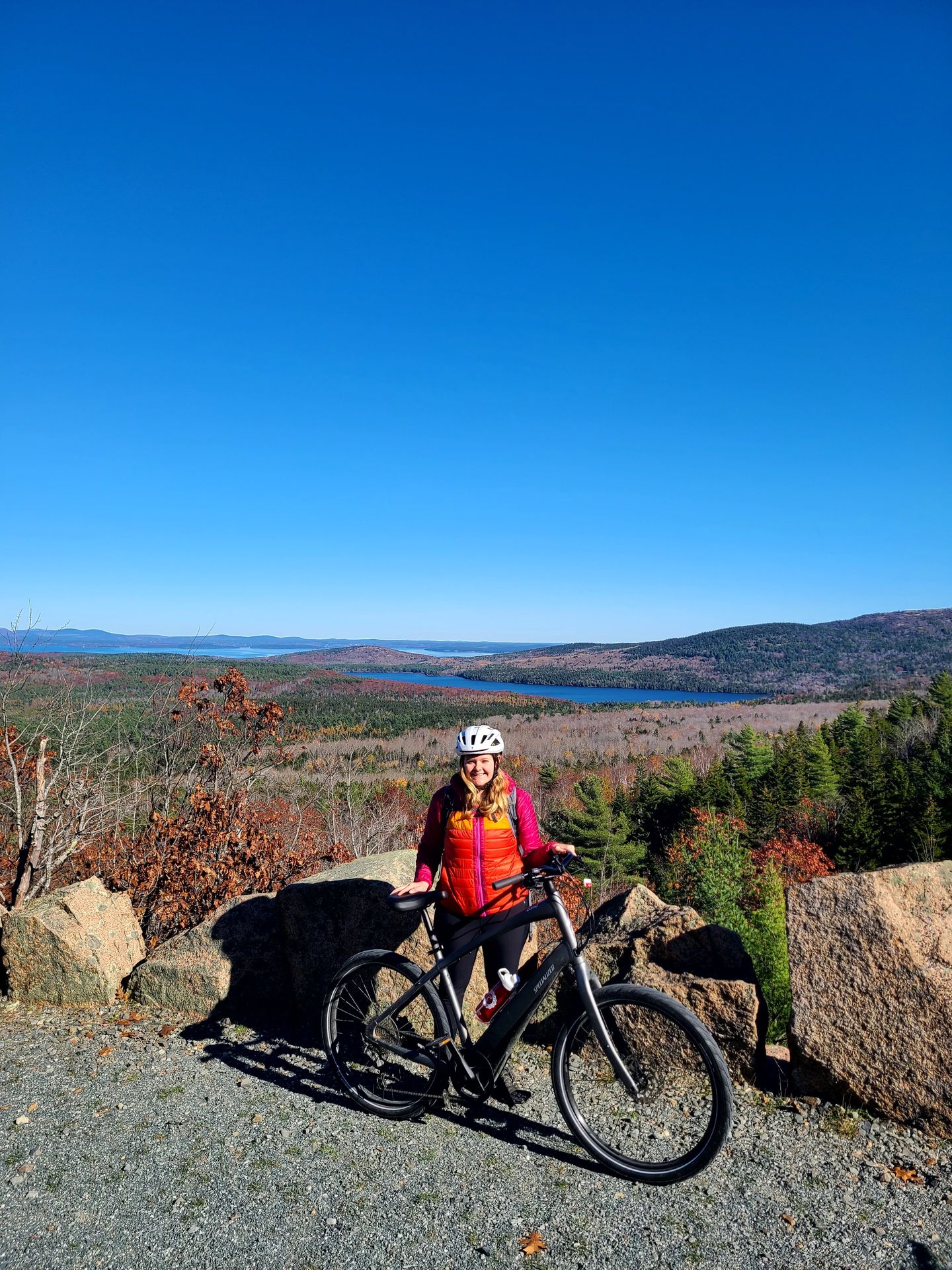
I rented an e-bike for this trip, which proved invaluable for covering more ground and easily conquering hills while stopping frequently for photos. The Jordan Pond and Eagle Lake areas were particularly stunning with mountain reflections enhanced by fall colors.
What made this experience special was the combination of comfortable riding temperatures, manageable crowd levels (busy but not overwhelming), and the unparalleled beauty of Acadia dressed in autumn splendor. The carriage roads themselves seemed transformed into golden pathways through a painter's masterpiece.
My Verdict: The Best Time to Bike Acadia
After experiencing Acadia's carriage roads across three seasons, my personal choice for the best time of year to bike Acadia National Park is mid-October, during peak fall foliage. This timing offers:
- The most spectacular scenery of any season
- Comfortable daytime riding temperatures
- Manageable crowd levels compared to summer
- Reliable trail conditions before winter weather arrives
- Special atmosphere as the park transitions seasons
That said, each season offers unique advantages. Spring provides solitude and renewal, summer offers reliable weather and full services, and fall delivers unmatched scenic beauty. The ideal time for your visit depends on your priorities—whether you value minimal crowds, guaranteed good weather, or maximum scenic impact.
If you're planning a cycling trip to Acadia and can be flexible with your timing, I strongly recommend aiming for the first two weeks of October. Just be sure to pack layers for the variable temperatures and book accommodations well in advance, as this has become an increasingly popular time to visit.
Biking Acadia's Carriage Roads: Visual Tour
This video showcases the beauty of biking Acadia's carriage roads, highlighting the stunning landscapes and varied terrain you'll encounter throughout the park. Watch to get a better sense of what to expect when planning your own cycling adventure during your chosen best time of year to bike Acadia National Park.
User Reviews: What Other Cyclists Say
To provide a broader perspective on the best time of year to bike Acadia National Park, I've gathered insights from other cyclists who have shared their experiences online. These diverse viewpoints can help you make an informed decision based on your personal preferences.
Summer Serenity Seeker
"I was there mid-August on a Monday, perfect weather, on probably the most popular route, and it didn't feel crowded at all. I think you'll be fine any day, maybe not a weekend if you're concerned about crowds but even then I think you'd be fine."
— CharmedInTheCity, Reddit
Fall Foliage Enthusiast
"You can't go wrong in either season, but I personally loved visiting in the fall. The fall offers fewer cruise ship crowds than the summer, the Precipice trail is more likely to be open, and the fall foliage is beautiful. Fall foliage usually peaks in mid-October."
— Lost with Lydia, Travel Blog
Spring Solitude Lover
"Spring is an excellent time to visit Acadia National Park to avoid the crowds and enjoy the mild weather. However, some facilities and amenities may be closed, and the weather can be unpredictable."
— Shokbox Travel Guide
Winter Wonder Explorer
"We encountered only a few spots with snow or ice and we could easily get around those while still on the path. The trails to and from Beehive were clear."
— Winter Cyclist, Facebook Group
Consensus on Seasonal Preferences
Based on a broad sampling of user reviews across various platforms, here's how cyclists rank the seasons for biking in Acadia:
1. Fall
★★★★★
Most frequently cited as the best season due to spectacular foliage, comfortable temperatures, and moderate crowds.
2. Summer
★★★★☆
Praised for reliable weather and full accessibility, but some find the crowds during peak season challenging.
3. Spring
★★★☆☆
Valued for solitude and budding beauty, but limited by seasonal closures and unpredictable weather.
4. Winter
★★☆☆☆
Appreciated by adventurous cyclists for extreme solitude, but limited by weather conditions and requiring specialized equipment.
While this consensus provides a general guideline, remember that the best time of year to bike Acadia National Park ultimately depends on your personal preferences, fitness level, and what aspects of the experience matter most to you.
Conclusion
After a comprehensive exploration of seasonal conditions, cyclist experiences, and practical considerations, we can conclude that determining the best time of year to bike Acadia National Park depends largely on your personal preferences and priorities.
For those seeking the perfect balance of scenic beauty, comfortable riding conditions, and manageable crowds, mid-September to mid-October emerges as the premier window for an unforgettable Acadia cycling experience. The spectacular fall foliage creates a magical backdrop that transforms the carriage roads into corridors of vibrant color, while the cooler temperatures provide ideal conditions for physical exertion.
Summer offers the most reliable weather and full access to all park amenities, making it ideal for families and those who prioritize convenience, despite the higher visitor numbers. Strategic timing (early mornings or weekdays) can mitigate crowding concerns during this popular season.
Spring presents a compelling case for those who value solitude and awakening natural beauty, though with some limitations due to mud season and variable weather conditions. Late May specifically offers a sweet spot before summer crowds arrive.
Winter remains an option only for the most adventurous cyclists with specialized equipment and experience, rewarding them with an almost private park experience amid peaceful snow-covered landscapes.
No matter which season you choose for your Acadia cycling adventure, proper preparation with appropriate gear, advance reservations during busy periods, and a flexible mindset will help ensure a memorable experience. The historic carriage roads provide a unique cycling opportunity in all seasons, offering intimate access to one of America's most beloved national parks.
Whether you're drawn to fall's vibrant palette, summer's reliable warmth, spring's peaceful renewal, or winter's serene solitude, Acadia National Park's carriage roads await your exploration on two wheels. The best time to go is ultimately when your schedule allows—each season offers its own special magic that makes biking in Acadia a bucket-list experience for cycling enthusiasts.
For more information about planning your trip to Acadia National Park, check out our self-guided bike tour itinerary or learn about family-friendly bike rental options.
Frequently Asked Questions
When is peak foliage season in Acadia National Park?
Peak fall foliage in Acadia National Park typically occurs in mid-October, usually between October 8-20, though this can vary by a week or so depending on the year's weather patterns. The colors begin changing in late September, with peak colors lasting about 1-2 weeks before fading. Higher elevations tend to change color earlier than coastal areas, creating a progressive display throughout the park. For the most up-to-date foliage reports during your planned visit, check the Maine Foliage Report or ask local bike rental shops.
Are e-bikes allowed on Acadia's carriage roads?
Yes, Class 1 e-bikes (pedal-assist up to 20 mph) are permitted on Acadia's carriage roads. However, Class 2 (throttle-controlled) and Class 3 (faster) e-bikes are prohibited. This policy allows cyclists who might struggle with Acadia's hills to still enjoy the carriage roads while maintaining a peaceful environment. E-bikes must yield to all other users, including pedestrians and horses, and must not exceed the 20 mph speed limit on carriage roads. Several rental shops in Bar Harbor offer Class 1 e-bikes specifically designed for Acadia's terrain. For more details on e-bike rentals and regulations, visit our dedicated guide.
How difficult are the carriage roads for average cyclists?
The carriage roads in Acadia National Park are moderately challenging but accessible to most recreational cyclists. Built originally for horse-drawn carriages, they feature gradual grades rarely exceeding 10%, making them less steep than typical mountain bike trails. The crushed gravel surface is well-maintained but does require more effort than paved roads. Most loops include some hills, with the Around the Mountain Loop being the most challenging (approximately 1,000 feet of elevation gain). Average cyclists can comfortably ride 10-15 miles on Acadia's carriage roads in a day, with 15-20 miles possible at a relaxed pace. E-bikes have become increasingly popular for those concerned about the hills or wanting to cover more distance. Beginners and families might prefer the gentler Witch Hole Pond Loop (4.7 miles) to start.
What are the most scenic carriage road routes in Acadia?
The most scenic carriage road routes in Acadia National Park include the Around the Mountain Loop (11.3 miles), which offers spectacular elevated views of Eagle Lake and surrounding mountains; the Jordan Pond Loop (8.6 miles), featuring the iconic Bubble Mountains reflected in pristine waters; and the Tri Lakes Loop (10.6 miles), which showcases Eagle Lake, Bubble Pond, and Jordan Pond in one ride. For fall foliage, the eastern side of Eagle Lake is particularly stunning as maple trees turn brilliant red and orange. Photography enthusiasts should consider the Paradise Hill section for its canopied sections that create magical light patterns. Those seeking ocean views should combine their carriage road ride with sections of the Park Loop Road near Thunder Hole and Otter Cliffs. For a detailed guide to the top trails for biking in Acadia, check out our specialized article.
How crowded are the carriage roads during peak season?
During peak summer season (July and August), Acadia's carriage roads experience significant visitation, particularly at popular access points like Jordan Pond House, Eagle Lake, and the Hulls Cove Visitor Center. Major intersections and scenic spots can become congested between 10:00 AM and 4:00 PM. However, even during peak season, the 45-mile network disperses visitors effectively once you move beyond the main entry points. Early mornings (before 9:00 AM) and evenings (after 4:00 PM) offer notably quieter experiences even in midsummer. September weekdays provide an excellent balance of good weather and reduced crowds. According to park visitation data, July and August each average over 750,000 visitors, while September sees about 650,000 and October approximately 450,000. Winter months (December-March) are extremely quiet, with monthly visitation dropping to just 10,000-15,000 people parkwide.