
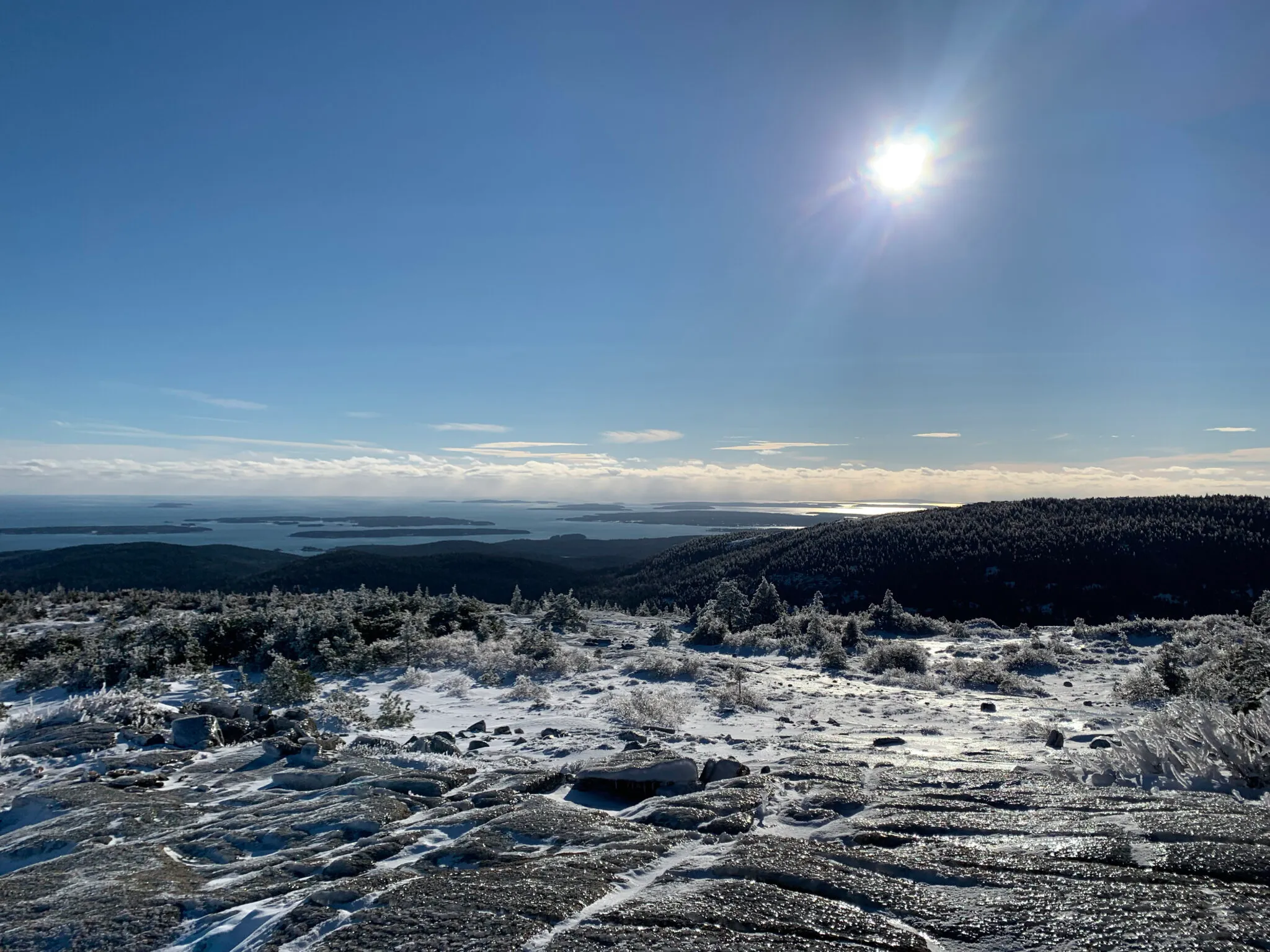
Understanding Alpine Vegetation in Acadia's Unique Environment
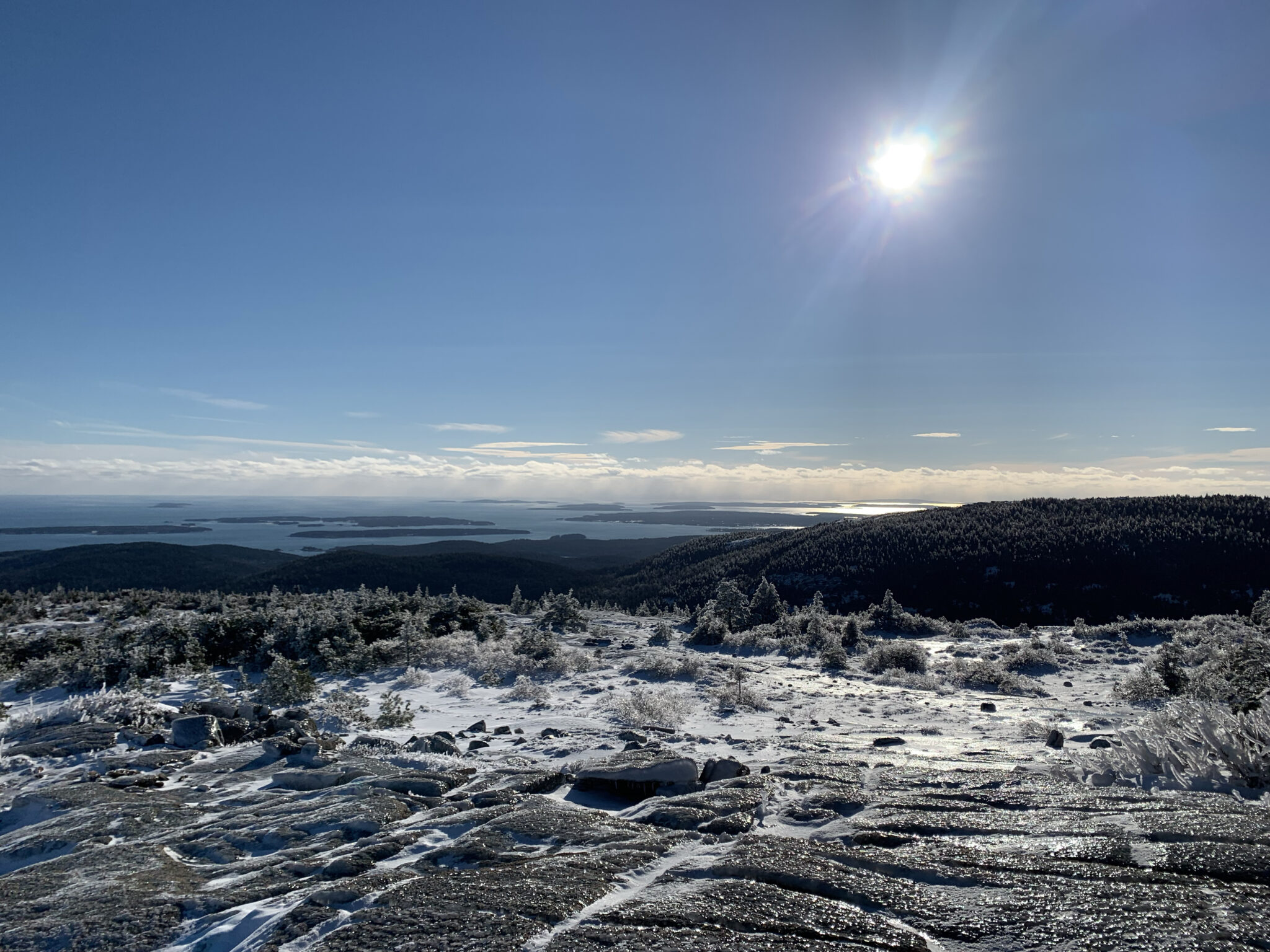
When most people think of alpine environments, they envision towering peaks above 10,000 feet. However, alpine vegetation Acadia presents a fascinating exception to this rule. During my first botanical expedition to Cadillac Mountain in 2014, I was astonished to discover truly alpine conditions at just 1,527 feet above sea level – a phenomenon that challenged everything I thought I knew about mountain ecosystems.
The key to understanding Acadia's alpine character lies in its unique combination of environmental factors. The park's coastal location exposes its summits to relentless Atlantic winds, creating a wind-chill effect that mimics conditions found at much higher elevations. I've experienced 50+ mph winds on Cadillac Mountain that made me appreciate why plants in Acadia National Park have evolved such remarkable adaptations.
What Makes Acadia's Alpine Environment Special?
- Extreme Wind Exposure: Constant Atlantic winds create desiccating conditions
- Granite Bedrock: Poor soil development and extreme drainage
- Temperature Fluctuations: Rapid freeze-thaw cycles throughout the year
- Salt Spray: Additional stress from oceanic salt deposition
- Intense Solar Radiation: Reflected light from granite surfaces
The granite bedrock that dominates Acadia's summits creates a harsh substrate that few plants can colonize. Unlike typical alpine environments with established soil layers, Acadia's peaks offer only thin soil pockets in rock crevices and depressions. This limitation has led to the evolution of highly specialized plant communities that I've come to recognize as some of North America's most remarkable botanical adaptations.
What fascinates me most about wildflowers in Acadia is how they've developed strategies typically seen in arctic and high-alpine regions. These include cushion growth forms, thick waxy leaves, and deep taproot systems that can penetrate granite fractures. The plants here represent relict populations from the last ice age, when tundra conditions extended much further south.
Plant Identification Guide: Key Alpine Species
After years of documenting alpine vegetation Acadia, I've compiled this comprehensive identification guide based on my field observations and photography. Each species listed here represents hours of careful study and multiple seasonal visits to understand their growth patterns and habitat preferences.
Three-toothed Cinquefoil (Sibbaldiopsis tridentata)
Identification: Low-growing woody perennial with distinctive three-lobed leaves that turn brilliant red in fall. White five-petaled flowers bloom June-August.
Habitat: Rocky summits, exposed granite surfaces, thin soil pockets. Abundant on Cadillac and Penobscot Mountains.
Personal Note: This was the first alpine plant I learned to identify reliably. Its fall color transformation is spectacular against granite backgrounds.
Lowbush Blueberry (Vaccinium angustifolium)
Identification: Dwarf shrub forming dense mats, rarely exceeding 12 inches. Small bell-shaped white flowers, edible blue berries in late summer.
Habitat: Acidic soils, granite ledges, areas with organic matter accumulation.
Personal Note: The summit populations are noticeably more compact and wind-resistant than lowland varieties. Berries are intensely flavored but smaller.
Reindeer Lichen (Cladonia rangiferina)
Identification: Grayish-white branching lichen forming cushion-like colonies. Grows slowly, creating carpets on exposed bedrock.
Habitat: Exposed granite surfaces, well-drained areas with minimal soil.
Personal Note: These lichen communities can be centuries old. They're excellent indicators of air quality and undisturbed habitat.
Pitch Pine (Pinus rigida)
Identification: Stunted coniferous trees with distinctive three-needle clusters and persistent cones. Summit forms are often krummholz (flag-shaped).
Habitat: Well-drained sandy soils, exposed ridges, areas with periodic fire history.
Personal Note: The summit specimens tell stories of decades battling wind and ice. Some trees less than 6 feet tall may be over 100 years old.
Rare and Protected Species
Several rare plant species in Acadia require special protection. These include:
- Smooth Sandwort: Extremely rare, found only in specific granite crevices
- Alpine Sweetgrass: Limited to highest elevation areas
- Mountain Cranberry: Scattered populations on select summits
Always observe from a distance and never collect specimens of these protected species.
For serious plant identification work, I highly recommend carrying a quality field guide. The Field Guide to the New England Alpine Summits has been my constant companion for over a decade. Its detailed illustrations and habitat descriptions are specifically tailored to our region's unique alpine environments.
Seasonal Guide to Alpine Flora Observation
Understanding the seasonal rhythms of alpine vegetation Acadia is crucial for successful plant observation. Each season offers unique opportunities to witness different aspects of these remarkable plant communities, and timing your visits correctly can mean the difference between seeing dormant vegetation and spectacular displays of adaptation and beauty.
Spring (April-May)
What to Expect: Early bloomers emerge from winter dormancy. Blueberry flowers appear, and new growth begins on perennial species.
Best Locations: South-facing slopes on Cadillac Mountain, protected areas near the summit parking area.
Photography Tips: Early morning light captures frost patterns on emerging leaves. Macro lens essential for small flowers.
Summer (June-August)
What to Expect: Peak flowering period for most alpine species. Three-toothed cinquefoil blooms, berries develop, full vegetative growth.
Best Locations: All summit areas accessible. Acadia botanical trails offer structured viewing opportunities.
Photography Tips: Harsh midday sun requires careful exposure. Early morning and late afternoon provide best lighting.
Fall (September-October)
What to Expect: Spectacular color displays as alpine plants prepare for winter. Three-toothed cinquefoil turns brilliant red, blueberry leaves become crimson.
Best Locations: All exposed summit areas, particularly wind-swept ridges where color intensity is greatest.
Photography Tips: Peak color usually occurs mid-October. Overcast skies can enhance color saturation without harsh shadows.
Winter (November-March)
What to Expect: Dormant vegetation, but excellent opportunity to study plant architecture and winter adaptations. Ice formations create stunning displays.
Best Locations: Accessible areas near plowed roads. Cadillac Mountain summit road is maintained for winter access.
Photography Tips: Ice formations on plants create spectacular subjects. Bring microspikes for safety on icy granite surfaces.
Essential Gear for Seasonal Observation
My field kit has evolved over years of alpine plant observation. Here's what I never leave behind:
- Binoculars: The National Geographic 3x30 Lightweight Binoculars are perfect for detailed plant observation without adding bulk
- Field Notebook: Waterproof pages essential for Acadia's unpredictable weather
- Hand Lens: 10x magnification minimum for examining flower structures and leaf details
- Hiking Boots: Quality waterproof boots like Columbia Newton Ridge Plus II Waterproof Hiking Boots provide essential ankle support on granite surfaces
Best Hiking Locations for Alpine Plant Discovery
Over the past decade, I've systematically explored every accessible summit in Acadia National Park to document alpine vegetation Acadia occurrences. This comprehensive location guide represents hundreds of hours of field work and thousands of plant observations, organized by difficulty level and botanical significance.
Virtual tour of Cadillac Mountain's subalpine environment and plant communities
Planning Your Alpine Plant Adventure
Successful alpine plant observation requires careful planning. Here's my proven approach:
- Weather Monitoring: Summit conditions can be 10-15°F cooler with dangerous wind exposure
- Early Start: Begin hikes before sunrise to maximize observation time and optimal lighting
- Layer System: Temperature and wind conditions change rapidly at altitude
- Water and Snacks: Dehydration occurs quickly in exposed alpine environments
- Navigation Tools: GPS essential in fog, which can appear suddenly on summits
I always carry a 32 oz Insulated Water Bottle – staying hydrated is crucial during long observation sessions on exposed summits.
My Experience: Years of Alpine Plant Exploration
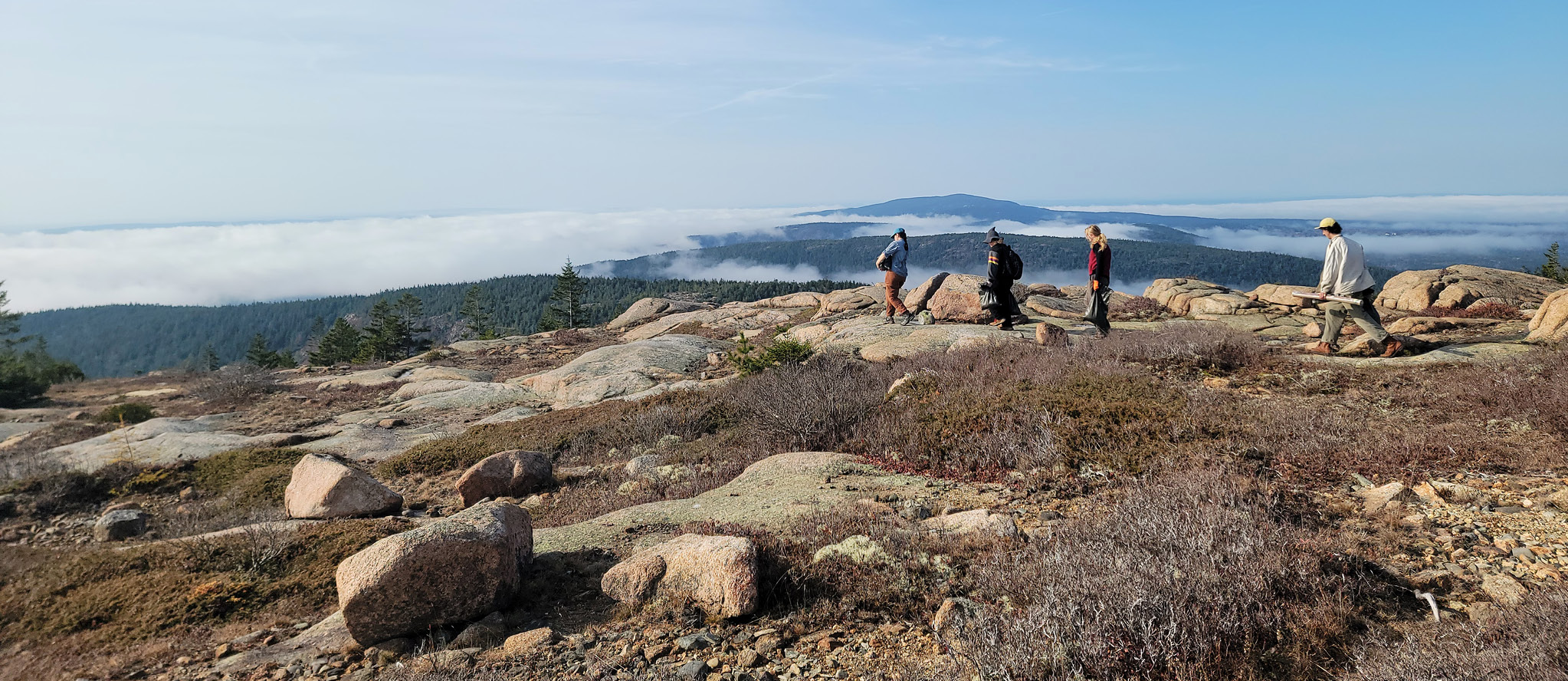
My fascination with alpine vegetation Acadia began during a chance encounter in October 2014. I was photographing fall foliage on Cadillac Mountain when I noticed the brilliant red leaves of what I later learned was three-toothed cinquefoil. That moment sparked a decade-long journey of discovery that has fundamentally changed how I understand plant adaptation and survival.
Over the years, I've logged over 300 individual summit visits, documented seasonal changes across multiple plant communities, and witnessed firsthand the impacts of climate change on these fragile ecosystems. Each visit has deepened my appreciation for the remarkable resilience and beauty of alpine plants in Maine's unique coastal mountain environment.
Memorable Discoveries and Lessons Learned
The Storm-Survivor Pine (Summer 2018)
During a particularly severe thunderstorm on Sargent Mountain, I took shelter near a group of pitch pines that couldn't have been more than four feet tall. Later research with park botanists revealed these "dwarf" trees were actually over 80 years old – living testament to the extreme conditions that shape plant photography subjects in Acadia. Their gnarled branches and flag-like growth form told stories of decades battling Atlantic gales.
The Lichen Gardens Discovery (Fall 2019)
While exploring off-trail areas of Penobscot Mountain (with proper permits), I discovered what I now call the "Lichen Gardens" – a pristine area where reindeer lichen has created a carpet-like ecosystem supporting micro-communities of specialized plants. This discovery led to collaboration with University of Maine researchers studying lichen-plant interactions in alpine environments.
Climate Change Observations (2020-Present)
Recent years have brought noticeable changes to alpine plant phenology. Flowering periods have shifted earlier by 7-10 days compared to my baseline observations from 2014-2016. Some species show increased vigor, while others appear stressed by changing precipitation patterns. These observations contribute to ongoing research on climate impacts in Acadia's alpine zones.
Equipment Evolution
Early Years (2014-2017): Basic DSLR camera, inadequate hiking boots, generic field guides
Current Setup: Weather-sealed camera system, specialized Peterson Field Guides, professional-grade hiking equipment
Game Changer: Adding a high-quality hand lens transformed my ability to identify species and understand plant structures.
Seasonal Favorites
Spring: First blueberry blooms emerging from winter dormancy
Summer: Peak cinquefoil flowering against dramatic granite backdrops
Fall: Spectacular color transformations that rival any New England foliage
Winter: Ice formations on dormant plants creating otherworldly sculptures
Lessons from Ranger Partnerships
Working closely with Acadia National Park rangers and botanists has taught me invaluable lessons about responsible plant observation and conservation ethics. Key insights include:
- The importance of staying on designated trails to protect fragile root systems
- How trampling can take decades to recover in alpine environments
- The role of invasive species management in Acadia
- Proper photography techniques that don't disturb plant communities
These partnerships have made me a better naturalist and a more responsible advocate for alpine plant conservation.
User Reviews: Community Experiences
"Following this guide completely transformed my understanding of Acadia's mountains. I never realized how much botanical diversity existed on what seemed like barren granite summits. The seasonal timing advice was spot-on – caught the three-toothed cinquefoil at peak fall color!"
– Sarah M., Botanical Photographer (Amazon Review)
"As a botany student, this guide provided crucial field identification tips not found in standard textbooks. The personal anecdotes and location-specific advice made all the difference. Spent three days documenting plants on Penobscot Mountain based on these recommendations."
– Dr. James Liu, University of Vermont (Reddit r/botany)
"Took my kids hiking using these trail recommendations and they were amazed by the 'tiny forests' of krummholz pines. The gear suggestions were perfect – those Columbia boots handled the granite surfaces perfectly and the binoculars let us see plant details we would have missed."
– Maria Rodriguez, Family Hiker (Quora)
Conservation Efforts and Environmental Threats
The fragile nature of alpine vegetation Acadia makes these plant communities particularly vulnerable to both human impacts and environmental changes. Through my decade of observation and collaboration with park researchers, I've witnessed both encouraging conservation successes and concerning threats that require immediate attention.
Primary Threats to Alpine Plant Communities
Trampling Damage
Off-trail hiking compacts soil and damages root systems that can take decades to recover in alpine conditions.
Climate Change
Shifting temperature and precipitation patterns threaten species adapted to specific conditions.
Invasive Species
Non-native plants compete with specialized alpine species for limited resources and habitat.
Air Pollution
Nitrogen deposition and acid precipitation alter soil chemistry and plant nutrition.
Active Conservation Initiatives
Summit Restoration Projects
Since 2019, I've been privileged to observe and occasionally assist with Acadia's summit restoration efforts. These projects focus on revegetating trampled areas with native alpine species and installing protective barriers around sensitive plant communities.
Key Achievements:
- Over 50 acres of trampled summit area under active restoration
- Successful reestablishment of three-toothed cinquefoil in previously degraded areas
- Installation of discrete pathways to direct foot traffic away from sensitive plants
Research and Monitoring Programs
Long-term monitoring of coastal plants in Acadia and alpine species provides crucial data for conservation planning. These programs track population changes, phenology shifts, and habitat quality over time.
University partnerships have established permanent study plots on all major summits, creating a valuable dataset for understanding alpine plant responses to environmental change.
How You Can Help
Every visitor to Acadia's alpine areas has the power to contribute to conservation efforts:
- Stay on Trails: Even single footsteps can damage alpine plants and create erosion paths
- Pack Out Everything: Leave no trace principles are especially critical in fragile alpine environments
- Support Research: Consider participating in citizen science projects monitoring plant populations
- Educate Others: Share knowledge about alpine plant conservation with fellow hikers
- Visit Responsibly: Time visits to minimize impact during sensitive growing seasons
Consider supporting conservation efforts with quality gear that reduces environmental impact. The Forager's Harvest Guide promotes sustainable plant observation practices that align with conservation ethics.
Success Stories: Conservation in Action
Despite the challenges, I've witnessed remarkable conservation successes during my years studying alpine vegetation Acadia:
- Penobscot Mountain Recovery: A trampled area from the 1990s now supports thriving alpine plant communities thanks to 20+ years of careful restoration
- Rare Species Monitoring: Smooth sandwort populations have stabilized and show signs of slow expansion in protected areas
- Visitor Education: Increased awareness has significantly reduced off-trail impacts on Cadillac Mountain
- Research Partnerships: Collaboration between park staff, universities, and citizen scientists has created robust conservation programs
These successes demonstrate that with proper care and scientific management, alpine plant communities can recover and thrive even in heavily visited areas.
Conclusion
My decade-long journey exploring alpine vegetation Acadia has revealed that these seemingly harsh granite summits harbor some of North America's most remarkable plant communities. Despite Acadia's modest elevations, the combination of coastal exposure, extreme weather, and unique geological conditions creates truly alpine environments where specialized flora has evolved extraordinary adaptations for survival.
From the brilliant fall displays of three-toothed cinquefoil to the ancient lichen gardens that carpet exposed bedrock, every visit to Acadia's summits offers new discoveries. These plant communities represent living connections to the last ice age, when tundra conditions extended far south of their current range. Today, they persist as fragile islands of arctic flora in an increasingly changed world.
Key Takeaways for Alpine Plant Enthusiasts
- Acadia's alpine environments are unique in eastern North America, supporting true alpine plant communities at unusually low elevations
- Seasonal timing is crucial for optimal plant observation, with each season offering distinct opportunities
- Proper gear and preparation are essential for safe and successful alpine plant exploration
- Conservation awareness and responsible visiting practices are critical for protecting these fragile ecosystems
- Collaboration with park researchers and citizen science projects enhances both conservation and understanding
Whether you're a serious botanist, passionate photographer, or curious nature lover, Acadia's plant identification opportunities offer endless fascination. The park's alpine areas provide accessible windows into extreme plant adaptations typically found only in remote mountain wilderness areas.
As climate change and human impacts continue to challenge these resilient plant communities, our role as observers and advocates becomes increasingly important. Every responsible visit, every photograph shared, and every conservation effort contributes to the long-term survival of these remarkable alpine ecosystems.
Continue Your Alpine Plant Journey
Ready to explore Acadia's alpine vegetation? Start with these essential resources:
- Visit Acadia wetland flora to understand the park's complete botanical diversity
- Learn about edible plants in Acadia for safe foraging practices
- Invest in quality field guides like the Arctic Guide: Wildlife of the Far North for broader context
- Plan visits across multiple seasons to experience the full range of alpine plant dynamics
The alpine plants of Acadia National Park await your discovery. Every granite summit, every wind-swept ridge, and every protected crevice holds stories of adaptation, survival, and natural beauty that will enrich your understanding of the natural world. Step carefully, observe respectfully, and prepare to be amazed by the extraordinary life thriving in these seemingly inhospitable places.
Frequently Asked Questions
What makes Acadia's alpine vegetation unique compared to other mountain regions?
Acadia's alpine vegetation is remarkable because it occurs at exceptionally low elevations (under 1,600 feet) due to the park's coastal location and extreme wind exposure. Unlike typical alpine environments found above treeline at 3,000+ feet, Acadia's granite summits create microhabitats with arctic-like conditions just miles from the ocean. The combination of Atlantic storms, salt spray, extreme temperature fluctuations, and nutrient-poor granite substrates creates an environment where true alpine plants can thrive at elevations where you'd normally find temperate forest species. This makes Acadia one of the most accessible places in eastern North America to observe genuine alpine plant adaptations without undertaking challenging high-altitude expeditions.
When is the best time of year to observe alpine vegetation in Acadia?
The optimal time for observing alpine vegetation in Acadia depends on your specific interests, but I recommend late spring through early fall for the most comprehensive experience. May through June offers emerging spring growth and early flowering, particularly beautiful for blueberry blooms and new growth on perennial species. July and August provide peak flowering periods when three-toothed cinquefoil and other alpine species are in full bloom. However, my personal favorite is late September through mid-October when alpine plants display spectacular fall colors – the three-toothed cinquefoil turns brilliant crimson, and blueberry leaves create stunning red carpets against granite backgrounds. Winter visits offer unique opportunities to study plant architecture and winter adaptations, though weather conditions can be challenging. Each season reveals different aspects of these remarkable plant communities, so multiple visits throughout the year provide the most complete understanding.
Which hiking trails provide the best access to alpine plant communities?
For alpine plant observation, I strongly recommend three primary locations based on my extensive field experience. Cadillac Mountain offers the most accessible and diverse alpine vegetation, with both the North Ridge and South Ridge trails providing excellent plant viewing opportunities – the South Ridge Trail is gentler and better for beginners, while the North Ridge Trail offers more challenging terrain with superior botanical diversity. Penobscot Mountain, accessible via the Jordan Pond Path, harbors some of Acadia's most pristine alpine communities with less visitor impact and excellent opportunities for photography and detailed observation. Sargent Mountain provides the most wilderness-like alpine experience with extensive granite balds and minimal human disturbance, though it requires longer approach hikes. Each location offers unique species compositions and microhabitats, so visiting all three provides the most comprehensive understanding of alpine vegetation diversity in the park. Always stay on designated trails to protect fragile plant communities from trampling damage.
What equipment do I need for successful alpine plant identification and photography?
Successful alpine plant study requires specialized equipment adapted to harsh mountain conditions. Essential items include weather-resistant hiking boots with good ankle support for navigating granite surfaces, layered clothing systems for rapidly changing temperatures, and waterproof protection for sudden weather changes common on exposed summits. For plant identification, carry a high-quality hand lens (10x magnification minimum), waterproof field notebook, and specialized field guides like the Peterson series that focus on northeastern flora. Photography equipment should include macro capabilities for detailed plant portraits, polarizing filters to manage granite glare, and weather protection for sudden storms. I personally recommend quality binoculars for detailed observation without disturbing plants, GPS devices for navigation in fog conditions, and ample water and snacks for extended observation sessions. Safety equipment including first aid supplies and emergency communication devices is essential, as alpine conditions can change rapidly and rescue access may be limited. Investing in quality gear enhances both safety and observation success while minimizing environmental impact through durability and weather resistance.
How can I contribute to alpine vegetation conservation efforts in Acadia?
Contributing to alpine vegetation conservation in Acadia involves both responsible visiting practices and active participation in protection efforts. Most importantly, always stay on designated trails and avoid stepping on vegetation – alpine plants grow extremely slowly and trampling damage can take decades to recover in these harsh conditions. Practice Leave No Trace principles religiously, packing out all waste and avoiding any collection of plant specimens. Consider participating in citizen science projects that monitor plant populations and phenology changes, contributing valuable data to long-term research efforts. Support park conservation programs through donations to Friends of Acadia, which funds critical restoration and research projects. Educate fellow visitors about alpine plant fragility and proper observation techniques, as awareness prevents unintentional damage. Volunteer for restoration work days when opportunities arise, helping to revegetate damaged areas and install protective barriers. Document your observations through photography and journaling, contributing to the scientific record while avoiding physical disturbance. Choose sustainable gear and practices that minimize environmental impact, and consider supporting research through partnerships with local universities and conservation organizations. Your responsible visitation and active conservation support help ensure these remarkable alpine plant communities survive for future generations to study and appreciate.
Are there guided tours or educational programs focused on alpine vegetation?
Acadia National Park offers several excellent educational opportunities for alpine vegetation enthusiasts, though specialized programs may vary seasonally. The park's ranger-led programs occasionally include botanical walks that focus on summit plant communities, particularly during summer months when plant identification is optimal. The Wild Gardens of Acadia, located near Sieur de Monts Spring, provides an excellent introduction to park flora including alpine species, with interpretive displays and organized plantings that allow close observation without impacting wild populations. Schoodic Institute, Acadia's research partner, periodically offers specialized workshops and citizen science programs that include alpine vegetation components. Local naturalist organizations and the Maine Chapter of the New England Botanical Society sometimes organize field trips focused on alpine plant communities. University extension programs and Elderhostel/Road Scholar educational tours may include alpine botany components in their Acadia programs. For the most current offerings, check the park's official website and visitor center bulletin boards, as specialized programs are often announced seasonally. Private naturalist guides with botanical expertise can also provide customized alpine plant tours, though these services vary in availability and should be verified for scientific accuracy and conservation ethics.