
Plants in Acadia National Park: A Complete Guide to Native Flora, Habitats & Seasonal Highlights
Diverse Ecosystems of Acadia National Park
Acadia National Park sits at a fascinating ecological crossroads, creating a unique environment where both northern boreal forest species and southern deciduous forest plants thrive side by side. This remarkable convergence of ecosystems is what makes the plant life in Acadia National Park so diverse and fascinating to explore.
The park encompasses over 49,000 acres on Mount Desert Island, Isle au Haut, and the Schoodic Peninsula, featuring dramatic landscapes shaped by glacial activity. These varied terrains—from rocky coastlines and sandy beaches to mountain summits and freshwater ponds—create distinct microclimates that support an impressive variety of plant communities.
What makes Acadia truly special is that it represents the southern limit for many arctic and boreal plant species like the arctic blue flag iris, while simultaneously marking the northern range limit for plants like pitch pine and scrub oak that typically grow in mid-Atlantic regions. This botanical convergence contributes to Acadia's extraordinary biodiversity, with more than 1,100 documented plant species—an impressive number for such a relatively small area.
The park's location along the Maine coast exposes plants to challenging environmental conditions, including salt spray, strong winds, and temperature fluctuations. These factors have led to fascinating adaptations in the native plants in Acadia National Park, from the wind-sculpted pitch pines to specialized coastal plants that can tolerate salt and extreme weather.
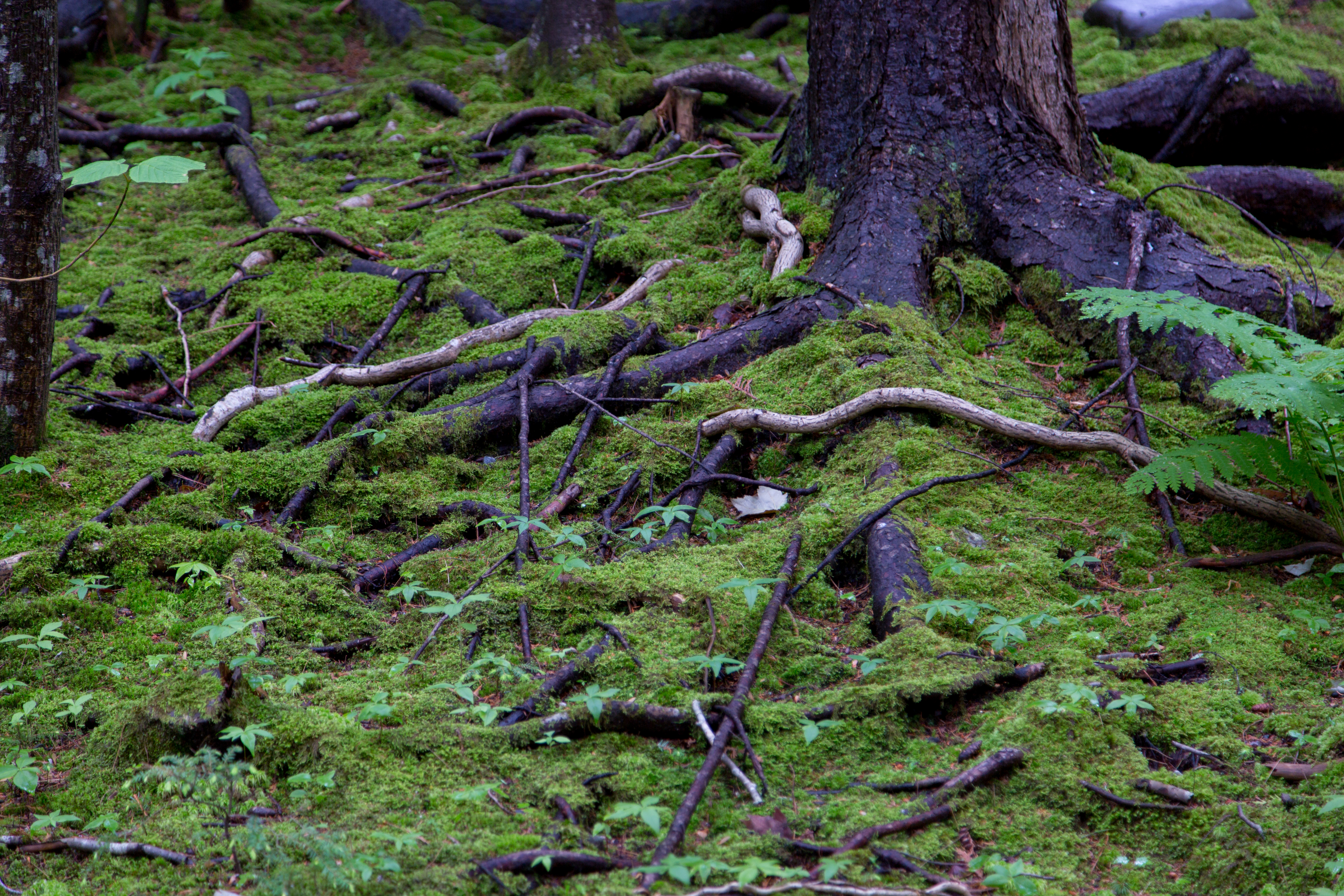
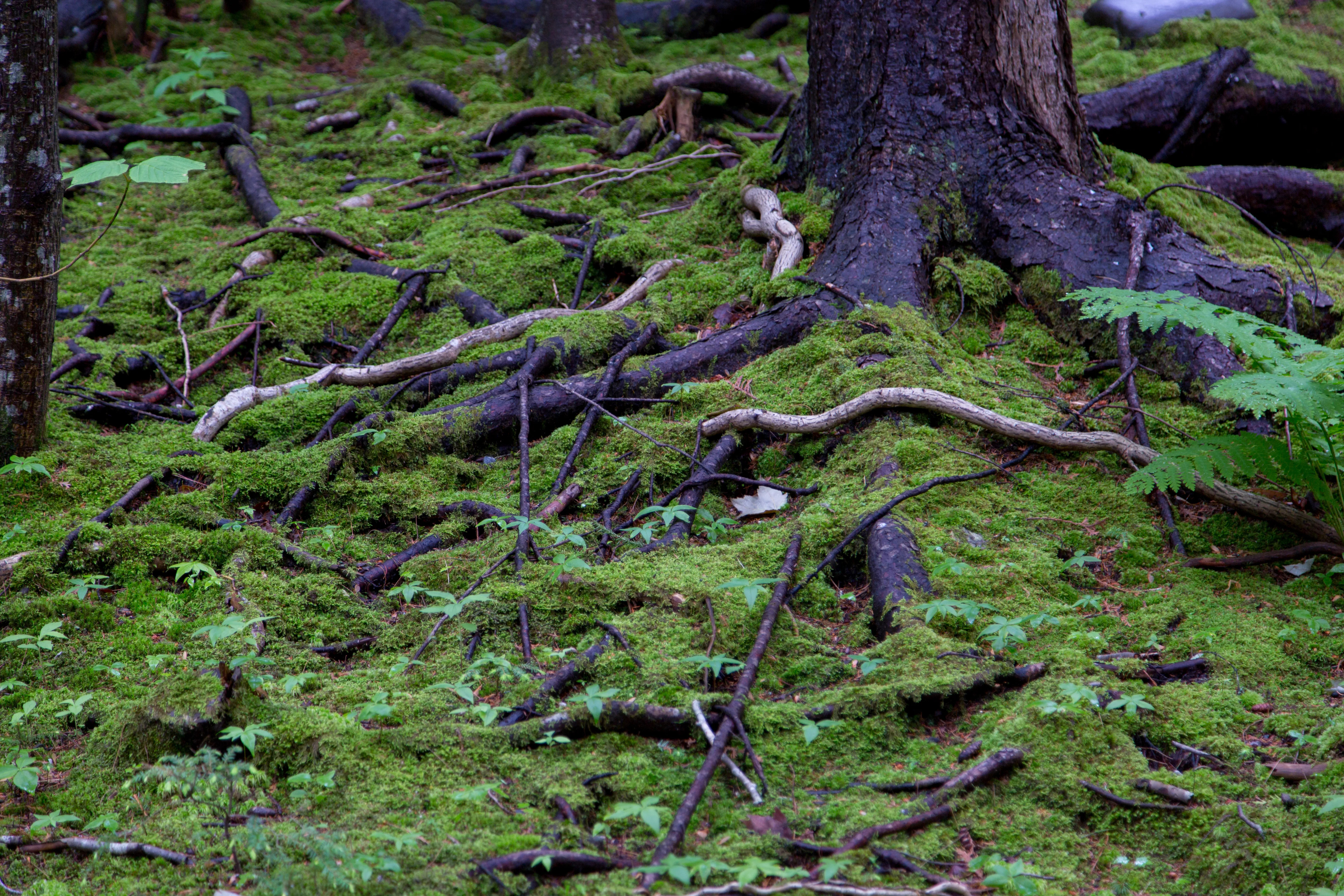
Moss and tree roots along Acadia's forest floor (NPS Photo)
Unfortunately, this delicate balance faces threats from climate change, invasive species, and human impact. Nearly one-third of the park's flora is non-native, with about 25 species being invasive and potentially harmful to native ecosystems. The National Park Service actively works to manage these invasive plants in Acadia National Park while preserving and protecting the native species that make this landscape so special.
One of the best ways to appreciate Acadia's plant diversity is by visiting the Wild Gardens of Acadia at Sieur de Monts Spring. This volunteer-maintained botanical garden showcases over 400 native plant species in simulated natural habitats, offering an excellent introduction to the various plant communities you'll encounter throughout the park.
Essential Resource for Plant Identification
For serious plant enthusiasts, I highly recommend The Plants of Acadia National Park by Glen Mittelhauser, Linda Gregory, Sally Rooney, and Jill Weber. This comprehensive field guide presents scientific descriptions of 862 plant species found in Acadia, including wildflowers, ferns, grasses, trees, and shrubs. With detailed information and beautiful photographs, it's been my constant companion during my botanical explorations of the park.
Get it on Amazon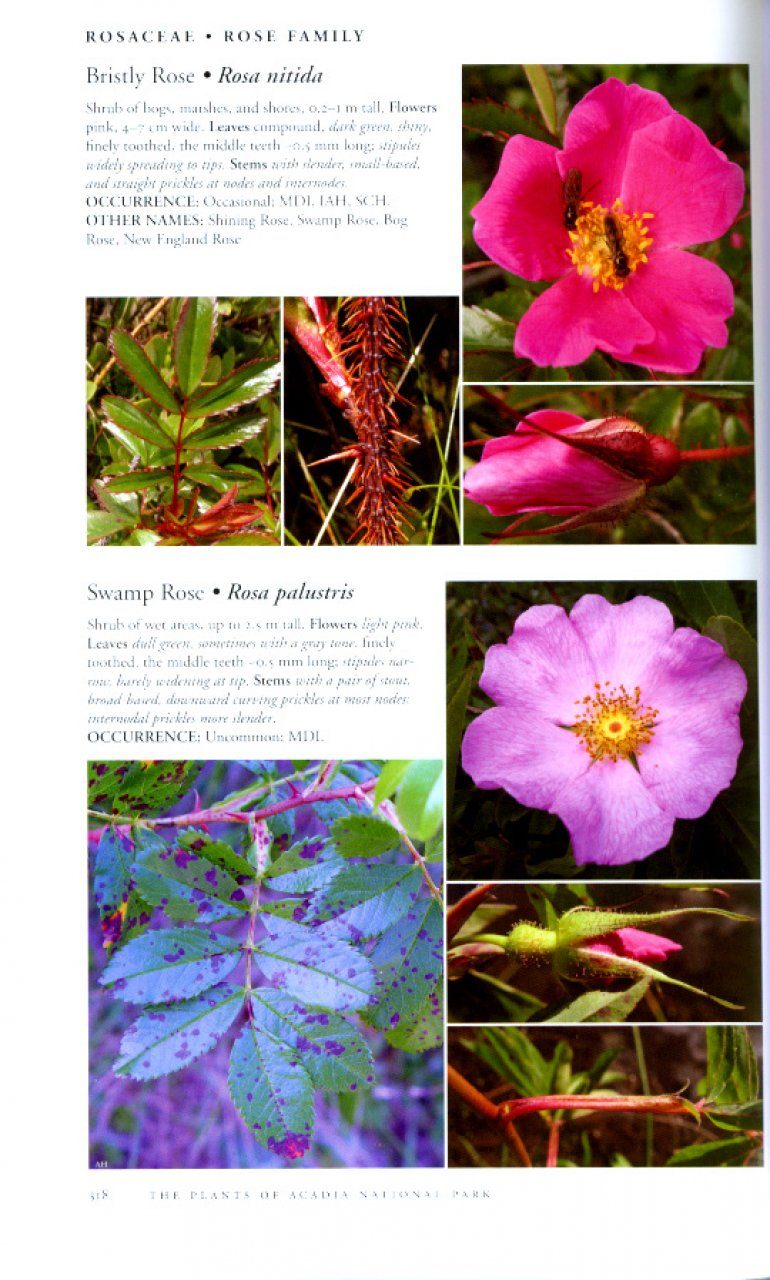
Forest and Woodland Plants
Acadia National Park sits at the boundary between two major forest types, creating a rich tapestry of woodland plant communities. The eastern deciduous forest and northern boreal forest converge here, resulting in a fascinating mix of plant species that change as you move through different elevations and exposures within the park.
Deciduous Forest Plants
The deciduous woodlands of Acadia feature a diverse canopy of broad-leaved trees that create a symphony of colors in autumn. Common species include red oak (Quercus rubra), American beech (Fagus grandifolia), red maple (Acer rubrum), sugar maple (Acer saccharum), and paper birch (Betula papyrifera). In spring, before the canopy fully leafs out, these forests host a stunning array of ephemeral wildflowers that take advantage of the abundant sunlight reaching the forest floor.
During my April visits to Acadia, I've delighted in finding patches of wild lily-of-the-valley (Maianthemum canadense), bunchberry (Cornus canadensis), goldthread (Coptis trifolia), and starflower (Trientalis borealis). These woodland wildflowers are among my favorite plants in Acadia National Park, creating a delicate carpet of blooms that disappear by early summer as the canopy thickens above.
The understory of deciduous woods also contains a rich variety of ferns, including Christmas fern (Polystichum acrostichoides) and bracken fern (Pteridium aquilinum). Shrubs like hobblebush (Viburnum lantanoides), sheep laurel (Kalmia angustifolia), and red-berried elder (Sambucus racemosa) add structure and food sources for wildlife.
Coniferous Forest Plants
The coniferous woods of Acadia represent the southern edge of the vast northern boreal forest. These evergreen-dominated areas are characterized by red spruce (Picea rubens), white spruce (Picea glauca), balsam fir (Abies balsamea), eastern hemlock (Tsuga canadensis), and various pine species. The acidic soil conditions created by conifer needles support distinctive understory plants that thrive in low-nutrient environments.
A hike through Acadia's coniferous forests reveals specialized plants like partridgeberry (Mitchella repens), wintergreen (Gaultheria procumbens), trailing arbutus (Epigaea repens), and various clubmosses. The forest floor is often carpeted with a lush layer of mosses and lichens that create a magical, almost primeval atmosphere, especially in the fog that frequently envelops the park.
One of my favorite spots to experience Acadia's coniferous woods is along the Jesup Path boardwalk near Sieur de Monts. Here, a beautiful hemlock grove creates a cool, shaded environment where you can observe the interactions between these stately trees and the specialized plants that grow beneath them. The boardwalk protects the sensitive forest floor while allowing visitors to immerse themselves in this unique ecosystem.
Ranger's Insight: Forest Threats
During a guided walk with Acadia park ranger Jessica, I learned about the serious threats facing the park's forests. Invasive pests like the hemlock woolly adelgid and red pine scale are attacking specific tree species, while climate change is shifting the growing conditions that have maintained these forest communities for centuries.
Jessica explained that weakened by multiple stressors, some tree species are being pushed to the brink of elimination, which could fundamentally change Acadia's forests and the plant communities they support. The park is monitoring these changes closely and implementing management strategies to maintain forest health.
Mixed forest areas—where deciduous and coniferous trees grow together—create diverse habitats that support an impressive array of plant life. These transitional zones often feature white pine (Pinus strobus), northern white cedar (Thuja occidentalis), and a mixture of hardwoods, creating a complex forest structure that provides niches for many different plants in Acadia National Park.
Coastal and Shoreline Flora
Acadia's 47 miles of coastline create some of the most challenging growing conditions in the park, yet they host fascinating plant communities specially adapted to survive in these harsh environments. From rocky headlands battered by waves to protected salt marshes and sandy beaches, coastal plants in Acadia National Park have evolved remarkable strategies to thrive despite salt spray, strong winds, and poor soil conditions.

Coastal wildflowers along Acadia's shoreline
Rocky Headland Plants
The exposed granite headlands of Acadia host specially adapted plants that can withstand extreme conditions. During my coastal hikes along the Ocean Path and Schooner Head, I've observed fascinating species like roseroot sedum (Rhodiola rosea), a succulent with fleshy leaves that help it retain water despite the drying winds and salt spray. This arctic-alpine plant reaches the southern limit of its range in Acadia, highlighting the park's unique position as a botanical meeting ground.
Another remarkable coastal plant is beach-head iris (Iris setosa var. canadensis), an arctic blue flag that somehow manages to bloom in the cracks of coastal rocks. Seaside goldenrod (Solidago sempervirens) adds bright yellow splashes to the coastline in late summer and early fall, while bayberry (Morella pensylvanica) shrubs with their aromatic leaves form low thickets in more protected spots.
My early morning explorations of Acadia's coastline have revealed how these plants have adapted to their challenging environment. Many coastal species have developed thick, waxy leaves to prevent water loss, deep root systems to anchor in thin soil, and low, spreading growth habits to minimize exposure to wind and salt spray. Some, like beach pea (Lathyrus japonicus), can fix nitrogen from the air, allowing them to grow in nutrient-poor coastal soils.
Salt Marsh and Beach Plants
In protected coves and inlets, salt marshes support specialized plants that can tolerate periodic flooding with saltwater. Salt marsh cord grass (Spartina alterniflora) dominates the lower marsh, while salt meadow hay (Spartina patens) forms the characteristic swirling patterns of the high marsh. Sea lavender (Limonium carolinianum) adds purple blooms in late summer, creating a beautiful contrast against the golden marsh grasses.
Sandy beaches are rare in Acadia, with Sand Beach being the most notable example. Here, specialized plants like beach grass (Ammophila breviligulata) help stabilize the shifting sands with their extensive root systems. During a guided beach ecology walk, a ranger pointed out how these pioneering plants are critical for beginning the process of dune formation and creating habitat for other species.
At the upper edges of beaches and in the splash zone of rocky shores, you might find sea rocket (Cakile edentula), silverweed (Argentina anserina), and seaside plantain (Plantago maritima)—all adapted to handle occasional saltwater inundation while taking advantage of nutrients from washed-up seaweed and other marine debris.
Must-Have Coastal Plant Guide
To identify the unique coastal plants you'll encounter along Acadia's shoreline, I recommend Wildflowers of Maine Islands: The Downeast and Acadia Coasts. This specialized guide focuses on the distinctive flora of coastal Maine, with beautiful photographs and detailed information about habitat, blooming periods, and interesting botanical facts.
View on Amazon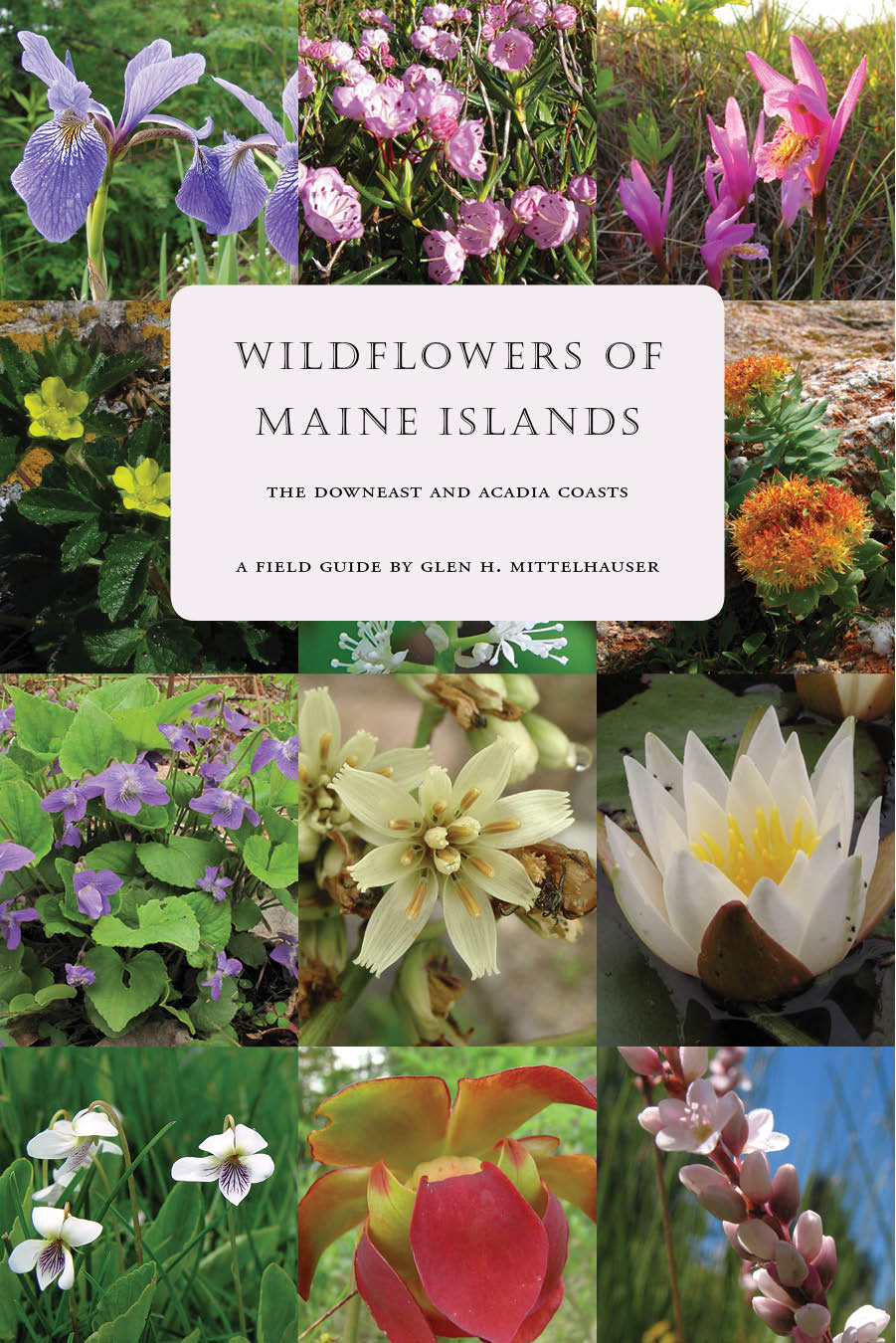
Mountain and Alpine Plant Communities
The granite mountains of Acadia National Park, though modest in elevation compared to other ranges, create distinctive habitats for specialized plant communities. Rising to 1,530 feet at Cadillac Mountain's summit, these peaks expose plants to harsh conditions including thin soils, strong winds, temperature extremes, and high solar radiation—creating environments similar to those found at much higher elevations elsewhere.
Summit and Ridgeline Flora
Hiking across Acadia's open mountain summits reveals a fascinating world of plants adapted to survive in these challenging conditions. The thin soil and exposed bedrock limit what can grow here, resulting in communities dominated by low-growing, tough perennials that can withstand the elements. During my numerous summit hikes, I've learned to appreciate these resilient mountain plants in Acadia National Park, which create beautiful miniature landscapes across the granite expanses.
One of the most distinctive mountain plants is three-toothed cinquefoil (Sibbaldiopsis tridentata), which forms low mats with distinctive three-toothed leaves and delicate white flowers. Mountain cranberry (Vaccinium vitis-idaea) spreads across the thin soil with leathery evergreen leaves and produces bright red berries that persist through winter. Black crowberry (Empetrum nigrum) creates dense, needle-leaved cushions that help it conserve moisture in the exposed environment.
Perhaps the most stunning of Acadia's mountain flora is the mountain sandwort (Minuartia groenlandica), which produces an abundance of star-like white flowers in early summer. Finding these delicate blooms emerging from cracks in the bare granite always feels like discovering hidden treasure. Their ability to thrive in such harsh conditions is a testament to the remarkable adaptations of alpine plants.
Open Ledge and Pitch Pine Communities
The south-facing slopes and exposed ledges of Acadia's mountains support unique plant communities dominated by pitch pine (Pinus rigida) and scrub oak (Quercus ilicifolia). These species reach their northeastern range limit in Acadia, making these communities particularly special from a botanical perspective.
Pitch pines on Acadia's mountains often take on a gnarled, twisted form due to the harsh growing conditions and past fires. Their thick, plated bark helps them survive wildfires, and they can even resprout from their trunks after severe burning—an adaptation I saw firsthand while exploring the recovering burn areas from the historic 1947 fire that affected much of the eastern side of Mount Desert Island.
Between the scattered pines, the thin soil supports a diverse community of drought-tolerant plants including lowbush blueberry (Vaccinium angustifolium), huckleberry (Gaylussacia baccata), bearberry (Arctostaphylos uva-ursi), and sweetfern (Comptonia peregrina). In spring, the pink blossoms of sheep laurel (Kalmia angustifolia) create beautiful displays across these rocky habitats.
One fascinating plant adaptation I've observed in these exposed environments is the way many species grow huddled against the leeward side of rocks, using them as shelter from the punishing winds. Others grow in shallow depressions where slightly more soil has accumulated, creating microhabitats that support greater plant diversity.
Climate Change Impacts on Mountain Plants
Researchers studying plants in Acadia National Park have documented concerning changes in mountain plant communities due to climate change. During a fascinating talk at the Schoodic Institute, I learned about the work of botanist Caitlin McDonough MacKenzie, who studies how warming temperatures are affecting plant communities at different elevations on Acadia's mountains.
Her research shows that the timing of flowering is shifting, with some species blooming weeks earlier than they did historically. This phenological mismatch can disrupt pollinator relationships and potentially lead to long-term changes in plant community composition. The specialized alpine and subalpine plants that reach their southern limit in Acadia may be particularly vulnerable as conditions continue to warm.
Wetland and Aquatic Plants
Wetlands comprise over 20% of Acadia National Park, creating diverse habitats for specialized plant communities. From acidic bogs and forested swamps to freshwater ponds and streams, these water-influenced environments support a remarkable variety of plants that have adapted to life with "wet feet." Some of the park's rarest plant species are found in these wetland ecosystems, making them particularly important for conservation.
Bog Plants and Carnivorous Species
Acadia's bogs are among the most fascinating botanical destinations in the park. These acidic wetlands, often lined with clay deposited during the last ice age, receive little water flow and are primarily fed by rainfall. The resulting low-nutrient, acidic conditions create a challenging environment where specialized plants have evolved remarkable adaptations.
During my visits to the Great Heath and other bog habitats, I've been captivated by the diversity of dwarf evergreen shrubs that dominate these landscapes. Labrador tea (Rhododendron groenlandicum) with its aromatic leaves, leatherleaf (Chamaedaphne calyculata), bog laurel (Kalmia polifolia), and rhodora (Rhododendron canadense) create a tapestry of texture and seasonal color. In spring, the vibrant pink-purple blooms of rhodora transform the bog into a spectacular flowering display.
Perhaps most fascinating are the carnivorous plants that have evolved to supplement their nutrient intake by capturing insects. The northern pitcher plant (Sarracenia purpurea) is particularly striking with its modified leaves forming water-filled pitchers that trap and digest insects. Round-leaved sundew (Drosera rotundifolia) uses sticky tentacles to capture prey, its glistening droplets sparkling in the sunlight like tiny jewels.
Bogs also support specialized wetland plants like cotton-grass (Eriophorum spp.), whose fluffy white seed heads wave in the breeze, and the delicate bog cranberry (Vaccinium oxycoccos), which produces small tart berries in late summer. The spongy carpet of Sphagnum moss that underlies most bog habitats is itself a fascinating plant adaptation, capable of holding up to 20 times its weight in water.
Freshwater Marsh and Pond Plants
Acadia's freshwater marshes and pond edges support entirely different plant communities adapted to consistently wet but not permanently flooded conditions. These productive ecosystems feature emergent vegetation—plants rooted in saturated soil with stems and leaves extending above the water surface.
Common cattail (Typha latifolia), blue flag iris (Iris versicolor), and various sedges and rushes create the characteristic marsh vegetation structure. During my kayaking explorations of Acadia's freshwater habitats, I've enjoyed spotting distinctive plants like pickerelweed (Pontederia cordata) with its spike of purple flowers, arrow-head (Sagittaria latifolia), and turtlehead (Chelone glabra).
The open water of ponds supports floating-leaved plants anchored to the bottom but with leaves and flowers at the surface. The fragrant water-lily (Nymphaea odorata) is perhaps the most iconic, its perfect white blooms opening in the morning sun. Yellow pond-lily or spatterdock (Nuphar variegata) adds bright yellow cups rising above the water's surface.
In deeper water, completely submerged aquatic plants like water lobelia (Lobelia dortmanna) create important habitat for fish and other aquatic organisms. These underwater meadows are critical components of freshwater ecosystems but often go unnoticed by visitors focused on more visible vegetation.
Recommended Field Guide for Wetland Plants
For identifying the fascinating wetland plants in Acadia National Park, I recommend the Field Guide to Acadia National Park, Maine by Russell D. Butcher. This comprehensive guide includes excellent sections on wetland ecosystems with clear illustrations and identification tips for bog plants, marsh species, and aquatic vegetation.
Check price on Amazon
Wetland habitats are particularly vulnerable to invasive plant species. Purple loosestrife (Lythrum salicaria), yellow iris (Iris pseudacorus), and glossy buckthorn (Frangula alnus) pose significant threats to native wetland plants in Acadia. The park's Invasive Plant Management Team works diligently to control these invasives and protect the native wetland flora.
Seasonal Guide to Acadia's Plant Life
One of the joys of exploring plants in Acadia National Park is witnessing the dramatic seasonal changes that transform the landscape throughout the year. Each season offers unique botanical highlights, from spring's ephemeral wildflowers to autumn's spectacular foliage. Understanding these seasonal patterns can help you plan your visit to coincide with the botanical displays that interest you most.
Spring Awakening (April-May)
Spring arrives relatively late in Acadia, with the first wildflowers typically appearing in late April and early May as temperatures gradually warm. This is a magical time to explore the park's forests before the canopy leafs out, when sunlight floods the forest floor and triggers a burst of blooming activity.
In deciduous woodlands, look for early bloomers like spring beauty (Claytonia caroliniana), trout lily (Erythronium americanum), and wood anemone (Anemone quinquefolia). As May progresses, the forest floor becomes carpeted with wildflowers—wild lily-of-the-valley, starflower, goldthread, and bunchberry create a tapestry of delicate blooms.
In wetland areas, marsh marigold (Caltha palustris) adds bright yellow splashes, while the pink blooms of rhodora transform bogs and wet thickets. By late May, the vibrant purple-blue of iris and the pink of rose pogonia orchids begin to appear in wet meadows and pond edges.
Spring is also when the park's trees and shrubs begin their annual cycle of renewal. The red maple's crimson flowers appear before its leaves, shadbush (Amelanchier spp.) produces clouds of white blossoms against the still-bare forest, and the distinctive catkins of birch and alder release their pollen to the spring breezes.
Summer Abundance (June-August)
Summer brings warmer temperatures and lush growth across all of Acadia's plant communities. By June, the spring ephemeral wildflowers have completed their brief lifecycle, but they're replaced by a succession of summer-blooming species that take advantage of the longer days and abundant sunshine.
In open areas like meadows and roadsides, a colorful progression of wildflowers unfolds throughout the summer. Meadowsweet (Spiraea alba), fireweed (Epilobium angustifolium), and various asters and goldenrods create waves of bloom that attract numerous pollinators. August and September bring the native wildflowers—asters and goldenrods—into full bloom, painting the landscape in purples and golds.
Mountain summits come alive in early summer when mountain sandwort, three-toothed cinquefoil, and bearberry flower across the open granite. By midsummer, blueberries ripen on the mountain slopes, offering sweet treats to hikers (and bears!).
Summer is the perfect time for pond and wetland exploration, when water lilies float on the glassy surface and pickerelweed produces its spikes of purple flowers. Carnivorous plants like pitcher plant and sundew are actively capturing insects, and can be observed with their specialized trapping mechanisms in full function.
Summer Plant Photography Tips
As an avid plant photographer, I've found early morning to be the absolute best time for capturing Acadia's summer flora. The soft light brings out the vibrant colors of flowers and leaves, and many blooms that close in midday heat are fully open. Bring a spray bottle with water to simulate morning dew if you're shooting later in the day—the tiny droplets add beautiful highlights to your macro shots.
For the best wildflower photography locations, I recommend the meadows around Sieur de Monts Spring, the Jesup Path boardwalk, and the summit of Cadillac Mountain in early June when mountain sandwort creates carpets of white stars against the pink granite.
Autumn Transformation (September-October)
Fall in Acadia brings perhaps the most spectacular plant display of all—the brilliant foliage of deciduous trees and shrubs. The transformation typically begins in mid-September and peaks in early to mid-October, though timing varies somewhat with each year's specific weather conditions.
The color change starts with red maples in wetland areas, which often begin turning scarlet by mid-September. They're followed by the golden yellows of birch and aspen, the deep burgundy of ash, and the rich bronze of oak. Understory shrubs like blueberry and huckleberry add their own vibrant reds to the palette, creating a multi-layered tapestry of autumn color.
While most spring and summer wildflowers have finished blooming by fall, asters and goldenrods continue flowering into October, providing essential late-season nectar for pollinators. The seedheads and fruits of earlier-blooming plants add structural interest to the landscape—the fluffy seeds of milkweed, the persistent red berries of wintergreen, and the scarlet fruit of jack-in-the-pulpit.
Autumn is also when many of Acadia's plants prepare for the coming winter. Evergreen species like spruce, pine, and fir become more prominent as deciduous trees shed their leaves. Perennial wildflowers die back to their roots, while leaving winter-hardy basal rosettes or underground storage organs to survive the cold months ahead.
Winter Rest (November-March)
Winter in Acadia may seem like a dormant time for plants, but even in this season of rest, there's botanical interest to be found. The park's coniferous trees—spruce, fir, pine, and hemlock—maintain their green needles through the winter, creating dramatic contrast against snow-covered landscapes and demonstrating their adaptation to the harsh northern climate.
Deciduous trees reveal their distinctive branching patterns and bark textures when stripped of leaves. The white paper birch stands out dramatically against evergreen backdrops, while the smooth gray bark of American beech catches subtle winter light. Some trees, like American beech and certain oaks, retain their dried leaves through much of the winter, a phenomenon called marcescence.
Even herbaceous plants leave winter-identifiable evidence of their presence. The dried seedheads of goldenrod and aster persist through winter, as do the distinctive winter rosettes of evergreen wildflowers like pipsissewa (Chimaphila umbellata) and wintergreen (Gaultheria procumbens).
Winter is when Acadia's plants are most vulnerable to the impacts of climate change. Decreased snow cover exposes roots to freezing temperatures, while unusual winter warm spells can trigger premature growth that's damaged by subsequent freezing. These climate disruptions could have long-term impacts on the plants in Acadia National Park, potentially shifting the composition of plant communities over time.
A comprehensive tour of the Wild Gardens of Acadia showcasing native plant communities
My Experience with Acadia's Flora
My personal journey with the plants in Acadia National Park began over a decade ago when I first visited as an amateur naturalist with little botanical knowledge. What started as casual curiosity has grown into a passionate pursuit, with each visit deepening my understanding and appreciation of Acadia's remarkable plant diversity.
One of my most memorable experiences occurred during a foggy morning hike along the Ocean Path. The fog had condensed on spider webs stretched between coastal shrubs, transforming them into glistening jeweled networks. As I examined these more closely, I discovered tiny sundews growing in pockets of moss on the granite, their sticky tentacles similarly adorned with droplets that captured the diffuse light. This serendipitous encounter sparked my interest in Acadia's carnivorous plants and led me to explore the park's various bog habitats.
Another transformative experience came through a week-long botany workshop led by park naturalists. We spent days exploring different ecosystems, learning to identify plants using both scientific keys and field marks. I'll never forget the moment when I successfully identified a sedge to species level using a botanical key—a small victory that represented a significant step in my botanical education. These hands-on learning experiences have been invaluable in developing my ability to recognize and understand the plants in Acadia National Park.
Over the years, I've developed seasonal traditions centered around Acadia's plant life. In early May, I make a pilgrimage to the Wild Gardens of Acadia to witness the first spring ephemerals. June finds me hiking mountain trails to photograph the delicate alpine flowers that bloom briefly in these harsh environments. August brings explorations of freshwater ponds and marshes by kayak, where I can observe aquatic plants up close without damaging sensitive shorelines.
Essential Plant Identification Tools
For serious plant identification in the field, I've found the Nature Guide to Acadia National Park to be indispensable. This comprehensive guide covers all major plant communities with clear photographs and identification tips specifically tailored to Acadia's species. It's compact enough to carry in a daypack but detailed enough for confident identification of most plants you'll encounter.
Get your guide on Amazon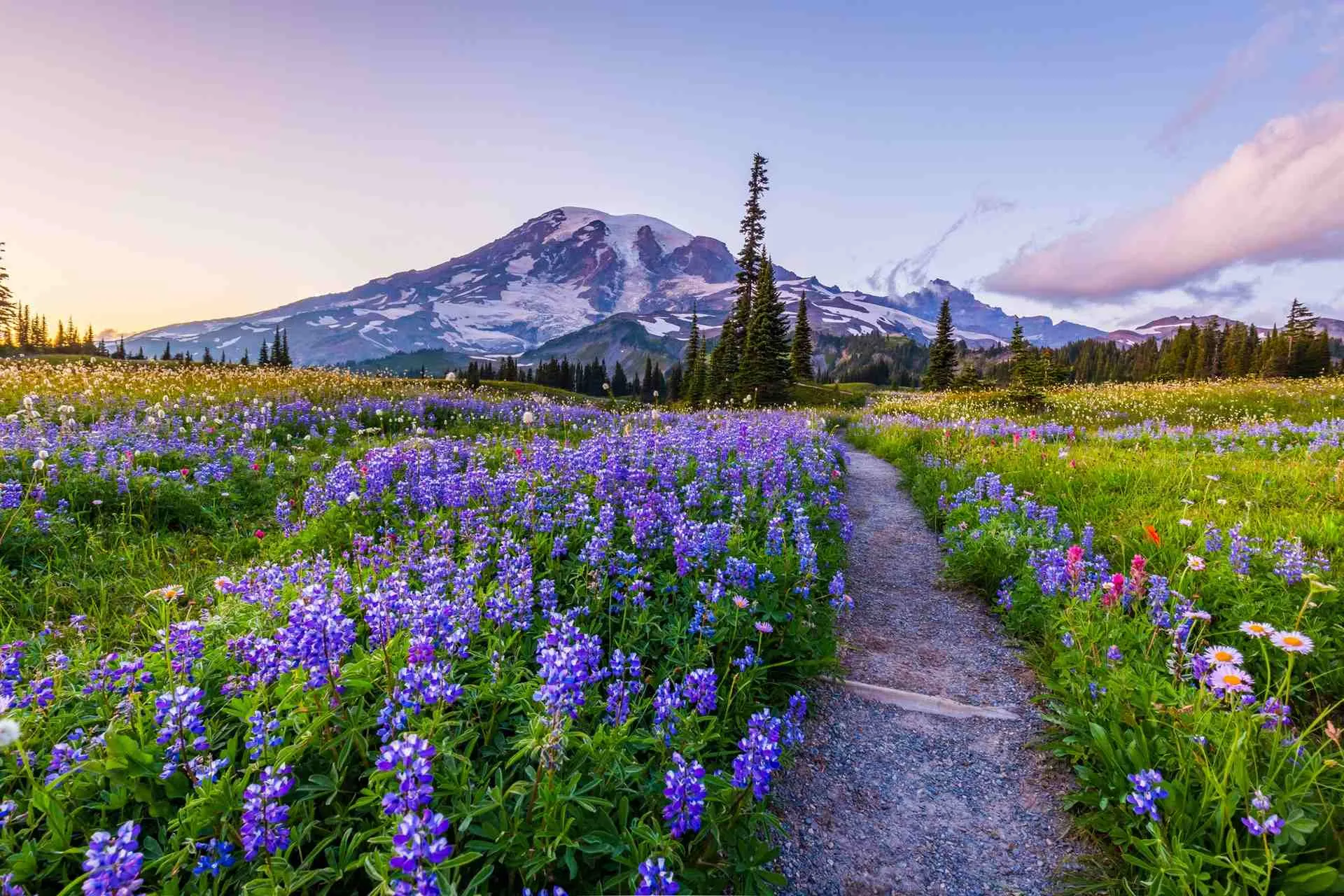
Lessons from Local Experts
Some of my most valuable insights have come from conversations with local experts—park rangers, researchers, and long-time residents who generously share their deep knowledge of Acadia's plant communities. Ranger-led programs, particularly the "Plants of Acadia" walks offered during summer months, provide excellent introductions to the park's botanical diversity.
During one memorable ranger program at Sieur de Monts, I learned about the traditional ecological knowledge of the Wabanaki people, who have inhabited this region for thousands of years. The ranger explained how certain plants were used for food, medicine, and materials, revealing a profound relationship between human communities and the natural world that predates the national park by millennia.
Researchers at the Schoodic Institute have also been generous in sharing their work on how climate change is affecting Acadia's plant communities. Their long-term monitoring efforts are documenting shifts in flowering times, changes in species distribution, and threats from invasive plants. These scientific perspectives add an important dimension to my understanding of the dynamic nature of plant communities.
Visitor Reviews and Experiences
"The Wild Gardens of Acadia were a highlight of our trip. As someone who knows little about plants, I appreciated how each area was labeled with the type of habitat and the plants within it. My children were fascinated by the carnivorous plants and spent ages looking for insects caught in the pitcher plants. Highly recommend for families!" —Sarah T., TripAdvisor review
"I used the 'Plants of Acadia' field guide throughout our week-long stay and it transformed our hiking experience. Instead of just admiring the scenery, we began to notice the incredible diversity of plant life all around us. The section on edible berries was particularly useful—we enjoyed sampling blueberries along the Bubbles Trail." —Michael K., Amazon review
"As a photographer focusing on macro shots of plants, Acadia in June was paradise. The diversity of wildflowers, especially in the meadows around Sieur de Monts and along the Ocean Path, provided endless subjects. The early morning light on the dew-covered flowers was magical. I'd recommend any plant enthusiast visit during early summer when the bloom diversity is at its peak." —Elena M., photography forum post
These shared experiences reflect the diverse ways visitors connect with plants in Acadia National Park—whether through scientific interest, aesthetic appreciation, or simply the joy of discovery. Each perspective adds to our collective understanding of this remarkable botanical landscape.
Conclusion
The remarkable diversity of plants in Acadia National Park reflects the unique convergence of geographic features, climate conditions, and ecological history that characterize this special place. From the hardy alpine species clinging to exposed mountain summits to the specialized coastal plants withstanding salt spray and fierce storms, Acadia's flora demonstrates the remarkable adaptability of plant life.
As we've explored throughout this guide, Acadia's position at the boundary between northern boreal and southern deciduous forest regions creates an exceptional botanical meeting ground. The park's varied topography—mountains, wetlands, forests, and coastline—provides niches for over 1,100 plant species, making it a treasure trove for botanists, naturalists, and curious visitors alike.
The seasonal cycles of Acadia's plant communities offer ever-changing displays that reward repeat visits. Spring's ephemeral wildflowers, summer's lush growth, autumn's spectacular foliage, and winter's subtle beauty each provide distinctive botanical experiences worth savoring.
Beyond their scientific and aesthetic value, the plants in Acadia National Park play crucial ecological roles. They provide habitat and food for wildlife, stabilize soils, filter water, sequester carbon, and maintain the fundamental ecological processes that sustain all life. Their continued health is essential to the integrity of the park ecosystem.
Yet Acadia's plant communities face significant challenges. Climate change is altering growing conditions and phenological patterns, potentially disrupting relationships between plants and their pollinators or seed dispersers. Invasive species threaten to displace native plants, while increased visitation puts pressure on sensitive habitats through trampling and soil compaction.
As visitors and admirers of Acadia's botanical treasures, we can contribute to their preservation by staying on designated trails, leaving natural features undisturbed, and supporting the park's conservation efforts. Taking time to learn about plants in Acadia National Park—their names, adaptations, and ecological relationships—deepens our connection to this landscape and inspires stewardship.
I encourage you to explore Acadia's plant communities with curiosity and respect. Whether you're a serious botanist armed with technical keys or a casual visitor simply enjoying the beauty of wildflowers, the plants of Acadia have something to teach us about resilience, adaptation, and the remarkable diversity of life on our planet. Each plant tells a story—of geological history, climate adaptation, ecological relationships, and human interactions—that enriches our understanding of this extraordinary national park.
Complete Your Acadia Experience
To make the most of your plant exploration in Acadia, I recommend the pocket-sized Maine Trees & Wildflowers: A Folding Pocket Guide to Familiar Species. Waterproof and tear-resistant, this compact guide is perfect for quick identification while hiking. It fits easily in a pocket and includes the most common plant species you'll encounter throughout the park.
Buy on Amazon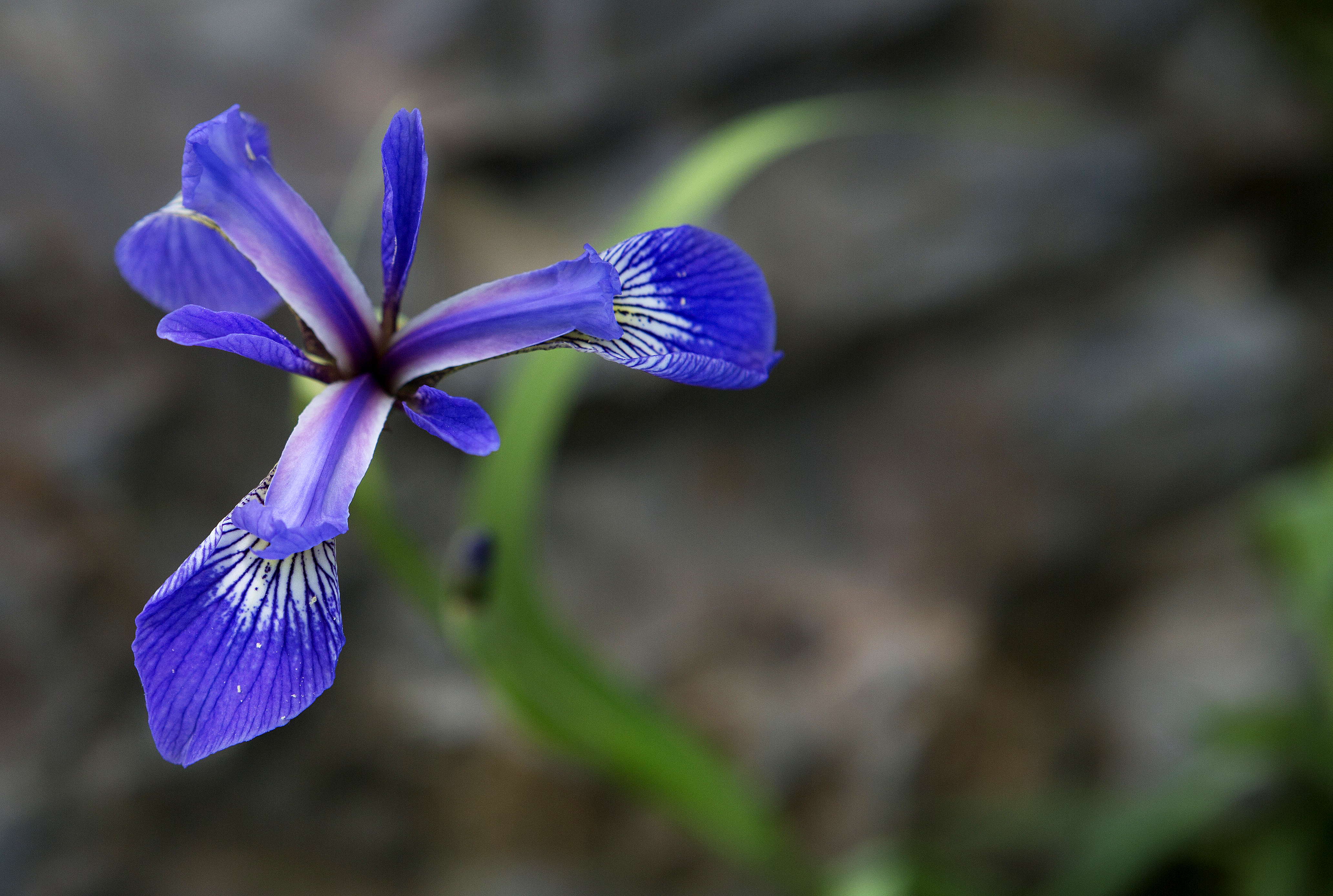
Frequently Asked Questions
When is the best time to see wildflowers in Acadia National Park?
The wildflower season in Acadia extends from late April through October, with different species blooming throughout this period. For spring ephemerals like trillium and spring beauty, visit in May when these woodland flowers carpet the forest floor before the canopy leafs out. June brings mountain summit flowers like mountain sandwort and three-toothed cinquefoil. Midsummer (July-August) is ideal for wetland flowers including water lilies and iris. Late summer and early fall (August-September) showcase asters and goldenrods in meadows and along roadsides. For the greatest diversity, I recommend late June when both spring and summer species overlap.
Are there rare or endangered plants in Acadia National Park?
Yes, Acadia is home to approximately 25 state-listed rare plant species. These include the Acadian hairgrass, boreal blueberry, mountain firmoss, and Arctic sandwort. Many of these rare plants are northern species at the southern edge of their range or alpine species that find suitable habitat on Acadia's mountain summits. The park's diverse habitats—including bogs, alpine areas, and specialized coastal environments—provide refuge for these uncommon plants. To protect these sensitive species, the park sometimes keeps specific locations confidential and may restrict access to particularly vulnerable areas. Always stay on designated trails and never collect plants within the park.
Can I collect plants or seeds in Acadia National Park?
No, collecting plants, seeds, or any natural objects is prohibited within Acadia National Park. All plants and natural features in the park are protected by federal law. This prohibition includes picking wildflowers, collecting seeds, digging up plants, gathering mushrooms, or harvesting berries. Even fallen leaves, pine cones, and driftwood must be left where you find them. These regulations exist to preserve the park's natural resources for future generations and to maintain ecological balance. Instead of collecting, consider photography as a way to "take home" the beauty of Acadia's plants. If you're interested in growing native plants, purchase seeds or plants from reputable nurseries that specialize in native plant propagation.
How can I identify plants I find in Acadia?
Several resources can help you identify plants in Acadia National Park. Start with a quality field guide specific to the region—I recommend "The Plants of Acadia National Park" or "Wildflowers of Maine." The Wild Gardens of Acadia at Sieur de Monts Spring displays over 400 labeled native plants in their natural habitats, providing an excellent reference point. Mobile apps like iNaturalist can help with identification and contribute to citizen science. Ranger-led programs often focus on plant identification; check the schedule at visitor centers. For serious botanists, the park herbarium at Sieur de Monts Nature Center contains specimens of nearly all plant species found in the park. Remember that identifying some plant groups (like grasses, sedges, and certain wildflowers) may require close examination of technical features, so carry a hand lens if you're interested in detailed identification.
What invasive plants threaten Acadia's native flora?
Acadia faces challenges from several invasive plant species that threaten to displace native flora. The park's Invasive Plant Management Team actively manages 29 non-native invasive plants. High-priority targets include woody species like glossy buckthorn (Frangula alnus), Japanese barberry (Berberis thunbergii), and Morrow's honeysuckle (Lonicera morrowii); vines such as Asiatic bittersweet (Celastrus orbiculatus); and herbaceous plants including purple loosestrife (Lythrum salicaria) and Japanese knotweed (Fallopia japonica). These invasives can alter habitat structure, outcompete native species, and reduce biodiversity. Climate change is exacerbating the problem by creating more favorable conditions for some invasive plants. Visitors can help by cleaning boots at trailhead brush stations to prevent spreading seeds, staying on designated trails, and learning to identify invasive species.
© 2025 WildernessPaths.com | Plants in Acadia National Park | Last Updated: July 28, 2025
Wildflowers in Acadia | Native Plants of Acadia | Rare Plant Species in Acadia | Alpine Vegetation in Acadia
Acadia Forest Ecosystems | Coastal Plants in Acadia | Acadia Wetland Flora | Edible Plants in Acadia
Acadia Plant Identification Guide | Invasive Species in Acadia | Acadia Botanical Trails | Plant Photography in Acadia