
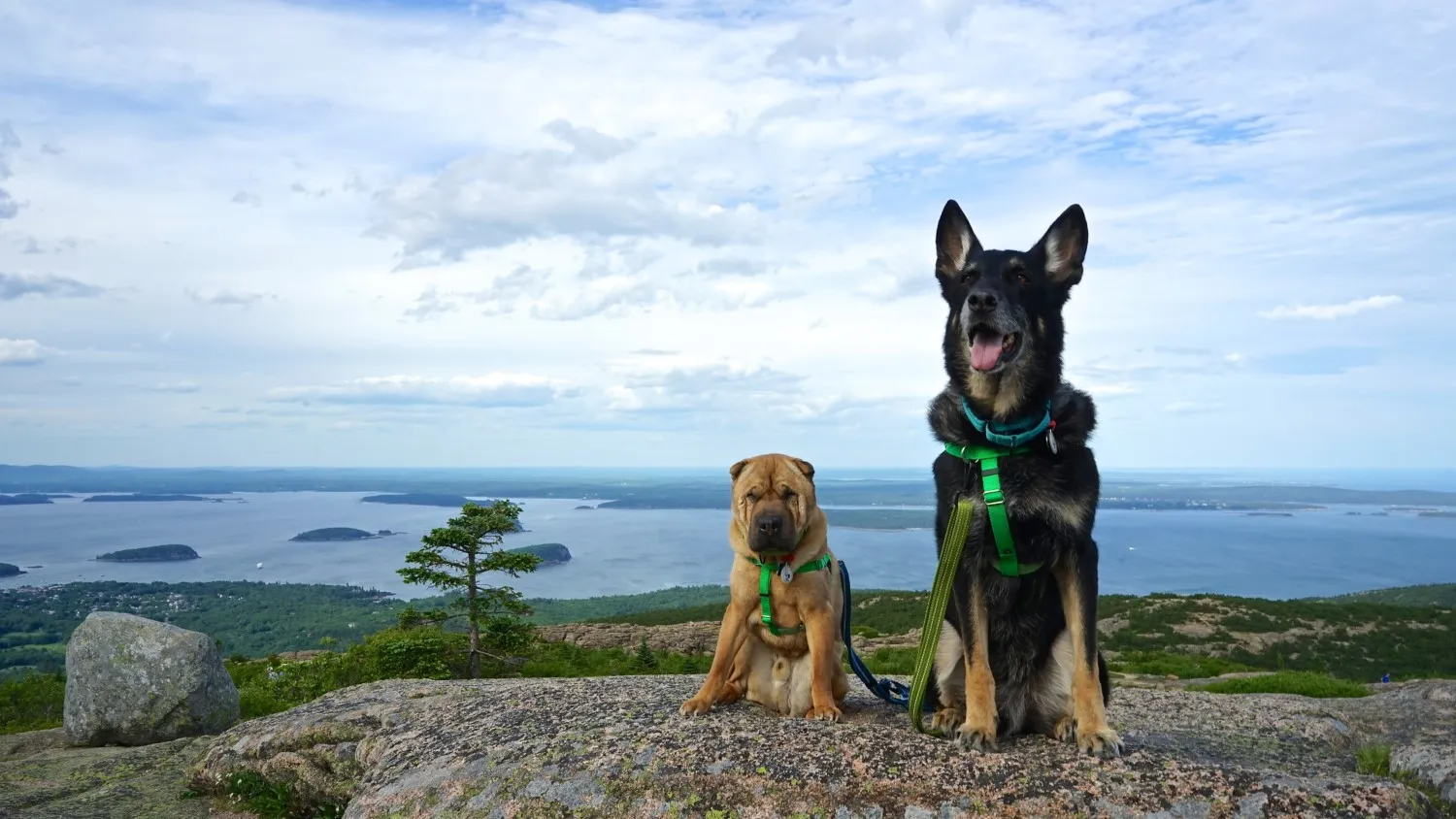
Overview: Dog Rules in Acadia National Park
Acadia National Park stands out as one of the most dog-friendly national parks in the United States. Unlike many other parks that restrict pets to developed areas, Acadia welcomes your four-legged companions on nearly 100 miles of hiking trails and 45 miles of historic carriage roads. This makes it an exceptional destination for outdoor enthusiasts who don't want to leave their dogs behind.
Before hitting the trails with your pup, it's essential to understand the park's regulations to ensure a safe and enjoyable experience for everyone:
- Leash requirement: All dogs must be kept on a leash no longer than 6 feet (2 meters) at all times. This rule is strictly enforced to protect wildlife, vegetation, other visitors, and your dog.
- Waste disposal: Pet owners must collect and properly dispose of all animal waste in designated trash receptacles. Never leave waste bags on the trail or hanging from trees, even if you plan to pick them up later.
- Supervision: Dogs must never be left unattended, including at campsites or in vehicles. Summer temperatures can quickly become dangerous for pets left in cars.
- Health and safety: Be vigilant about ticks, which are prevalent in the park. Check yourself and your dog thoroughly after each hike.
- Trail restrictions: While most trails welcome dogs, there are a few exceptions, primarily trails with iron rungs or ladders that would be unsafe for dogs.
The National Park Service offers the "Bark Ranger" program at Acadia, where your dog can be sworn in as an honorary ranger after you commit to following the park's pet guidelines. Stop by the Sieur De Monts Nature Center or the Hulls Cove Visitor Center to participate and receive a special Bark Ranger collar tag available for purchase.
Restricted Areas for Dogs in Acadia
While most of Acadia welcomes dogs, they are not permitted in the following areas:
- Precipice Trail
- Beehive Trail (though you can reach the summit via The Bowl Trail with your dog)
- Ladder Trail to Dorr Mountain
- Beech Cliffs Trail
- Perpendicular Trail on Mansell Mountain
- Jordan Cliffs Trail (between Penobscot East Trail and the carriage road)
- Sand Beach during peak season (June 15 - September 8)
- Echo Lake Beach during peak season (May 15 - September 15)
- Wild Gardens of Acadia
- Public buildings and ranger programs
The National Park Service also recommends avoiding certain trails with dogs due to challenging terrain, including Acadia Mountain, Flying Mountain, Giant Slide, Cadillac Mountain (west face), portions of the Bubbles and Jordan's Pond Path, Norembega Goat Trail, Bubbles-Pemetic Trail, Penobscot Mountain Trail, Upper Beachcroft Trail, and Upper Gorge Trail. While not prohibited, these trails may present difficulties for many dogs.
Top Dog-Friendly Trails in Acadia
After multiple visits to Acadia with my dogs and speaking with local rangers, I've compiled this list of the best dog-friendly trails in Acadia National Park. Each trail offers unique features and varying difficulty levels to suit different abilities and preferences.
1. Jordan Pond Path
- Distance: 3.3 miles (loop)
- Elevation Gain: 62 feet
- Difficulty: Easy to moderate
- Estimated Time: 1.5-2 hours
- Highlights: Stunning reflective pond views, the iconic "Bubbles" mountains, well-maintained trail
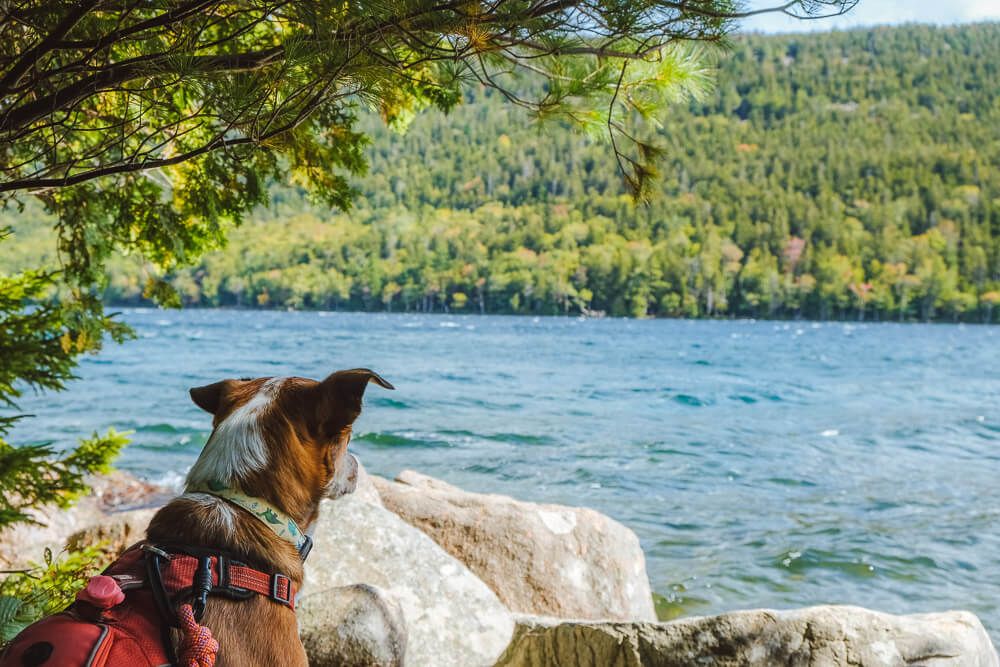
Jordan Pond Path offers one of the most picturesque experiences in Acadia. This relatively flat loop encircles the crystal-clear Jordan Pond with constant views of The Bubbles (two rounded mountains) at the north end. The trail features a mix of gravel paths, boardwalks over sensitive areas, and some rocky terrain on the west side. Dogs particularly enjoy the variety of terrain, though some may find the narrow boardwalk sections challenging.
I recommend hiking this trail clockwise, starting from the Jordan Pond House. This way, you'll hit the boardwalk section first and tackle the rockier western shore when you're less tired. The trail can get busy, especially during midday in summer, so consider an early morning start for a more peaceful experience.
Learn more about Jordan Pond Loop2. Ocean Path Trail
- Distance: 4.1 miles (out and back)
- Elevation Gain: 337 feet
- Difficulty: Easy
- Estimated Time: 1.5-2 hours
- Highlights: Spectacular ocean views, Thunder Hole, Otter Cliff, access to rocky coastline
Ocean Path runs parallel to Park Loop Road, offering continuous views of Acadia's dramatic coastline. Beginning at Sand Beach (where dogs are allowed off-season) and extending to Otter Point, this mostly flat trail provides numerous opportunities to explore the pink granite shoreline. The path itself is well-maintained gravel, making it accessible for most dogs and humans.
The trail features several notable attractions, including Thunder Hole, where waves crash into a narrow inlet creating a thunderous sound at mid-tide, and Otter Cliff, one of the highest coastal headlands north of Rio de Janeiro. There are countless spots to step off the main path and explore the rocky coastline with your leashed dog.
Discover more about Ocean Path Trail
3. Wonderland Trail
- Distance: 1.6 miles (loop)
- Elevation Gain: 78 feet
- Difficulty: Easy
- Estimated Time: 45 minutes - 1 hour
- Highlights: Tidepools, forest trail, peaceful atmosphere, pebble beach
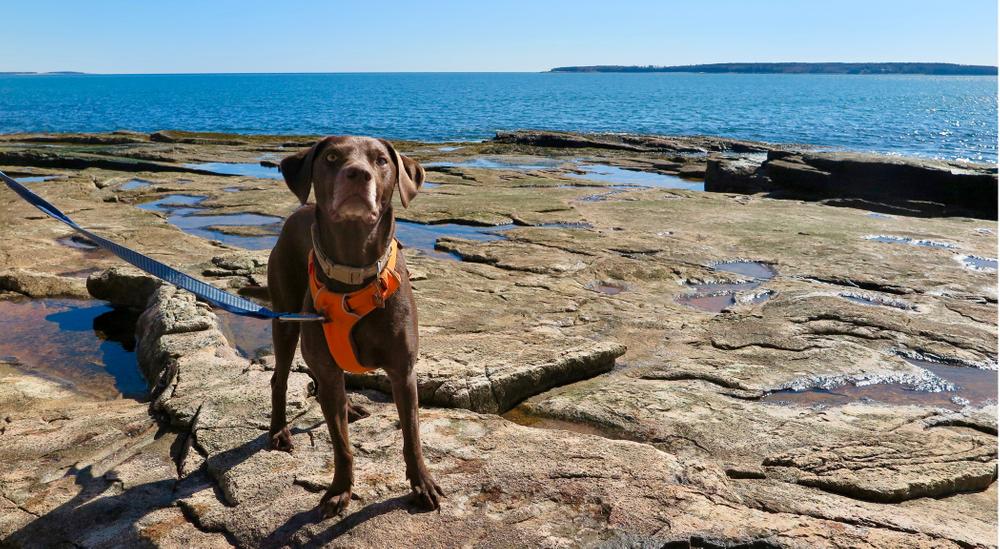
Located on the "quiet side" of Mount Desert Island, Wonderland Trail is a hidden gem that offers a serene experience away from the crowds. This easy 1.6-mile loop takes you through a spruce forest before opening up to a beautiful rocky coastline with fascinating tidepools. The flat, well-maintained path is perfect for dogs of all sizes and abilities.
What makes Wonderland special is the sense of discovery as the forest suddenly gives way to panoramic ocean views. The pebble beach area at the end of the trail is a perfect spot for dogs to explore (while leashed). Visit during low tide to see the most interesting marine life in the tidepools. Early mornings or evenings are particularly magical here, with opportunities to watch lobster boats pass by in the distance.
4. Gorham Mountain Trail
- Distance: 1.6 miles (out and back)
- Elevation Gain: 449 feet
- Difficulty: Moderate
- Estimated Time: 1-1.5 hours
- Highlights: Panoramic views, interesting geology, relatively uncrowded
For those seeking moderate elevation gain with big rewards, Gorham Mountain Trail offers spectacular panoramic views of the coastline, Sand Beach, and surrounding mountains. The trail climbs steadily through a forested area before emerging onto open granite slopes with increasingly impressive vistas.
The path is well-marked with blue blazes and includes some stone steps and minor rock scrambles, but nothing too challenging for most dogs. There are several natural lookout points along the way, making it easy to take breaks and enjoy the scenery. The summit provides a 360-degree view that's absolutely worth the climb.
This trail can be combined with Ocean Path for a longer adventure. I recommend tackling Gorham Mountain first, then descending to connect with Ocean Path for an extended hike along the coast.

5. Cadillac Mountain South Ridge Trail
- Distance: 8.1 miles (out and back)
- Elevation Gain: 2,283 feet
- Difficulty: Strenuous
- Estimated Time: 4-5 hours
- Highlights: Summit of Acadia's highest mountain, breathtaking views, challenging terrain
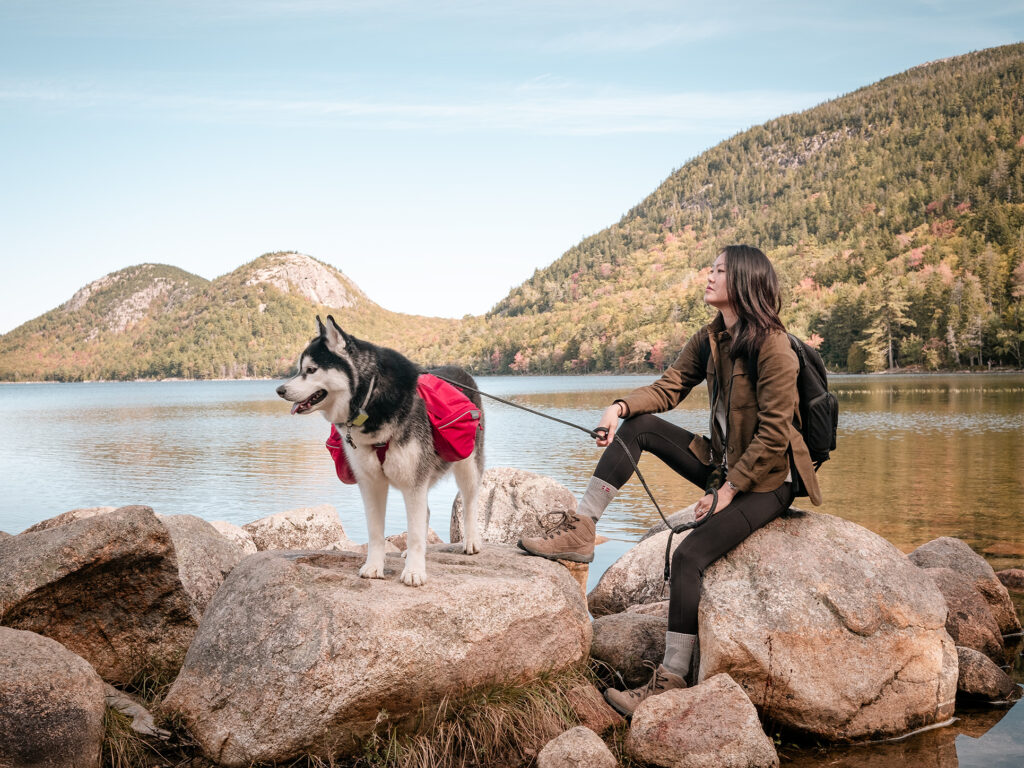
For the most adventurous dog owners, Cadillac Mountain South Ridge Trail offers a challenging but incredibly rewarding experience. As the longest continuous hiking trail in Acadia, it provides a genuine wilderness experience despite leading to the park's most popular summit. The gradual ascent makes it more manageable than steeper routes to the top.
The trail begins in a forested area before emerging onto open ridge with expansive views that only get better as you climb. There's one section with a single ladder rung that may require lifting your dog, but otherwise the trail is navigable for athletic dogs. Be aware that much of the upper section is exposed granite with little shade, so avoid hot summer days and bring plenty of water for both you and your dog.
Note that from May to October, a vehicle reservation is required to drive to the summit of Cadillac Mountain, making this hiking route an excellent alternative for experiencing the mountain with your dog.
Explore Cadillac Mountain hiking options6. Acadia's Historic Carriage Roads
Beyond traditional hiking trails, Acadia's 45 miles of carriage roads offer an exceptional dog-friendly experience. These crushed-stone paths wind through forests, around mountains, and past lakes and streams. Built by John D. Rockefeller Jr. between 1913 and 1940, these roads were designed for horse-drawn carriages and are perfect for leisurely walks with dogs of all abilities.
The carriage roads feature 17 elegant stone bridges, each with unique architectural details. Popular carriage road loops include:
- Around Eagle Lake: 6 miles, moderate difficulty
- Witch Hole Pond Loop: 3.3 miles, easy difficulty
- Jordan Pond/Bubble Pond Loop: 8.7 miles, moderate difficulty
The carriage roads are particularly useful on rainy days when granite trails become slippery, or as recovery routes after more challenging hikes. They're well-maintained year-round and provide a smooth, even surface that's comfortable for dogs and humans alike.
Seasonal Restrictions and Best Times to Visit
Acadia National Park experiences distinct seasonal changes that affect when and where you can hike with your dog. Understanding these patterns will help you plan the perfect trip with your four-legged companion.
Beach Access Restrictions
The most significant seasonal restrictions for dog owners involve beach access:
- Sand Beach: No dogs allowed from June 15 to September 8 (peak season)
- Echo Lake Beach: No dogs allowed from May 15 to September 15 (peak season)
Outside these restricted periods, dogs on leash are welcome at these popular beaches. This makes spring and fall particularly appealing seasons for dog owners who want to enjoy Acadia's coastal areas.
Seasonal Considerations
Spring (April-May)
Pros: Fewer crowds, dog-friendly beaches accessible, mild temperatures, beautiful wildflowers
Cons: Some trails may still have snow/ice, bugs begin emerging (especially black flies in May), some facilities not yet open
Spring offers the advantage of exploring popular areas with fewer people. Early May is ideal before black fly season intensifies. Mud can be an issue on some trails after snow melt.
Summer (June-August)
Pros: All trails open, warm weather, all park facilities operating, longer daylight hours
Cons: Beach restrictions, crowded trails, hot temperatures can be hard on dogs, peak tourism season
If visiting in summer, start hikes early in the morning to avoid crowds and heat. Stick to shaded forest trails during midday and always carry extra water for your dog.
Fall (September-October)
Pros: Spectacular foliage, cooler temperatures, fewer restrictions after September 15, thinner crowds (except holiday weekends)
Cons: Shorter daylight hours, facilities begin closing in October, can be rainy
Fall is my favorite season to visit Acadia with dogs. The fall foliage is stunning, temperatures are comfortable for hiking, and beaches become dog-friendly again.
Winter (November-March)
Pros: Solitude, no restrictions, beautiful snow-covered landscapes
Cons: Cold temperatures, icy conditions, limited facilities, some roads closed
Winter visits require more preparation but offer a unique experience. The carriage roads are often groomed for cross-country skiing and are excellent for winter hikes with dogs. Always check conditions before setting out.
Peak vs. Off-Peak Visitation
Acadia receives approximately 4 million visitors annually, with the vast majority coming between June and October. July and August are the busiest months, when parking can be challenging and popular trails become crowded.
For the best experience with your dog, consider visiting during shoulder seasons:
- Late April to early June: Spring flowers, fewer crowds, most trails open
- September to mid-October: Fall colors, beach restrictions lifted, pleasant temperatures
If you must visit during peak season, adopt these strategies:
- Start hikes very early in the morning (before 8 AM)
- Explore the "quiet side" of Mount Desert Island (western side)
- Use the Island Explorer shuttle system (dogs allowed on leash)
- Visit less popular trails and areas
- Avoid holiday weekends
Weather Considerations
Acadia's weather can change rapidly, especially in spring and fall. Always check the forecast before heading out, and be prepared for conditions to change. Summer thunderstorms are common in the afternoon, while fog can roll in quickly along coastal trails. In winter, trails can be icy and dangerous without proper equipment.
The granite surfaces of many Acadia trails become extremely slippery when wet. Use extra caution with your dog on rainy days or after recent rainfall, particularly on steeper sections of trails.
Essential Gear for Hiking with Dogs in Acadia
Proper preparation is key to ensuring a safe and enjoyable hiking experience with your dog in Acadia National Park. Having hiked extensively with my dogs throughout the park in all seasons, I've compiled this list of essential gear that every dog owner should consider:
Hiking Basics
- Sturdy 6-foot leash: A must-have for compliance with park regulations. I recommend a durable nylon or rope leash that won't easily fray on rocky terrain.
- Comfortable harness: For better control and to prevent strain on your dog's neck, especially on steeper trails. The Ruffwear Front Range Harness has been exceptional for my dogs on longer hikes.
- Collapsible water bowl: Essential for keeping your dog hydrated. I've used the Ruffwear Quencher for years - it's lightweight and durable.
- Extra water: Acadia's trails often have limited water sources, so carry enough for both you and your dog. A general rule is 1 cup of water per 10 pounds of dog weight for every 3 miles of hiking.
- Dog backpack: For longer hikes, consider having your dog carry some of their own supplies. The Ruffwear Approach Pack distributes weight evenly and has good storage capacity.
Safety Essentials
- Pet first aid kit: Include basics like gauze, antiseptic wipes, tweezers for tick removal, and bandages. The Adventure Medical Kits Trail Dog First Aid Kit is compact yet comprehensive.
- Tick prevention and removal tools: Ticks are prevalent in Acadia, especially in spring and fall. Apply preventative treatment before your trip and check your dog thoroughly after each hike.
- Paw protection: Acadia's granite surfaces can be rough on dog paws. Consider paw balm or wax for protection, especially on longer or rockier trails.
- Reflective gear or light: For early morning or evening hikes, especially important during shorter fall and winter days.
- Vaccination records: Carry copies of your dog's vaccination records, particularly rabies certification, as you may need these if your dog has an encounter with wildlife or needs veterinary care.
Weather-Specific Gear
Acadia's weather can change dramatically throughout the year, requiring different gear depending on when you visit:
Summer Essentials
- Cooling vest or bandana: For hot summer days, especially on exposed trails
- Insect repellent safe for dogs: To ward off mosquitoes and black flies
- Portable shade (small tarp or blanket): For breaks on exposed trails
- Doggy sunscreen: For dogs with thin coats or pink skin, especially for exposed areas like nose and ears
Cold Weather Gear
- Dog jacket or sweater: Essential for short-haired breeds in spring, fall, and winter
- Paw booties: To protect against ice, snow, and salt on winter trails
- Insulated water bottle: To prevent water from freezing during winter hikes
- Emergency thermal blanket: In case of unexpected weather changes
Trail Etiquette Supplies
Being a responsible dog owner in Acadia means coming prepared to leave no trace:
- Biodegradable poop bags: Carry plenty, as you'll need to pack out all waste
- Dedicated waste carrying pouch: To store used bags until you reach a proper disposal site
- Hand sanitizer: For after cleanup
- Training treats: To reward good trail behavior and reinforce commands
Remember that Acadia's remoteness means you should be self-sufficient on the trails. The nearest pet stores are in Bar Harbor and Ellsworth, so stock up on supplies before hitting the trails. For more comprehensive information on hiking gear for Acadia, check out our dedicated guide.
My Experience: Adventures with My Dogs in Acadia

First Adventures with Max
My journey exploring dog-friendly trails in Acadia began seven years ago with my loyal German Shepherd, Max. We first visited in early October, which I quickly discovered was the perfect time for dogs in the park. The summer crowds had thinned, the temperatures were ideal for hiking, and the fall colors created a magical backdrop for our adventures.
On our first trip, we tackled the Jordan Pond Path early one morning. The mist was still rising from the water as we set out, and we had the trail almost entirely to ourselves. Max was fascinated by the wooden boardwalk sections, initially hesitant but soon confidently trotting across. The reflection of the Bubbles mountains on the pond's glass-like surface remains one of my most treasured memories of Acadia.
One challenge I encountered was the rocky western shore of Jordan Pond. The large, irregular boulders required careful navigation with Max. I learned quickly that maintaining a shorter leash through these sections prevented tangling while still giving him enough freedom to find his footing. This technique has served me well on all of Acadia's rockier trails.
Seasonal Explorations with Luna
In subsequent years, I returned with my Border Collie mix, Luna, exploring different seasons and trails. One spring visit taught me valuable lessons about the park's varied conditions. We arrived in late April, eager to hit the trails after a long winter. While the main carriage roads were clear, we discovered that some higher elevation trails still had patches of ice and snow, making them treacherous in spots.
We pivoted to exploring the "quiet side" of the island, discovering the wonderful Wonderland Trail. Luna was absolutely in her element, bouncing along the forest path before reaching the rocky coastline. We spent nearly an hour exploring tidepools as the sun began to set, and remarkably, we were the only ones there. A local ranger later told me this was one of the park's best-kept secrets for dog owners—less crowded and equally beautiful as the more popular eastern side trails.
Another memorable experience was hiking the Cadillac South Ridge Trail with both dogs. We started early to avoid the heat, carrying extra water in my pack. The gradual climb allowed us to settle into a comfortable rhythm, stopping regularly for water breaks and to admire the increasingly expansive views. The open granite sections near the top were hot on the dogs' paws, so we took frequent shade breaks under scattered trees.
Lessons Learned from a Ranger
During one visit, I had the fortune of hiking alongside a park ranger who shared invaluable advice for dog owners in Acadia. She recommended the "Bark Ranger" program, which both dogs proudly participated in, earning their special collar tags. More importantly, she pointed out subtle wildlife signs along the trail that I might have otherwise missed—evidence of porcupines (which can be dangerous for curious dogs) and nesting areas to give wide berth.
The ranger also shared a lesser-known tip: the carriage roads are often at their best for dogs in the early morning hours when dew dampens the gravel, minimizing dust and providing slightly softer footing. This advice led us to some magical sunrise walks on the carriage roads around Eagle Lake, with mist rising from the water and deer frequently spotted in the distance.
Unexpected Challenges
Not all experiences were perfect. During a summer visit, we underestimated the popularity of Ocean Path and found ourselves navigating crowded sections with both dogs. Luna, typically well-behaved, became anxious with the constant stream of hikers and other dogs. We learned to read the parking lots—if they're more than half full, the trail will likely be busy.
Another challenging moment came during a sudden thunderstorm on Gorham Mountain Trail. We were exposed on granite slopes when the storm approached rapidly from the ocean. Finding shelter was difficult, and the descent on wet granite was treacherous. Since then, I've become much more attentive to weather forecasts and always carry rain gear, even on seemingly clear days.
These experiences have deepened my appreciation for Acadia's dog-friendly policies while teaching me the importance of preparation, flexibility, and respect for the park's natural environment. Each visit has built upon the last, and the dogs and I now have our favorite trails for different conditions, seasons, and moods.
User Reviews and Recommendations
The experiences of other dog owners can provide valuable insights when planning your own adventure in Acadia. I've gathered reviews and recommendations from various sources including AllTrails, Reddit, and Quora to help you benefit from others' experiences.
Sarah's Experience on Jordan Pond Path
"Jordan Pond Path was perfect for my senior Labrador. We started early (around 7:30am) and practically had the trail to ourselves. The boardwalk sections were a bit tricky—my dog kept wanting to step off into the mud—but overall it was manageable. The western side has some rocky areas that required careful navigation. Bring plenty of water as there aren't many shady spots once the sun is high. The views were absolutely worth it, and we saw a loon on the pond! Definitely clockwise is the way to go with dogs."
— Sarah M., AllTrails Review
Mike's Recommendation from Reddit
"Don't miss Little Long Pond on the Land & Garden Preserve (not technically part of Acadia but adjacent). It's an off-leash 4-mile loop owned by the Rockefellers and open to the public. My border collie absolutely loved being able to swim off-leash here after days of being restricted in the national park. Just be respectful and make sure your dog has good recall. We also loved the Wonderland Trail—went at sunset and had the whole place to ourselves. Just watch the tide as it comes in quickly!"
— Mike D., Reddit r/acadianationalpark
Jennifer's Carriage Road Experience
"We've hiked all over the country with our two golden retrievers, and Acadia's carriage roads are some of the most pleasant dog walking routes we've found. The Witch Hole Pond loop was particularly beautiful in the morning light. The crushed gravel surface was gentle on their paws even after several days of hiking. We encountered horses twice, so be prepared to step aside and keep your dogs calm if you're not sure how they'll react. Also worth noting: after heavy rain, some sections had large puddles that were difficult to navigate around while keeping dogs dry."
— Jennifer L., Quora response
Common Themes from User Reviews
After analyzing dozens of reviews from dog owners who have visited Acadia, several consistent recommendations emerged:
Timing Is Everything
- Early morning (before 8 AM) is consistently cited as the best time to avoid crowds
- Late afternoon/early evening is also good, especially for sunset views
- Mid-day is most challenging due to heat and crowds
- Many reviewers recommend visiting in September for ideal conditions
Trail Preferences
- Ocean Path gets high marks for views but low scores for crowding
- Wonderland and Ship Harbor are frequently cited as "hidden gems" for dog owners
- Great Head Trail is popular for its manageable length and impressive views
- Carriage roads are universally praised for reliability and ease of use
Common Challenges
- Parking difficulties, especially between 10 AM and 4 PM in summer
- Navigating boardwalks with dogs who want to step off
- Finding shade on exposed trails during hot days
- Managing dogs around horses on carriage roads
- Crowds at popular overlooks and narrow trail sections
Local Expertise
In addition to visitor reviews, I spoke with several local dog owners and seasonal employees who shared their insider knowledge:
- Lesser-known dog-friendly beaches: Locals recommend Seal Harbor Beach (outside the park) and Hunter's Beach (within the park) as less crowded alternatives when Sand Beach and Echo Lake are restricted
- Tick awareness: All locals emphasized thorough tick checks, noting that ticks are active even in winter during mild days
- Bar Harbor dog-friendly businesses: Many downtown establishments welcome dogs on outdoor patios, with Thrive Juice Bar, Side Street Cafe, and The Thirsty Whale consistently mentioned as dog-friendly
- Island Explorer shuttle: Local dog owners highly recommend using this free shuttle service, which allows leashed dogs and helps avoid parking headaches
These firsthand accounts provide valuable context beyond official trail descriptions and highlight the importance of planning, flexibility, and respect for park rules when visiting Acadia with your dog. Consider these experiences as you plan your own adventure in this remarkably dog-friendly national park.
Frequently Asked Questions
Are dogs allowed on all trails in Acadia National Park?
Dogs are allowed on approximately 100 miles of hiking trails and 45 miles of carriage roads in Acadia National Park, making it one of the most dog-friendly national parks in the United States. However, dogs are not permitted on certain trails with iron rungs or ladders, including the Precipice Trail, Beehive Trail, Ladder Trail to Dorr Mountain, Beech Cliffs Trail, Perpendicular Trail, and Jordan Cliffs Trail (between Penobscot East Trail and the carriage road). These restrictions exist primarily for safety reasons, as these trails would be dangerous for dogs to navigate. Additionally, the National Park Service recommends avoiding certain challenging trails with dogs, though they're not officially prohibited.
When are dogs allowed on beaches in Acadia?
Dogs are allowed on Acadia's beaches during the off-season but are restricted during peak visitor months. At Sand Beach, dogs are prohibited from June 15 to September 8. At Echo Lake Beach, dogs are not allowed from May 15 to September 15. Outside these restricted periods, leashed dogs are welcome at both beaches. These seasonal restrictions help balance the needs of various park visitors during the busiest times of year. For year-round dog-friendly beach access, consider visiting Wonderland Trail or Ship Harbor Trail, which lead to rocky shorelines where leashed dogs are always permitted. Alternatively, some beaches outside the park boundaries, such as Little Long Pond (on the Land & Garden Preserve), offer dog-friendly access throughout the year.
What are the leash requirements for dogs in Acadia?
In Acadia National Park, all dogs must be kept on a leash no longer than 6 feet (2 meters) at all times. This rule is strictly enforced throughout the park, including on all trails, carriage roads, developed areas, and beaches when dogs are permitted. The leash requirement protects wildlife from disturbance, prevents confrontations with other dogs, ensures the safety of your pet, and respects other visitors. There are no off-leash areas within the official boundaries of Acadia National Park. However, the adjacent Land & Garden Preserve at Little Long Pond does allow off-leash dogs in designated areas, providing an option for dogs to run free during your visit to Mount Desert Island. Rangers actively patrol popular trails and may issue fines for unleashed dogs, so always keep your pet properly leashed.
What should I do with my dog's waste in the park?
You must collect and properly dispose of all dog waste in Acadia National Park. Bring plenty of waste bags and be prepared to carry used bags until you reach a designated trash receptacle. These are typically located at major trailheads, visitor centers, and picnic areas—not along the trails themselves. Never leave waste bags on the side of the trail, even if you plan to pick them up on your return journey. Park rangers specifically ask visitors not to hang bags from trees or leave them beside full garbage cans. Pet waste can contaminate water sources, spread disease to wildlife, and detract from other visitors' experiences. The "leave no trace" principle applies strongly to pet waste. Many experienced dog owners in Acadia use a dedicated "duty bag" or sealed container to carry used waste bags odor-free until proper disposal is possible.
Are there any dog-friendly accommodations near Acadia?
There are numerous dog-friendly accommodation options near Acadia National Park. Within the park itself, Blackwoods, Seawall, and Schoodic Woods campgrounds all allow dogs with certain restrictions (they must be leashed, cannot be left unattended, and shouldn't disturb other campers). In Bar Harbor and surrounding towns, many hotels, motels, and B&Bs welcome dogs, including the Bar Harbor Inn, Atlantic Oceanside Hotel, and Wonder View Inn. Vacation rentals through platforms like Airbnb and VRBO often provide more space for dogs, with many offering fenced yards. When booking accommodations, always confirm the pet policy, including any weight restrictions, additional fees, or limitations on the number of pets. During peak season (June through August), dog-friendly accommodations fill up quickly, so it's advisable to book several months in advance if traveling with your pet.
What should I do if my dog has an emergency in Acadia?
If your dog experiences a medical emergency while visiting Acadia National Park, there are several veterinary clinics and animal hospitals in the area that can provide care. In Bar Harbor, the Acadia Veterinary Hospital offers regular and emergency services. For after-hours emergencies, the Eastern Maine Emergency Veterinary Clinic in Brewer (about an hour from the park) provides 24/7 care. It's wise to save these contact numbers in your phone before your trip. For minor injuries on the trail, carrying a pet first aid kit can help you address issues until you can reach veterinary care. If your dog is injured and unable to walk out of a trail, contact park rangers for assistance by calling the park's emergency number: (207) 288-8791. Before your trip, locate and note the addresses of the nearest emergency veterinary services, as cell service can be spotty in parts of the park.
Conclusion
Acadia National Park truly stands out as a premier destination for dog owners seeking to explore the great outdoors with their four-legged companions. With nearly 100 miles of dog-friendly trails and 45 miles of historic carriage roads, the park offers an unparalleled variety of experiences for dogs and humans alike. From the breathtaking coastal views of Ocean Path to the tranquil forests around Jordan Pond and the majestic summit of Cadillac Mountain, Acadia's landscape provides endless opportunities for adventure.
Throughout this guide, we've explored the top dog-friendly trails in Acadia, highlighting their unique features and considerations for hiking with dogs. We've covered essential information about park regulations, seasonal restrictions, and gear recommendations to ensure a safe and enjoyable experience. My personal experiences and the accounts of other dog owners offer practical insights that go beyond what you'll find in official park literature.
As with any adventure with your dog, successful visits to Acadia National Park require planning, flexibility, and respect for both the natural environment and other visitors. By following leash regulations, properly disposing of waste, and choosing appropriate trails for your dog's abilities and the season, you'll help ensure that Acadia remains dog-friendly for generations to come.
I hope this guide inspires you to experience the wonders of Acadia with your canine companion. Whether you're climbing granite peaks, strolling along carriage roads, or watching the sunrise from Ocean Path, sharing these moments with your dog creates memories that will last a lifetime. The magnificent landscapes of Acadia become even more special when experienced through the joy and wonder of your four-legged friend.
Before you go, remember to check current park conditions and regulations, as they may change seasonally or annually. The National Park Service website offers up-to-date information, and the park's visitor centers can provide guidance specific to your visit. With proper preparation, you and your dog are set for an unforgettable adventure in one of America's most stunning and dog-friendly national parks.
Happy trails, and may you and your furry hiking partner create beautiful memories together in Acadia National Park!