
![post-Easy Hikes in Acadia National Park: Ultimate Guide to Scenic Trails [2025]](/_next/image?url=https%3A%2F%2Fapi.wildernesspaths.com%2Fuploads%2Fimages%2F1753766452714-Path-PictureLake-Getty.webp&w=3840&q=75)
Easy Hikes in Acadia National Park: Ultimate Guide to Scenic Trails [2025]
Exploring the easy hiking trails of Acadia National Park has been one of my most rewarding outdoor adventures. With over 150 miles of trails ranging from gentle coastal walks to scenic pond loops, Acadia offers breathtaking views that are accessible to hikers of all abilities. In this comprehensive guide, I'll share my personal experiences, ranger recommendations, and insider tips to help you discover the perfect easy trails in this Maine paradise. Whether you're visiting with family, planning a solo trip, or looking for accessible options, Wilderness Paths has you covered with everything you need to know about easy hikes in Acadia National Park.
Introduction to Acadia National Park
Nestled on the rugged coast of Maine, Acadia National Park preserves approximately 50,000 acres of breathtaking landscapes, including the tallest mountains on the eastern seaboard, iconic rocky coastlines, and peaceful forest trails. As one of the most visited national parks in the United States, Acadia attracts over 4 million visitors annually who come to experience its unique blend of ocean, mountain, and forest environments.
What makes Acadia particularly special is its accessibility. Despite featuring dramatic landscapes, many of the park's most scenic areas can be enjoyed via easy, well-maintained trails that require minimal hiking experience. This makes Acadia an ideal destination for families, seniors, casual hikers, and anyone looking to experience stunning natural beauty without tackling strenuous mountain climbs.
During my multiple visits to Acadia over the years, I've discovered that the park can be divided into several distinct regions. The "popular" eastern side of Mount Desert Island contains many of the most famous attractions and trails, while the "quiet" western side offers a more peaceful experience with equally impressive scenery but fewer crowds. Additionally, the Schoodic Peninsula section of the park provides a truly off-the-beaten-path experience that only about 1% of visitors explore.

Photo courtesy of Chris Bennett, National Park Service
The National Park Service maintains over 150 miles of hiking trails in Acadia, ranging from completely flat walks to challenging climbs requiring iron rungs and ladders. For this guide, I'll focus exclusively on the easy trails that showcase the park's diverse beauty without demanding technical skills or exceptional fitness.
Before we dive into the specific trails, it's worth noting that Acadia's unique history has blessed it with two special features that enhance its accessibility: the historic carriage roads and the Island Explorer shuttle system. The carriage roads, financed by John D. Rockefeller Jr. between 1913 and 1940, offer 57 miles of car-free, graded pathways perfect for casual walking. Meanwhile, the free Island Explorer shuttle (thanks to L.L. Bean's sponsorship) connects major trailheads, making it easy to plan one-way hikes or avoid parking headaches during the busy summer months.
Whether you have a single day or a full week to explore, I've personally tested these trails and can confirm they deliver maximum scenic value for minimal physical effort. Let's discover the best easy hikes in Acadia National Park that will reward you with unforgettable views and experiences.
Top Easy Hikes in Acadia National Park
After exploring Acadia extensively through different seasons, I've identified these six trails as the absolute best easy hikes in the park. Each offers a distinctive experience, showcasing different aspects of Acadia's diverse landscape while remaining accessible to most visitors. I've arranged them roughly in order of popularity, but all are worth experiencing if your schedule allows.
1. Ocean Path Trail
Distance: 4.2 miles round trip (can be shortened)
Elevation Gain: Minimal, mostly flat
Duration: 2-3 hours for full trail
Difficulty: Easy
Trailhead: Sand Beach parking lot on Park Loop Road
Often considered the crown jewel of easy hikes in Acadia National Park, Ocean Path delivers spectacular views of Maine's rugged coastline with virtually every step. The trail follows the eastern shore of Mount Desert Island, running parallel to the Park Loop Road between Sand Beach and Otter Point.
What makes Ocean Path particularly special is its accessibility combined with tremendous scenic payoff. The trail surface is primarily crushed gravel and dirt, with minimal elevation change, making it suitable for most fitness levels. Yet despite its ease, it showcases some of Acadia's most iconic landmarks, including Thunder Hole, Monument Cove, and Otter Cliff.
During my morning hikes along Ocean Path, I've been mesmerized by the way the rising sun illuminates the pink granite cliffs with a warm golden glow. The contrast between the dark blue Atlantic Ocean, the pink-orange rock faces, and the deep green pine forests creates a color palette that photographers dream about.

Ocean Path offers stunning views of the Atlantic coastline
One of the great aspects of Ocean Path is its flexibility. The entire trail is an out-and-back route of about 4.2 miles round trip, but you can easily shorten it by turning around at any point. Multiple parking areas along Park Loop Road also allow you to access different sections of the trail if you prefer not to walk the entire length.
Pro tip: To avoid crowds, I strongly recommend hiking Ocean Path before 9:00 AM. My most memorable experience on this trail was starting at Sand Beach at 7:00 AM and having the entire path nearly to myself for the first hour. By 10:00 AM, especially during summer and fall, the trail becomes significantly more crowded as tour buses arrive.
Don't miss the side trails that branch off from the main path down to the shoreline. These short spurs lead to fantastic viewpoints and tidepools that many casual visitors overlook. If you time your visit with low tide, you can explore the small sea caves and tidepools that form along the shore.
I've personally hiked Ocean Path in every season, and each offers a different experience. Summer provides the warmest temperatures but the largest crowds. Fall offers spectacular foliage contrasting with the blue ocean. Winter brings a dramatic seascape with potential for seeing sea smoke (a mist that forms when very cold air moves over the relatively warmer ocean water). Spring offers a chance to see wildflowers and migrating birds along the trail.
When the more challenging trails in Acadia like the Beehive or Precipice are closed due to nesting peregrine falcons (typically from late March through August), Ocean Path becomes an even more popular alternative.
2. Jordan Pond Path
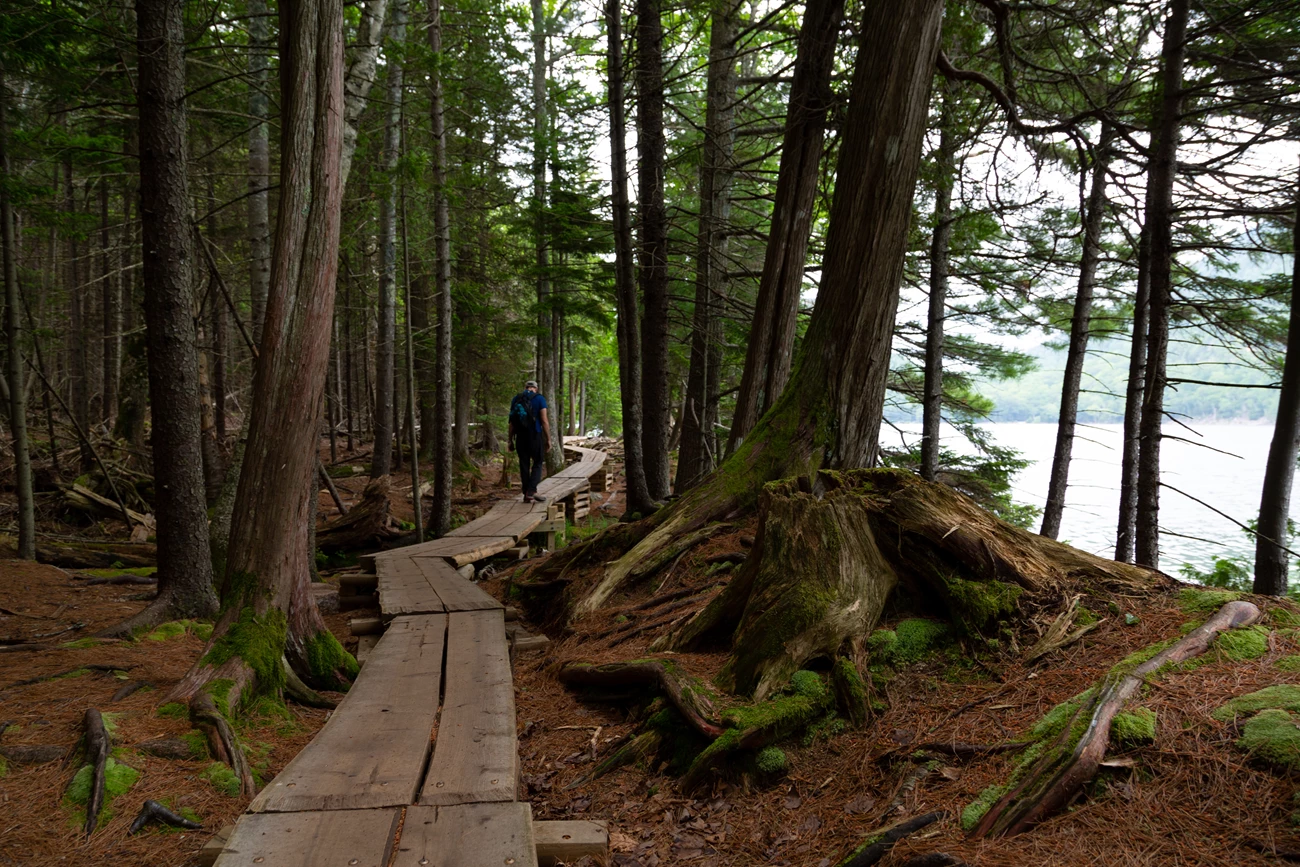
The boardwalk section of Jordan Pond Path
Distance: 3.3 miles loop
Elevation Gain: Minimal, about 40 feet
Duration: 1.5-2 hours
Difficulty: Easy
Trailhead: Jordan Pond House parking lot
Jordan Pond Path offers a different kind of Acadia experience than the coastal trails, focusing on the park's serene inland beauty. This nearly flat 3.3-mile loop encircles the pristine waters of Jordan Pond, with the iconic Bubble Mountains providing a picture-perfect backdrop.
What makes this trail particularly special is the variety of environments you'll experience. The eastern shore features a level dirt path through fragrant pine forests. The southern end includes a beautifully engineered boardwalk section that protects the sensitive wetland environment. The western shore offers open views across the crystal-clear pond to the Bubble Mountains, creating one of the most photographed scenes in the entire park.
During my visits, I've found Jordan Pond Path to be exceptionally peaceful, especially in the early morning when the water is often perfectly still, creating mirror-like reflections of the surrounding landscape. The trail surface varies from smooth dirt to sections of wooden boardwalk and some rockier areas, but remains accessible throughout.
What makes Jordan Pond Path truly special is how it provides access to Acadia's interior beauty without requiring any significant climbing. The pond itself is actually a glacial lake with some of the clearest water in Maine, with underwater visibility often exceeding 40 feet. Its pristine quality is protected by strict regulations—no swimming, wading, or pets are allowed in the water as it serves as a public water supply.
After your hike, I highly recommend stopping at the historic Jordan Pond House for their famous popovers and tea. This tradition dates back to the 1890s, and enjoying these freshly baked treats on the lawn with views of Jordan Pond and the Bubbles is a quintessential Acadia experience. Just be prepared for a wait during peak summer hours—making a reservation is advisable.
Pro tip: The western shore of Jordan Pond offers the best views of the Bubble Mountains, but the eastern shore typically has fewer people. For photographers seeking the classic reflection shot of the Bubbles in Jordan Pond, I recommend visiting around sunset when the light is softer and the day visitors have departed. Just remember to bring a headlamp for the walk back to your car.
This trail connects to several others, including the more challenging South Bubble Trail, which leads to the famous Bubble Rock. If you're feeling energetic, this optional side trip adds about a mile (round trip) and 350 feet of elevation gain to your journey but rewards you with panoramic views of Jordan Pond from above.
3. Ship Harbor Trail
Distance: 1.4 miles figure-eight loop
Elevation Gain: Minimal, about 50 feet
Duration: 1 hour
Difficulty: Easy
Trailhead: Ship Harbor parking area on Route 102A
Located on the "quiet side" of Mount Desert Island, Ship Harbor Trail is one of my absolute favorite easy hikes in Acadia National Park for visitors seeking tranquility away from the crowds. This charming 1.4-mile figure-eight loop alternates between peaceful evergreen forest and dramatic rocky coastline, offering an intimate experience of Acadia's diverse ecosystems.
What makes Ship Harbor Trail special is its relative seclusion combined with impressive scenic diversity in a short distance. The trail begins in a serene spruce-fir forest before opening up to a sheltered harbor that fills and empties with the tides. At low tide, tide pools form among the rocks, creating fascinating micro-ecosystems filled with sea stars, crabs, snails, and other marine life.
During my most recent visit in early summer, I spent nearly 30 minutes just watching a great blue heron fishing in the shallow waters of the harbor. The peaceful setting, away from the park's busier areas, creates opportunities for wildlife viewing that are often missed on the more popular trails.

The scenic coastal section of Ship Harbor Trail
The trail's figure-eight design allows you to customize your hike. The full loop is only 1.4 miles, but you can choose to complete just one of the loops for an even shorter walk. The outer loop takes you closer to the ocean with more dramatic coastal views, while the inner loop offers more forest scenery.
According to a ranger I spoke with, Ship Harbor gets its name from a 19th-century shipwreck that occurred in the harbor. While nothing remains of the ship today, the sheltered cove continues to be a haven for small boats seeking protection from the open Atlantic.
Pro tip: This trail is particularly magnificent at low tide when the harbor transforms into a vast expanse of tidepools and exposed seaweed-covered rocks. Check local tide schedules and try to time your visit accordingly. Also, pair this hike with a visit to the nearby Bass Harbor Head Lighthouse, one of the most photographed lighthouses in Maine, just a short drive away.
The trail surface on Ship Harbor is primarily packed earth with sections of exposed tree roots and some rocky areas near the shore. While it's considered easy, proper footwear is still recommended as the coastal sections can be slippery when wet.
Ship Harbor Trail is perfect for families with children who can enjoy exploring the tidepools under supervision. It's also ideal for photographers seeking quintessential Maine coastal scenery without long hikes, and for nature lovers who appreciate a more solitary experience away from Acadia's more heavily trafficked areas.
During my visits, I've found that combining Ship Harbor Trail with the nearby Wonderland Trail makes for a perfect half-day of easy hiking on the quieter side of Acadia. Both trails offer similar distances and difficulty levels but showcase slightly different coastal environments.
4. Wonderland Trail
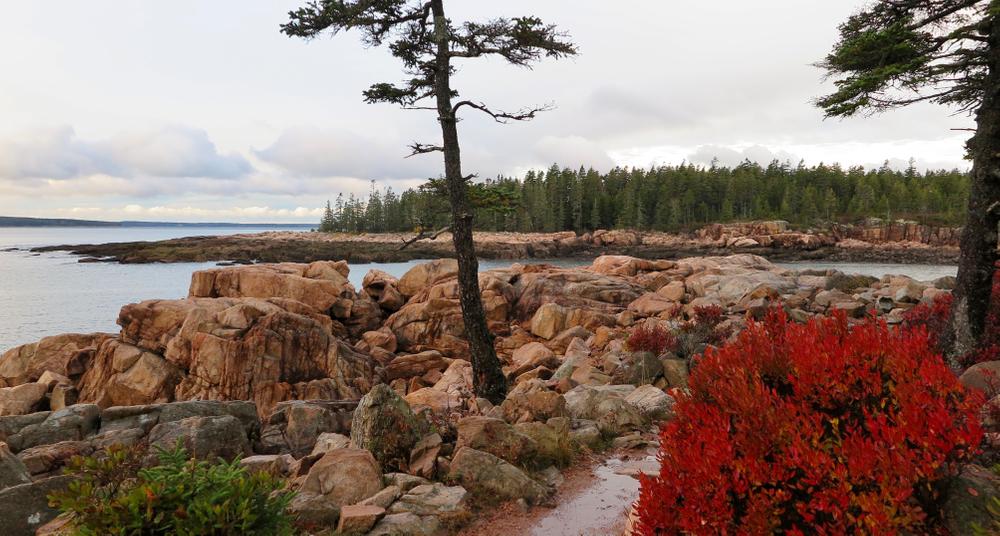
The magical coastal area of Wonderland Trail
Distance: 1.3 miles out-and-back
Elevation Gain: Minimal, about 40 feet
Duration: 45 minutes
Difficulty: Easy
Trailhead: Wonderland parking area on Route 102A
With a name like "Wonderland," this trail sets high expectations—and remarkably, it delivers. Located just down the road from Ship Harbor on the southwestern side of Mount Desert Island, Wonderland Trail is another gem on the quieter side of Acadia that offers an enchanting coastal experience with minimal physical effort.
This flat, 1.3-mile out-and-back trail leads through a serene spruce forest before opening up to a stunning expanse of pink granite ledges along the shoreline. What makes Wonderland special is how dramatically different it looks depending on the tide. At low tide, extensive tide pools form among the granite outcroppings, creating what truly feels like a "wonderland" of marine exploration.
During my visit with my nephew and niece, they were absolutely captivated by the tide pools, spending nearly an hour discovering tiny crabs, sea stars, anemones, and various seaweeds. The flat granite formations also make perfect natural seating areas for a picnic lunch while enjoying views of the open ocean.
The trail itself is primarily flat and composed of packed earth and pine needles, making it accessible to most visitors including families with small children. The forest section provides welcome shade on hot summer days before you emerge onto the exposed coastal ledges.
What particularly stands out about Wonderland is how it encapsulates the magic of Maine's coast in a highly accessible format. You'll experience the distinctive fragrance of balsam fir trees, the rhythmic sound of waves against granite, and panoramic ocean views that stretch to the horizon—all without climbing a single hill.
Pro tip: Like Ship Harbor, Wonderland Trail is best experienced at low tide when the tide pools are exposed. I recommend checking tide schedules and planning accordingly. Also, bring a tide pool guidebook or download an identification app to make the most of exploring the marine life. And don't forget to stop at the charming Milagro Coffee Shop in nearby Southwest Harbor for refreshments after your hike—they have excellent coffee and gluten-free options.
Despite its easy classification, proper footwear is still important as the granite surfaces near the shore can be slippery when wet. I also recommend bringing sun protection as the coastal section offers no shade.
Wonderland Trail is perfect for those seeking a shorter walk with a big scenic payoff, families with children interested in marine life, and photographers hoping to capture classic Maine coastal imagery. It's also ideal for visitors with limited mobility or energy who still want to experience Acadia's natural beauty.
This trail is particularly magical at sunset when the low-angle light illuminates the pink granite with a warm glow. Just remember that if you stay for sunset, you'll need a flashlight or headlamp for the forest section on your return walk.
5. Cadillac Summit Loop Trail
Distance: 0.5 mile loop
Elevation Gain: Minimal, about 30 feet
Duration: 30 minutes
Difficulty: Easy
Trailhead: Cadillac Mountain Summit parking area
While reaching the highest point in Acadia National Park might sound challenging, the Cadillac Summit Loop Trail itself is remarkably easy and accessible. This paved 0.5-mile loop circles the summit of Cadillac Mountain, offering spectacular 360-degree views of Mount Desert Island, the surrounding Atlantic Ocean, and on clear days, views extending to distant mountains in Maine and Canada.
What makes this trail special is the unparalleled panoramic perspective it provides of Acadia's diverse landscapes. From this 1,530-foot vantage point—the highest peak on the eastern seaboard of the United States—you can see Bar Harbor, the Porcupine Islands, Frenchman Bay, and countless other landmarks that help you understand the geography of the entire region.
The Summit Loop is fully paved and designed to be accessible, with minimal elevation change and several interpretive panels explaining the geology, ecology, and human history of the mountain. This makes it one of the most accessible ways to experience high-elevation views in Acadia.

Stunning panoramic view from Cadillac Mountain
During my sunrise visit to Cadillac Mountain, I was joined by a diverse crowd of fellow early risers, from young children to seniors with mobility aids, all able to enjoy the spectacle of first light touching the United States from this accessible trail. The summit of Cadillac Mountain is the first place in the continental United States to receive sunlight from approximately October through March, making sunrise visits particularly special.
Important note: From May through October, vehicle reservations are required to drive Cadillac Summit Road. These can be purchased through Recreation.gov and often sell out weeks in advance, especially for sunrise times. The National Park Service implemented this reservation system to manage the overwhelming popularity of this location and preserve the visitor experience.
If you're unable to secure a vehicle reservation, you can still reach the summit via several hiking trails of varying difficulty, or by taking a guided tour that includes summit access. Alternatively, consider visiting between November and April when reservations are not required.
While the summit can be extremely windy and significantly colder than sea level, the short loop means you're never far from the warmth of your vehicle if needed. I recommend bringing an extra layer even on warm summer days, as the exposed summit can be surprisingly chilly.
Pro tip: While sunrise is famously popular on Cadillac Mountain, sunset can be equally spectacular and typically draws smaller crowds. The western view from the summit provides an excellent vantage point as the sun sets over the mountains and lakes of Mount Desert Island, casting a golden glow across the landscape.
The Cadillac Summit Loop is ideal for visitors seeking maximum scenic impact with minimal physical effort, those with mobility limitations who still want to experience mountain views, and photographers looking for panoramic perspectives of Acadia. It's also perfect for families with small children or elderly relatives who might not be able to handle longer hikes.
For those interested in exploring beyond the paved loop, several trails descend from the summit with varying degrees of difficulty. The Cadillac North Ridge Trail is among the more moderate options if you're looking to extend your summit experience.
6. Bar Island Trail

The sandbar to Bar Island exposed at low tide
Distance: 1.9 miles round trip
Elevation Gain: About 170 feet
Duration: 1-1.5 hours
Difficulty: Easy
Trailhead: Bridge Street in Bar Harbor
Bar Island Trail offers perhaps the most unique hiking experience in Acadia National Park. This 1.9-mile round-trip walk takes you across a natural gravel land bridge that's only accessible during low tide, connecting downtown Bar Harbor to Bar Island. Once on the island, a gentle forested trail leads to an elevated viewpoint offering a beautiful perspective of Bar Harbor and the surrounding mountains.
What makes this hike special is its tidal dependency—the land bridge is underwater except for the approximately 3-hour window centered around low tide. This creates both a fascinating natural phenomenon to observe and a time-sensitive adventure that adds an element of excitement to your planning.
During my visit with friends, we timed our hike about an hour after low tide, which gave us plenty of time to explore the island and return before the tide reclaimed the path. Walking across the exposed ocean floor was a memorable experience, with interesting marine life, shells, and smooth stones visible along the way. Children around us delighted in exploring the temporary tide pools that form in depressions on the bar.
Once on Bar Island, the trail climbs gently through a mixed forest to a modest summit with partial views of Bar Harbor, Frenchman Bay, and the mountains of Acadia. While not as panoramic as some other viewpoints in the park, the unique perspective of seeing Bar Harbor from this vantage point provides a different appreciation of the area's geography.
The island itself is part of Acadia National Park, and the trail is well-maintained and marked. The forest section includes some tree roots and minor rocky sections but remains easy for most hikers. The modest elevation gain of about 170 feet is gradual and manageable.
Pro tip: Check tide schedules carefully before planning this hike. The land bridge typically becomes passable about 1.5-2 hours before low tide and remains accessible until about 1.5-2 hours after low tide. To be safe, I recommend planning to be back on the Bar Harbor side no later than 1.5 hours after low tide. Signs near the trailhead indicate safe crossing times, but it's best to verify independently. Remember, the tide waits for no one—if you miss the window, you'll either be stranded for many hours or facing a dangerous water crossing.
What makes Bar Island Trail particularly appealing is its proximity to downtown Bar Harbor. You can easily combine this hike with exploring the shops and restaurants of Bar Harbor, making it perfect for days when you want a mix of nature and town experiences.
The trail is suitable for most ages and fitness levels, though be aware that the land bridge surface is uneven with loose gravel and sometimes slippery seaweed. Waterproof footwear is recommended, especially if you're crossing near the beginning or end of the low tide window when the bar might still be partially wet.
Bar Island Trail offers a perfect blend of natural wonder, easy hiking, and convenient access that makes it one of the most unique easy hikes in Acadia National Park. The time-sensitive nature of the trail also creates a shared adventure among strangers as everyone keeps an eye on the tide and often exchanges friendly reminders about the time.
For those interested in Acadia's history, Bar Island (formerly known as Rodick Island) once had several large summer cottages and a small year-round population in the late 19th and early 20th centuries. Today, no structures remain, and the island has returned to its natural state as part of the national park.
Family-Friendly Hiking Tips
Having explored Acadia with family members of all ages, from toddlers to grandparents, I've learned that a little preparation goes a long way toward ensuring everyone has an enjoyable experience. Here are my top tips for family-friendly hiking in Acadia National Park:
Choosing the Right Trails
When hiking with children or multi-generational groups, trail selection becomes even more important. Beyond the six easy trails detailed above, I especially recommend:
- Jessup Path: This flat boardwalk trail through a beautiful birch forest is perfect for strollers and young children. The wooden walkway keeps little feet dry and clean while providing an enchanting forest experience.
- Witch Hole Pond Carriage Road: The wide, car-free carriage roads are perfect for families who want a more structured walking surface. This particular loop offers peaceful pond views and is relatively flat.
- Sand Beach to Thunder Hole: This section of Ocean Path is shorter (about 0.7 miles one way) and gives kids the excitement of seeing and hearing Thunder Hole while also allowing for beach time.
For families with older children looking for a bit more adventure, consider the Gorham Mountain Trail, which offers more elevation gain but remains accessible for active kids and rewards with spectacular views.

Family enjoying the Ocean Path Trail
Essential Family Hiking Gear
Based on my experiences with family hiking in Acadia, these are the must-have items I recommend:
- Water bottles or hydration packs: Even on easy trails, staying hydrated is crucial, especially for children who may not recognize thirst cues. I've found that kids are more likely to drink regularly with their own special water bottles or hydration packs like the CamelBak Mini M.U.L.E. Kids Hydration Backpack.
- Proper footwear: Even Acadia's easy trails have sections of uneven terrain, exposed roots, and sometimes slippery surfaces. Sturdy shoes with good traction are essential. For kids, I recommend the Merrell Kids' Chameleon Waterproof Hiking Shoe, which provides good support while remaining lightweight.
- Sun protection: Many of Acadia's coastal trails offer limited shade. A combination of sunscreen, hats, and sunglasses is important for everyone. For kids who resist sunscreen application, I've had good luck with Blue Lizard Kids Mineral Sunscreen, which goes on easily and offers reliable protection.
- Layers: Acadia's coastal location means weather can change quickly, with significant temperature differences between sunny and shaded areas. Lightweight, packable layers like the Columbia Kids' Glennaker Rain Jacket ensure comfort in changing conditions.
- Trail snacks: Nothing derails a family hike faster than hungry children. Pack more snacks than you think you'll need—granola bars, trail mix, fruit leather, and other portable, energy-boosting foods.
Making Hiking Fun for Kids
From my experience hiking with nieces, nephews, and friends' children, these approaches help keep young hikers engaged and excited:
- Scavenger hunts: Create a simple list of items to find during the hike—a pinecone, a red leaf, a heart-shaped rock, or specific wildlife. This transforms the walk into an exciting treasure hunt.
- Junior Ranger Program: Acadia offers an excellent Junior Ranger program. Pick up a booklet at a visitor center, complete the activities during your visit, and earn a badge. This provides structure and educational value to your explorations.
- Tide pool exploration: If hiking coastal trails like Ship Harbor or Wonderland, bring a small tide pool guidebook or download an identification app to make marine life discovery more engaging.
- Photography missions: Give older children a camera or smartphone and assign them specific photography challenges, like capturing the smallest flower they can find or the most interesting cloud formation.
- Trail games: Simple games like "I Spy" or counting certain objects (like birds or boats) help pass time on longer sections of trail.
Safety Considerations for Family Hikes
While Acadia's easy trails are generally safe, these precautions are especially important when hiking with children:
- Establish clear boundaries: Before starting, explain to children how far they can go ahead on the trail (for example, "always stay within sight" or "stop at each trail junction").
- Teach trail etiquette: Help children understand basics like yielding to uphill hikers, staying on marked trails, and respecting wildlife.
- Watch carefully on coastal trails: Acadia's coastal trails often feature unfenced dropoffs to rocky shores below. Keep children away from cliff edges and supervise them closely.
- Be tide-aware: If exploring coastal areas, especially Bar Island Trail, know the tide schedule and allow ample time to return before high tide.
- Pack a basic first aid kit: Even on easy trails, minor scrapes and insect bites can happen. A simple kit with band-aids, antiseptic wipes, and bite relief can save the day.
By choosing appropriate trails, coming prepared, making the experience fun, and prioritizing safety, family hiking in Acadia becomes not just manageable but truly magical. Some of my fondest memories of the park involve watching children discover their first tide pool creatures or proudly reaching a viewpoint they weren't sure they could manage.
Seasonal Hiking Guide
One of the most remarkable aspects of Acadia National Park is how dramatically it transforms with the seasons. I've had the privilege of hiking in Acadia during all four seasons, and each offers a completely different experience on the same trails. Here's my guide to seasonal hiking in Acadia, with specific recommendations for easy hikes during each time of year:
Summer (June - August)
Summer is peak season in Acadia, bringing warm temperatures, lush vegetation, and the largest crowds. The park comes alive with vibrant wildflowers, and the long daylight hours provide extended hiking opportunities.
Weather conditions: Daytime temperatures typically range from 70-80°F (21-27°C), though coastal trails can feel cooler due to ocean breezes. Humidity can be high, especially in July and August. Afternoon thunderstorms are possible but typically brief.
Trail conditions: All trails are generally open and well-maintained. Vegetation may encroach slightly on less-traveled paths. Boardwalks and bridges are in good condition.
Best easy summer hikes:
- Ship Harbor and Wonderland Trails: These coastal trails offer refreshing ocean breezes on hot days.
- Jordan Pond Path: The shade of the eastern shore provides relief from the summer sun, and the clear waters of the pond look particularly inviting (though swimming is not permitted).
- Jesup Path: The dense forest canopy creates a naturally air-conditioned environment on hot summer days.
Pro summer tips:
- Hike early (before 8:00 AM) or late (after 4:00 PM) to avoid crowds and midday heat.
- Use the Island Explorer shuttle system to avoid parking frustrations during peak hours.
- Make advance reservations for Cadillac Summit Road access, as summer slots fill quickly.
- Bring extra water, as summer heat increases hydration needs even on easy trails.
- Consider bug repellent, especially for forested trails in the evening hours.

Summer view along Ocean Path Trail
Fall (September - October)
Fall is widely considered the most magical season in Acadia, with spectacular foliage, crisp air, and reduced crowds after Labor Day (though October weekends can still be busy during peak foliage).
Weather conditions: September remains relatively warm with daytime temperatures in the 60-70°F (16-21°C) range. October brings cooler weather, typically 50-60°F (10-16°C) during the day, dropping into the 30-40°F (0-10°C) range at night. Rain is more common than in summer.
Trail conditions: All trails remain open and well-maintained. Fallen leaves can make some surfaces slightly slippery, especially after rain.
Best easy fall hikes:
- Jordan Pond Path: The reflection of fall colors in the pond creates stunning photo opportunities.
- Cadillac Summit Loop: The 360-degree views showcase the island's autumn tapestry from above.
- Jessup Path: The birch and maple trees along this trail create a golden canopy in fall.
- Ocean Path: The contrast between the blue ocean, pink granite, and red/orange/yellow foliage is simply spectacular.
Pro fall tips:
- Peak foliage typically occurs in mid-October, but this varies annually. Check Maine foliage reports for current conditions.
- Dress in layers—mornings can be quite chilly, warming significantly by midday.
- Bring a thermos of hot coffee or tea to enjoy at scenic viewpoints on cooler days.
- Consider visiting midweek in October to avoid the substantial weekend crowds that come for fall foliage.
- Make lodging reservations well in advance, as fall is a popular season.
During my fall visit, I found the changing colors around Jordan Pond to be particularly breathtaking. The still water created perfect reflections of the surrounding trees, doubling the visual impact of the autumn display.
Winter (November - March)
Winter transforms Acadia into a serene wonderland of snow and ice. While many facilities close and some roads become inaccessible, the park remains open year-round, offering a uniquely peaceful experience for those willing to brave the cold.
Weather conditions: Temperatures typically range from 15-35°F (-9 to 2°C) during the day, often dropping below freezing at night. Snow and ice are common, with coastal storms bringing significant snowfall. Wind chill can make temperatures feel much colder, especially on exposed coastal and summit areas.
Trail conditions: Many trails become snow-covered and icy. Ocean Path and other coastal trails may be impacted by winter storms. Park Loop Road is closed to vehicles beyond the Entrance Station, though it remains open for pedestrians, cross-country skiers, and snowshoers.
Best easy winter hikes:
- Carriage Roads: These wide, relatively flat paths are excellent for winter walking, snowshoeing, or cross-country skiing.
- Ocean Path: The accessible portion from Schooner Head Road can be spectacular after a snow, with white snow against dark blue ocean.
- Jordan Pond Path: Often accessible in winter, this trail offers a different perspective of the frozen or partially frozen pond.
Pro winter tips:
- Proper winter footwear is essential—consider microspikes or crampons for added traction on icy trails.
- Dress in moisture-wicking layers, as hiking in snow can cause sweating despite cold temperatures.
- Start hikes earlier in the day to take advantage of maximum daylight hours.
- Carry a thermos with a hot beverage—it's both comforting and can help maintain core temperature.
- Check with the park website or visitor center about current road and trail conditions before setting out.
- Consider renting snowshoes or cross-country skis to explore the carriage roads in fresh snow.
During my winter visit, I was struck by the absolute tranquility of hiking Ocean Path with only a handful of other adventurous souls, compared to the hundreds who crowd the trail in summer. The sight of snow-covered granite against the dark winter ocean created a dramatic monochromatic landscape that was hauntingly beautiful.
Spring (April - May)
Spring is Acadia's quietest season and something of a local secret. While conditions can be wet and unpredictable, the combination of emerging greenery, rushing streams, and minimal crowds creates a special atmosphere for those who appreciate solitude.
Weather conditions: Highly variable, with temperatures ranging from 40-65°F (4-18°C). Rain is common, and patches of snow may persist in shaded areas through April. Morning frost is possible well into May.
Trail conditions: Early spring (April) often brings muddy trails as snow melts and frost leaves the ground. By May, conditions improve significantly, though wet areas remain. Some trails may have winter damage that hasn't yet been repaired.
Best easy spring hikes:
- Ocean Path: Less affected by mud than forest trails and offers opportunities to see migrating seabirds.
- Carriage Roads: Their crushed gravel surface drains well, making them less muddy than natural trails.
- Jesup Path: The boardwalk keeps you elevated above soggy ground, and spring wildflowers begin appearing in late May.
- Ship Harbor Trail: Spring tides bring interesting debris to the shoreline, and early wildflowers appear in protected areas.
Pro spring tips:
- Pack waterproof hiking boots and gaiters to handle muddy conditions.
- Dress in layers—spring temperatures can fluctuate dramatically throughout the day.
- Check the park website for seasonal trail closures, as some areas may be closed to protect nesting peregrine falcons or to recover from winter damage.
- Take advantage of significantly lower accommodation rates before the summer season begins.
- Bring binoculars, as spring migration makes this an excellent season for birdwatching.
My spring visit to Acadia coincided with peak wildflower bloom in late May, when trails like Jesup Path were adorned with delicate trillium, violets, and spring beauties. The emerging bright green leaves created a luminous canopy that felt refreshingly alive after winter's dormancy.
Best Times to Visit for Easy Hiking
If your schedule is flexible and you're primarily interested in easy hiking in Acadia National Park, here are my recommendations for optimal timing:
- Early September: This sweet spot offers summer-like warmth, reduced crowds after Labor Day, extended daylight hours, and the very beginning of fall color changes.
- Mid-May to early June: The "shoulder season" before peak crowds arrive brings pleasant temperatures, emerging wildflowers, and significantly fewer people on popular trails.
- Weekdays in October: For those who can avoid weekends, fall foliage viewing is much more peaceful midweek.
- Winter weekends for locals or those within driving distance: The solitude and unique beauty of a snow-covered Acadia is worth experiencing if you're prepared for cold conditions.
Regardless of when you visit, each season reveals a different facet of Acadia's character, from the vibrant energy of summer to the peaceful solitude of winter. The park's easy hiking trails remain accessible and rewarding year-round, with proper preparation for seasonal conditions.
My Experience Hiking in Acadia
My journey with Acadia National Park began nearly a decade ago when I first visited on a whim during a New England road trip. What was meant to be a quick two-day stop turned into a week-long stay, and I've returned at least once every two years since then, exploring different areas and trails each time.
My most memorable experience came during my third visit, when I decided to focus exclusively on the park's easier trails rather than challenging myself with the more famous difficult hikes like Precipice or Beehive. This decision was partly practical—I was recovering from a minor knee injury—but it became a revelation that completely changed how I approach national park visits.
During that trip, I discovered that Acadia's easiest trails often showcase the park's most iconic scenery while allowing more time and energy to truly absorb the surroundings. On the challenging trails, I was so focused on navigating difficult terrain that I sometimes missed the smaller details and broader context of the landscape.

Early morning light on Ocean Path Trail
One particular morning stands out as my single favorite hiking experience in Acadia. I arrived at the Sand Beach parking lot at 5:30 AM to begin hiking Ocean Path just as dawn was breaking. For nearly two hours, I had this spectacular coastal trail entirely to myself, with only the sounds of crashing waves and seabirds for company.
The early morning light transformed the pink granite cliffs into glowing golden sculptures, and the tide was low enough to explore several small sea caves that are inaccessible at high tide. I sat on the rocks at Monument Cove for nearly half an hour, watching harbor seals playing offshore and feeling a profound connection to this special place.
As I continued toward Otter Point, I encountered a park ranger setting up wildlife spotting scopes. She invited me to look through one focused on a peregrine falcon nest on a distant cliff face. While sharing her knowledge about the park's successful falcon restoration program, she also recommended several lesser-known easy trails that have since become favorites of mine. This kind of spontaneous educational experience is common in Acadia if you're willing to engage with rangers and volunteers.
Another memorable experience was hiking Ship Harbor Trail with my 72-year-old father, who has limited mobility due to arthritis. Despite his concerns about being able to complete even an "easy" hike, the trail's gentle terrain and frequent rest spots allowed him to reach the harbor viewpoint comfortably. Witnessing his joy at experiencing such a beautiful coastal landscape that he had assumed was beyond his abilities was deeply moving.
During my most recent visit in early summer, I focused on exploring the quieter western side of Mount Desert Island. The relative solitude of trails like Wonderland and Ship Harbor provided a completely different experience from the more visited eastern side. One afternoon, I spent nearly three hours at Wonderland's rocky shore, watching the changing light as the tide gradually came in, transforming the landscape before my eyes.
What continues to draw me back to Acadia's easy trails is their perfect balance of accessibility and reward. Unlike some national parks where the most spectacular views require strenuous all-day hikes, Acadia democratizes natural beauty by making it available to hikers of all abilities. From families with young children to seniors with mobility concerns, these trails offer everyone the chance to experience the essence of what makes Acadia special.
I've visited numerous national parks across the country, but Acadia remains special for this very reason. Its network of easy hiking trails doesn't feel like a compromise—they feel like the perfect way to experience the park's unique convergence of mountains, forests, and sea.
Lessons Learned and Tips from My Experiences
Through my many visits to Acadia, I've gathered some personal insights that might help fellow hikers:
- The "quiet side" is worth the extra drive. While the eastern side of Mount Desert Island gets the majority of visitors, the western "quiet side" offers equally beautiful landscapes with significantly fewer people.
- Timing is everything. Arriving at popular trailheads before 8:00 AM or after 4:00 PM dramatically changes your experience, often giving you relative solitude even on the busiest trails.
- Talk to rangers. Some of my best hiking experiences came from ranger recommendations that don't appear in guidebooks or popular websites. The visitor centers at Hulls Cove and Thompson Island are excellent resources.
- Consider the tides. Coastal trails like Ship Harbor and Wonderland transform completely depending on the tide level. Check tide charts and try to visit at low tide for tide pool exploration.
- Look beyond the famous trails. While Beehive and Precipice get all the attention, some of Acadia's best experiences are on its easiest, less celebrated paths.
- Embrace bad weather. Some of my most memorable Acadia moments have come during light rain or fog, which transforms the landscape and typically reduces crowds.
Through each visit to Acadia, my appreciation for these accessible trails has only deepened. They've shown me that the value of a hiking experience isn't measured by its difficulty but by the connection it facilitates with the natural world. Acadia's easy hikes may not provide the adrenaline rush of more challenging trails, but they offer something equally valuable: an intimate, unhurried introduction to one of America's most beloved landscapes.
Essential Gear for Acadia Hikes
Even on easy trails, having the right gear can significantly enhance your hiking experience in Acadia National Park. Based on my multiple visits in different seasons, here are my recommendations for essential hiking gear, including some specific products I've personally tested and found effective:
Footwear
While Acadia's easy trails don't require technical hiking boots, proper footwear is still important. Many trails have sections of exposed tree roots, slippery granite surfaces (especially when wet), and occasional muddy patches.
My recommendation: Merrell Moab 2 Ventilator Hiking Shoes
These have been my go-to hiking shoes for Acadia's easy to moderate trails for years. They offer excellent traction on both dry and wet surfaces, good foot protection without the weight and stiffness of full hiking boots, and enough breathability to keep feet comfortable during summer hikes. The women's version is equally well-designed.
For coastal trails where you might want to explore tidepools or cross shallow water, consider water shoes or sandals with good grip, like KEEN Newport H2 Sandals. These protect your toes while allowing you to safely navigate wet rocks and shallow water.
Daypack
Even for short hikes, carrying water, snacks, an extra layer, and other essentials is important. A comfortable daypack makes this easy without burdening your hike.
My recommendation: Osprey Daylite Plus Daypack
This 20-liter pack has accompanied me on countless Acadia hikes. It's lightweight yet durable, has comfortable shoulder straps and a mesh back panel that prevents excessive sweating, and includes a hydration sleeve if you prefer a water reservoir to bottles. The multiple pockets help organize smaller items like snacks, a map, and sunscreen.
For shorter hikes where you need minimal gear, the Osprey Daylite Waist Pack is a great alternative that keeps your hands free while providing easy access to essentials.
Weather Protection
Acadia's coastal location means weather can change rapidly. Being prepared for rain or wind, even on clear days, is essential.
My recommendation: Columbia Watertight II Rain Jacket
This packable, lightweight rain jacket has saved me during unexpected afternoon showers on multiple Acadia hikes. It's breathable enough that you won't overheat, compact enough to stuff in a daypack pocket, and effectively waterproof for typical rain conditions. Available in both men's and women's versions.
For cooler seasons or early morning hikes, a lightweight insulated layer like the Amazon Essentials Lightweight Packable Puffer Jacket provides warmth without bulk and compresses small enough to fit in your pack when not needed.
Navigation & Safety
While Acadia's popular easy trails are well-marked, having reliable navigation tools ensures peace of mind and allows for spontaneous exploration.
My recommendation: National Geographic Trails Illustrated Map for Acadia
This waterproof, tear-resistant map shows all official trails with distance and difficulty indicators. Cell service in Acadia can be spotty, especially on the western side of the island and in forested areas, making a physical map an important backup.
For digital navigation, I've found the AllTrails Pro subscription valuable for downloading offline trail maps. The app also includes user photos and reviews that can help you decide which trails best match your interests and abilities.
Don't forget basic safety items like a small first aid kit, headlamp or flashlight (even for day hikes, in case you get delayed), and an emergency whistle.
Specialized Gear Worth Considering
- Trekking Poles: Even on easier trails, trekking poles can reduce strain on knees and improve stability on uneven terrain. The Cascade Mountain Tech Aluminum Trekking Poles offer excellent value and have served me well on numerous Acadia hikes.
- Binoculars: Acadia's coastal trails offer opportunities to spot marine wildlife like seals, porpoises, and various seabirds. Compact binoculars enhance these experiences significantly.
- Tide Table or App: For coastal hikes, especially Bar Island Trail which becomes inaccessible at high tide, knowing the tide schedule is essential. The NOAA Tides & Currents app provides accurate forecasts.
- Insect Repellent: While coastal trails rarely have insect issues, forest trails can have mosquitoes and black flies, particularly in late spring and early summer. I prefer repellents with picaridin rather than DEET for less odor and no damage to synthetic fabrics.
- Microspikes: If visiting during winter or early spring when trails may have ice, portable traction devices that slip over your boots can make hiking much safer.
What to Wear for Easy Hikes in Acadia
Proper clothing is just as important as gear for enjoying Acadia's trails comfortably:
- Moisture-wicking base layers: Avoid cotton, which stays wet with sweat. Synthetic or wool materials like the Under Armour Tech 2.0 T-Shirt keep you drier and more comfortable.
- Convertible hiking pants: These allow adaptation to changing temperatures and provide sun protection and pocket storage. The zip-off legs convert to shorts when temperatures rise.
- Sun protection: A wide-brimmed hat, sunglasses, and sunscreen are essential, especially on exposed coastal trails where reflection from water intensifies the sun's effects.
- Layering system: Even in summer, Acadia's weather can shift quickly. I typically carry a light fleece or insulated vest even on warm days, as coastal breezes can make exposed viewpoints significantly cooler than forested sections.
The right gear doesn't need to be expensive or extensive for enjoying Acadia's easy trails, but thoughtful preparation enhances safety, comfort, and ultimately your connection with this remarkable landscape. The items I've recommended have proven their value through multiple seasons of Acadia hiking and have helped make even simple walks more enjoyable and memorable.
Remember that what you bring to the trail is less important than your willingness to immerse yourself in the experience. Even with minimal specialized gear, Acadia's easy trails offer rich rewards to those who approach them with curiosity, respect, and an open heart.
Frequently Asked Questions
What is the easiest hike in Acadia National Park?
The Cadillac Summit Loop Trail is widely considered the easiest hike in Acadia National Park. This paved 0.5-mile loop around the summit of Cadillac Mountain offers spectacular 360-degree views with minimal physical effort. The trail is relatively flat with just 30 feet of elevation change, making it accessible for visitors of all ages and abilities, including those with mobility devices. While reaching the trailhead requires driving up Cadillac Mountain (which needs a vehicle reservation during peak season), the hike itself requires no technical skills or significant exertion while delivering one of the most panoramic views in the entire park.
Are there any flat trails in Acadia National Park?
Yes, Acadia National Park offers several wonderfully flat trails that are perfect for those seeking easy walking experiences. Jordan Pond Path provides a 3.3-mile flat loop around a pristine lake with mountain views. Ocean Path has minimal elevation change while showcasing spectacular coastline for 2.2 miles (one way). Jessup Path features a flat boardwalk through a beautiful birch forest. The historic Carriage Roads offer 45 miles of wide, relatively flat gravel paths perfect for leisurely walking. Ship Harbor and Wonderland Trails on the quiet side of the park are mostly flat 1.3-1.4 mile loops with beautiful coastal sections. These trails demonstrate that you don't need to climb mountains to experience Acadia's diverse beauty.
Which trails in Acadia are best for families with young children?
Several Acadia trails are particularly well-suited for families with young children. Wonderland Trail (1.3 miles) offers exciting tide pool exploration at low tide with a flat, easily navigable path. Ship Harbor Trail (1.4 miles) features a figure-eight design that allows families to adjust the length while enjoying forest and coastal scenery. Jordan Pond Path has sections of wooden boardwalk that children typically enjoy, plus the Jordan Pond House nearby offers popovers—a hit with kids. Jessup Path's boardwalk through birch forest creates an enchanting environment that often captivates children's imagination. Bar Island Trail provides the unique adventure of walking across an exposed ocean floor at low tide. The key for family hikes is timing—starting early morning before crowds and heat, bringing plenty of snacks and water, and planning activities like tide pool exploration or wildlife spotting to maintain children's engagement.
What are the best easy hiking trails in Acadia for ocean views?
For spectacular ocean views on easy trails, Ocean Path is unmatched in Acadia. This 2.2-mile (one-way) trail follows the dramatic eastern coastline from Sand Beach to Otter Point, passing famous landmarks like Thunder Hole and Monument Cove with continuous ocean panoramas. Ship Harbor and Wonderland Trails on the quieter western side offer more secluded coastal views with minimal elevation change, each about 1.4 miles round-trip. The short Great Head Trail (1.5-mile loop) provides elevated ocean perspectives with moderate effort. For those seeking minimal walking, the Schooner Head Overlook requires just a few hundred yards of walking to a dramatic cliff-top ocean view. Unlike many national parks where coastal views require strenuous hiking, Acadia uniquely offers easy access to some of America's most beautiful shoreline scenery.
When is the best time of year to hike easy trails in Acadia?
Early September offers the ideal balance for enjoying Acadia's easy trails. This "sweet spot" provides summer-like temperatures (typically 65-75°F/18-24°C), significantly reduced crowds after Labor Day, and the beginning of subtle fall color changes in the foliage. Water temperatures remain comfortable for tide pool exploration, and wildlife is active. May and early June represent another excellent window, with emerging wildflowers, fewer visitors, and comfortable hiking temperatures, though some facilities may have limited hours. For fall foliage enthusiasts, mid-October delivers spectacular color, but expect significant crowds, especially on weekends—consider midweek visits if possible. Winter offers a uniquely peaceful experience for those prepared for cold conditions, with trails like Ocean Path and the carriage roads often accessible with appropriate footwear. Each season transforms Acadia's easy trails in distinctive ways, providing different but equally rewarding experiences.
Do I need special gear for easy hikes in Acadia National Park?
While Acadia's easy trails don't require specialized technical gear, a few essentials enhance safety and comfort. Good walking shoes with decent traction are important—trail runners or light hiking shoes work well for most easy trails, though waterproof options are beneficial in spring or after rain. Weather in coastal Maine can change quickly, so carrying a lightweight rain jacket and an extra layer is wise even on clear days. A small daypack with water (at least 1 liter per person), snacks, sunscreen, and insect repellent covers basic needs. For coastal trails, tide tables (via app or printed) help plan safe exploration. A trail map is recommended as cell service can be unreliable in parts of the park. While specialized hiking gear isn't necessary, appropriate footwear and preparation for weather changes significantly improve the experience even on Acadia's easiest trails.
Video: Exploring family-friendly hikes in Acadia National Park
Conclusion
After exploring the diverse easy trails of Acadia National Park through multiple seasons and years, I've come to appreciate how these accessible paths offer some of the most rewarding natural experiences available in America's national park system. What makes Acadia truly special is how it democratizes access to extraordinary beauty—you don't need to be an experienced hiker or athlete to witness some of the park's most spectacular landscapes.
The six primary trails we've explored—Ocean Path, Jordan Pond Path, Ship Harbor Trail, Wonderland Trail, Cadillac Summit Loop, and Bar Island Trail—each showcase different aspects of Acadia's unique character while remaining accessible to most visitors. From dramatic rocky coastlines to peaceful forest walks, from mountain panoramas to serene lake views, these easy hikes in Acadia National Park collectively offer a comprehensive introduction to this beloved landscape.
What I hope you take away from this guide is that choosing easier trails doesn't mean sacrificing experience. In fact, the moderate pace and reduced physical demands of these trails often allow for deeper connection with the surroundings—more time to notice the play of light on granite, to identify bird calls, to photograph reflections in tide pools, or simply to sit and absorb the peaceful energy of this special place.
Acadia's accessibility extends beyond its trail system. The park's free Island Explorer shuttle connects major trailheads, eliminating parking concerns and allowing for one-way hikes. The historic carriage roads provide car-free walking routes suitable for strollers, wheelchairs, and those with mobility concerns. And the park's compact size means you can experience diverse environments—from mountain summits to crashing surf—all within a single day if needed.
For first-time visitors to Acadia, I recommend starting with Ocean Path for its iconic coastal scenery, followed by Jordan Pond Path for a contrasting inland experience. If time allows, venture to the quieter western side for Ship Harbor or Wonderland Trail to experience the park away from the main crowds. This combination provides a well-rounded introduction to Acadia's diverse landscapes without overwhelming physical demands.
For returning visitors who have already experienced the popular eastern side of the park, I encourage exploration of the less-visited areas—the carriage roads around Witch Hole Pond, the Jesup Path boardwalk, or even the separate Schoodic Peninsula section of the park where the Sundew Trail offers an easy 1.8-mile loop with spectacular coastal views.
Remember that experiencing Acadia's easy trails isn't just about physical accessibility—it's about mental and emotional accessibility as well. These paths invite contemplation, connection, and wonder from visitors of all backgrounds, ages, and abilities. They remind us that nature's most profound gifts are often available to anyone willing to step onto the trail with an open heart and curious mind.
Whether you're planning your first visit to Acadia or returning for the twentieth time, I hope this guide helps you discover the remarkable experiences waiting along the park's easy trails. In a world that often equates value with difficulty, Acadia's accessible paths stand as a beautiful reminder that some of life's richest rewards require not exceptional strength or skill, but simply the willingness to show up and be present in places of natural wonder.
Happy trails, and may your journeys through Acadia bring you the same joy and renewal they have brought me through the years.