

Acadia National Park stands as the crown jewel of the Maine coastline, offering visitors an unparalleled blend of rugged shorelines, pristine forests, and majestic mountains. As someone who has explored every trail and vista in this magnificent park across all four seasons, I'm thrilled to share my comprehensive guide to Acadia National Park attractions. Whether you're planning your first visit or returning to discover hidden gems, this guide will help you experience the breathtaking beauty that makes Acadia one of America's most beloved national parks. Check out our homepage for more wilderness adventures!
1. Exploring Acadia's Iconic Landscapes
1.1 Cadillac Mountain: Sunrise Magic
Standing at 1,530 feet, Cadillac Mountain is the crown jewel among Acadia National Park attractions. As the highest point on the North Atlantic seaboard, it offers visitors an unparalleled experience—watching the first rays of sunrise touch American soil. During my numerous visits to Acadia, I've made the pre-dawn journey up Cadillac Mountain at least a dozen times, and the experience never loses its magic.
The 3.5-mile road to Cadillac Mountain’s summit requires a timed reservation during peak season (mid-May to mid-October)—a detail I learned the hard way on my second visit. After missing the reservation, I chose to hike the Cadillac Mountain North Ridge Trail instead, a demanding but rewarding 4.4-mile round trip. The trail offered sweeping views often missed by those who drive, though I came to appreciate the convenience of driving on later visits.
At the summit, the panorama is nothing short of breathtaking. On clear days, you can spot Bar Harbor, the Porcupine Islands, and even parts of the mainland across Frenchman Bay. For photographers, a tripod is invaluable for capturing sunrise—the golden light over the islands creates postcard-worthy shots. During my autumn trip, the summit also served as the perfect vantage point to take in Mount Desert Island’s brilliant fall foliage.
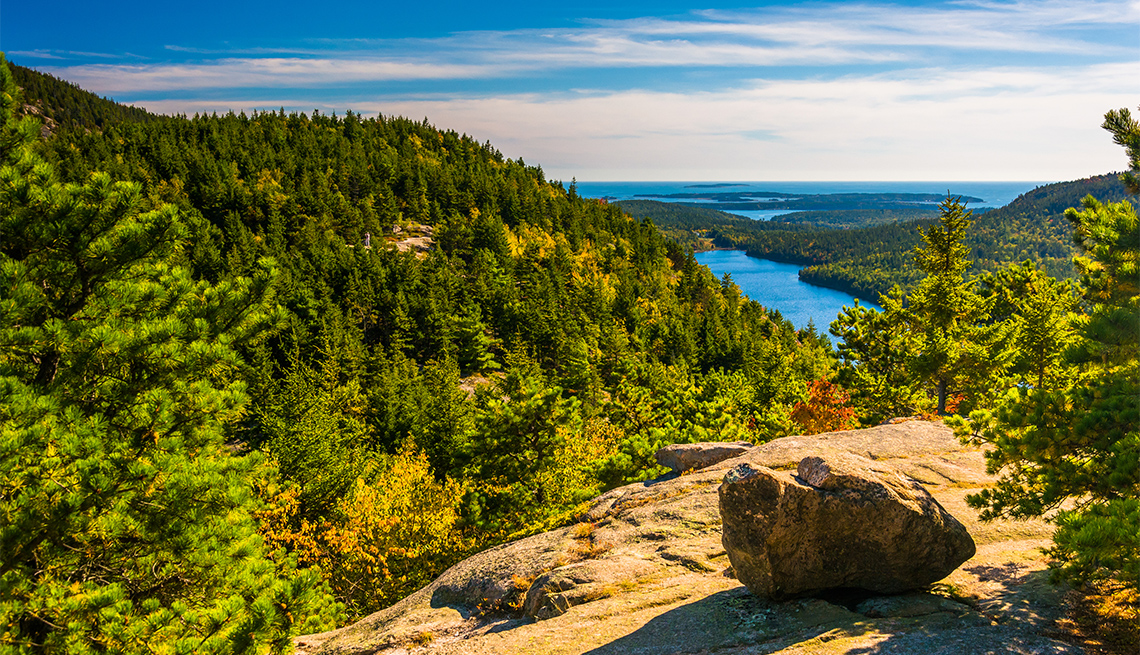
The breathtaking view from Cadillac Mountain overlooking Jordan Pond and the Bubbles
1.2 Park Loop Road: Scenic Drive Excellence
The 27-mile Park Loop Road serves as the main artery connecting many of Acadia National Park's most spectacular attractions. This one-way scenic route provides access to forests, mountain vistas, rocky coastlines, and some of the park's most popular hiking trails. Having driven it during all four seasons, I can confidently say that Park Loop Road offers an ever-changing tableau of natural beauty.
On my first visit to Acadia National Park attractions, I made the mistake of starting too late in the day. Now, I always recommend beginning your Park Loop Road adventure early in the morning (before 8 AM) or later in the afternoon (after 4 PM) to avoid the midday crowds. The road follows a counterclockwise direction for most of its length, so planning your stops accordingly will save you from backtracking.
Notable stops along Park Loop Road include the Wild Gardens of Acadia, Sieur de Monts Spring, and the breathtaking Otter Point. I particularly love the stretch between Sand Beach and Otter Cliff, where the road hugs the coastline and provides stunning ocean views. During my summer visits, I found that having a printed map was invaluable as cell service can be spotty within the park. Don't miss the pull-offs for Schooner Head Overlook and Great Head—these less-crowded spots offer magnificent vistas without the large groups typically found at more popular stops.
For those seeking scenic drives in Acadia National Park, this road should be at the top of your list. Just remember to drive cautiously, as wildlife sightings are common, and the road can be narrow in sections.
1.3 Jordan Pond and The Bubbles
Jordan Pond offers one of the most iconic views in Acadia National Park—its crystal-clear waters reflecting The Bubbles, two rounded mountains that create a picture-perfect backdrop. Despite having visited dozens of national parks across the country, this vista remains one of my all-time favorites, particularly during early morning when the water is perfectly still and the reflection is undisturbed.
The 3.3-mile Jordan Pond Path loop around the pond is relatively easy and family-friendly, with wooden boardwalks traversing some of the boggier sections. During my spring visit, I spotted several deer drinking at the pond's edge and a family of loons gliding across the water. It's worth noting that swimming is prohibited in Jordan Pond as it serves as a public water supply, though this preservation effort is precisely why the waters remain so pristinely clear.
No visit to Jordan Pond is complete without stopping at the historic Jordan Pond House, famous for its traditional tea and popovers since the 1890s. After a long morning hike, I treated myself to these warm, hollow rolls served with butter and jam on the restaurant's lawn overlooking the pond. The tradition dates back over 100 years and remains one of the unique cultural experiences among Acadia National Park attractions. For the best experience, make a reservation in advance—during my August visit, the wait without a reservation stretched beyond two hours.
For hikers looking for more adventure, several trails lead up to the summits of South and North Bubble mountains, offering expansive views of Jordan Pond below. The Bubbles are also home to Bubble Rock, a glacial erratic perched precariously on the edge of South Bubble—a fascinating geological feature and popular photo spot that showcases the glacial history of this remarkable landscape.
2. Breathtaking Coastal Attractions
2.1 Thunder Hole: Nature's Symphony
Thunder Hole represents nature's raw power in one of its most dramatic displays among Acadia National Park attractions. This natural phenomenon occurs when incoming waves crash into a small inlet, compressing air inside a underwater cave and creating a thunderous boom accompanied by a spectacular splash that can reach up to 40 feet high. During my many visits to Acadia, I've experienced Thunder Hole in various conditions, but nothing compares to witnessing it at its peak performance.
Timing is everything when visiting Thunder Hole. I've learned through trial and error that the best time to experience this natural wonder is approximately 1-2 hours before high tide. On my first visit, I arrived at low tide and was somewhat underwhelmed by the gentle splashing. However, when I returned the next day during the recommended window, the thunderous roars and impressive sprays made it clear why this is one of the park's most popular attractions.
The viewing area includes a railed stairway leading down to a platform near the inlet, but be prepared to get wet if you venture down during active conditions! During one particularly memorable autumn visit, I was completely soaked by an unexpected massive wave—a chilly but exhilarating experience. For those with mobility concerns, an upper observation deck still provides excellent views of the action below.
Beyond the spectacle itself, Thunder Hole offers stunning panoramic views of the coastline. To the left, you can see Sand Beach tucked between granite headlands, while to the right, the dramatic Otter Cliff comes into view. This makes it an excellent spot for photography in Acadia National Park, even when the "thunder" is less pronounced.

Thunder Hole in action during high tide, creating its signature explosive spray
2.2 Otter Cliff: Dramatic Ocean Views
Rising 110 feet above the Atlantic Ocean, Otter Cliff stands as one of the most impressive coastal headlands along the eastern seaboard. This towering pink granite cliff is among the most photographed Acadia National Park attractions, and for good reason—the dramatic juxtaposition of rugged rock faces against the deep blue ocean creates an unforgettable vista that captures the essence of Maine's coastline.
As an avid photographer, I've visited Otter Cliff during different seasons and times of day. My personal recommendation is to arrive shortly after sunrise, when the morning light bathes the cliff face in a warm golden glow and fewer visitors are present. During my September visit, I witnessed local rock climbers scaling the cliff's face—a testament to Otter Cliff's popularity among technical climbers who appreciate the unique challenge of climbing directly above the ocean.
The viewpoint is easily accessible via Park Loop Road, with a small parking area at the Otter Cliff overlook. For the most immersive experience, I suggest approaching via the Ocean Path trail from Thunder Hole, a gentle walk of about 0.7 miles that provides ever-changing perspectives of the coastline. Despite visiting dozens of national parks, I still find this stretch of trail to be among the most scenic coastal walks in the entire National Park system.
While exploring the area around Otter Cliff, keep an eye out for seabirds, harbor seals, and occasionally even whales in the distance. During fall migration, the area becomes an excellent spot for birdwatching, with various duck species gathering offshore before continuing their southern journey. Despite its name, you won't find sea otters here—park rangers explain that the name likely refers to river otters that historically inhabited the area.
2.3 Sand Beach: A Unique Coastal Experience
Nestled between granite mountains and rocky headlands lies the rare gem of Sand Beach, a 290-yard stretch of sand composed primarily of crushed shells—a surprising find along Maine's predominantly rocky coastline. This unique beach is one of the most beloved Acadia National Park attractions, offering visitors a chance to experience the meeting of mountains, forest, and ocean in one breathtaking location.
During my summer visits, I've joined the brave souls who venture into the chilly Atlantic waters, which rarely warm above 55°F (13°C). The shocking cold is an invigorating experience, though I never manage to stay in for more than a few minutes! The beach is staffed with lifeguards during summer months, making it one of the safer swimming locations in the park, particularly for families with children.
Beyond swimming, Sand Beach serves as an excellent starting point for several hiking trails. The Great Head Trail begins at the eastern end of the beach and forms a 1.4-mile loop with spectacular views of the coastline and Sand Beach itself from above. Looking up from the beach, you can spot the distinctive shape of The Beehive, one of Acadia's famous iron-rung trails.
My favorite time to visit Sand Beach is early morning, when footprints from the previous day have been washed away, and the rising sun illuminates the surrounding pink granite cliffs. During off-season visits in late fall, I've had the entire beach to myself—an almost surreal experience of solitude in what is typically one of the park's busiest locations. For those visiting Acadia with family, this beach provides a perfect spot for children to explore tidepools at the beach's edges while offering adults stunning scenic views.
3. Hiking Adventures in Acadia
3.1 The Beehive Trail: Thrilling Iron-Rung Experience
Among the many Acadia National Park attractions, the Beehive Trail stands out as one of the most exhilarating hiking experiences available to visitors. This 1.5-mile loop trail may be short in distance, but it delivers an adventure that will stay with you long after you've descended from its 520-foot summit. As someone who has hiked this trail multiple times, I can attest to the unique thrill of scaling this distinctive granite dome using the iron rungs, ladders, and handrails embedded directly into the rock.
The trail begins innocuously enough near Sand Beach, but don't be fooled by its modest start. Within minutes, you'll be faced with your first set of iron rungs as the path begins its vertical ascent up the face of The Beehive. The trail doesn't follow traditional switchbacks—instead, it goes straight up, using metal rungs and railings to help hikers navigate exposed cliff faces and narrow ledges. During my first climb, I distinctly remember pausing halfway up to appreciate (or perhaps question) the creative trail engineering that makes this hike possible.
This is not a hike for everyone. Those with a fear of heights or young children should consider alternative trails. Park rangers recommend that hikers ascend the Beehive Trail and descend via the Bowl Trail, as attempting to descend the iron rungs can be dangerous and disruptive to ascending hikers. On my most recent climb, I witnessed a few hikers freeze in fear on particularly exposed sections, requiring encouragement from fellow hikers to continue.
The reward for braving the iron rungs is a spectacular 360-degree view from the summit, including Sand Beach, Great Head, and the vast Atlantic Ocean stretching to the horizon. For photographers, the Beehive offers some of the most dramatic landscape opportunities in the park, especially during morning golden hour when the first light strikes the coastline. If you're seeking amazing hiking trails in Acadia, the Beehive should be at the top of your list—just remember to bring your courage along with your hiking boots!
3.2 Precipice Trail: For the Adventurous Hiker
If the Beehive Trail whets your appetite for vertical adventure, the Precipice Trail will satisfy your hunger for adrenaline. Often described as Acadia's most challenging and exposed trail, this 2.1-mile round-trip route is not so much a hike as it is a vertical rock climbing experience—albeit one with the assistance of strategically placed iron rungs, ladders, and railings. Having conquered this trail twice, I can confirm its reputation as both the most demanding and most rewarding of Acadia National Park attractions for hikers.
The trail ascends nearly 1,000 feet in less than a mile, taking climbers directly up the eastern face of Champlain Mountain. The exposure is real and ever-present—in many sections, a misstep could have serious consequences. During my first ascent, I remember gripping the iron rungs with white knuckles as I navigated around a particularly exposed corner with seemingly nothing but air beneath my feet. This is decidedly not a trail for those with a fear of heights or young children.
An important note for planning: the Precipice Trail is typically closed from March through August to protect nesting peregrine falcons. On my June visit, I was disappointed to find the trail closed but appreciated the park's commitment to wildlife conservation. I returned in October and was rewarded with not only an open trail but also the bonus of spectacular fall foliage framing the dramatic ocean views.
The summit views are simply outstanding, offering some of the best vistas of Frenchman Bay, the Porcupine Islands, and Bar Harbor. The descent follows the more gradual Champlain North Ridge and Orange & Black Path, providing a less technical return route. If you're considering this trail, start early to avoid crowds, as passing other hikers on the narrow ledges can be challenging. For those who conquer the Precipice, the sense of accomplishment rivals any hike of similar length in the National Park system—it's a badge of honor among Acadia enthusiasts and remains one of my proudest hiking achievements.
3.3 Ocean Path Trail: Accessible Beauty
Not all of Acadia's treasures require technical climbing skills or a head for heights. The Ocean Path Trail represents the perfect balance of accessibility and natural beauty, making it one of the most universally enjoyed Acadia National Park attractions. This relatively flat 2.2-mile trail (one way) hugs the dramatic coastline between Sand Beach and Otter Point, offering spectacular ocean views without demanding technical hiking abilities.
Unlike the iron-rung trails, Ocean Path welcomes visitors of nearly all ages and abilities. The mostly level gravel path runs parallel to Park Loop Road, allowing hikers to customize their experience—walk as far as you wish, then either return the way you came or hop on the free Island Explorer shuttle (in season) to return to your starting point. During my visits with less mobile family members, this trail has been our go-to option for experiencing Acadia's coastal beauty together.
What makes Ocean Path special is the nearly continuous access to Acadia's iconic pink granite shoreline. Numerous informal side paths invite exploration down to the water's edge, where you can sit on sun-warmed rocks, listen to the rhythmic Atlantic waves, and perhaps spot seals, seabirds, or even whales in the distance. I've spent hours exploring the tide pools along this route, discovering tiny marine ecosystems teeming with life—sea stars, urchins, crabs, and colorful algae create miniature underwater worlds fascinating for both children and adults.
The trail passes several named attractions, including Thunder Hole and Monument Cove, but I've found that some of the unnamed spots between these landmarks offer equally stunning views with far fewer visitors. For sunrise enthusiasts, walking this path in early morning light provides a magical experience as the first golden rays illuminate the coastline. For photographers, the opportunities are endless—from dramatic wave action to intimate details of tide pools to sweeping coastal panoramas.
4. Historic Attractions and Cultural Sites
4.1 Bass Harbor Head Lighthouse
Perched dramatically on a cliff overlooking the entrance to Bass Harbor, the Bass Harbor Head Lighthouse stands as one of the most iconic and photographed Acadia National Park attractions. Built in 1858, this historic beacon continues to guide mariners along Maine's rugged coastline, while also drawing countless visitors seeking that perfect Maine lighthouse image—so emblematic of the state that it even appears on the Maine quarter in the U.S. Mint's America the Beautiful series.
During my first visit to Acadia, I made the common mistake of arriving at the lighthouse mid-afternoon, finding limited parking and crowds of visitors. I've since learned that early morning or sunset visits provide not only better lighting for photography but also a more contemplative experience. The most famous view of the lighthouse isn't from the grounds themselves but from the rocks below, accessed via a wooden staircase to the right of the lighthouse.
Descending these stairs and carefully navigating the large granite boulders rewards photographers with the classic shot of the white lighthouse tower perched above the rocky coastline, especially beautiful when bathed in the golden light of sunset. During my autumn visit, I arrived an hour before sunset and waited patiently as the fading light painted the white tower and surrounding spruce trees in warm hues—a memory captured in what remains one of my favorite national park photographs.
Unlike many other park attractions, Bass Harbor Head Lighthouse sits on the "quiet side" of Mount Desert Island, away from the hustle of Bar Harbor and the main sections of the park. This location offers visitors a glimpse into the working harbors and fishing villages that define Maine's coastal communities. After photographing the lighthouse, I recommend exploring the nearby village of Bass Harbor, where you can observe lobster boats returning with their daily catch and perhaps enjoy the freshest seafood of your life at one of the local restaurants. For those interested in historic landmarks in Acadia, this lighthouse should be considered essential viewing.
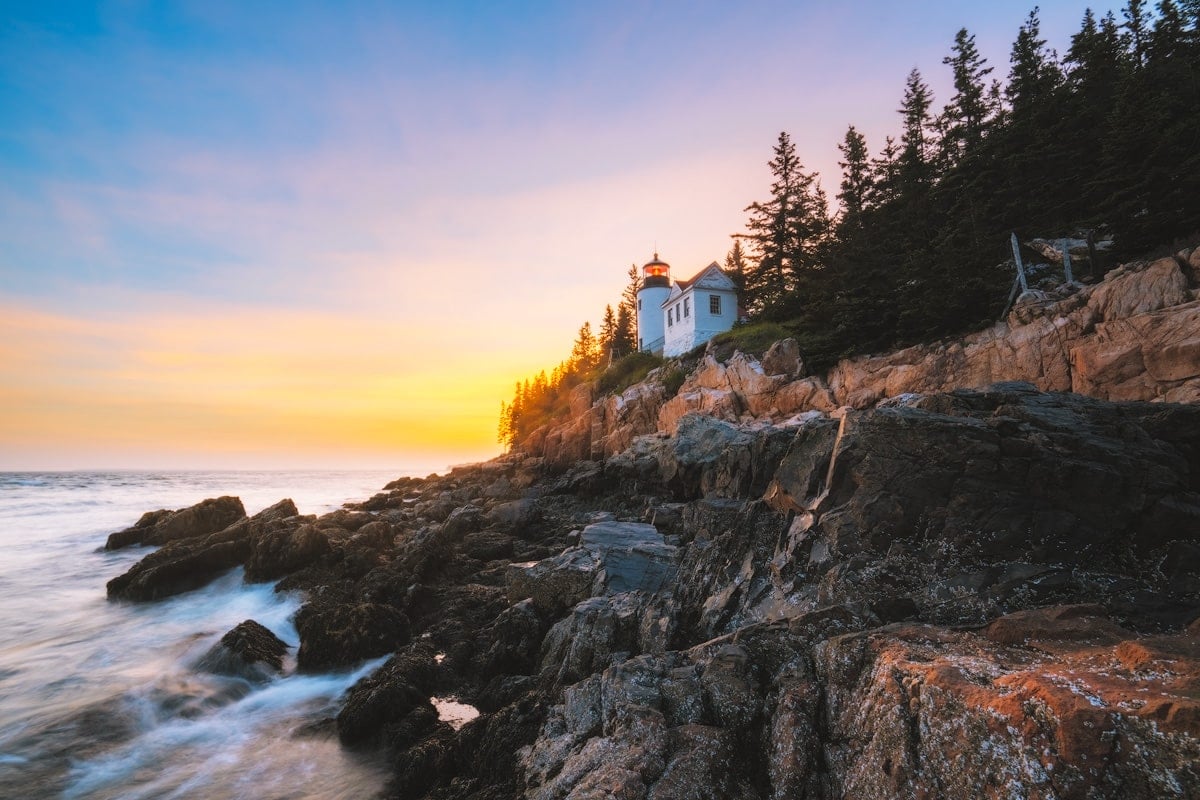
The iconic Bass Harbor Head Lighthouse at sunset, one of the most photographed spots in Acadia
4.2 Carriage Roads and Stone Bridges
Among Acadia National Park attractions, the historic Carriage Roads represent an extraordinary blend of human engineering and natural beauty. This network of 45 miles of crushed-rock pathways was a gift from philanthropist John D. Rockefeller Jr., who wanted to create automobile-free roadways where visitors could travel by horse and carriage through the heart of Mount Desert Island. Today, these meticulously designed roads provide perfect pathways for walking, biking, horseback riding, and cross-country skiing, offering a peaceful alternative to the park's occasionally congested main roads.
What makes the Carriage Roads truly special is their seamless integration into the landscape. During my cycling explorations, I've been repeatedly impressed by how the roads follow the natural contours of the land, offering ever-changing views of mountains, lakes, and forests without feeling intrusive. Rockefeller personally oversaw the design and construction of these roads between 1913 and 1940, insisting on careful attention to aesthetic details that remain impressive today.
The 17 stone bridges along the Carriage Roads deserve special mention—each one uniquely designed to complement its specific setting. My personal favorite is the Cobblestone Bridge near Jordan Pond, whose graceful arch is reflected in the stream below, creating a picture-perfect scene that seems plucked from a fairy tale. During my fall visit, the stone bridges framed by colorful foliage created some of the most stunning photographs from my entire trip.
For first-time visitors, I recommend renting bicycles in nearby Bar Harbor or from the Acadia Bike rental shop. The section of Carriage Roads around Eagle Lake and Jordan Pond offers a good introduction to the system, with moderate terrain and excellent views. If you have limited time, the loop around Witch Hole Pond provides a shorter experience (approximately 3.3 miles) that still showcases the brilliant engineering and natural beauty of these historic paths. As you travel these roads, take a moment to appreciate the vision that preserved these car-free corridors through some of Acadia's most beautiful landscapes.
4.3 Sieur de Monts Spring and Wild Gardens
While dramatic coastal views and challenging trails often dominate discussions of Acadia National Park attractions, the Sieur de Monts area represents a different but equally compelling facet of the park's appeal. This historic site serves as a window into both the natural and cultural history of Mount Desert Island, providing a perfect starting point for understanding the diverse ecosystems and human stories that make Acadia unique.
At the heart of the area lies the Sieur de Monts Spring, encased in a historical stone springhouse that commemorates the original 1916 creation of Sieur de Monts National Monument—the precursor to today's Acadia National Park. During my first visit, I was struck by how this modest spring represents the beginning of conservation efforts that ultimately preserved over 47,000 acres of this remarkable island.
Adjacent to the spring, the Wild Gardens of Acadia showcase more than 400 plant species native to Mount Desert Island, organized by habitat type. As an amateur botany enthusiast, I spent hours exploring these meticulously maintained gardens, which provide a condensed introduction to the diverse plant communities you'll encounter throughout the park. The gardens are particularly beautiful in late spring when wildflowers bloom in profusion, and again in early fall when woodland plants display their autumn colors.
The area is also home to the Abbe Museum, which presents the history and culture of Maine's native Wabanaki peoples. The museum's exhibits helped me understand how indigenous communities utilized the island's resources for thousands of years before European contact, adding important cultural context to my park experience. Just across the lawn, the Nature Center offers interactive displays about the park's natural history and ecology, making this an excellent stop for families with children.
For hikers, several trails begin from the Sieur de Monts area, including the relatively easy Jesup Path and Hemlock Road loop, which traverses a boardwalk through a white birch forest and hemlock grove. These trails offer an accessible introduction to Acadia's diverse forest ecosystems and are particularly lovely for wildlife viewing, especially songbirds during spring migration.
5. My Personal Acadia Experience
5.1 Seasonal Highlights Through the Year
Having visited Acadia National Park during all four seasons over the past decade, I've developed a deep appreciation for how dramatically the character of its attractions transforms throughout the year. Each season offers a distinct experience of this remarkable landscape, with unique highlights and considerations for visitors to keep in mind.
Spring in Acadia (May-June) brings a sense of renewal as the park awakens from winter's grip. My May visits have allowed me to witness the explosion of wildflowers along woodland trails and the return of migratory birds. The Jesup Path boardwalk through birch forest becomes a symphony of birdsong, while the Wild Gardens of Acadia burst with spring ephemeral flowers. Spring also offers the advantage of fewer crowds, though visitors should be prepared for variable weather and some trail closures due to mud and peregrine falcon nesting.
Summer (July-August) transforms Acadia into its most accessible but also busiest state. During my summer visits, I've learned to start days very early, often hitting popular trails by 6 AM to avoid crowds. The warmer months make ocean activities more appealing—kayaking around the Porcupine Islands provides a unique perspective of the park from the water. Summer evenings bring excellent wildlife viewing opportunities; my most memorable wildlife encounter happened during a summer twilight when a family of beavers swam past me while I sat quietly beside Jordan Pond.
Fall (September-October) remains my favorite season in Acadia, when the park explodes with color as maples, birches, and aspens turn brilliant shades of red, orange, and gold. The contrast between autumn foliage and the deep blue of the Atlantic creates breathtaking scenes, particularly along Ocean Path and atop Cadillac Mountain. Fall also brings cooler hiking temperatures and somewhat reduced crowds after Labor Day. During my October visits, I've enjoyed the simple pleasure of walking through fallen leaves on the Carriage Roads while savoring the crisp air scented with the distinctive autumn fragrance of Maine's forests.
Winter (November-April) reveals yet another face of Acadia, one of serene beauty and solitude. Though many park facilities close and Park Loop Road becomes largely inaccessible to vehicles, winter opens up opportunities for snowshoeing, cross-country skiing, and ice fishing on the park's lakes. My February visit allowed me to experience the transformed landscape of snow-covered granite and ice-encrusted shorelines with very few other visitors. The Carriage Roads, when groomed for winter use, provide excellent terrain for cross-country skiing through silent, snow-draped forests.
5.2 Ranger-Led Programs Worth Joining
Throughout my numerous visits to Acadia, some of my most memorable and educational experiences have come from participating in ranger-led programs. The National Park Service offers an impressive array of guided activities that provide deeper insights into Acadia National Park attractions than self-guided exploration alone can provide.
The Ranger-led Tide Pool Exploration stands out as particularly enlightening. During low tide at Ship Harbor, I joined a small group as a knowledgeable ranger helped us identify dozens of marine species—from tiny periwinkle snails to vibrant sea stars and elusive rock crabs. The ranger's explanation of how these creatures adapt to the challenging intertidal environment transformed what might have been a casual glance at tide pools into a fascinating biological lesson. This program is especially wonderful for families, as children are naturally drawn to discovering the miniature marine world.
For those interested in the night sky, Acadia's Stars Above program is truly special. The park boasts some of the darkest skies on the Eastern Seaboard, and during this evening program, rangers equipped with laser pointers guide visitors through the constellations while sharing both scientific information and cultural stories associated with the heavens. During my August visit, I was fortunate enough to attend this program during the Perseid meteor shower—watching shooting stars streak across the sky while learning about celestial navigation made for an unforgettable evening.
The Carriage Road Explorations program gave me a new appreciation for the history and engineering behind these remarkable pathways. Our ranger guide pointed out architectural details I would have otherwise missed and shared fascinating stories about John D. Rockefeller Jr.'s vision and the skilled craftsmen who built the roads and bridges. Learning about the careful planning that went into preserving scenic views and working with the natural topography enhanced my appreciation of these historic routes.
I've also benefited immensely from the shorter ranger talks offered at various locations throughout the park. At Thunder Hole, a ranger's explanation of the geology behind this natural phenomenon gave me a deeper understanding of the forces at work. Similarly, a brief presentation about peregrine falcon recovery at the Precipice Trail helped me understand why seasonal trail closures are so important for these once-endangered birds.
5.3 Hidden Gems Most Visitors Miss
Beyond the well-known Acadia National Park attractions that appear in every guidebook, I've discovered several lesser-known treasures that offer equally rewarding experiences without the crowds. These hidden gems provide opportunities to experience Acadia's magic in more peaceful settings, often just a short distance from the park's busier areas.
The Schoodic Peninsula, representing the only portion of Acadia located on the mainland, remains surprisingly uncrowded despite its spectacular scenery. During my mid-summer visit, when Park Loop Road was bumper-to-bumper with traffic, I made the hour-long drive to Schoodic and found myself practically alone on its pink granite shores. The 6-mile one-way loop road offers stunning coastal views, while the short hike to Schoodic Head provides panoramic vistas of Mount Desert Island across the water. The dramatic wave action at Schoodic Point rivals anything at Thunder Hole, yet you might have this natural spectacle all to yourself.
On Mount Desert Island itself, the Ship Harbor Trail is a personal favorite that many visitors overlook. This gentle 1.3-mile figure-eight loop alternates between fragrant spruce forest and a protected harbor with fascinating tide pools. During my last visit, I spent a magical evening here watching harbor seals play in the water while the setting sun painted the granite shoreline in warm hues—all without another visitor in sight.
The Perpendicular Trail on the "quiet side" of the island offers a unique hiking experience using stone steps crafted by the Civilian Conservation Corps in the 1930s. The meticulous stonework creates a staircase ascending the western side of Mansell Mountain, providing a less crowded alternative to the popular iron-rung trails but with similarly rewarding views from the summit.
For a truly peaceful experience, the network of hiking trails around Long Pond offers serene forest walks and lovely water views without the crowds found at Jordan Pond. During my afternoon hike on the Long Pond Trail, I spotted several loons and had the trail almost entirely to myself—a sharp contrast to the busy eastern side of the island.
Finally, I recommend exploring the tidal zones during low tide at Wonderland Trail or Hunter's Beach—these hidden coves contain fascinating tide pools teeming with marine life, yet they receive just a fraction of the visitors drawn to the better-known Sand Beach. As a park ranger once told me, "The best parts of Acadia are often just around the corner from where most people stop looking."
6. Essential Gear for Your Acadia Visit
6.1 Hiking Equipment You'll Need
After numerous trips exploring Acadia National Park attractions in all conditions, I've refined my gear list to include essential items that enhance both safety and enjoyment on the trails. The varied terrain of Acadia—from smooth carriage roads to challenging iron-rung routes—demands thoughtful preparation.
Quality hiking boots with excellent traction are non-negotiable for Acadia's granite surfaces, which can become treacherously slippery when wet. After losing my footing on Penobscot Mountain during a light rain, I invested in the Salomon X Ultra 3 Mid GTX Hiking Boots, which have provided outstanding grip on Acadia's challenging terrain. The waterproof Gore-Tex construction has kept my feet dry through unexpected rain showers and stream crossings, while the ankle support has prevented injuries on uneven trails.
A reliable daypack is essential for carrying water, snacks, and safety essentials. The Osprey Talon 22 Hiking Backpack has become my trusted companion on Acadia trails. Its ventilated back panel prevents excessive sweating during summer hikes, while multiple compartments help organize gear. The integrated rain cover has saved my equipment during sudden downpours, which can occur even on seemingly clear days in coastal Maine.
Navigation tools are critical, as cell service is unreliable throughout the park. I always carry the National Geographic Trails Illustrated Acadia National Park Map, which is waterproof and tear-resistant. This detailed topographic map shows all official trails, carriage roads, and facilities, helping me plan routes and identify alternative paths when necessary. During my last visit, this map proved invaluable when fog rolled in unexpectedly during a hike on Dorr Mountain, reducing visibility to near zero.
For the challenging iron-rung trails like Beehive and Precipice, lightweight gloves provide better grip and hand protection. I use simple G & F Products Nitrile Coated Work Gloves, which offer sufficient grip while maintaining dexterity for navigating the metal rungs and ladders. These inexpensive gloves have prevented painful blisters and provided confidence when traversing exposed sections of these thrilling routes.
Finally, don't underestimate the importance of hiking poles, especially for Acadia's steep descents. The TrailBuddy Trekking Poles have saved my knees countless times on long descents like the back side of Cadillac Mountain. These adjustable poles collapse for easy storage when not needed (such as during iron-rung sections) and provide stability on loose or wet surfaces. During my rainy spring visit, these poles prevented several potential falls on slippery granite surfaces.
Check Price on Amazon: Salomon Hiking Boots
6.2 Photography Gear for Capturing Acadia
Acadia National Park attractions offer extraordinary photographic opportunities in every season. From dramatic coastlines to intimate forest scenes, capturing Acadia's beauty requires thoughtful preparation. After numerous photography-focused trips to the park, I've refined my gear recommendations for both serious photographers and casual shooters looking to preserve their memories.
A versatile weather-resistant camera is essential for Acadia's variable coastal conditions. I've found the Sony Alpha a6000 Mirrorless Digital Camera strikes an excellent balance between image quality, portability, and durability. Its compact size makes it easy to carry on long hikes, while its image quality rivals much larger DSLRs. The electronic viewfinder proves invaluable in bright sunlight when LCD screens become difficult to see, such as when shooting midday at Jordan Pond or Sand Beach.
For landscape photography, a sturdy tripod is non-negotiable, especially for sunrise at Cadillac Mountain or sunset at Bass Harbor Lighthouse. The Manfrotto Befree Travel Tripod has become my trusted companion. Its carbon fiber construction provides stability in coastal winds while remaining lightweight enough to carry on longer hikes. During a particularly windy sunset session at Otter Cliff, this tripod kept my camera steady while other photographers struggled with camera shake.
A polarizing filter dramatically improves outdoor photography by reducing glare and enhancing colors, particularly useful when photographing Acadia's reflective coastal scenes and forest foliage. I use the B+W 77mm Circular Polarizing Filter, which noticeably enhances the blue of the sky and reduces glare on water surfaces. The difference was striking when photographing Jordan Pond with the Bubbles in the background—with the filter, the reflection became crystal clear and the autumn foliage vibrant.
For protection against Acadia's frequent fog and unexpected rain showers, I recommend the Altura Photo Professional Rain Cover. This inexpensive accessory has saved my equipment numerous times, most memorably during a sudden downpour while photographing Thunder Hole. Unlike plastic bags or makeshift covers, this purpose-built rain cover allows continued access to camera controls while keeping moisture away from sensitive electronics.
Finally, don't overlook the importance of a comfortable camera bag designed for hiking. The Lowepro ProTactic Camera Bag provides excellent organization and protection while remaining comfortable during long days on the trail. Its weatherproof construction has kept my gear dry during foggy mornings at Otter Point and dusty afternoons on carriage roads. The modular interior allows customization based on the equipment needed for each day's shooting plans.
6.3 Weather-Appropriate Clothing
Maine's weather is famously changeable, and nowhere is this more evident than in Acadia National Park. After being caught unprepared during my first visit—shivering through a foggy summer morning in cotton clothing—I've developed a strategic approach to dressing for Acadia's variable conditions. The right clothing can make the difference between an enjoyable day exploring Acadia National Park attractions and a miserable experience cut short by weather.
The layering system is essential for Acadia in any season. I start with a moisture-wicking base layer like the SmartWool Merino 150 Base Layer, which regulates temperature and continues insulating even when damp from fog or perspiration. During a chilly morning hike up Cadillac Mountain, this layer kept me comfortable through significant temperature changes as I ascended from the cool forest to the windy, exposed summit.
A reliable waterproof shell is perhaps the most important clothing item for Acadia. The coastal location means precipitation can develop quickly, and ocean fog frequently rolls in without warning. The Marmot PreCip Eco Rain Jacket has proven its worth countless times during my Acadia adventures. Lightweight enough to carry in my pack and fully waterproof with sealed seams, this jacket kept me dry during an unexpected thunderstorm that developed while I was exploring the remote western side of the island, far from shelter.
Footwear considerations extend beyond hiking boots. Water shoes are invaluable for tide pooling expeditions and exploring rocky beaches. After slicing my foot on a barnacle-covered rock during my first visit, I now always pack KEEN Newport H2 Water Sandals. These provide excellent grip on wet surfaces and protect toes from sharp rocks while allowing water drainage—perfect for exploring the tide pools at Ship Harbor or the cobble beaches near Otter Cliff.
Sun protection is often overlooked in Maine but critically important, especially when on or near water where reflection intensifies UV exposure. A wide-brimmed hat like the Columbia Bora Bora Booney Hat provides face and neck protection during long days of coastal hiking. The light color and ventilation panels prevent overheating, while the adjustable chin strap prevents loss during the frequent windy conditions atop Acadia's exposed summits.
Finally, don't underestimate the importance of good gloves and a warm hat for Acadia's summits, which can be significantly colder and windier than lower elevations. Even in summer, I always pack lightweight gloves and a beanie hat for sunrise outings to Cadillac Mountain, where pre-dawn temperatures can be surprisingly chilly. During my October visit, temperatures at the summit before sunrise hovered around freezing, making these small items essential for comfort while waiting for the first light to break over the Atlantic.
7. Conclusion
Acadia National Park stands as a testament to the foresight of conservation pioneers who recognized the irreplaceable value of Mount Desert Island's natural wonders. After exploring dozens of national parks across the country, I can confidently say that Acadia offers a unique combination of accessible wilderness, diverse ecosystems, and cultural history that distinguishes it from any other protected landscape in America.
The park's remarkable diversity of Acadia National Park attractions ensures that visitors of all ages, abilities, and interests can find meaningful connections to nature. From challenging hikes along exposed cliffs to gentle strolls on historic carriage roads, from tidepooling adventures along rocky shores to quiet contemplation beside pristine woodland ponds, Acadia rewards exploration and reveals new treasures with each visit.
What makes Acadia truly special is the harmonious relationship between human history and natural processes. The carriage roads, hiking trails, and viewpoints don't detract from the landscape but rather enhance our ability to experience it mindfully. John D. Rockefeller Jr., George Dorr, Charles Eliot, and other early advocates for the park understood that thoughtful access could foster appreciation and conservation rather than degradation.
Throughout my many visits to Acadia across different seasons and years, I've developed a deep personal connection to this remarkable place. I've witnessed spectacular sunrises from Cadillac Mountain, discovered hidden tide pools teeming with marine life, followed deer paths through autumn-colored forests, and found solitude on windswept granite domes. Each experience has added to my understanding of why this landscape deserves our protection and careful stewardship.
As you plan your own journey to Acadia National Park attractions, I encourage you to approach with both a sense of adventure and a commitment to responsible visitation. Follow Leave No Trace principles, respect wildlife and fellow visitors, and consider exploring beyond the most popular sites to discover your own special connection to this extraordinary place. Whether you have a few days or a few weeks to explore, Acadia offers endless opportunities for discovery, reflection, and rejuvenation.
The preservation of Acadia National Park represents one of America's great conservation success stories, and each visitor becomes part of that ongoing narrative. By experiencing these landscapes thoughtfully and advocating for their continued protection, we ensure that future generations will have the opportunity to forge their own connections to this remarkable meeting place of mountains and sea. As you discover your own favorite spots among Acadia National Park attractions, may you be inspired to become part of this proud legacy of stewardship and appreciation.
User Reviews
"My wife and I followed this guide for our first trip to Acadia and it was absolutely perfect. The tip about visiting Thunder Hole 1-2 hours before high tide was spot on - we got completely splashed and loved every second! The recommendation for the Precipice Trail was also great, though definitely not for the faint of heart. This guide helped us experience Acadia like locals instead of tourists."
— Michael S., Reddit
"As a photographer, I found the section on photography gear and locations incredibly helpful. I followed the advice to visit Bass Harbor Head Lighthouse an hour before sunset and got the most amazing shots! The polarizing filter recommendation made a huge difference in the quality of my photos of Jordan Pond. This guide basically planned my entire week in Acadia and I couldn't be more grateful."
— Teresa L., Amazon review
"The 'Hidden Gems' section of this guide was worth its weight in gold. We visited during peak summer season but were able to escape the crowds by exploring Ship Harbor and the Schoodic Peninsula as recommended. Our children loved tide pooling and the ranger programs. The practical advice about what to pack saved us from being unprepared for the quickly changing Maine weather. Couldn't recommend this guide more highly!"
— Jamie W., Quora
8. Frequently Asked Questions
What are the must-see attractions in Acadia National Park for first-time visitors?
First-time visitors should prioritize experiencing the park's iconic landscapes: watching sunrise from Cadillac Mountain (reservation required during peak season), driving the Park Loop Road, exploring Jordan Pond with views of the Bubbles, witnessing Thunder Hole during incoming tide, and walking the Ocean Path along the dramatic coastline. If you're physically capable, adding one of the iron-rung trails like the Beehive provides an unforgettable adventure. Finally, make time for popovers at the Jordan Pond House—a century-old tradition that combines culinary delight with spectacular scenery. With these experiences, you'll capture the essence of what makes Acadia special while leaving plenty to discover on future visits.
When is the best time to visit Acadia National Park?
The optimal time to visit depends on your preferences and tolerance for crowds. September through mid-October offers a magical combination of pleasant temperatures, reduced crowds (compared to summer), and spectacular fall foliage, making it my top recommendation. Summer (June-August) provides the warmest weather and full access to all facilities, but comes with significant crowds and requires advance planning for accommodations. Late May and early June offer a wonderful spring awakening with wildflowers and fewer visitors, though some facilities may not yet be open. Winter transforms Acadia into a serene landscape perfect for snowshoeing and cross-country skiing, but requires proper preparation for cold conditions and limited services. For the best balance of good weather, full access, and manageable crowds, aim for weekdays in early September.
How many days should I spend in Acadia National Park?
While you could see major highlights in a rushed single day, I recommend a minimum of three full days to appreciate Acadia National Park attractions properly. This allows time to experience the eastern side of Mount Desert Island (Park Loop Road and major sites), explore the quieter western side (including Bass Harbor Head Lighthouse), and potentially visit the Schoodic Peninsula section of the park. With three days, you can also build in flexibility for weather changes, which are common in coastal Maine. For hikers wanting to tackle several trails or photographers hoping to capture different lighting conditions, five to seven days would provide a more relaxed and comprehensive experience. Remember that Acadia rewards slow exploration—some of its most magical moments come from unplanned discoveries while wandering a carriage road or sitting quietly beside a woodland pond.
Is Acadia National Park suitable for families with young children?
Acadia is exceptionally family-friendly, offering numerous attractions appropriate for children of all ages. Young children particularly enjoy exploring the tide pools at Ship Harbor or Wonderland, where they can discover starfish, hermit crabs, and other fascinating marine creatures. The relatively flat Ocean Path provides an accessible introduction to Acadia's dramatic coastline, while the carriage roads offer safe, vehicle-free cycling opportunities. Junior Ranger programs at the visitor centers engage children with age-appropriate activities that make learning about the park fun and interactive. Families should also consider ranger-led programs like "Stars Above Acadia" or "Animal Signs," which are designed with children in mind. While the iron-rung trails aren't suitable for young children, there are plenty of gentler alternatives like the Jordan Pond Path or Witch Hole Pond loop that still provide memorable outdoor experiences for the whole family.
Do I need a car to visit Acadia National Park?
While having a car provides maximum flexibility for exploring Acadia National Park attractions, it's possible to enjoy the park without one during the summer season. From late June through October, the free Island Explorer shuttle system connects Bar Harbor with major park destinations, including the Hulls Cove Visitor Center, Jordan Pond House, Sieur de Monts Spring, and various campgrounds and trailheads. The shuttles are equipped with bike racks, allowing you to combine cycling and shuttle use for greater range. Staying in downtown Bar Harbor places you within walking distance of the Village Green, where multiple shuttle routes begin. For visitors arriving without a car, options include flying into Hancock County-Bar Harbor Airport (10 miles from Bar Harbor) or taking bus service from Boston to Bar Harbor. However, reaching the Schoodic Peninsula section of the park and exploring the "quiet side" of Mount Desert Island is much more challenging without private transportation, so consider car rental for at least a portion of your visit if these areas interest you.
Plan Your Perfect Acadia Trip: Get The Essential Map & Guide on Amazon
Related Articles You Might Enjoy
- Top 10 Hiking Trails in Acadia National Park: From Easy Strolls to Challenging Adventures
- Scenic Drives in Acadia National Park: The Ultimate Guide to Breathtaking Vistas
- 15 Delightful Things to Do in Bar Harbor Near Acadia National Park
- Unforgettable Viewpoints: The Most Spectacular Vistas in Acadia National Park
- Family-Friendly Activities in Acadia National Park: Creating Memories with Kids
- Seasonal Guide: The Best Time to Visit Acadia National Park Attractions