

The Ultimate Guide to Acadia National Park in Fall: Experience Nature's Colorful Spectacle
When is the Best Time to Visit Acadia National Park in Fall
Timing your Acadia National Park fall visit perfectly can make all the difference between seeing vibrant, peak foliage or missing nature's spectacular color show entirely. Based on my multiple autumn visits and conversations with park rangers, I can confidently say that mid-October is typically the sweet spot for peak fall colors in Acadia.
While the exact timing varies slightly each year depending on weather conditions, I've found that the peak foliage period in Acadia generally falls between October 8-22. During this magical window, you'll witness the park's hardwood trees—maples, birches, and beeches—displaying their most vibrant reds, oranges, and golds against the backdrop of evergreens and the stunning Atlantic coastline.

Jordan Pond's spectacular fall colors

Carriage roads surrounded by autumn colors
Fall Color Progression in Acadia
The color transformation in Acadia National Park fall season follows a predictable pattern:
- Late September: The first hints of color begin to appear, primarily yellows and light oranges. It's still relatively green but you'll notice changes starting, especially in the higher elevation areas.
- Early October (1st week): Color intensifies with approximately 30-50% of trees showing change. This is when the transition becomes more noticeable with deeper oranges and hints of red appearing.
- Mid-October (2nd and 3rd weeks): Peak foliage season! Expect a spectacular display with 70-100% color change. This is when the entire landscape transforms into a painter's palette of vibrant reds, oranges, and golds.
- Late October: Past peak but still beautiful. Many trees will have dropped their leaves, but you'll still find pockets of color, especially in protected areas.
Pro Tip: Check Fall Foliage Reports
Before finalizing your travel dates, I highly recommend checking Maine's official Fall Foliage Report which is updated weekly during autumn. I've also found that following the hashtag #AcadiaFall on Instagram provides real-time glimpses of current conditions from other visitors.
Benefits of Visiting Acadia in Fall
Beyond the spectacular colors, there are several compelling reasons to plan your Acadia National Park fall visit during autumn:
- Fewer crowds: After Labor Day, the summer crowds diminish significantly, especially on weekdays. I've hiked popular trails in mid-October and encountered only a handful of other hikers.
- Comfortable hiking temperatures: Fall brings cooler temperatures (typically 45-65°F during daytime), which makes for more comfortable hiking conditions compared to summer's heat and humidity.
- Wildlife viewing: Fall is an active time for wildlife as animals prepare for winter. Keep your eyes open for deer, foxes, and various migratory birds.
- Stunning photography opportunities: The combination of coastal scenery, granite mountains, and vibrant foliage creates unparalleled photography conditions.
- Better accommodation availability: While still popular, you'll have an easier time finding accommodations in Bar Harbor during fall compared to the peak summer season.
Top Fall Hiking Trails in Acadia National Park
Experiencing the Acadia National Park fall colors up close on a hiking trail is truly one of life's great pleasures. Over my years of autumn visits, I've hiked nearly every trail in the park and have identified the absolute best paths for experiencing the fall foliage spectacle.
1. Beehive Loop Trail (Moderate to Difficult)
The Beehive Loop Trail offers one of the most rewarding combinations of thrilling hiking and spectacular fall foliage views. This 1.4-mile loop features iron rungs, ladders, and granite steps as you ascend the face of The Beehive. While challenging and not suitable for those with a fear of heights, the panoramic views of the Acadia National Park fall colors spreading across the landscape to the ocean beyond are simply breathtaking.
During my last October hike here, the contrast between the fiery red maples, golden birches, and the deep blue of the Atlantic Ocean created a scene I'll never forget. Just be aware that the iron rungs can be slippery when wet, so check weather conditions before attempting this trail.
Safety First!
If you're uncomfortable with heights or hiking with small children, consider the Bowl Trail instead. It connects to the backside of the Beehive and offers similar spectacular views of fall foliage without the exposed sections.
2. Jordan Pond Path (Easy)
For those seeking a more relaxed fall foliage experience, the Jordan Pond Path is perfect. This 3.3-mile loop around the pristine Jordan Pond offers consistently stunning views of the colorful trees reflecting in the crystal-clear waters. With the iconic Bubble Mountains as a backdrop, this flat, well-maintained trail provides some of the most photogenic fall scenes in Acadia National Park.
I always recommend visiting in the early morning when the water is typically calm and the reflection of the fall colors is at its most vivid. Afterward, treat yourself to the famous popovers at the Jordan Pond House—a perfect way to conclude your fall hike in Acadia.
3. Jesup Path and Hemlock Road Loop (Easy)
If you're looking for the most concentrated fall color experience, don't miss the Jesup Path. This often-overlooked 1.5-mile loop features a wooden boardwalk through a vibrant maple forest that creates a stunning tunnel of autumn colors. During peak foliage, this area transforms into what I can only describe as a cathedral of red, orange, and yellow hues.
The boardwalk section makes this trail accessible for almost everyone, and the White Birch forest section provides a striking contrast with its white trunks against the colorful leaves. Located near the Sieur de Monts Spring area, this trail consistently offers the most intense Acadia National Park fall colors I've experienced.
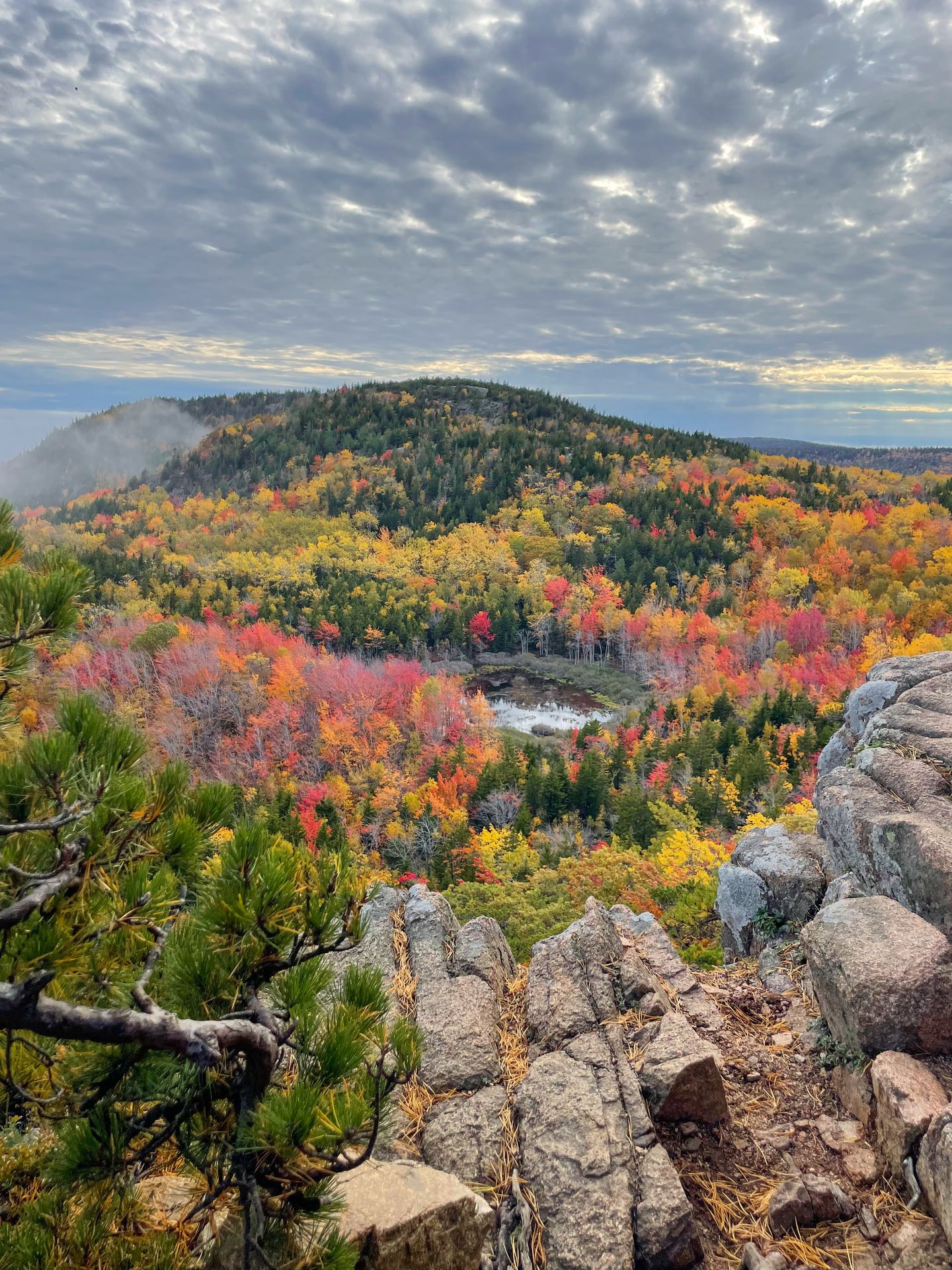
Beehive Trail during peak fall colors
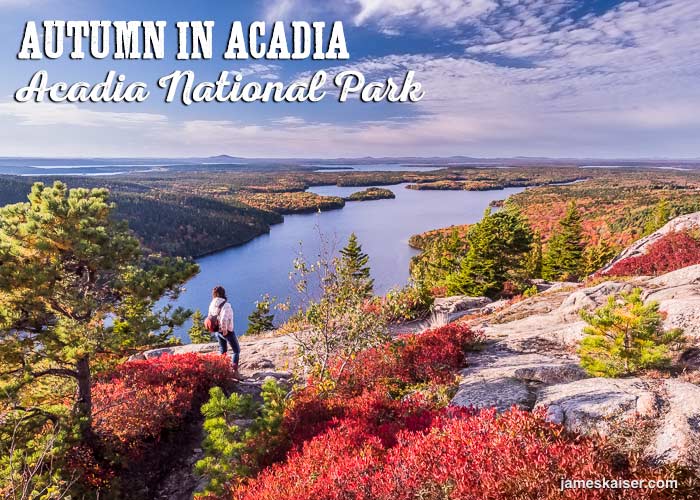
Jordan Pond surrounded by autumn foliage
4. Cadillac Mountain North Ridge Trail (Moderate)
For a more challenging hike with panoramic views, the 4.4-mile North Ridge Trail to Cadillac Mountain's summit is exceptional during fall in Acadia National Park. As you climb, you'll be treated to increasingly expansive views of the colorful landscape below, with the ocean and islands providing a stunning backdrop to the fall foliage.
I particularly love this trail in late afternoon when the warm autumn light enhances the vibrant colors. If you're up for an adventure, hiking up for sunset provides an unforgettable experience as the fading light casts a golden glow across the fall colors in Acadia. Just remember to bring headlamps for the descent!
5. Ocean Path (Easy)
For a unique combination of coastal scenery and fall foliage, the 4-mile out-and-back Ocean Path from Sand Beach to Otter Point is unmatched. This gentle trail follows the dramatic coastline while offering views of colorful trees contrasting with the deep blue Atlantic and pink granite shoreline.
During my fall visits to Acadia National Park, I've found that the section around Thunder Hole and Monument Cove offers particularly striking views where you can see the brilliant autumn colors cascading down the hillsides all the way to the ocean's edge. This trail is also excellent for those with limited mobility, as the first sections are quite accessible.
Must-See Photography Spots for Fall Colors in Acadia
As a photography enthusiast who has spent countless hours capturing the Acadia National Park fall spectacle, I've discovered several locations that consistently yield stunning autumn images. These spots combine the park's unique landscapes with brilliant fall colors to create truly memorable photographs.
Bass Harbor Head Light
The Bass Harbor Head Lighthouse is arguably the most iconic photography location in Acadia, and it becomes even more magical during fall. The classic view from the rocks below the lighthouse captures this historic structure perched on granite cliffs with colorful maples and oaks framing the scene.
For the best fall photography in Acadia, arrive about an hour before sunset. The late afternoon light bathes the lighthouse and surrounding foliage in a golden glow that's simply perfect for photography. I've found that a wide-angle lens (16-35mm) works best to capture both the lighthouse and the colorful trees around it.
Cadillac Mountain Summit
While most famous for sunrise, Cadillac Mountain offers spectacular fall foliage views throughout the day. The 360-degree panorama from the summit showcases the entire island awash in autumn colors, with Bar Harbor, the Porcupine Islands, and the mainland visible in the distance.
I especially recommend visiting in the late afternoon when the warm light enhances the red and orange hues across the landscape. For photography, bring a telephoto lens to capture detailed compositions of distant ridgelines displaying bands of color. Remember that fall weather in Acadia can be unpredictable, so check the summit conditions before heading up.

Bass Harbor Head Light with autumn colors

Panoramic view of Acadia's fall landscape
Jordan Pond with The Bubbles
The view across Jordan Pond toward the Bubble Mountains is one of Acadia National Park's signature scenes, and it reaches peak beauty during fall. The still waters of the pond create perfect reflections of the surrounding trees dressed in autumn colors, with the distinctive rounded shapes of the Bubbles providing a compelling focal point.
For the best photography results, visit early in the morning when the water is typically calmest and mist often hovers over the pond. A polarizing filter is extremely helpful here to manage reflections and enhance the vibrant colors. The classic composition from the rocks near the Jordan Pond House restaurant captures the symmetry of the scene beautifully.
Bubble Rock
For a unique fall photograph that combines geology with autumn colors, hike the short trail to Bubble Rock. This glacial erratic perched precariously on the edge of South Bubble Mountain offers a foreground element with a sweeping backdrop of Eagle Lake surrounded by vibrant fall foliage.
I've found that mid-morning light works well here, and a wide-angle lens helps capture both the boulder and the colorful landscape beyond. The relatively short hike (about 1 mile from the parking area) makes this accessible for most photographers, and the reward-to-effort ratio is exceptional during peak Acadia National Park fall colors.
Otter Cove
Otter Cove offers a perfect combination of coastal scenery and fall colors that's a bit less photographed than some other park locations. This sheltered inlet along the Park Loop Road features a small bridge crossing, with colorful maples and birches contrasting beautifully against the blue water below.
For photographers, the best time to capture this scene is in the morning when the light illuminates the eastern slopes of the surrounding hills. Including elements like the bridge or lobster boats moored in the cove adds a sense of place and scale to your Acadia fall images. Don't miss the small pullouts along this section of the Park Loop Road for various perspectives.
Photography Tip
For the richest fall colors in your photographs, shoot during the "golden hours" shortly after sunrise or before sunset. A polarizing filter can reduce glare and increase color saturation, especially when photographing foliage against water or sky.
What to Expect: Acadia National Park Fall Weather
Understanding the typical Acadia National Park fall weather patterns is crucial for planning a successful visit. As someone who has experienced everything from perfect sunny days to sudden coastal storms during my autumn trips, I can attest that being prepared for variable conditions is essential.
Temperature Ranges
Fall in Acadia brings moderate temperatures that are ideal for hiking and outdoor exploration. Based on historical data and my personal experiences:
- September: Daytime highs of 65-75°F (18-24°C), nighttime lows of 45-55°F (7-13°C)
- October: Daytime highs of 55-65°F (13-18°C), nighttime lows of 35-45°F (2-7°C)
- November: Daytime highs of 45-55°F (7-13°C), nighttime lows of 30-40°F (-1-4°C)
These moderate temperatures create comfortable conditions for exploring Acadia in fall, but the significant drop between day and night temperatures means layering is essential. I've learned from experience that having a warm jacket available for early mornings and evenings is non-negotiable, even during September visits.
Precipitation and Fog
Fall in coastal Maine brings variable precipitation patterns. October typically receives about 4-5 inches of rain, often coming as scattered showers rather than prolonged downpours. However, what makes Acadia National Park's fall weather distinctive is the fog.
The meeting of cool autumn air with the relatively warm ocean waters creates frequent fog conditions, particularly in the mornings. While this might seem disappointing at first, I've found that foggy conditions actually enhance the mystical quality of the fall landscape. Some of my most memorable photographs capture colorful trees emerging from swirling mist along the park's coastline.
Weather Variability
During my last October visit, I experienced temperatures ranging from 34°F to 68°F within the same week. Pack accordingly and check the National Weather Service forecast for Bar Harbor before each day's adventure.
Wind Conditions
Fall brings increasingly windy conditions to Acadia National Park, particularly along the exposed coastal sections and at higher elevations like Cadillac Mountain. These winds contribute to the changing foliage as they help shake loose colorful leaves, creating those picturesque "falling leaves" moments.
From a practical standpoint, the increased wind means you should be prepared when hiking exposed trails or planning sunrise visits to Cadillac Mountain. I always bring a windproof jacket and secure hat when visiting during Acadia National Park's fall season. These winds also affect photography—bring a sturdy tripod if you plan serious photography sessions.
Daylight Hours
An important but often overlooked aspect of fall weather in Acadia National Park is the rapidly decreasing daylight hours. By mid-October, sunset occurs around 6:00 PM, and dawn breaks around 7:00 AM, giving you approximately 11 hours of daylight for exploration.
This reduction in daylight means planning your days efficiently becomes important. I've found that organizing activities with the shorter days in mind—perhaps saving longer hikes for full-day excursions and reserving shorter trails or scenic drives for late afternoon—helps maximize your enjoyment of Acadia's fall scenery.
Essential Gear for Your Acadia Fall Adventure
Properly equipping yourself for the variable conditions of Acadia National Park in fall can make the difference between a comfortable, memorable experience and a miserable one. Having learned through both wonderful experiences and occasional discomforts over my many autumn visits, here's my carefully curated list of essential gear for your fall Acadia adventure.
Hiking Essentials
The foundation of any successful fall trip to Acadia National Park starts with appropriate hiking gear. The park's varied terrain—from smooth carriage roads to challenging granite scrambles—demands footwear and equipment that can handle diverse conditions.
- Waterproof Hiking Boots: Columbia Newton Ridge Plus Hiking Boots offer excellent ankle support and waterproofing, essential for Acadia's occasionally wet and always varied terrain. I've traversed countless miles of Acadia's trails in these boots and appreciate their grip on both wet granite and muddy paths.
- Trekking Poles: Cascade Mountain Tech Trekking Poles provide stability on steep descents and creek crossings. During my hike down the North Ridge Trail last fall, these poles saved my knees from the punishment of the long descent.
- Daypack: Osprey Daylite Pack offers the perfect balance of capacity and comfort for day hikes. Its hydration compatibility and multiple compartments keep water and essentials organized during long days on the trail.
Clothing for Variable Weather
The key to comfort during Acadia's fall weather is layering. Temperatures can fluctuate by 30°F in a single day, and conditions on exposed mountaintops differ dramatically from sheltered forest trails.
- Base Layers: Smartwool Merino 150 Base Layer provides warmth without bulk and continues insulating even when damp—perfect for foggy morning hikes when perspiration is inevitable.
- Insulating Layer: Columbia Steens Mountain Fleece offers versatile warmth that works well as either a mid-layer on cold days or an outer layer during milder conditions. I never visit Acadia in fall without this reliable piece.
- Waterproof Shell: Marmot Minimalist Rain Jacket provides essential protection against Acadia's unpredictable rain showers and coastal winds. Its GORE-TEX Paclite technology keeps you dry without overheating during active hiking.
- Hiking Pants: prAna Stretch Zion Pants offer the perfect combination of durability, quick-drying capability, and stretchy comfort for Acadia's fall hiking trails. Their versatility makes them suitable for everything from relaxed nature walks to challenging summit scrambles.
Gear Review from Fellow Hiker
"The Columbia Newton Ridge boots recommended by this guide were a lifesaver during our October visit to Acadia. Waterproof enough for dewy morning trails and comfortable enough for all-day hiking on the carriage roads. Best hiking purchase I've made in years!"
- Sarah T., Reddit hiking community
Amazon Customer Feedback
"The Osprey Daylite pack has been my constant companion for three years of national park visits. The perfect size for day hikes in Acadia—fits water, snacks, extra layers, and camera gear without feeling bulky or uncomfortable."
- Michael R., verified purchase review
Photography Equipment
Acadia National Park in fall is a photographer's paradise, and having the right equipment helps capture those magical moments. While professional gear isn't necessary, a few key items will significantly enhance your photography experience.
- Tripod: MeFOTO RoadTrip Tripod provides stability for sunrise/sunset shots and folds compactly for easy carrying on trails. The built-in monopod feature has proven particularly useful for quick setups along the Ocean Path.
- Filters: Circular Polarizing Filter enhances fall foliage colors by reducing glare and increasing saturation—especially effective when photographing colorful leaves against water or sky.
- Camera Protection: Peak Design Shell Camera Cover protects your equipment from Acadia's frequent misty conditions without hindering quick access for spontaneous shots.
Safety and Navigation
While preparing for fall in Acadia, never underestimate the importance of safety equipment. Shorter daylight hours and variable weather conditions mean preparation is essential.
- Headlamp: Black Diamond Spot Headlamp provides reliable illumination if your hike extends past sunset. During my last October visit, this headlamp guided our group safely down from Cadillac Mountain after an unexpectedly long sunset photography session.
- First Aid Kit: Adventure Medical Kits Day Tripper contains essential supplies for common trail injuries. The waterproof packaging is particularly valuable in Acadia's often damp conditions.
- Trail Map: While cell service has improved in recent years, never rely solely on digital maps. The National Geographic Acadia Trail Map is waterproof and includes detailed information about trail difficulties and points of interest.
Ranger Recommendation
During my conversation with Park Ranger Sarah at the Visitor Center last October, she emphasized the importance of carrying extra layers and a headlamp even on short hikes. "Weather changes quickly in Acadia during fall, and we regularly assist hikers who weren't prepared for temperature drops after sunset," she explained.
My Personal Experience: A Week in Autumn Paradise
There's something deeply personal about experiencing Acadia National Park in fall. The vibrant colors, crisp air, and sense of seasonal transition create moments that stay with you long after you've returned home. Let me share highlights from my most recent October adventure in this coastal Maine treasure.
Day 1: Arrival and First Impressions
I arrived in Bar Harbor on October 10th last year, perfectly timed for what the locals were calling "near-peak" foliage. Driving the final stretch of Route 3 into town, I was immediately struck by the intensity of colors—far more vivid than photographs can convey. The maple trees lining the roads blazed with fiery reds and oranges that seemed to glow from within.
After checking into a small bed and breakfast near downtown Bar Harbor (I highly recommend the Primrose Inn for its perfect location and fall-themed afternoon cookies), I couldn't resist a quick drive into the park along the Park Loop Road. Even in the fading afternoon light, the spectacle of yellow birch trees against the blue Atlantic Ocean created a scene so beautiful it hardly seemed real.
Insider Tip: Bar Harbor During Fall
While summer brings crowds and higher prices to Bar Harbor in the fall, October offers a perfect balance of lively atmosphere and breathing room. Many restaurants and shops remain open, but you'll find it much easier to get dinner reservations and parking spots. Don't miss the pumpkin spice popovers at Jordan Pond House—a seasonal twist on their famous specialty!
Day 3: Hiking Through a Living Painting
The highlight of my week was undoubtedly the day I dedicated to hiking the Bubbles and Jordan Pond. Starting early to catch the morning light, I witnessed an unforgettable scene at Jordan Pond: perfectly still waters creating mirror reflections of the vibrant foliage and Bubble Mountains, with wisps of mist hovering just above the surface.
The trail around the pond was relatively quiet—one of the benefits of visiting Acadia in fall rather than summer. As I hiked, the sunlight filtering through yellow and orange maple leaves created dappled patterns on the path that changed with each breath of wind. The forest felt alive, constantly shifting and revealing new combinations of color with every turn in the trail.
Ascending South Bubble, I was rewarded with panoramic views that showcased the diversity of Acadia's fall landscape—evergreen islands dotting the ocean beyond, mountains carpeted in reds and oranges, and the deep blue of Eagle Lake to the north. Sitting beside Bubble Rock, watching golden leaves occasionally float down from the canopy above, I experienced one of those perfect moments of connection with the natural world that make all travel worthwhile.
Day 5: Coastal Magic and Unexpected Wildlife
To experience the contrast between forest and shoreline foliage, I dedicated a full day to exploring the Ocean Path and surrounding trails. The morning began with heavy coastal fog—initially disappointing until I realized how it transformed the experience. The fog softened the landscape, creating an ethereal quality as colorful trees emerged and disappeared in the mist.
Near Thunder Hole, I encountered a small group of white-tailed deer grazing among brilliantly colored shrubs just yards from the crashing waves. This unexpected juxtaposition of wildlife, fall colors, and dramatic coastline perfectly encapsulated what makes Acadia National Park so special in autumn.
Later that afternoon, as the fog lifted, I hiked the short but rewarding Wonderland Trail near Bass Harbor. The path winds through a section of forest before opening to a rocky shoreline where the contrast between red blueberry bushes, golden grasses, and the deep blue Atlantic created a scene that demanded quiet contemplation.
The Best Fall Hikes in Acadia National Park
Day 7: Sunrise Farewell on Cadillac Mountain
For my final morning in Acadia, I secured a sunrise reservation for Cadillac Mountain (essential during fall in Acadia National Park—book well in advance!). Rising at 4:30 AM and driving the winding road in darkness built anticipation for what many consider a bucket-list experience.
As first light appeared on the horizon, the landscape below gradually revealed itself—islands emerging from darkness, then the subtle differentiation of land forms, and finally the explosion of color as sunlight struck the autumn foliage. The brilliant oranges and reds of maple trees seemed to catch fire with the first rays, creating a mosaic of color across the landscape that literally drew gasps from everyone present.
What struck me most was how the fall colors completely transformed the familiar topography of Acadia National Park. Ridgelines and valleys that might blend together in summer became distinctly defined by their unique palettes of autumn hues, revealing the complex tapestry of microclimates and forest types that make this park so ecologically diverse.
Descending from Cadillac and beginning my journey home, I carried with me not just photographs but sensory memories: the sound of leaves crunching underfoot, the scent of pine mixing with the subtle sweetness of fallen maple leaves, and the feeling of cool autumn air filling my lungs as I stood atop granite peaks. These are the gifts of fall in Acadia—experiences that remain vivid long after the journey ends.
Local Perspective
During my stay, I chatted with Tom, a Bar Harbor resident of 30 years, who shared: "Climate change has shifted our foliage season later over the decades. When I first moved here, peak colors reliably arrived by October 1st. Now we rarely see peak before the second week of October, and some years it stretches into the third week. The colors are still spectacular, but visitors should adjust their timing accordingly."
Frequently Asked Questions
When do the leaves change color in Acadia National Park?
The fall foliage progression in Acadia typically begins in late September with subtle changes, reaches peak colors in mid-October (usually between October 8-22), and begins to fade by late October. Higher elevations change first, followed by mid-elevations, with coastal areas often changing last. Weather conditions in the preceding summer (particularly rainfall amounts) can influence both timing and intensity of color changes. For the most accurate information, I recommend checking Maine's official fall foliage reports, which are updated weekly throughout autumn.
What are the best trails for fall foliage in Acadia?
For the most spectacular Acadia National Park fall colors, I recommend the Jesup Path for its concentrated maple forest with vibrant reds and oranges; Jordan Pond Path for reflections of colorful trees in still water; Beehive Trail for panoramic views of the autumn landscape (if you're comfortable with heights); and the Bubbles Trail for a moderate hike with diverse forest and lake views. For those seeking an accessible experience, the carriage roads near Eagle Lake and Witch Hole Pond offer gentle grades through beautiful hardwood forests with peak fall color. The best fall hikes in Acadia combine some elevation gain for broader views with sections through diverse forest types.
Is October too cold for camping in Acadia?
Camping in Acadia during fall is absolutely feasible with proper preparation. October temperatures typically range from daytime highs of 55-65°F (13-18°C) to nighttime lows of 35-45°F (2-7°C). I've camped at Blackwoods Campground in mid-October and found the experience wonderful, though nights required a quality sleeping bag rated for at least 30°F. The main consideration is that facilities begin closing seasonally—Seawall Campground typically closes in early October, while Blackwoods remains open year-round with reduced services after Columbus Day. The trade-off for cooler temperatures is significantly fewer crowds and the magical experience of being surrounded by fall colors from the moment you unzip your tent in the morning.
Do I need a reservation to visit Acadia in fall?
Vehicle reservations are required for the Cadillac Summit Road from May through late October, including the fall foliage season. These reservations are especially important if you want to experience sunrise from Cadillac Mountain. Reservations can be made through recreation.gov up to 90 days in advance. For sunrise slots during peak foliage, I recommend booking as early as possible as they fill quickly. The good news is that the rest of Acadia National Park does not require timed entry reservations in fall, though you still need to purchase a park pass. If Cadillac Mountain reservations are unavailable, consider Beech Mountain or Penobscot Mountain for alternative sunrise/sunset viewing locations.
What should I wear for hiking in Acadia during fall?
The key to comfortable fall hiking in Acadia National Park is layering. I recommend starting with moisture-wicking base layers (merino wool is excellent), adding an insulating mid-layer like a fleece jacket, and carrying a waterproof/windproof outer shell. Temperatures can fluctuate significantly throughout the day, and conditions on mountain summits are often much colder and windier than in sheltered valleys. Sturdy, waterproof hiking boots are essential, as trails can be slippery with fallen leaves and morning dew or frost. Don't forget a warm hat and gloves, especially for early morning or late afternoon hikes. For a complete guide on what to pack, see my detailed article on what to wear in Acadia in fall.
Conclusion
As our journey through Acadia National Park's fall splendor comes to an end, I'm reminded of why this season captivates so many visitors year after year. The transformation of Acadia's landscape during autumn is more than just a visual spectacle—it's a multisensory experience that engages all aspects of our connection with nature.
The unique combination of coastal scenery and vibrant fall foliage creates a landscape unlike any other in America. Where else can you stand on a granite summit, surrounded by a sea of crimson and gold leaves, while gazing out at the vast blue Atlantic dotted with evergreen islands? This juxtaposition of environments is what makes Acadia National Park in fall so special and why it deserves a prominent place on every nature lover's bucket list.
I've found that the fall experience in Acadia offers something for everyone. Whether you're an avid hiker seeking challenging trails with panoramic rewards, a photographer chasing perfect light on colorful landscapes, or simply someone who appreciates natural beauty and wants to experience it by car, Acadia delivers in abundance.
The seasonal changes also bring practical benefits—reduced crowds compared to summer, comfortable hiking temperatures, and often more stable weather patterns than spring. While you'll need to prepare for cooler conditions and shorter days, these minor adjustments are small prices to pay for experiencing the park during its most visually spectacular season.
Community Perspective
"Having visited national parks across the country in autumn, I can confidently say Acadia offers the most unique fall experience. The combination of coastal scenery with peak foliage creates landscapes that seem almost otherworldly. Don't miss Jesup Path—it's like walking through a tunnel of fire when the maples reach peak color."
- Alex M., from Quora National Parks community
As you plan your own Acadia National Park fall adventure, remember that flexibility is key. The precise timing of peak foliage varies each year, influenced by factors ranging from summer rainfall to early frost events. If possible, allow yourself a window of several days or even a week in the region to maximize your chances of experiencing peak colors.
Finally, I encourage you to embrace the full experience beyond just the visual spectacle. Take time to listen to the distinctive sound of leaves crunching underfoot on a forest trail. Inhale the unique autumn aroma—a mix of pine, ocean salt, and the subtle sweetness of fallen leaves. Feel the crisp morning air filling your lungs as you watch sunrise from a granite summit.
These sensory memories will stay with you long after the photographs have been filed away, creating a lasting connection to this special place and season. Whether it's your first visit or your fiftieth, Acadia National Park in fall has a way of imprinting itself on your heart, calling you back year after year to witness nature's most spectacular seasonal transformation.