

Alpine Plants of Acadia: A Complete Guide to Mount Desert Island's Unique Summit Flora
Perched atop the granite mountains of Acadia National Park exists a remarkable and fragile ecosystem few visitors truly notice. These alpine plants of Acadia represent a unique botanical treasure – hardy survivors adapted to extreme conditions that tell a story of glacial retreat and climate resilience. As an avid botanist who's explored these summits through all seasons, I've witnessed firsthand the delicate beauty of these plant communities and the challenges they face. In this comprehensive guide, I'll share everything you need to know about identifying, appreciating, and helping protect Acadia's alpine flora. Discover why these diminutive plants matter so much to the park's ecology and how you can experience them responsibly on your next visit to Wilderness Paths.
Introduction to Acadia's Alpine Environment
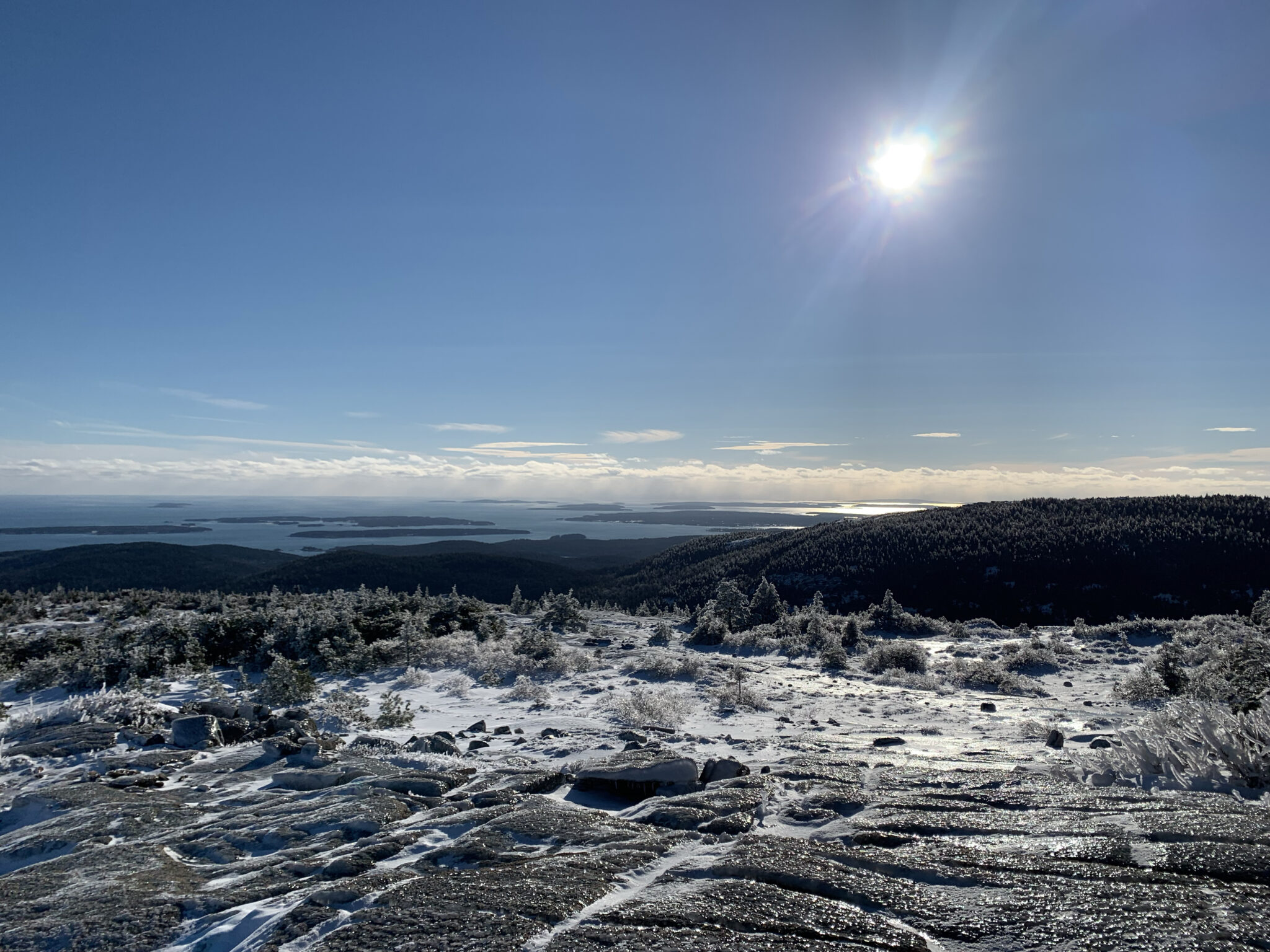
At first glance, you might not consider Acadia's mountains truly "alpine." After all, Cadillac Mountain—the park's highest point—reaches a modest 1,527 feet above sea level, far lower than what most consider alpine terrain. Yet remarkably, these granite summits harbor plant communities that share many characteristics with their higher-elevation counterparts in the White Mountains, Adirondacks, and beyond.
What makes Acadia's summits special is their position at the intersection of environmental extremes. These mountains experience intensely cold winters, hot summers, high winds, minimal soil, and significant exposure to the elements. These challenging conditions have created a unique ecological niche where specialized alpine plants in Acadia have evolved to survive.
The "Sky Islands" of Acadia
Ecologists often refer to Acadia's mountain summits as "sky islands"—isolated habitats where rare plant communities grow, separated from other similar environments by vast expanses of different ecosystems. The alpine plants of Acadia represent surviving fragments of the tundra that covered the Northeast after the last Ice Age approximately 13,000 years ago.
As the climate warmed and forests expanded northward, cold-adapted plants became restricted to places that remained exposed, barren, and cooler—high mountains and coastal headlands. This isolation has created fascinating evolutionary pressures and resulted in unique adaptations among Acadia's alpine plants.
Defining Characteristics of Acadia's Summit Environment
The summit environment in Acadia National Park is characterized by several key factors that directly influence the alpine plants that grow there:
- Cold temperatures: Summit temperatures average 7°F colder than coastal areas in winter.
- Intense solar radiation: Unfiltered sun exposure creates dramatic temperature fluctuations.
- High winds: Mountains intercept air currents, creating persistent windy conditions.
- Thin, patchy soil: Limited organic matter exists between granite surfaces.
- Moisture extremes: Periods of both drought and excess water occur seasonally.
These challenging conditions have selected for plants with remarkable adaptations. While hiking along trails on Cadillac, Pemetic, or Sargent Mountains, I've often marveled at how these diminutive plants survive in what appears to be bare rock. This harsh environment has led to a community of alpine plants in Acadia that share more in common with Arctic flora than with the lush forests at the mountains' bases.
For more information about the overall plant diversity in Acadia, visit Acadia National Park Plants, where you'll find a broader overview of the park's botanical treasures.
Key Alpine Plant Species and Identification

Acadia National Park's summit areas contain a surprisingly diverse array of plant species adapted to the harsh conditions. The National Park Service has documented approximately 145 different plant species on Cadillac Mountain alone. Below, I'll highlight some of the most iconic alpine plants of Acadia that you're likely to encounter on the mountain summits.
Three-toothed Cinquefoil (Sibbaldiopsis tridentata)
Perhaps the most emblematic of all alpine plants in Acadia is the three-toothed cinquefoil. This low-growing perennial forms spreading mats across the granite surfaces and is immediately recognizable by its:
- Compound leaves with three distinct "teeth" or notches at the end
- Small white flowers with five petals, blooming in early summer
- Reddish leaves in fall, providing striking autumn color
- Woody stems that help it survive harsh winter conditions
Three-toothed cinquefoil plays a crucial ecological role on Acadia's summits. Its spreading growth habit helps stabilize thin soil, creating opportunities for other plants to establish. According to Peter Nelson, Forest Ecology Director at Schoodic Institute, "Three-toothed cinquefoil arrives as a seedling, a fragment from a nearby plant, and mixes with grasses, lichens, and mosses to form a stable turf so the shrubs like alders can come in. That's one of its roles."
Mountain Sandwort (Minuartia groenlandica)
Another summit specialist is mountain sandwort, a delicate-looking but tough alpine plant that thrives in Acadia's harshest environments. Key identification features include:
- Cushion-like growth habit, forming small mounds
- Needle-like leaves arranged in opposite pairs
- Bright white flowers with five deeply notched petals
- Preference for growing directly in rock crevices
Mountain sandwort is one of the rare plants found in Acadia that demonstrates the park's connection to more northern ecosystems. It's a testament to the unique microclimate of these summits that these plants can persist here at relatively low elevations.
Boreal Blueberry (Vaccinium boreale)
The boreal blueberry, sometimes called alpine blueberry, is a state-listed species of special concern in Maine. It's easily confused with the more common lowbush blueberry but has several distinguishing characteristics:
- Shorter, more compact and branched growth habit
- Narrower leaves than common lowbush blueberry
- Smaller flowers that bloom 10-20 days earlier
- Often flowers before leaves have fully developed
The presence of boreal blueberry on Acadia's mountains is significant as it represents a fragment of the tundra that once covered the region after the last Ice Age. You can learn more about rare plants in Acadia including the boreal blueberry on our specialized page.
Other Notable Alpine Species
Beyond these signature species, Acadia's summits host a remarkable diversity of other alpine and subalpine plants, including:
- Black crowberry (Empetrum nigrum) - A low-growing evergreen shrub with small needle-like leaves and black berries
- Mountain cranberry (Vaccinium vitis-idaea) - Features glossy, leathery leaves and red berries
- Mountain alder (Alnus viridis) - A shrubby pioneer species that helps stabilize mountain soils
- Rand's goldenrod (Solidago simplex ssp. randii) - A compact goldenrod adapted to rocky summit conditions
- Harebell (Campanula rotundifolia) - Delicate blue bell-shaped flowers on thin stems
- Common juniper (Juniperus communis) - A prostrate conifer often found on exposed ridges
For a comprehensive listing of plants native to the region, consider exploring our guide to native plants of Acadia, which offers additional identification tips and ecological information.
Recommended Field Guide

The Plants of Acadia National Park
For serious plant enthusiasts, I highly recommend "The Plants of Acadia National Park" by Glen H. Mittelhauser, which presents scientific descriptions of 862 plant species found in the park, including many of the alpine species mentioned in this article. It includes detailed keys, an illustrated plant-family section, and informative introductions to the park's diverse habitats.
Check Price on AmazonEcological Importance and Adaptations
The alpine plants of Acadia are not just botanical curiosities—they're ecological pioneers that have developed remarkable adaptations to survive in one of the park's most challenging environments. These adaptations not only make these plants fascinating to study but also underline their importance to the broader ecosystem.
Remarkable Adaptations
Alpine plants have evolved specific strategies to cope with the extreme conditions found on Acadia's summits:
- Low, mat-forming growth: Many summit plants grow close to the ground in dense mats or cushions to avoid wind damage and trap heat.
- Perennial life cycles: Rather than starting from seed each year, most alpine plants regrow from the same roots, conserving energy in a short growing season.
- Early photosynthesis: Alpine species can begin photosynthesizing at temperatures just above freezing, maximizing their limited growing season.
- Red pigmentation: Anthocyanin pigments in leaves help convert light to heat and protect against UV damage. These pigments become visible in fall when chlorophyll breaks down, creating dramatic red landscapes on the summits.
- Waxy or hairy leaves: These features help trap heat and prevent water loss while also protecting against extreme sun exposure.
- Efficient reproduction: Many species reproduce vegetatively through runners or rhizomes in addition to seed production.
During my botany work on Cadillac Mountain, I've observed how these plants can survive in what appears to be bare granite. The secret lies in their ability to exploit even the smallest accumulations of organic matter in rock crevices and depressions—truly a testament to evolutionary ingenuity.
Ecological Roles and Services
Alpine plants in Acadia provide several critical ecological functions:
- Soil formation and stabilization: These plants trap wind-blown particles and organic matter, slowly building soil in what would otherwise be barren rock.
- Erosion prevention: The root systems of alpine plants help hold soil in place during heavy rain events.
- Habitat creation: The vegetative mats provide microhabitats for insects, spiders, and other small fauna.
- Food sources: Berries from plants like mountain cranberry and crowberry provide important food for wildlife.
- Climate indicators: These sensitive plants serve as early warning systems for climate change impacts.
The presence of these plant communities also contributes to the distinctive character of Acadia's landscape. The visual texture and seasonal color changes they provide enhance the visitor experience and create the unique sense of place that makes Acadia's summits so special.
For a deeper understanding of how these alpine plants fit into the broader ecological context of Acadia, visit our flora of Acadia page, which explores the full spectrum of plant communities throughout the park.
Recommended Viewing Equipment

Carson MicroBrite Plus Pocket Microscope
To truly appreciate the intricate adaptations of alpine plants, I always carry this pocket microscope on my summit explorations. The 60x-120x magnification reveals the fascinating structures of these plants that are invisible to the naked eye. It's lightweight, pocket-sized, and includes an LED light—perfect for examining the tiny hairs on leaves or the structure of moss on granite surfaces.
Check Price on AmazonConservation Challenges and Restoration Efforts
Despite their resilience, alpine plants in Acadia face significant threats that have already caused measurable damage to these fragile communities. Understanding these challenges is essential for anyone who cares about preserving the unique botanical heritage of Acadia's summits.
Human Impact and Visitor Pressure
The most immediate threat to alpine plant communities comes from direct human impact. With Acadia National Park receiving over 4 million visitors annually, and Cadillac Mountain being one of the most popular destinations, the pressure on summit ecosystems is enormous.
According to National Park Service estimates, approximately 16% of vegetated areas on Cadillac Mountain have been lost to erosion, primarily due to visitors walking off designated trails. What might seem like harmless exploration can have devastating effects, as:
- Alpine plants grow extremely slowly and may take decades to recover from being trampled
- Soil formation in alpine environments occurs on a timescale of centuries
- Once vegetation is removed, wind and water quickly erode the thin soil layer
- "Social trails" (unofficial paths created by visitors) fragment habitat and accelerate erosion
During my work with park ecologists, I've witnessed how even a single footstep in the wrong place can dislodge plants that took decades to establish. On popular summits like Cadillac, approximately 300 unauthorized "social trails" now crisscross the fragile plant communities.
Climate Change Impacts
Beyond direct human pressure, climate change poses an existential threat to alpine plants of Acadia. These plants exist in a narrow ecological niche, and even small shifts in temperature and precipitation patterns can have profound effects:
- Warming temperatures allow lowland plant species to move upslope, competing with specialized alpine plants
- Changed precipitation patterns lead to more frequent drought stress and intense rain events
- Reduced snow cover in winter eliminates an important insulating layer that protects dormant plants
- More frequent freeze-thaw cycles damage plant tissues and disrupt growth patterns
- Earlier spring thaws and later fall frosts alter flowering times and reproductive success
Chris Nadeau, climate adaptation scientist at Schoodic Institute, notes that "Acadia's alpine is paradoxically special. On the one hand, the alpine vegetation in Acadia is likely more vulnerable to climate change than most other places in the Northeast. On the other hand, the individuals here might have adaptations to warm environments that could help save populations at higher elevations."
Summit Restoration Projects
Recognizing these threats, the National Park Service, in collaboration with organizations like Schoodic Institute, Friends of Acadia, and the Native Plant Trust, has launched ambitious restoration projects to protect and rebuild alpine plant communities on Acadia's summits.
The Cadillac Summit Restoration project represents one of the most comprehensive efforts. Key aspects include:
- Active replanting: Using plants grown from seeds collected on the mountain
- Soil restoration: Adding a six-inch layer of local, sterilized loam to create growing substrate
- Strategic species selection: Focusing on plants like three-toothed cinquefoil and green alder that quickly establish and facilitate other species
- Genetic resilience research: Studying whether local plants have adaptations that might help them survive warming conditions
- Visitor management: Installing low barriers and educational signs to guide visitors and protect restored areas
In recent years, volunteers have even carried thousands of pounds of soil in backpacks up to summits like Penobscot and Sargent Mountains to support restoration efforts. These labor-intensive projects demonstrate the commitment to preserving Acadia's unique botanical heritage.
For more information about how invasive species affect the park's ecology, visit our invasive plants of Acadia page.
Support Conservation Efforts

Nature Guide to Acadia National Park
This comprehensive field guide by Ann and Rob Simpson introduces park visitors to the animals, plants, insects, and geology of Acadia National Park. A portion of proceeds supports conservation efforts in the park, making this purchase a way to directly contribute to protecting the alpine plant communities we've discussed. I keep a copy in my daypack for quick reference during hikes.
Check Price on AmazonBest Viewing Locations and Seasonal Guide
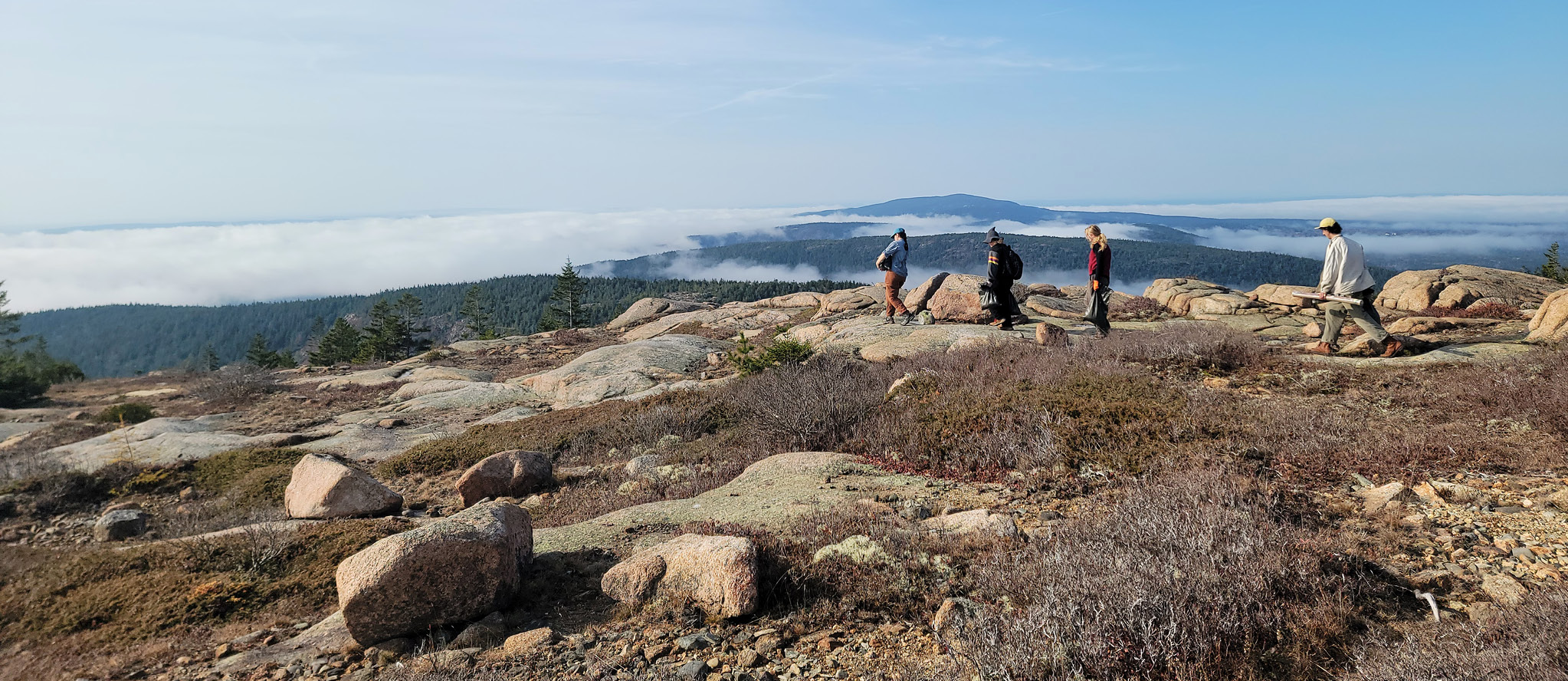
For those eager to experience the unique alpine plants of Acadia firsthand, timing and location are everything. While these plant communities exist on several mountain summits throughout the park, some locations offer better viewing opportunities than others, and each season brings different highlights.
Prime Summit Locations
Based on my extensive explorations throughout Acadia, here are the top locations for observing alpine plant communities:
- Cadillac Mountain: The highest and most accessible summit offers extensive areas of alpine vegetation, particularly along the North Ridge Trail and the less-traveled sections of the Summit Loop.
- Pemetic Mountain: Less visited than Cadillac, the open ledges near the summit provide excellent opportunities to observe undisturbed alpine plant communities.
- Sargent Mountain: The exposed granite dome near the summit hosts impressive displays of mountain sandwort and three-toothed cinquefoil.
- Penobscot Mountain: The open ridge between Penobscot and Sargent Mountains features extensive alpine vegetation with fewer visitors than Cadillac.
- The Bubbles: These smaller mountains offer accessible viewing of typical summit plant communities with less hiking required.
While Cadillac Mountain is the most accessible option (you can drive to the summit), it also receives the most visitors and consequently has experienced the most damage to its plant communities. For a more pristine experience, I recommend the slightly more challenging hikes to Pemetic or Sargent Mountains.
Seasonal Highlights
Each season brings different highlights for observing alpine plants in Acadia:
- Spring (May-June):
- Early flowering of mountain sandwort and boreal blueberry
- Fresh growth emerging from seemingly barren rock
- Opportunity to observe plants before summer crowds arrive
- Summer (July-August):
- Peak flowering period for most alpine species
- Three-toothed cinquefoil displays its delicate white blooms
- Maximum diversity of visible plant species
- Fall (September-October):
- Dramatic red coloration of three-toothed cinquefoil leaves
- Fruiting of mountain cranberry and crowberry
- Excellent photographic opportunities as crowds diminish
- Winter (November-April):
- Alpine plants in dormancy, often protected under snow
- Opportunity to observe adaptation strategies to extreme cold
- Minimal human impact during this season
For the most rewarding experience, I recommend visiting in early morning or evening hours when the light is softer and crowds are thinner. Early September offers a particular sweet spot—summer crowds have diminished, the weather remains pleasant, and three-toothed cinquefoil begins its stunning autumn transformation.
If you're interested in exploring beyond the alpine zone, check out our guides to wildflowers of Acadia National Park and trees in Acadia National Park for a more comprehensive botanical experience.
Essential Viewing Gear

Nikon ACULON A211 10x42 Binoculars
These binoculars have been my constant companion on summit explorations for years. The 10x magnification allows you to observe alpine plants in detail from a distance without disturbing them—essential for responsible viewing. They're also perfect for spotting distant hawks and falcons that frequent Acadia's summits. The multi-coated optics deliver bright, clear images even in low light conditions at dawn and dusk.
Check Price on AmazonResponsible Visitor Guidelines
As someone who has spent countless hours studying and photographing alpine plants in Acadia, I've developed a deep appreciation for their fragility and importance. Responsible visitation is crucial to ensuring these unique plant communities survive for future generations to enjoy. Here are essential guidelines for experiencing alpine areas respectfully:
Stay on Designated Trails and Hardened Surfaces
This is the single most important action you can take to protect alpine plants. When exploring summit areas:
- Always stay on marked trails, wooden boardwalks, or bare granite surfaces
- Avoid stepping on any vegetation, no matter how small or insignificant it may appear
- Resist shortcuts between trail switchbacks, even if others have created "social trails"
- Look before you sit or place gear down to ensure you're not crushing plants
- If you must step off trail briefly (e.g., to allow others to pass), choose bare rock surfaces
Remember that what might look like "just moss" or a small plant patch represents decades or even centuries of slow growth in these harsh conditions. A single misplaced step can undo this work in an instant.
Practice Leave No Trace Principles
Beyond staying on trail, follow these Leave No Trace principles in alpine areas:
- Plan ahead and prepare - Research trails, weather, and regulations before your visit
- Travel and camp on durable surfaces - Stick to established trails and rest on bare rock
- Dispose of waste properly - Pack out all trash, leftover food, and litter
- Leave what you find - Never pick flowers, collect plants, or move rocks
- Minimize campfire impacts - No fires are permitted on Acadia's summits
- Respect wildlife - Observe animals from a distance and never feed them
- Be considerate of other visitors - Yield to uphill hikers and keep noise levels down
Time Your Visit Strategically
When and how you visit can significantly reduce your impact:
- Visit during off-peak hours (early morning or late afternoon) when trails are less crowded
- Consider exploring less-visited summits instead of always heading to Cadillac
- Use the Island Explorer shuttle bus system when possible to reduce parking congestion
- If driving to Cadillac Summit, obtain a vehicle reservation during peak season
- Avoid summit trails during or immediately after heavy rain when soil is more vulnerable to erosion
Become an Advocate
One of the most powerful ways to protect alpine plants in Acadia is to become an advocate:
- Gently educate fellow visitors about the importance of staying on trail
- Report trail damage or visitor issues to park rangers
- Support organizations like Friends of Acadia and Schoodic Institute that fund restoration work
- Share your knowledge about alpine plant communities with friends and family
- Consider volunteering for trail maintenance or restoration projects
By following these guidelines, you can enjoy the unique beauty of Acadia's alpine areas while helping ensure they remain intact for future generations. For more information about protecting all types of plant communities in the park, visit our Acadia plant identification guide, which includes conservation information.
Essential Hiking Gear for Summit Exploration

Trekology Ultralight Inflatable Seat Cushion
One of my top recommendations for summit visitors is this ultralight inflatable seat cushion. When you want to sit and enjoy the views or have lunch on the summit, this provides comfortable seating on bare granite without any temptation to sit on fragile vegetation. It weighs practically nothing, compresses to pocket size when deflated, and provides welcome comfort on those hard granite surfaces. I never visit Acadia's summits without mine.
Check Price on AmazonMy Experience with Acadia's Alpine Plants
My relationship with the alpine plants of Acadia began over fifteen years ago when I first volunteered with a botanical survey on Cadillac Mountain. What started as casual interest quickly blossomed into deep fascination and eventually a professional focus. Through countless seasonal visits and changing weather conditions, I've developed an intimate knowledge of these remarkable plant communities.
Memorable Summit Encounters
One crisp September morning stands out vividly in my memory. I had hiked up the North Ridge Trail to Cadillac's summit before dawn, hoping to photograph alpine plants in the golden light of sunrise. As the first rays illuminated the landscape, I found myself amid a sea of three-toothed cinquefoil that had transformed overnight into brilliant crimson. The low angle of the light revealed thousands of dew drops clinging to the tiny leaves, each one a perfect prism scattering rainbows across the summit.
Another formative experience came during a week-long research project on Pemetic Mountain. Working alongside park ecologists, I helped document the slow recovery of vegetation in areas that had been roped off for protection twenty years earlier. The painstakingly slow progress—just inches of growth over two decades—fundamentally changed my perspective on the fragility of these ecosystems and the immense timescales on which they operate.
Seasonal Observations
By returning to the same locations throughout the seasons, I've gained unique insights into the rhythms of alpine plants in Acadia:
- Spring awakening: In late April and early May, before most visitors arrive, I've watched the first tentative growth emerge from what appears to be bare rock. The boreal blueberry's early flowering often coincides with lingering patches of snow—a striking juxtaposition of seasons.
- Summer resilience: During July heat waves, I've marveled at how these plants adapt to drought conditions. While lowland vegetation may wilt, species like three-toothed cinquefoil continue to thrive on exposed granite that becomes hot enough to burn bare skin.
- Autumn transformation: The fall color change of alpine vegetation often precedes the more famous foliage in valleys below by several weeks. This creates a unique opportunity to witness two distinct autumn color peaks during a single visit.
- Winter survival: On snowshoe expeditions to Cadillac in January, I've observed how wind patterns create areas of bare ground alongside deep drifts, creating a complex mosaic of microhabitats that alpine plants have evolved to exploit.
Conservation Lessons
My years of working with restoration projects have taught me valuable lessons about both the challenges and rewards of alpine conservation:
During one volunteer session on Cadillac, our team spent an entire day carefully transplanting three-toothed cinquefoil specimens into a heavily eroded area near the summit parking lot. The work was painstaking—each tiny plant required its own handcrafted microenvironment of soil and protective rocks. When I returned the following year, fewer than 30% had survived, a stark reminder of how difficult restoration work can be in these environments.
Yet there have been successes too. Areas that were roped off for protection in the 1990s now show remarkable recovery, with diverse plant communities re-establishing themselves when given sufficient time without human disturbance. These success stories provide hope that with proper management and visitor education, we can maintain healthy alpine plant communities even in heavily visited areas.
Through all these experiences, I've developed not just scientific knowledge but a deep emotional connection to these resilient plant communities. They've taught me patience, perspective, and respect for the often invisible but vital components of natural systems.
For more insights into the broader botanical context of Acadia, visit our Acadia National Park botany page, which explores the fascinating scientific work being done throughout the park.
Frequently Asked Questions
What makes Acadia's summit plant communities "alpine" when they're at such low elevations?
While Acadia's mountains don't reach the elevation typically associated with alpine zones (Cadillac Mountain is only 1,527 feet above sea level), they experience environmental conditions remarkably similar to higher alpine areas. The combination of exposed bedrock, thin soils, extreme temperature fluctuations, high winds, and intense solar radiation creates microhabitats that support plant communities typically found at much higher elevations. These "sky islands" harbor specialized plants adapted to these harsh conditions, including species like three-toothed cinquefoil, mountain sandwort, and boreal blueberry that are characteristic of alpine zones in the White Mountains and beyond.
When is the best time to see alpine plants flowering on Acadia's summits?
The prime flowering period for most alpine plants in Acadia occurs from mid-June through July, though this can vary depending on the specific species and yearly weather conditions. Mountain sandwort typically begins flowering in late May, while three-toothed cinquefoil reaches peak bloom in early to mid-July. Boreal blueberry flowers appear earlier than common lowbush blueberry, often blooming in late May before the plants have fully leafed out. For the most spectacular displays, I recommend visiting in early July when multiple species are in bloom simultaneously. Early morning visits not only provide better lighting for photography but also avoid the heat of the day and the largest crowds.
How can I identify three-toothed cinquefoil in different seasons?
Three-toothed cinquefoil (Sibbaldiopsis tridentata) is one of Acadia's most distinctive alpine plants and can be identified year-round with a few key features. In spring and summer, look for its characteristic three-leaflet compound leaves, with each leaflet having three distinct "teeth" or notches at the end. The plant grows in low, spreading mats across rock surfaces. From June to August, it produces small white five-petaled flowers about a half-inch in diameter. In fall, the leaves turn a striking burgundy-red color, creating some of the most vivid autumn displays on the summits. Even in winter, the woody stems remain visible, often forming intricate patterns across the granite. The plant's evergreen leaves may remain under snow cover, turning reddish-bronze in response to cold.
Why are alpine plants important to Acadia's ecosystem?
Alpine plants serve several crucial ecological functions in Acadia despite their small size and limited distribution. First, they act as pioneers in soil formation, trapping windblown particles and organic matter that gradually build up to support more diverse plant communities. Their extensive root systems help prevent erosion on steep mountain slopes during heavy rain events. These plants also provide specialized habitat for unique insects and other invertebrates that have co-evolved with them. Additionally, many alpine species produce berries that are important food sources for birds and small mammals. From a conservation perspective, these plant communities represent living remnants of the tundra that once covered the region after the last Ice Age, making them valuable for scientific study and as indicators of climate change impacts.
Can I collect seeds or specimens of alpine plants in Acadia?
No, collecting any plant material—including seeds, flowers, or specimens—is strictly prohibited within Acadia National Park without specific scientific research permits. The alpine plant communities are particularly vulnerable, and even small-scale collection could cause significant harm. Many of these plants grow extremely slowly and produce limited seeds, making population recovery difficult. Additionally, several alpine species in Acadia, such as boreal blueberry, are considered rare or of special concern at the state level. Instead of collecting specimens, I recommend photographing plants (from established trails) and using field guides or plant identification apps to learn more about them. The Wild Gardens of Acadia at Sieur de Monts Spring also offers an opportunity to see many native plants in a controlled setting where they're properly labeled and protected.
Conclusion
The alpine plants of Acadia National Park represent one of the most remarkable yet overlooked natural treasures of Mount Desert Island. These resilient botanical communities tell a story that spans millennia—from the retreat of glaciers that carved the landscape to the ongoing challenges of climate change and human impact. Though small in stature, these plants play outsized roles in the park's ecology, contributing to soil formation, preventing erosion, and providing specialized habitat for countless organisms.
Through my years of studying and photographing these plant communities across all seasons, I've developed a profound respect for their tenacity and ecological importance. Species like three-toothed cinquefoil, mountain sandwort, and boreal blueberry have evolved incredible adaptations that allow them to thrive in what appears to be bare rock, enduring freezing temperatures, scorching sun, and relentless winds.
Yet these alpine plants in Acadia face significant threats. Human foot traffic has already damaged substantial portions of summit vegetation, while climate change poses an existential challenge to species that have nowhere higher to migrate. The restoration efforts currently underway represent critical work to preserve these unique plant communities for future generations.
As visitors to Acadia, we each have a responsibility to tread lightly in these fragile ecosystems. By staying on designated trails, timing our visits thoughtfully, and becoming advocates for conservation, we can help ensure that the unique alpine plants of Acadia continue to thrive on the granite summits they've called home since the last Ice Age.
I encourage you to take time during your next summit hike to look closely at the remarkable plant life beneath your feet. Bring a hand lens or pocket microscope to observe the intricate adaptations that allow these species to survive. Visit in different seasons to witness the changing faces of the alpine community. And most importantly, share your knowledge and appreciation with others, helping to build a community of stewards committed to protecting Acadia's botanical treasures.
The story of alpine plants in Acadia is ultimately one of resilience, adaptation, and interconnection—a living reminder of our responsibility to protect even the smallest components of our natural heritage. In preserving these plant communities, we preserve not just botanical diversity but a window into the past and a key to understanding our environmental future.
For more comprehensive information about plant life throughout the park, don't forget to explore our related articles about coastal vegetation in Acadia and forest plants in Acadia Park.
And remember, when you visit alpine plants of Acadia, you're witnessing not just beautiful flora, but living history—botanical survivors that have persisted through dramatic climate shifts and now depend on our stewardship to face the challenges of the future.